

Viral TikTok Elote Pasta Salad — Mexican Street Corn, Applied to Pasta
Prep: 20 min active + 1 hr chilling | Serves: 6 | Make-ahead, crowd-pleaser
Elote pasta salad is what happens when you stop treating Mexican street corn as a corn recipe and start treating it as a sauce format. The elote toppings — mayo, crema, lime, chili powder, cotija, cilantro, Tajín — aren’t just finishing touches on a corn cob; they’re a complete dressing with real tang, richness, salt, and heat. Pour them over pasta with charred corn kernels instead of a whole ear, and you have a pasta salad that is more interesting than 95% of what shows up at a cookout.
This landed on TikTok FoodTok and stayed there because it’s genuinely different from generic pasta salad: the char on the corn creates a smokiness that no Italian-dressing version achieves, the cotija seasons every bite with a salty punch rather than a uniform milky blandness, and the lime and Tajín finish makes it taste like a dish with a clear identity rather than a “throw stuff in mayo” afterthought.
Why This Went Viral
Mexican street corn has been one of the most consistently searched and replicated flavors in American home cooking for years — the combination of charred corn, crema, cotija, lime, and chili is widely known and craved. The TikTok adaptation is structurally obvious in retrospect: turn the toppings into a pasta dressing, add the corn kernels into the bowl, serve it cold at scale.
The format performs well on FoodTok for three specific reasons:
-
Batch-friendly: One pot of pasta + one skillet of corn + one bowl of dressing = a dish that serves 6–8 for a cookout or provides a week of lunches. The “serves a crowd” format is a reliable viral driver.
-
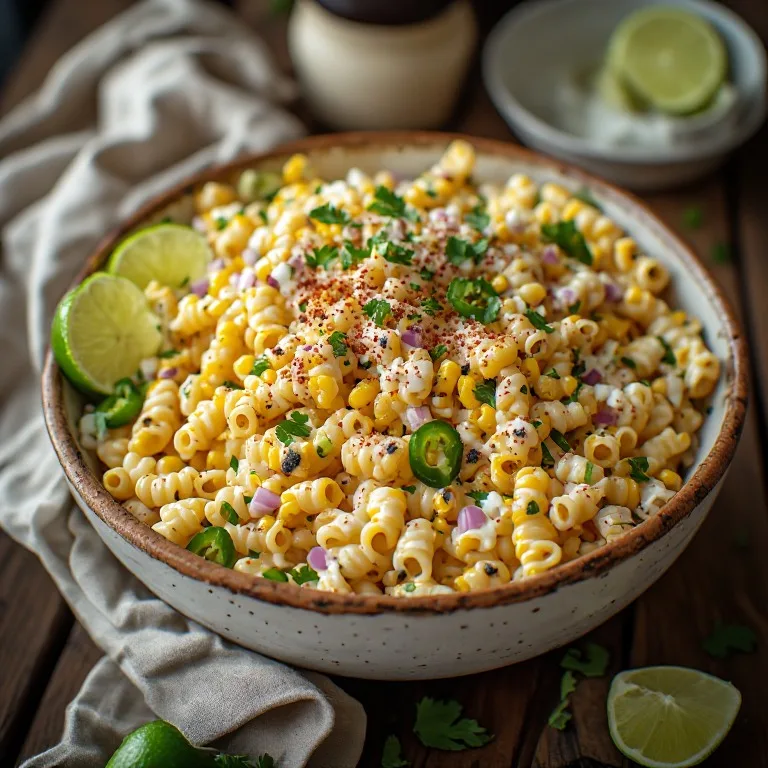
Visual contrast: Charred corn kernels with dark spots against creamy white-yellow dressing, topped with bright green cilantro, crumbly white cotija, and a dusting of red-orange Tajín is a high-contrast TikTok visual. It photographs well from above.
-
Technique reveal: The “char the corn in a dry cast iron with no oil” moment is a short, legible technique payoff that works as a TikTok hook. The before-and-after — pale canned corn vs. blackened-spot charred corn — is a visible, repeatable demonstration.
The Char Technique — What Actually Makes This Different from Corn Salad
Most pasta salads use corn from a can, drained, added directly to the bowl. Elote pasta doesn’t. The char is the entire point.
Why charring matters: When corn kernels make direct contact with a very hot dry surface, two things happen simultaneously that don’t happen in a water-cooked or steamed kernel:
- Maillard reaction on the sugar: Corn kernels are about 10% natural sugar. In direct contact with a 500°F+ cast iron surface, those sugars caramelize and brown, producing a deep, slightly nutty-sweet flavor that is completely absent in cooked or canned corn.
- Moisture evaporation at the surface: The dry heat drives off surface moisture and concentrates the corn flavor in the charred spots. Raw or boiled corn retains water that dilutes this concentration.
The result is a corn kernel that has three distinct flavor zones in a single bite: the raw sweet interior, the cooked corn midpoint, and the slightly bitter-smoky charred exterior. That complexity is why elote is Mexican street food rather than just boiled corn on the cob.
How to char correctly:
Heat a large cast-iron skillet over high heat for 2 full minutes before adding the corn — the pan must be very hot before anything goes in. Add the corn with NO oil. The absence of oil is critical: oil creates a barrier between the corn and the metal surface and turns charring into sautéing. Corn in oil sputters, steams, and cooks without contact with the pan face. Corn in a dry pan lands directly on the metal and charcoals at the surface immediately.
Spread the corn as flat as possible (a single dense layer is better than a crowded pile). Let it sit for 2–3 minutes without stirring — the undisturbed contact time is what creates the char spots. Stir once, spread flat again, let sit another 2–3 minutes. Total time: 8–10 minutes for visible black spots on 20–30% of the kernels.
| Corn Type | Char Method | Time | Result |
|---|---|---|---|
| Fresh from the cob | Dry cast iron, no oil | 8–10 min | Best — sweet, smoky, complex |
| Gas flame directly on the cob | Tongs over open flame, then cut | 3–4 min per ear | Most authentic — char in irregular strips |
| Fire-roasted frozen | Dry cast iron, thawed | 3–4 min | Very good — corn was already charred before freezing |
| Canned corn | Dry cast iron, well-drained | 12–15 min | Acceptable — takes longer to drive off the moisture |
The Elote Sauce as Pasta Dressing
Traditional elote sauce is not a salad dressing — it’s a finishing layer applied to a hot grilled ear of corn just before serving. The mayonnaise and crema (or sour cream) don’t emulsify into a pourable liquid; they coat the corn surface in a thick, clinging layer.
That same clinging property is exactly what makes it a good pasta dressing when applied cold. The thick mayo-crema base sticks to pasta surfaces rather than pooling at the bottom of the bowl, and the lime acidity keeps it bright even after an hour of refrigeration.
The proportions here — 1 cup mayo + ½ cup sour cream — are based on 12 oz dry pasta + 3 cups corn. For a smaller batch, halve the dressing; for a larger crowd, the dressing scales linearly. The dressing will look very generous when you first pour it over: this is correct. The pasta absorbs roughly one-third of it during the first hour of chilling. Do not reduce it preemptively.
After chilling, always taste and adjust:
- If the dressing seems absorbed and the pasta looks dry: add 1–2 tablespoons each of mayo and sour cream, plus a squeeze of lime, and toss again.
- If the lime flavor has muted: add another half-lime squeeze.
- If it tastes flat: add salt ¼ teaspoon at a time; chilling dulls salt more than any other flavor.
Pasta Shape: Why It Matters
The elote dressing is thick and clinging, not pourable. It distributes itself based on surface contact, not gravity. Short pasta shapes with textured surfaces and sauce-capture geometry outperform long, smooth pastas significantly.
| Shape | Why It Works | Notes |
|---|---|---|
| Ditalini | Sauce coats outside AND inside each tube; corn kernels fit perfectly inside | The most TikTok-viral choice; bite-size proportions match the corn |
| Rotini (spirals) | Grooves capture dressing; spirals hold onto corn kernels | Second-best; more widely available than ditalini |
| Small shells | Cup shape cradles sauce and corn in a mini bowl | Elegant option; use medium shells for a heartier version |
| Orecchiette | Cupped side captures sauce; rough interior texture grips it | Harder to find but excellent |
| Penne | Smooth exterior doesn’t grip; inner tube too large relative to corn | Works but underperforms; not the TikTok-visual choice |
| Farfalle | Flat center doesn’t capture sauce; cute visually but functional underachiever | Use if presentation matters more than sauce delivery |
Cotija: The Cheese That Does the Work
Cotija is a firm, aged, dry Mexican cheese with a salty, slightly tangy flavor and a crumbly texture that doesn’t melt. This is specifically what gives elote its characteristic salty punch — the cheese doesn’t become a smooth layer when it hits the warm corn; it stays as distinct crumbles that you encounter throughout the bite.
In the pasta salad, cotija serves three functions:
- Salt delivery: Cotija is saltier than most cheeses — it seasons every bite it touches without needing additional salt in those specific spots.
- Texture contrast: The firm, granular crumbles create a textural variation against the creamy dressing and soft pasta.
- Umami depth: Like Parmesan, cotija has significant glutamate content from the aging process, which adds a savory complexity without a distinct “cheesy” flavor.
Where to find cotija: Most large grocery chains carry it in the dairy section, often near the sour cream or Mexican dairy products. Whole Foods carries it consistently. Mexican grocery stores stock it in both fresh and aged varieties (use the aged/firmer form for this recipe). It’s sold in wheels or blocks and should be crumbled by hand, not grated — the granular texture is part of what it does.
Substitutes:
- Queso fresco: Most direct substitute (similar crumble texture), but milder and less salty. Add an extra ¼ teaspoon salt to the dressing if using.
- Feta: The best brine-forward substitute for cotija’s punch. Greek or Bulgarian varieties work well; use the block form and crumble by hand, not pre-crumbled.
- Grated Parmesan (finely grated): Works but shifts the flavor toward Italian pasta salad. The umami and salt are there; the Mexican-cheese character is not.
The Tajín Finish
Tajín Clásico (dried chile + lime + salt) applied over the top at serving is what makes this unmistakably elote-inspired rather than a generic Mexican pasta salad. Street corn vendors finish elote with Tajín as the final layer — after the mayo, cheese, and cilantro — so the lime-chile salt is the first flavor you taste.
For the pasta salad: dust it after the cotija and cilantro are already on, from 6–8 inches above the surface, sweeping back and forth for even coverage. Do not use Tajín as a substitute for chili powder in the dressing — the dressing needs regular chili powder for a deep, even heat throughout; Tajín at the surface delivers the bright, punchy citrus-chile hit that signals this is street corn food.
How to Scale This for a Crowd
This recipe makes about 10–11 cups of pasta salad — enough for 6 generous servings as a side dish, or 4 as a main course with protein added.
For a party of 12–15 as a side dish:
- Double all quantities (24 oz pasta, 6 cups corn, 2 cups mayo, 1 cup sour cream)
- Use a large sheet pan (18×26 in) or sheet-pan half to char the corn in a flat layer in two batches — don’t crowd it
- A restaurant-size 8-quart mixing bowl is helpful for tossing; a large stockpot works too
- Make 8–12 hours ahead; taste and adjust dressing 30 minutes before serving
What This Pairs With
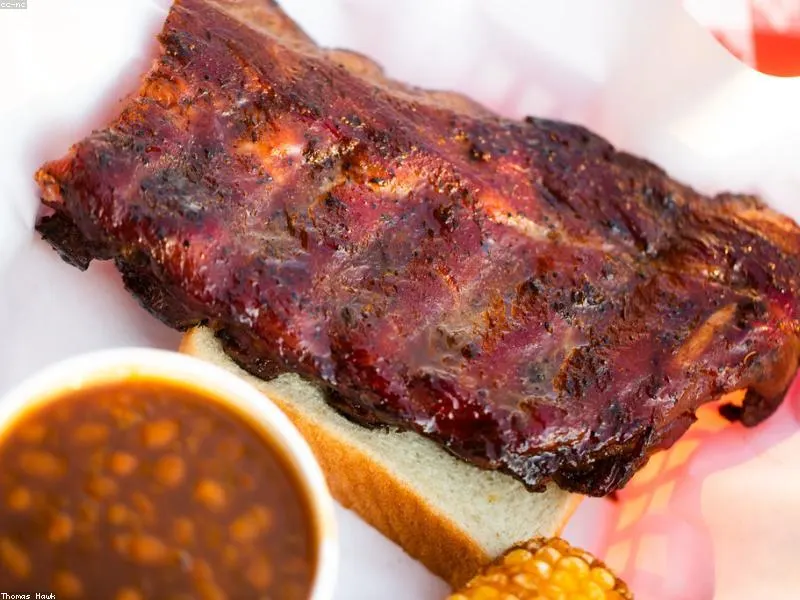
Elote pasta salad works as a side dish next to anything off a grill or smoker: ribs, chicken thighs, burgers, carne asada. The creamy lime dressing also makes it a natural companion to dishes that are already spicy or charred, since the cool creaminess balances them. Served cold, it holds at room temperature for about 2 hours safely before it needs to go back on ice — relevant for outdoor cookouts.
For more in the elote/street corn family: the Elote Corn Dip is the same flavor applied to a warm skillet dip format (great with tortilla chips). The Street Corn Ribs use the dry-char technique on a split corn cob for a vegetable “rib” that finishes with exactly the same toppings. The Corn Ribs is the original viral version. The Cowboy Caviar is the closest-cousin cold salad in this flavor neighborhood — black beans, corn, avocado, lime. And the Crunchy Ramen Salad is another no-cook (mostly) crowd-serving salad built on a similarly bold, tangy dressing.