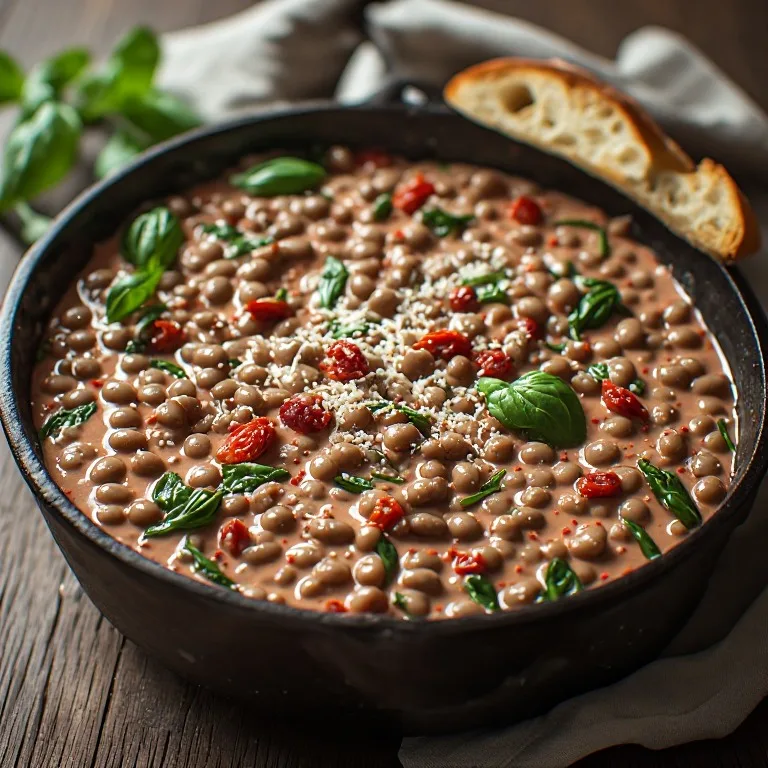



Lentil Bolognese — The TikTok Vegetarian Pasta Sauce That Actually Satisfies
Prep: 15 min | Cook: 55 min | Serves: 4
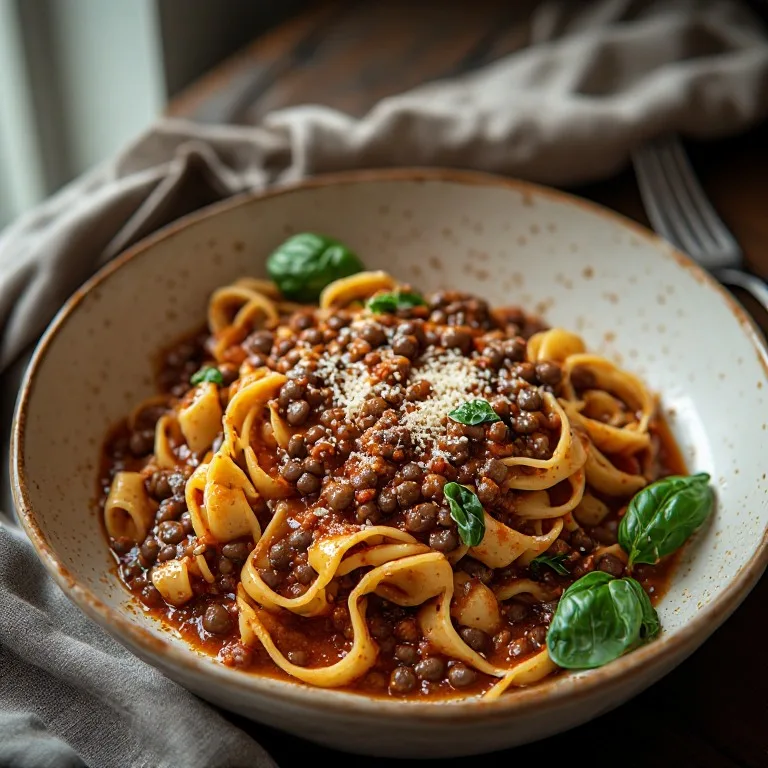
This is the lentil bolognese that went viral on TikTok not because it’s a virtuous compromise but because it’s genuinely delicious: brown lentils slow-cooked in a proper soffritto with red wine, crushed tomatoes, mushrooms, and a spoonful of white miso, finished with a splash of dairy the way classic Bolognese is. Thick, rich, and deeply savory over pappardelle, it costs about $3 to make and rivals plenty of meat sauces.
Why It Went Viral
Lentil Bolognese started circulating on TikTok when food creators began running side-by-side comparisons: classic meat sauce versus lentil sauce cooked with exactly the same technique — soffritto, wine, long simmer, dairy finish. The videos got millions of views because the lentil version genuinely looked like ragu. Not “lentil soup with pasta” but a thick, scoopable, meaty-looking sauce.
The pivot that made the trend spread was the realization that lentils cooked low and slow in a flavor-loaded base produce something you can actually serve to meat eaters without apology. Add mushrooms (for body), miso (for umami depth), and the dairy finish (for richness and balance), and you have a sauce that satisfies the same craving meat Bolognese satisfies — at a fraction of the cost and with a better fiber and protein profile.
The Soffritto: Don’t Rush It
Classic Bolognese is a lesson in patience, and the vegetarian version is no different. The soffritto — onion, carrot, and celery cooked slowly in olive oil — is the flavor foundation. If you cook it quickly over high heat, you get softened vegetables with a sharp edge. If you cook it low and slow for 12–15 minutes until the vegetables are sweet and barely starting to color, you get the flavor base that makes the sauce taste like something a restaurant made.
The measurement: equal parts by volume of onion, carrot, and celery. Dice everything as fine as you can — not a rough chop, not a brunoise, just a consistent ½-inch dice. The goal is for the vegetables to eventually dissolve into the sauce rather than read as distinct chunks.
The Mushroom Trick
The mushrooms are the step that most people either skip or underdo. The goal is to cook them completely dry.
Add finely chopped cremini mushrooms to the soffritto after the vegetables are done and turn the heat up to medium-high. The mushrooms will release their liquid immediately — this is the water trapped in the cells of the mushroom releasing as steam. Keep cooking, stirring occasionally, until all that liquid has evaporated and the mushrooms have gone from grey and wet to golden and slightly chewy at the edges. This takes 5–6 minutes.
Water-logged mushrooms add earthiness and moisture. Dry-cooked mushrooms add body, texture, and the kind of meaty depth that makes this sauce feel satisfying. The difference is significant.
The Miso Trick
White miso paste is not a traditional Italian ingredient, but it’s what separates a lentil bolognese that tastes complete from one that tastes like something is missing. Miso is fermented soybean paste — deeply umami, slightly sweet, mildly salty — and one tablespoon whisked into the tomato paste during the caramelization step adds a layer of savory complexity that’s invisible as miso but obvious as richness.
Use white miso (shiro miso) — it’s the mildest and most versatile. Red miso is stronger and saltier; it works but use less. Don’t add it at the end — add it with the tomato paste so it cooks and melds with the sauce rather than sitting on top of it.
Brown or Green Lentils Only
This cannot be overstated: use brown or green lentils, not red. Red lentils disintegrate into a smooth purée in 15–20 minutes of simmering — which is great for a dal or a soup but wrong for a bolognese that needs texture and body. Brown and green lentils hold their shape through a 40-minute simmer and produce a sauce with distinct, slightly chewy lentils that read as meaty.
The lentils go in dry and unsoaked — they don’t need soaking and they’ll absorb the flavor from the tomatoes and broth as they cook, which produces a more flavorful lentil than one boiled separately in plain water.
The Dairy Finish
Traditional Italian Bolognese always finishes with a splash of whole milk — it rounds out the acid from the tomatoes, adds a richness that makes the sauce feel complete, and is one of the markers that separates a real Bolognese from a tomato-meat sauce. The lentil version benefits from the same step.
Add ¼ cup of whole milk or a splash of heavy cream after the lentils are tender and let it cook in for 2 minutes. The sauce will look slightly lighter and smoother after. This is not about making it creamy — you won’t taste dairy in the finished sauce, but you’ll notice that the tomato edge is gone and the whole thing tastes balanced.
For vegan versions, unsweetened oat milk works almost as well as whole milk here. Coconut cream adds a faint coconut note that’s pleasant but different. Full-fat coconut milk is the closest to heavy cream in terms of richness.
Pasta Choice
Pappardelle is the right call — wide, flat, substantial, and able to carry a chunky sauce without the sauce sliding off. Rigatoni is the second best choice; the ridges and hollow tubes trap individual lentils in every bite. Tagliatelle is traditional for Bolognese and works well.
Avoid anything thin (spaghetti, linguine, angel hair) — the lentils are too chunky and will pile up rather than incorporate. Avoid anything delicate — the sauce is heavy.
Salt the pasta water until it tastes like mild seawater. Reserve a cup of pasta water before you drain. Add the drained pasta to the sauce in the pot, not the sauce to the pasta — the pasta coats more evenly when it’s tossed in the pot over heat.
Variations
Spicy lentil Bolognese: Add 1 teaspoon red pepper flakes with the garlic, or stir in 1–2 tablespoons of Calabrian chili paste with the crushed tomatoes. The heat plays well with the richness of the sauce.
Walnut lentil Bolognese: Toast ½ cup of walnuts and pulse them roughly in a food processor, then add them with the lentils. Walnuts add fat, crunch, and a meatier bite — some versions use this instead of mushrooms. The texture is closer to a crumbled meat sauce.
Red wine-forward version: Double the wine to 1 cup and let it cook down longer. The sauce will be more deeply flavored and slightly tannic — good with pappardelle or served over polenta instead of pasta.
Serve over polenta: The sauce is just as good ladled over creamy polenta as it is over pasta. Make polenta while the sauce simmers — it’s a heartier, more Italian-American presentation that works particularly well in fall and winter.
Make-Ahead and Storage
The sauce keeps in the refrigerator for up to 5 days and freezes well for 3 months. It thickens considerably in the fridge — add a splash of water or broth when reheating and it returns to the right consistency.
Store the sauce separately from the pasta. Cooked pasta sitting in sauce absorbs liquid and turns soft.
The sauce often tastes better on day 2, after the flavors have had a night to meld. Make it on Sunday, eat it through the week.