


Pin It

Viral TikTok Creamy Mushroom Pasta (The Dry-Pan Technique Everyone Gets Wrong)

Viral TikTok Creamy Mushroom Pasta (The Dry-Pan Technique Everyone Gets Wrong)
Jump to Recipe
Prep 10 min Cook 25 min Serves 4
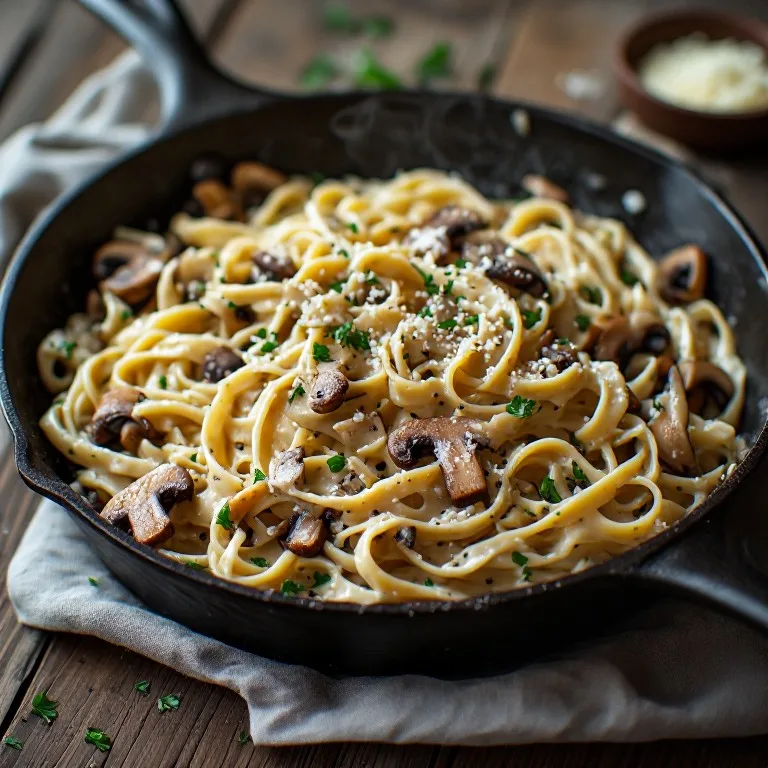
Quick answer: Slice 1 lb of mixed mushrooms (cremini + shiitake) and tear any larger pieces. Heat a large, dry skillet over medium-high — no oil, no butter — and add the mushrooms in a single layer. Leave them completely untouched for 3 to 4 minutes. You will see water releasing into the pan; this is normal and exactly what should happen. Wait until the liquid fully evaporates and the pan goes dry again. Only then add 2 tablespoons of butter and let the mushrooms brown another 2 to 3 minutes until deeply golden. Season with salt, pepper, and thyme leaves. Remove and set aside. Meanwhile, cook 12 oz of fettuccine in heavily salted water until 1 minute shy of al dente; reserve 1½ cups pasta water before draining. In the same skillet over medium, add 2 tablespoons of butter and 2 minced shallots; cook 2 minutes. Add 4 thinly sliced garlic cloves and cook 1 minute until fragrant. Pour in ½ cup of dry white wine and scrape up the browned bits; reduce by half. Add ½ cup of heavy cream and ½ cup of the reserved pasta water. Bring to a gentle simmer on LOW — never boil the cream. Add the mushrooms and the underdone pasta directly to the pan. Toss vigorously for 2 to 3 minutes, adding splashes of pasta water until the sauce coats every strand and clings without pooling. Off heat, stir in ½ cup of grated Parmesan and a tablespoon of fresh lemon juice. Serve immediately with extra Parmesan and chopped parsley.

Shop the tools

Gear matched to this recipe. These are Amazon affiliate links — we may earn a small commission if you buy, at no extra cost to you.

As an Amazon Associate, Copycat Spices earns from qualifying purchases. Product images are generic illustrations, not the exact item listed.

Viral TikTok Creamy Mushroom Pasta (The Dry-Pan Technique Everyone Gets Wrong)

The TikTok mushroom pasta that actually works: start in a DRY pan so mushrooms go golden instead of gray, then finish in a silky garlic-cream sauce built on starchy pasta water. 30 minutes, one skillet.

Easy Prep: 10 min Cook: 25 min Total: 35 min4 servings ~$4.50/serving
Prep10 min
Cook25 min
Total35 min
Servings
4
At home~$4.50/serving
vs
Restaurant~$20.25/serving
You save ~78%

The Story Behind the Recipe

The TikTok mushroom pasta that actually works: start in a DRY pan so mushrooms go golden instead of gray, then finish in a silky garlic-cream sauce built on starchy pasta water. 30 minutes, one skillet.

Nutrition Facts

Per serving (4 servings)
Calories520
Total Fat22g
Total Carbs60g
Dietary Fiber3g
Sugars3g
Protein22g
Sodium680mg

* Estimated values based on standard recipe preparation. Actual values may vary.

Ingredients

  • Pasta
  • Mushrooms
  • Cream sauce
  • Optional additions

Instructions

💡
Pro tip: This recipe tastes even better the next day. The flavors need time to meld together in the fridge.
❄️
Storage: Keeps in an airtight container in the fridge for up to 2 weeks. Freezer-friendly for up to 3 months.
🎃 Free Halloween cookbook — download now The Copycat Halloween Cookbook A ready-made, photo-illustrated PDF of our best halloween copycat recipes — free to download, no building required. Pay what you want to support if you love it.

Free PDF — instant download. We'll also send new seasonal copycat recipes now and then; unsubscribe anytime. Or just download it →

There are roughly two types of mushroom pasta in existence: the kind where you thought you followed the recipe and ended up with gray, watery, slightly rubbery mushrooms draped in thin cream — and the kind where the mushrooms are so deeply golden and caramelized that they look like something out of a restaurant kitchen.

The difference is one technique decision made before you add a single drop of oil. Dry pan. No butter. No oil. Hot, dry metal, and then patience.

The one technique that changes everything

Mushrooms are about 90% water by weight. That’s the fact that explains why most mushroom pasta fails before the cream ever goes in.

When you add oil or butter to a pan first and then add mushrooms, the fat creates a barrier between the mushroom surfaces and the hot metal. The moisture inside the mushrooms immediately releases and starts steaming against that fat layer. The pan cools down from the added liquid. The mushrooms spend their first several minutes simmering in a shallow bath of their own released moisture mixed with oil — they never actually contact a dry, hot surface. They come out pale, soft, and with the flat flavor of something that was cooked through without being seared.

The dry pan changes the equation. No fat means the mushrooms make direct contact with hot metal. Some moisture releases and steams off immediately; some sears against the pan surface. The high heat keeps the pan temperature from dropping too sharply. After 3 to 4 minutes, something shifts: the liquid fully evaporates, the pan goes audibly dry, and the mushroom surfaces are exposed to dry, hot metal for the first time. Now you add the butter — and now the mushrooms caramelize in seconds.

What you get is mushrooms with golden, almost lacquered surfaces, a nutty Maillard crust, and a concentrated earthy flavor that has nothing in common with their gray counterpart. This is the technique TikTok keeps teaching, because most home cooks have genuinely never seen their mushrooms brown before they try it.

Two non-negotiables: single layer, and don’t touch them. Crowded mushrooms steam each other; untouched mushrooms develop a crust instead of moving around and redistributing moisture. If your pound of mushrooms won’t fit without overlapping significantly, cook them in two batches. The second batch cooks in the fond from the first batch and comes out even better.

Pasta water is the sauce

The cream sauce in this recipe uses two liquids: heavy cream and reserved pasta water. The pasta water is not a filler or a way to stretch the cream — it’s a functional ingredient that changes the texture of the sauce.

As pasta boils, it releases starch into the cooking water. That starchy water is an emulsifier: when you toss pasta in the pan with pasta water, the dissolved starch molecules coat the fat droplets in the butter and cream and bind them to the water content of the sauce. The result is a silky, clingy coating that adheres to every strand of pasta rather than pooling in a puddle at the bottom of the bowl.

Plain water has no starch and no emulsifying power. Adding tap water to a cream sauce just thins it. The pasta water thickens it.

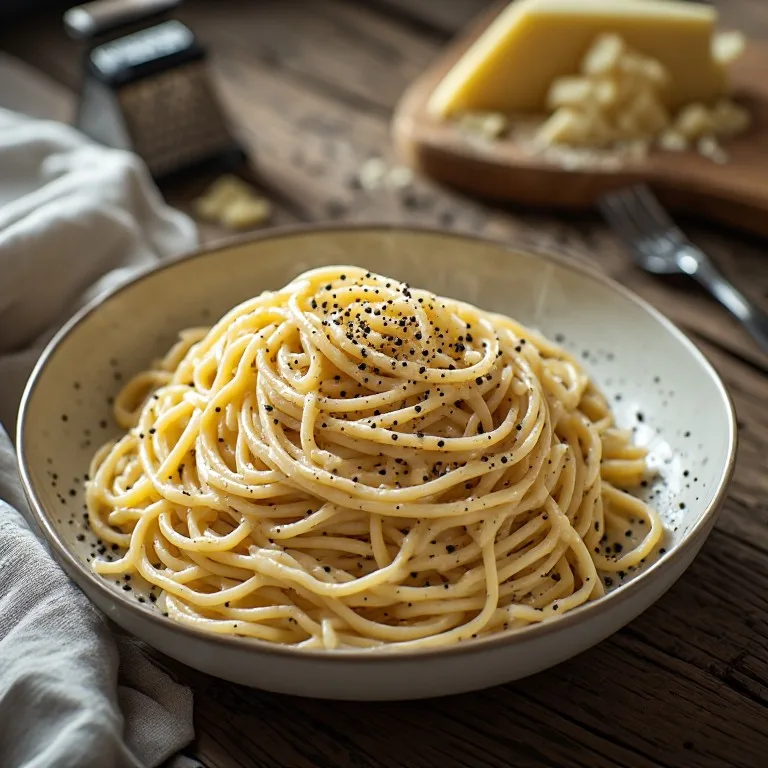
This is the same principle behind cacio e pepe: pasta water + butter + Parmesan, no cream at all, producing a glossy sauce purely through starch emulsification. The mushroom pasta uses cream for richness but relies on exactly the same starchy-water mechanics to keep the sauce cohesive.

Reserve at least 1½ cups before you drain. Set a measuring cup or ladle next to the pot before you start — it’s the most commonly forgotten step in pasta cooking, and once you’ve poured the pasta down the drain the water is gone.

The mushroom mix matters more than most people think

Cremini (baby bella) mushrooms are the backbone: widely available, affordable, with a substantial earthy flavor and a dense texture that holds up to the dry-pan sear. They brown predictably and work as the base of almost any mushroom dish.

Shiitake mushrooms are the upgrade layer. Their caps have a more pronounced, almost smoky umami character from naturally occurring free glutamates. They firm up slightly when seared rather than softening completely, which means they stay distinct in the finished pasta instead of blending entirely into the sauce. Remove the stems — they’re woody and fibrous and don’t soften even with extended cooking, but they make excellent additions to vegetable stock.

For fall 2026, lion’s mane mushrooms are genuinely worth seeking out at farmers’ markets or specialty grocery stores if you can find them. They have a subtly sweet, seafood-adjacent flavor — slightly briny, almost like crab — and a texture that, when torn into irregular pieces and dry-seared, develops a caramelized exterior with a yielding, fibrous interior. They’re expensive, but even 2 oz mixed with cremini changes the character of the dish significantly.

Why the pasta goes into the pan

The last step — tossing underdone pasta directly in the sauce pan rather than plating and pouring — isn’t optional or decorative. It’s how the sauce becomes a sauce.

When you drain pasta and ladle sauce over it in a bowl, you have two separate components touching. The sauce sits on the pasta, and then it slides off and pools at the bottom. When you add pasta to the skillet 1 minute before it’s done, several things happen simultaneously: the pasta finishes cooking and absorbs some of the sauce flavor; the surface starch from the pasta dissolves into the sauce and thickens it further; and the vigorous tossing motion distributes the sauce into every crevice of every strand.

Splash in pasta water one tablespoon at a time as you toss. You’re looking for the moment when the sauce flows as a unified, slightly viscous coating that moves with the pasta rather than sitting on top of it. It happens quickly — usually 2 to 3 minutes in a pan over medium heat with good tossing. When you pull a strand and it looks glazed rather than sauced, it’s done.

See also: Cacio e Pepe — the Roman pasta where starchy pasta water + butter + Pecorino creates a silky sauce with no cream at all; the no-cream version of this mushroom pasta uses the exact same emulsification principle; Marry Me Pasta — the sun-dried tomato cream pasta with a similar sauce structure but a completely different flavor profile; Boursin Pasta — the herbed cream cheese pasta that melts into a sauce with pasta water; Brown Butter Miso Udon — umami-forward noodles where miso and brown butter build depth without mushrooms; Tuscan White Bean Pasta — the cannellini and wilted greens pasta that shares the one-pan, pasta-water-sauce technique.
🥗

Make It Healthier

Love Viral TikTok Creamy Mushroom Pasta (The Dry-Pan Technique Everyone Gets Wrong) but want a lighter version? Try these simple swaps:

  • ✓Skip the cream entirely and use only pasta water — this is the cacio e pepe approach applied to mushrooms. Add 1 full cup of pasta water in place of cream and an extra ½ oz of Parmesan to compensate. The starch in pasta water plus the fat in butter and Parmesan creates a naturally emulsified, silky sauce with far fewer calories.
  • ✓Use half the butter (2 tablespoons total instead of 4) and replace the other half with olive oil. Olive oil works for sautéing the shallots and garlic but lacks the nutty, dairy richness butter gives the finished sauce — the tradeoff is worth it for a lighter dish.
  • ✓Increase the mushroom-to-pasta ratio. The recipe uses 1 lb of mushrooms for 12 oz of pasta; push it to 1½ lbs of mushrooms and 8 oz of pasta. Mushrooms are ~20 calories per cup and virtually zero fat — more mushrooms means more volume and satiety with fewer total calories.
  • ✓Whole wheat fettuccine or chickpea pasta drops the glycemic impact and adds protein. The sauce is rich enough that the flavor difference is minimal.

Frequently Asked Questions

Why do you start the mushrooms in a dry pan with no oil?

Because mushrooms are about 90% water by weight. When you add oil or butter to the pan first and then add mushrooms, two things happen: the moisture trapped in the mushrooms immediately steams against the hot fat, and the mushrooms physically cool the pan down. The result is that the mushrooms spend their first several minutes simmering in a mix of their own released liquid and oil — they never make direct, sustained contact with a hot dry surface, so they never brown. They come out gray, soft, and flat-flavored. Starting in a dry pan at high heat changes this completely. The mushroom surfaces make direct contact with the hot metal. Some liquid releases and some steams off; some sears against the pan. By the time the liquid fully evaporates — 3 to 4 minutes — the pan has dried out and the mushroom surfaces are ready to caramelize. Adding the butter at that point gives you the Maillard crust: golden-brown, nutty, deeply savory. This is the technique TikTok viewers are responding to when they see someone achieve genuinely browned mushrooms at home, because most home cooks have never seen their mushrooms actually brown before.

Do I really need to reserve pasta water? Can I just add regular water?

The pasta water is a functional ingredient, not a courtesy rinse. As pasta boils, it releases starch into the surrounding water — that starchy water is what emulsifies the cream, butter, and Parmesan into a cohesive sauce. When you toss the pasta in the pan with starchy water, the starch molecules coat fat droplets and bind them to the water content, creating a silky sauce that clings to the pasta instead of pooling at the bottom. Plain tap water has no starch and no emulsifying power. Adding it would thin the sauce without thickening it, and the cream and butter would separate into a greasy liquid. The pasta water also adds seasoning from the heavily salted pasta-cooking water, which rounds the flavor of the finished dish. Get in the habit of setting a measuring cup next to the stove before you start draining — it's easy to forget once the pasta is done.

Can I make this without cream? The no-cream versions on TikTok use only pasta water.

Yes, and the no-cream version is excellent if you want a lighter dish. Replace the ½ cup of cream with an additional ½ to ¾ cup of reserved pasta water and add an extra ½ oz (about 2 tablespoons) of grated Parmesan at the end. The pasta starch + butter + Parmesan combination is exactly the same emulsification logic as cacio e pepe — the Parmesan fat, butter, and starch fuse into a silky, sauce-coating consistency without any cream at all. The no-cream version has a more pronounced umami depth from the mushrooms and Parmesan themselves, without the dairy richness. Both versions are good; the cream version is slightly more forgiving because cream is already an emulsion.

Why does my cream sauce sometimes break or look greasy?

Cream breaks when it gets too hot too fast. The fat globules in cream are held in suspension by a protein shell — if you bring cream to a hard boil, those proteins denature, the structure collapses, and the fat separates out as greasy pools on the surface. The fix: always add cream on low to medium-low heat, and bring it to a quiet simmer (small bubbles at the edges, not a rolling boil). If your sauce does break, you can sometimes save it by adding a splash of cold pasta water and whisking vigorously — the cold starch water re-emulsifies the separated fat. Prevention is easier than rescue: never turn the heat up high once cream is in the pan.

What mushrooms work best, and can I use just one variety?

A mix of cremini (baby bella) and shiitake is the most reliably available and most flavorful combination for home cooks. Cremini mushrooms brown beautifully and have a meaty, earthy flavor. Shiitake mushrooms have a more pronounced umami character from naturally occurring glutamates and a slightly firmer texture — their caps stay distinct from the sauce rather than fully melting into it. Using just cremini works but produces a one-dimensional flavor. If you can find oyster mushrooms, add them alongside the cremini and shiitake — they have a delicate, slightly briny flavor and a frilled texture that makes the dish look impressive. Lion's mane is having a major TikTok moment in fall 2026 — it has a subtly sweet, seafood-adjacent flavor and tears into crab-like chunks that brown spectacularly in a dry pan. If you see it at the store or a farmers market, swap it in for the shiitake.

Why does the recipe say to finish the pasta IN the pan instead of in a bowl?

Finishing the pasta in the pan is how the sauce actually becomes a sauce. When you drain pasta and then pour sauce over it in a bowl, you end up with separate components: pasta on one side, sauce on top. The sauce doesn't penetrate the pasta or cling to it — it sits on it. When you add underdone pasta directly to the simmering sauce in the pan and toss for 2 to 3 minutes with splashes of pasta water, several things happen simultaneously: the pasta finishes cooking and absorbs some of the sauce; the surface starch from the pasta dissolves into the sauce and thickens it; the vigorous tossing motion continuously coats every strand in sauce. The result is pasta where the sauce is distributed all the way through, not pooled at the bottom of the bowl.

What wine works here and can I skip it?

Any dry white wine with good acidity: Sauvignon Blanc, Pinot Grigio, unoaked Chardonnay, Vermentino. Avoid Chardonnays that have been aged in oak — they add a buttery, vanilla note that clashes with the earthy mushrooms. Cooking wine in a bottle has added salt and preservatives that throw off the flavor balance. You can absolutely skip the wine: substitute an equal amount of additional pasta water and add an extra squeeze of lemon juice at the end to compensate for the acidity the wine would have contributed. The dish will be slightly less complex without the wine but still very good.

Love this recipe? Share it!

Free PDF: our 12 most-wanted copycat recipes — instant download.

Made it? Buy us a coffee

Every recipe here is free, with no paywalls. If this one was a hit at your table, a small tip keeps new copycats coming.

$

Ratings & Reviews

—
No ratings yet

Rate this recipe

Click a star to rate

Leave a Review

0/500

CS

Copycat Spices Editorial

Researched + fact-checked. Every recipe on Copycat Spices is built from published sources — official ingredient lists, brand-published recipes, interviews and food-science references — and fact-checked before it goes live, then written as clear, step-by-step instructions for home cooks of all skill levels.

Learn more about our mission →