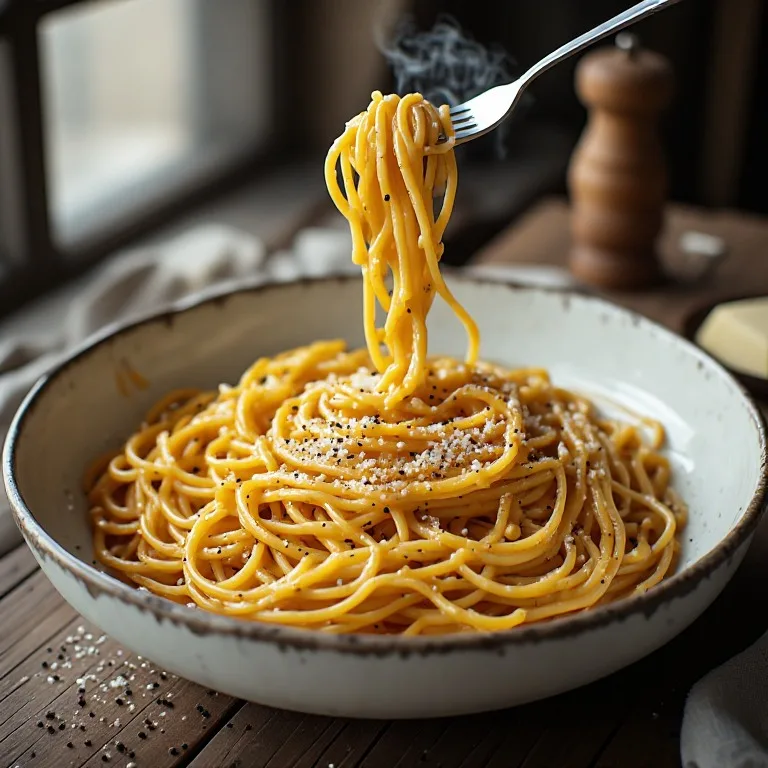



Pin It

Viral TikTok Miso Carbonara

Viral TikTok Miso Carbonara
Jump to Recipe
Prep 10 min Cook 15 min Serves 2
Quick answer: Whisk 2 tbsp white miso (shiro) into softened butter, then blend that miso-butter into 2 whole eggs + 2 yolks + ¾ cup finely grated Pecorino Romano. Cook 8 oz spaghetti, reserve a full cup of pasta water. Drain, add to a warm (not hot) pan, pour the egg-miso mixture over, toss continuously for 60–90 seconds off heat, loosening with pasta water until silky. The miso replaces guanciale's fermented umami — it has more free glutamates per gram than almost any other ingredient. Use shiro (white) miso only: dark or red miso overpowers the egg balance. Add the miso to the egg mix cold, never to the hot pan directly. Total time: 25 minutes.

Shop the tools

Gear matched to this recipe. These are Amazon affiliate links — we may earn a small commission if you buy, at no extra cost to you.

As an Amazon Associate, Copycat Spices earns from qualifying purchases. Product images are generic illustrations, not the exact item listed.

Viral TikTok Miso Carbonara

The viral TikTok miso carbonara: white miso whisked into the egg-Pecorino sauce delivers guanciale-level umami without the pork — silky, rich, and ready in 25 minutes. The specific trick that makes it work (and why dark miso ruins it).

Medium Prep: 10 min Cook: 15 min Total: 25 min2 servings ~$3.50/serving
Prep10 min
Cook15 min
Total25 min
Servings
2
At home~$3.50/serving
vs
Restaurant~$15.75/serving
You save ~78%

The Story Behind the Recipe

Miso carbonara started circulating on TikTok in late 2024 as a vegetarian hack — and then something unexpected happened: chefs started making it not as a substitute, but as its own dish worth eating on its own terms. The appeal made chemical sense. Traditional carbonara gets its savory depth from guanciale: cured pork cheek whose fats and amino acids, rendered slowly in a pan, coat every surface of the pasta with umami before a single egg goes in. Shiro miso (white miso), made from fermented soybeans and rice, is one of the most glutamate-dense ingredients on the planet — gram for gram, it delivers more free glutamate than soy sauce or Parmesan. Swap guanciale fat for miso-butter and you're not substituting a lesser ingredient; you're using a different one that happens to hit the same receptor.

The TikTok versions that blew up all showed the same moment: the egg-miso mixture hitting warm pasta and turning into a glassy, golden sauce with no visible cream and no tricks. At home, the total ingredient cost runs about $4 per serving — cheaper than guanciale carbonara and fast enough for a weeknight. The technique difference from traditional carbonara is small but critical: the miso needs to be creamed with softened butter first (not added to hot fat), so it distributes evenly rather than leaving gummy pockets. Everything else follows standard carbonara rules — cool pan, off heat, continuous tossing, pasta water as the emulsion safety valve.

Nutrition Facts

Per serving (2 servings)
Calories800
Total Fat31g
Total Carbs81g
Dietary Fiber3g
Sugars2g
Protein36g
Sodium1390mg

* Estimated values based on standard recipe preparation. Actual values may vary.

Ingredients

Instructions

💡
Pro tip: This recipe tastes even better the next day. The flavors need time to meld together in the fridge.
❄️
Storage: Keeps in an airtight container in the fridge for up to 2 weeks. Freezer-friendly for up to 3 months.
🎃 Free Halloween cookbook — download now The Copycat Halloween Cookbook A ready-made, photo-illustrated PDF of our best halloween copycat recipes — free to download, no building required. Pay what you want to support if you love it.

Free PDF — instant download. We'll also send new seasonal copycat recipes now and then; unsubscribe anytime. Or just download it →

Viral TikTok Miso Carbonara — Silky, Rich, Ready in 25 Minutes

Prep time: 10 minutes Cook time: 15 minutes Servings: 2

Miso carbonara started as a vegetarian workaround and became something better: a dish worth making even when you have guanciale in the fridge.

Traditional carbonara gets its deep savory backbone from guanciale — cured pork cheek that, when rendered slowly, fills the pan with glutamate-rich fat that coats every strand of pasta before a single egg goes in. The TikTok version replaces that with white miso (shiro miso), and it works because the chemistry is surprisingly similar. Shiro miso is one of the most glutamate-dense ingredients on earth, fermented until its proteins break down into free amino acids — the same basic mechanism that makes guanciale (and aged cheese, and soy sauce) taste so deeply savory. The result is a sauce with the same silky richness as the original, a slightly sweeter and more complex background note, and no pork required.

There are a few things most viral videos skip. This page covers all of them.

Why White Miso, Not Red

The miso type matters more than almost any other variable in this recipe. White miso (shiro miso) is fermented for weeks; red miso (aka miso) is fermented for months to years. The extended fermentation produces more intense, sharper flavor compounds — excellent for miso soup or glazed eggplant, but overwhelming in a delicate egg sauce. Dark miso makes the carbonara taste like miso soup with noodles in it. Shiro miso adds savory depth that disappears into the background, making the egg-Pecorino balance taste more complex without announcing what you added.

The Miso-Butter Paste Step

White miso is a thick, sticky paste. Add it directly to the egg mixture and it clumps rather than distributing evenly — you get bites with a concentrated miso hit and bites with nothing. Creaming it with softened (room temperature) butter first takes 30 seconds and solves this completely. The miso disperses through the fat, and when that fat-miso blend meets the eggs, the final mixture is uniform. Melted butter doesn’t work the same way — the miso sinks rather than emulsifying. Softened-but-solid butter is the target.

Temperature: The Only Skill in Carbonara

Miso or traditional, carbonara lives and dies by pan temperature — the same discipline behind the no-cream TikTok carbonara and cacio e pepe. Egg proteins set at around 160°F. The goal is to land the sauce in the band between “still liquid” and “scrambled” — glossy, thickened, and cohesive without a single curd.

Three rules:

  1. The pan must be warm, not hot. If you cooked guanciale, let the pan cool 5 full minutes off heat before pasta goes in. If using a bowl, warm it with hot tap water and dry it.
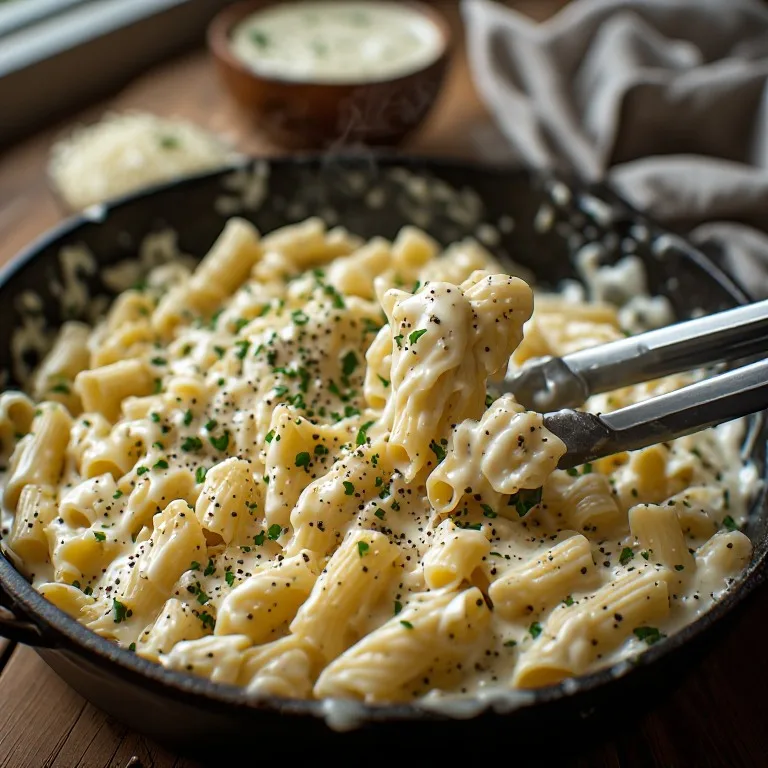
  2. Continuous tossing distributes heat evenly and prevents any spot from getting too hot. Tong-over-tong, lift and fold, 90 seconds without stopping.
  3. Cold pasta water is your emergency brake. If you see any curding at the edges, add a splash of cold pasta water and toss harder. The starch suspends the egg proteins and the cold drops the temperature fast enough to stop the scramble.

Miso carbonara takes slightly more pasta water than traditional, because the miso paste thickens the sauce faster. Keep the cup close and add liberally.

With or Without Guanciale

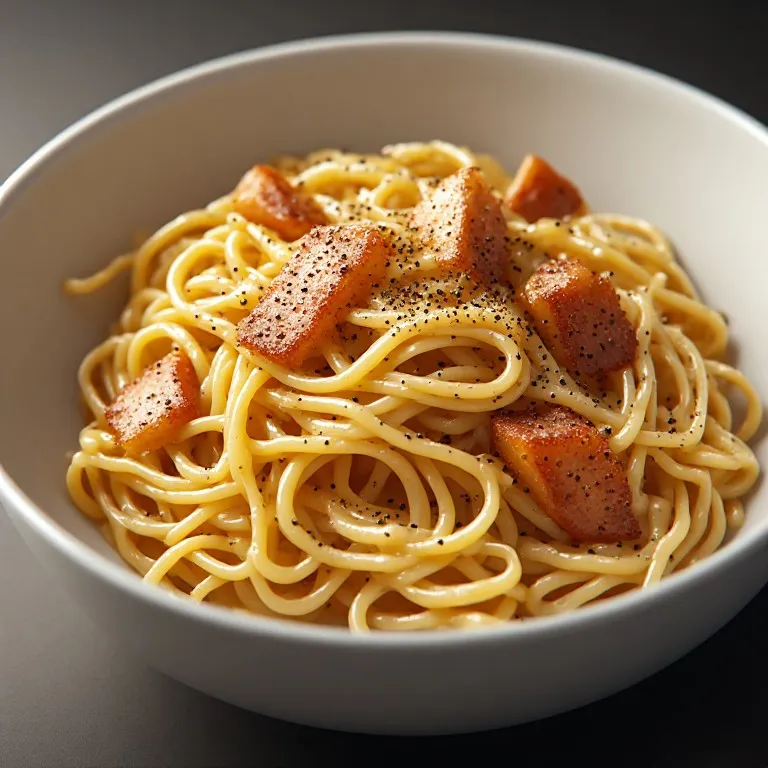
The base recipe is vegetarian — miso, butter, eggs, Pecorino, pasta. If you want the full depth of guanciale-plus-miso, render the guanciale first, let the fat cool, and use the miso-butter-egg mixture as directed. The combination is extraordinary: guanciale fat for richness and pork umami, miso for brightness and fermented complexity, Pecorino for salt and sharpness. They don’t compete; each fills a different frequency.

For a vegetarian version, the miso-butter alone is enough. Some recipes add a small amount of olive oil to approximate the fat volume of guanciale, which isn’t wrong, but isn’t necessary either — the butter provides sufficient fat to carry the sauce. If you want the pork without the eggs, pasta alla gricia is the guanciale-and-Pecorino cousin that skips them entirely.
🥗

Make It Healthier

Love Viral TikTok Miso Carbonara but want a lighter version? Try these simple swaps:

  • ✓Use 1 whole egg + 2 yolks (3 total instead of 4) to reduce fat and cholesterol without changing the silky texture much — the extra yolk in standard carbonara is for richness, not structure.
  • ✓Swap half the Pecorino Romano for a lower-sodium Parmesan to cut sodium by roughly 300mg per serving.
  • ✓Use whole wheat spaghetti for 5–6 extra grams of fiber per serving and a lower glycemic index — it holds up well to the carbonara technique.
  • ✓Add 2 cups of baby spinach to the pasta pan right after draining and before the egg-miso mixture — it wilts in 30 seconds from pasta heat and boosts iron and vitamins with no flavor impact on the sauce.

Frequently Asked Questions

What kind of miso should I use for miso carbonara?

White miso (shiro miso) only. It's the mildest, sweetest variety — fermented for weeks rather than months, with a clean savory flavor that blends into the egg sauce without dominating it. Dark miso (red miso or aka miso) is fermented much longer and has a sharp, almost bitter intensity that overwhelms the egg-Pecorino balance and makes the sauce taste like miso soup rather than pasta. Yellow (awase) miso falls in between and can work in a pinch, but shiro miso is the specific pick.

Does miso carbonara taste like miso soup?

No. The miso flavor becomes background depth — a savory undertone that makes you think the dish is more complex than it looks, without announcing itself. The dominant flavors are still egg, Pecorino, and black pepper, just as in traditional carbonara. Miso soup tastes like miso because the miso-to-water ratio is very high; here, the 2 tablespoons of miso are distributed across 8 oz of pasta and a full cup of pasta water, so it's a supporting player.

Can I still add guanciale or pancetta?

Yes, and it's excellent. Render 2–3 oz of guanciale first (cold pan, no oil, medium heat until crispy), remove the guanciale to a plate, and let the fat cool in the pan for 5 minutes before the pasta goes in. Whisk the miso-butter into the egg-Pecorino mixture as directed. The combination of guanciale fat and miso is dramatically more complex than either alone — the pork fat coats the pasta and the miso adds a fermented brightness the fat doesn't have. For a strictly vegetarian version, skip the guanciale and use the miso-butter route only.

Why does my miso carbonara scramble?

The pan was too hot when the eggs went in. Eggs set at around 160°F — warm enough to thicken into a sauce, but the window between 'silky' and 'scrambled' is narrow. After draining the pasta, the pan should feel warm (not hot) to the touch. If you've just rendered guanciale, let the pan cool for 5 full minutes off heat. Pour the egg-miso mixture over the pasta away from any direct heat source, toss continuously, and add cold pasta water immediately if you see any curding at the edges.

Why cream the miso with butter first?

White miso is a thick paste. Added directly to the egg mixture, it doesn't fully incorporate — you get pockets of concentrated miso flavor in some bites and none in others. Creaming it with softened butter (room-temperature butter, not melted) distributes the miso evenly through the fat before the eggs go in, so the final sauce is uniform. It takes 30 seconds with a fork.

What pasta shape works best for miso carbonara?

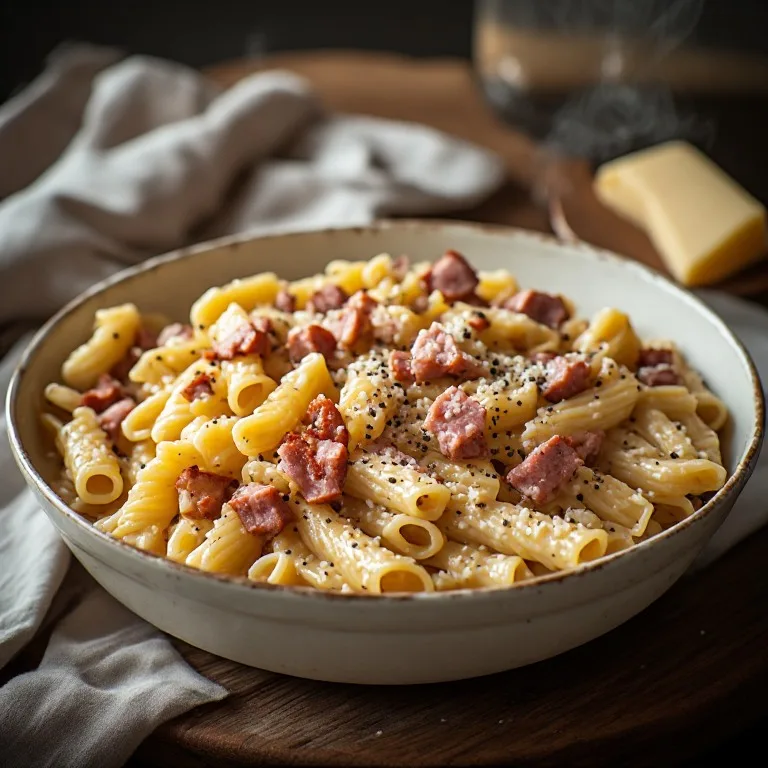
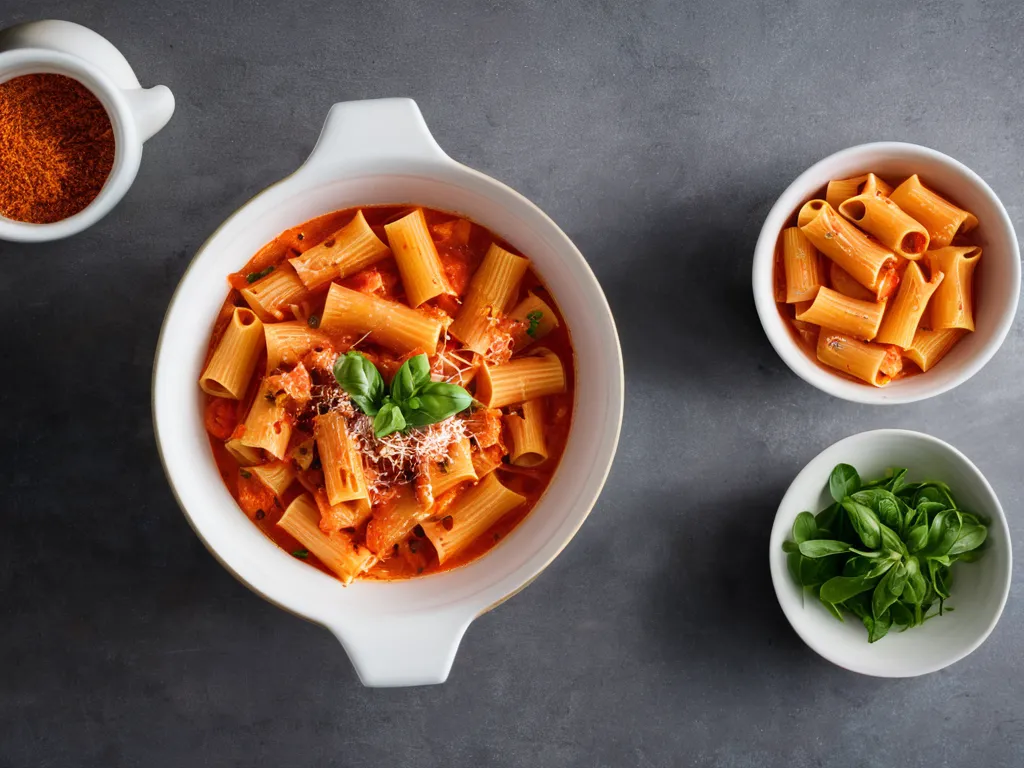
Spaghetti is traditional and works well because the long strands pick up the glossy sauce efficiently. Rigatoni is a popular TikTok choice because the ridged tubes trap the sauce inside and out and look dramatic. Both work. Avoid pasta with very large holes (penne lisce) or tiny shapes — you want surface area to catch the sauce, not a shape that lets it pool at the bottom of the bowl.

Can I make miso carbonara without Pecorino Romano?

Parmesan (Parmigiano-Reggiano) is the closest substitute. Pecorino Romano is sharper, saltier, and more pungent than Parmesan — it's the traditional cheese for carbonara because it punches through the richness of egg and pork fat. Parmesan is milder, slightly sweeter, and lower in sodium, so if you swap, add an extra pinch of salt. A 50/50 mix of Pecorino and Parmesan is an excellent middle ground. Avoid pre-shredded bags: the anti-caking agents prevent the cheese from melting smoothly into the sauce.

Is miso carbonara actually vegetarian?

The base recipe is vegetarian (no guanciale or pancetta), but Pecorino Romano is made with animal rennet, which some vegetarians avoid. Substitute Parmesan labeled 'vegetarian rennet' or use a vegetarian-certified Pecorino-style cheese to make it fully vegetarian. The eggs are the other consideration for vegans — there's no good carbonara without eggs, but many plant-based carbonara recipes use silken tofu and nutritional yeast to approximate the texture.

Love this recipe? Share it!

Free PDF: our 12 most-wanted copycat recipes — instant download.

Made it? Buy us a coffee

Every recipe here is free, with no paywalls. If this one was a hit at your table, a small tip keeps new copycats coming.

$

Ratings & Reviews

—
No ratings yet

Rate this recipe

Click a star to rate

Leave a Review

0/500

CS

Copycat Spices Editorial

Researched + fact-checked. Every recipe on Copycat Spices is built from published sources — official ingredient lists, brand-published recipes, interviews and food-science references — and fact-checked before it goes live, then written as clear, step-by-step instructions for home cooks of all skill levels.

Learn more about our mission →