
The One Ingredient That Changes Everything
White miso paste (shiro miso) is fermented soybeans, salt, and rice — aged anywhere from a few weeks to a few months until it develops a dense, sweet-savory, deeply complex flavor. Japanese cooks have been using it in desserts for decades (white miso ice cream, miso caramel, miso butterscotch).
TikTok discovered it in chocolate chip cookies somewhere around 2022, and it hasn’t left the trending pages since. The reason it keeps circulating: the cookies produce a specific reaction that gets documented on camera. People taste them, pause, take another bite, and then spend 30 seconds trying to identify the flavor they can’t name. When you tell them it’s miso, the most common response is: “I never would have guessed that.”
That reaction is what food content is made of.
The flavor science: miso is loaded with glutamates — the amino acids that activate the umami taste receptors on your tongue. In small quantities, glutamates don’t taste savory; they suppress bitterness and amplify whatever flavors are already present. In a chocolate chip cookie, that means:
- The chocolate tastes deeper and less sharp
- The brown butter’s caramelized notes become more pronounced
- The sugar’s sweetness registers as more complex and rounded, not just sweet
You don’t taste miso. You taste the best version of every other ingredient in the cookie.
Brown Butter + Miso: Why Both?
Brown butter and white miso do similar but distinct things. Brown butter contributes Maillard reaction flavor — the same chemistry that browns seared steak and toasted bread, producing hazelnut, toffee, and caramel notes from the milk solids in the fat. Miso contributes enzymatic fermentation flavor — the glutamates and complex amino acids that develop over weeks of fermentation.
Both are “depth of flavor” moves. Together, they stack. The brown butter gives the cookie a nuttiness and caramelized edge that plain melted butter cannot match; the miso gives the entire cookie an underlying savoriness and complexity that makes the sweetness feel three-dimensional.
The single most important technique: whisk the miso into the warm brown butter before you add anything else. Warm fat dissolves the miso completely, distributing those glutamates throughout every tablespoon of fat in the recipe. Every bite gets the effect — it’s not concentrated in a pocket.
The Miso Question: White vs. Yellow vs. Red
White miso is the one to use. It’s the mildest, fermented for the shortest time, with a sweet and lightly salty character that adds complexity without competing with the chocolate. At 2½ tablespoons, it essentially disappears.
Yellow miso is workable but assertive — reduce to 1½ tablespoons and taste the dough before you decide if you need more. The fermented edge starts to become noticeable in the baked cookie.
Red miso is not recommended here. It’s intensely salty, highly fermented, and strongly flavored. Even 1 tablespoon will produce a noticeably savory cookie that tastes like a deliberate sweet-savory experiment rather than a mysteriously complex one. Red miso has good uses in desserts (miso caramel sauce, for example) but this isn’t one of them.
Most American grocery stores stock white or yellow miso refrigerated near the tofu. Hikari, Miso & Easy, and South River Miso are widely available brands; Whole Foods and Asian grocery stores carry multiple varieties. If you can only find yellow, use 1½ tablespoons and proceed.
Salt Management
This is the most important adjustment relative to a standard recipe. White miso contains roughly 280mg of sodium per tablespoon. At 2½ tablespoons, you’re adding about 700mg of sodium to the batch.
Standard chocolate chip cookie recipes call for ½ to 1 teaspoon of kosher salt in the dough. This recipe drops that to ¼ teaspoon. If you use the full standard amount, the cookies come out aggressively salty — not pleasantly seasoned but distractingly salty.
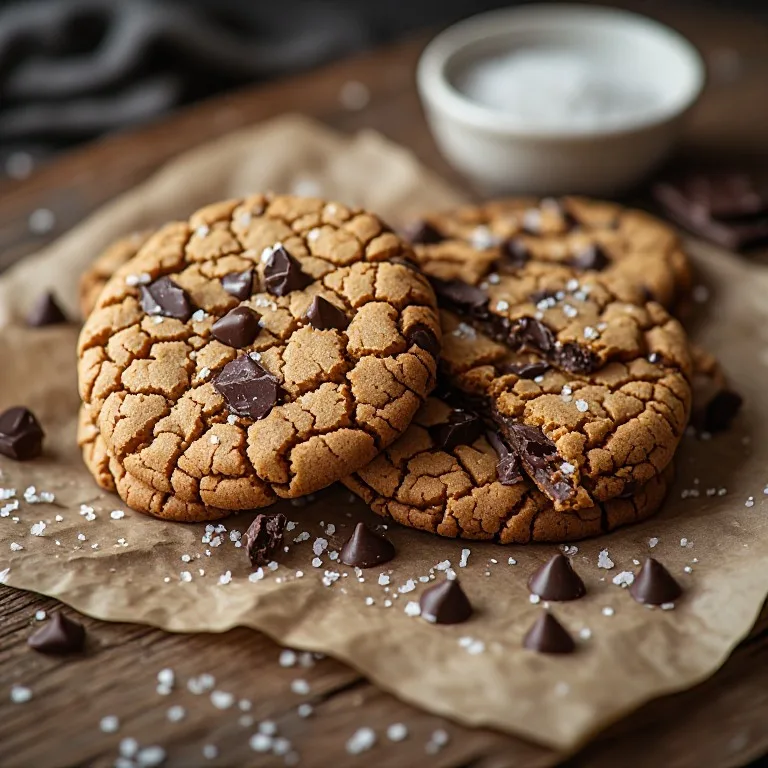
The flaky sea salt finish on top is still essential and is not reduced. Finishing salt is applied after baking and provides contrast and texture rather than background salinity — it’s a different register entirely. Apply a generous pinch of Maldon or similar flaky salt per cookie the moment they come out of the oven.
The Chill: Why It Matters More Here
Brown butter is liquid at room temperature, so brown butter doughs are significantly softer than creamed-butter doughs before chilling. The miso adds a small amount of additional moisture from the paste. Together, this means the dough is more prone to spreading flat if it goes into the oven warm.
The 30-minute minimum chill re-firms the brown butter so it melts slowly in a hot oven rather than immediately pooling. A 30-minute chill produces a good cookie. One hour produces a noticeably thicker, rounder cookie. Overnight (8–12 hours) produces the best flavor — the miso has time to distribute fully through the dough and the flour hydrates completely.
If you are short on time: scoop the dough into balls immediately after mixing and put the entire baking sheet in the freezer for 20 minutes rather than chilling the bulk dough. Smaller balls reach temp faster.
Never bake warm dough directly from mixing. The result will be flat and greasy.
Bake Timing: Pull Earlier Than You Think
Brown butter miso cookies bake slightly faster than standard brown butter cookies because the miso’s moisture affects the set point. Watch carefully starting at 9 minutes.
The visual cues at the correct pull point:
- Edges: set, beginning to show color, crinkled slightly
- Centers: shiny, domed, slightly glossy — clearly not fully set
- The ring where edge meets center: a transition from matte (set) to glossy (not yet)
At this point, the internal temperature is approximately 165 to 170°F. The pan will finish the centers during the 10-minute rest — carry-over heat from the sheet conducts into the bottom of each cookie, bringing the center temperature up to about 180°F where they are fully cooked but still gooey.
If the centers look done in the oven, they are overcooked. The gooey center will be gone. You cannot fix overbaked cookies.
Bar Variation: Even Easier, Ultra-Fudgy
Pressing the dough into a 9x13 pan and baking as bars is the most common TikTok format because it requires zero scooping, produces a spectacularly fudgy interior, and slices cleanly for content that shows the cross-section.
Use the same dough. After chilling, press it into a parchment-lined 9x13 pan in an even layer (damp fingers help prevent sticking). Press a few extra chocolate pieces onto the surface. Bake at 350°F (not 375°F — the thicker mass needs lower heat to bake through without burning the bottom) for 22 to 26 minutes. Pull when the center is just set and a toothpick inserted halfway in comes out with moist crumbs, not wet batter. Top with flaky salt the moment it comes out. Cool completely in the pan — at least 30 to 45 minutes — before slicing into squares. Rushing the cut will result in bars that crumble rather than slice.
The bars have a denser, more brownie-like texture than the individual cookies. The miso depth is even more pronounced because the larger mass retains more moisture.
Variations
Double miso: Increase the miso to 3 tablespoons and reduce the salt to zero. At this level, the miso edge becomes barely perceptible — still not obviously miso, but with a deeper, more complex savoriness. Good for people who have already made the standard version and want to push it further.
Miso tahini chocolate chip: Whisk 1½ tablespoons of tahini into the warm brown butter alongside the miso. Tahini adds a sesame depth that pairs with the miso in a Middle Eastern-Japanese hybrid register. Use chopped dark chocolate, reduce vanilla to 1 teaspoon, and add ¼ teaspoon ground cardamom.
Espresso miso: Add 1 tablespoon of finely ground espresso powder to the dry ingredients. Espresso amplifies chocolate without adding distinct coffee flavor at this quantity. Espresso + brown butter + miso produces a layered depth that is genuinely hard to explain without listing the ingredients.
Miso caramel center: Make a quick miso caramel by combining ¼ cup sugar, 1 tablespoon butter, 2 tablespoons heavy cream, and 1 teaspoon white miso. Cool until thick but still pliable. Freeze in tablespoon-sized drops. Press a frozen caramel drop into the center of each dough ball before chilling. The caramel melts into a lava center during baking. More effort, dramatically more impressive.
Storage and Freezing
Room temperature: These stay noticeably soft for 4 to 5 days in an airtight container, substantially longer than standard cookies — the miso’s moisture-retention properties are the reason. Separate layers with parchment to prevent sticking.
Freezing baked cookies: Cool completely, freeze in a single layer, then transfer to a zip bag. Reheat from frozen in a 325°F oven for 4 to 5 minutes, or in the microwave for 20 to 25 seconds. The microwave restores the gooey center; the oven restores the crisp edges.
Freezing unbaked dough: Scoop into balls, freeze solid on a parchment-lined sheet (about 2 hours), transfer to a bag. Freeze up to 3 months. Bake from frozen at 375°F for 12 to 13 minutes. The chill is built into the freeze.
Why This Recipe Keeps Going Viral
Two things drive TikTok content: visual drama and the “I have to tell someone about this” reaction. Brown butter miso chocolate chip cookies produce both.
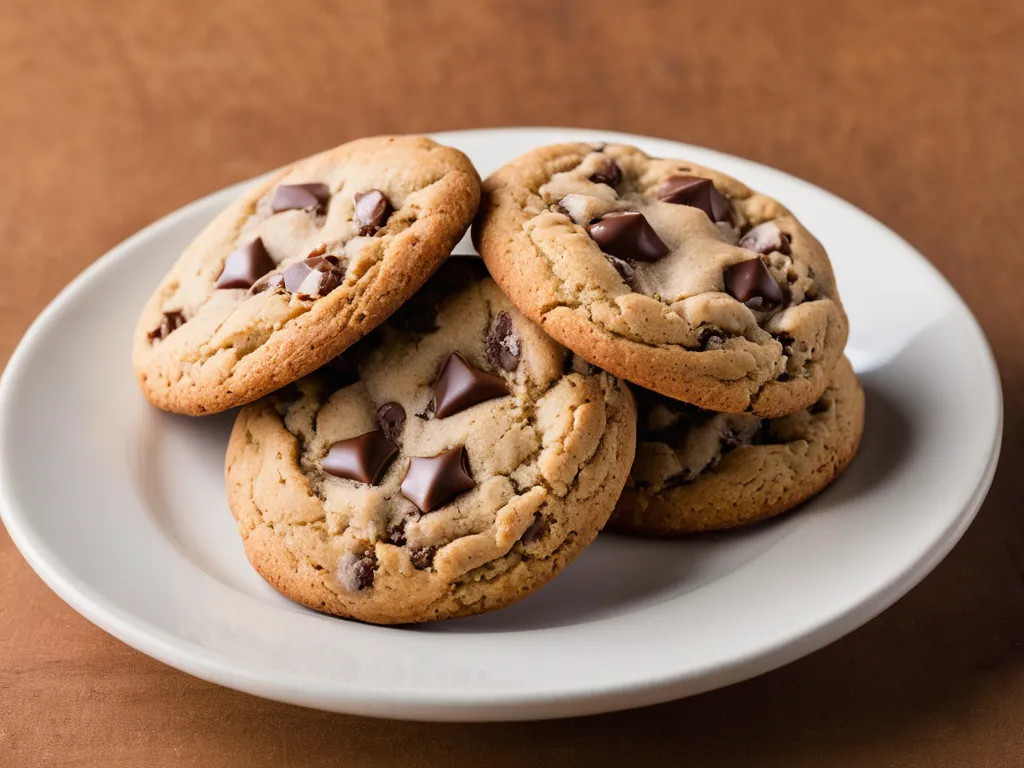
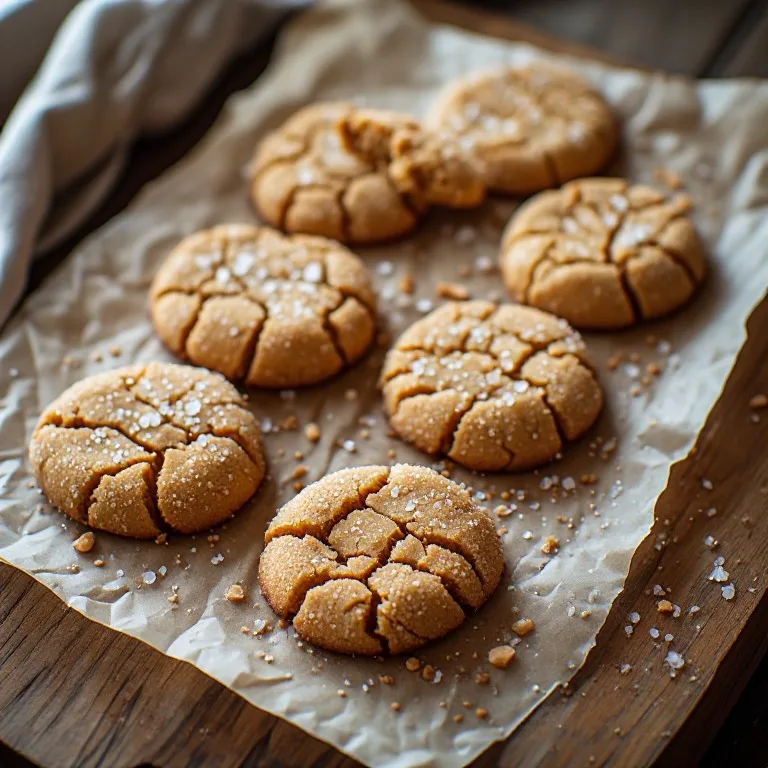
The visual: dark chopped chocolate pressed onto the tops pools into visible melted puddles during baking. The crinkled tops with their flaky salt finish look bakery-quality with no special skills required.
The reaction: the umami depth from the miso produces exactly the response that gets verbalized on camera — “wait, what’s in these?” It’s specific and repeatable. Every batch produces someone in the room asking the question. That’s why this recipe keeps getting made, filmed, and shared.
Two and a half tablespoons of white miso whisked into your brown butter. That’s the whole trick.