
Pin It

Viral TikTok Matcha White Chocolate Chip Cookies

Viral TikTok Matcha White Chocolate Chip Cookies
Jump to Recipe
Prep 15 min Cook 12 min Serves 16 cookies
Quick answer: Viral TikTok matcha white chocolate chip cookies: melt 1 cup butter and let cool 10 minutes. Whisk in 1 cup brown sugar and ½ cup granulated sugar, then 2 eggs plus 1 yolk, and 2 teaspoons vanilla. Sift in 2 tablespoons high-quality culinary matcha and whisk until fully blended (no green streaks). Fold in 2 cups all-purpose flour, 1 teaspoon baking soda, and ¾ teaspoon kosher salt. Fold in 1½ cups chopped white chocolate. Chill 30 minutes minimum (overnight is better). Scoop balls onto a lined baking sheet, press a few extra white chocolate pieces on top, and bake at 350°F for 10–12 minutes — pull when the edges are set but the centers still look glossy and underdone. Rest on the pan 10 minutes. The single most important rule: use high-quality ceremonial or culinary-grade matcha. Cheap matcha turns the cookies dull brown-green instead of vivid green and tastes bitter rather than earthy-sweet.

Viral TikTok Matcha White Chocolate Chip Cookies

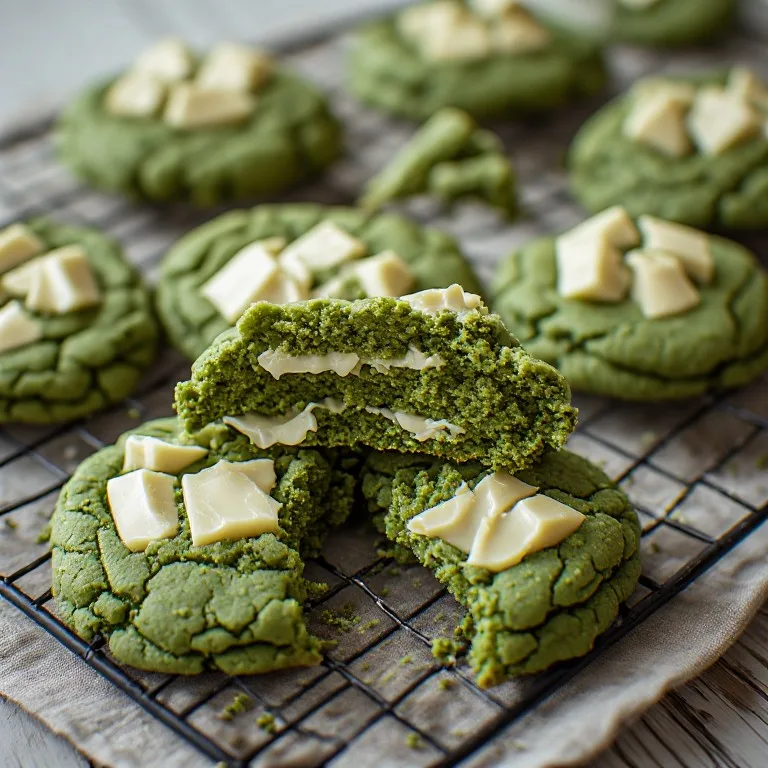
The viral TikTok matcha white chocolate chip cookies — vivid green, bakery-chewy, creamy white chocolate pools. Sifted matcha, melted butter, and one critical technique tip. Done in 30 minutes.

Easy Prep: 15 min Cook: 12 min Total: 27 min16 cookies servings ~$3.85/serving
Prep15 min
Cook12 min
Total27 min
Servings
16
At home~$3.85/serving
vs
Restaurant~$17.32/serving
You save ~78%

The Story Behind the Recipe

Matcha's TikTok ascent is backed by extraordinary numbers: more than 10 billion TikTok views, a 30% year-over-year increase in matcha menu items in 2025, and a 2026 Confectionery News report naming it one of the top visual flavor trends shaping bakery and snacks. The matcha cookie specifically went viral because of its color — a striking deep green against cream-white chocolate puddles, photographed on a cooling rack or pulled apart mid-bite. It fit TikTok's format perfectly: the reveal shot of the bright interior, the stretch of melted white chocolate, the split-second of "wait, are those green?" before the comments arrive. The matcha latte had already trained millions of people on the earthy-sweet flavor; the cookie translated that association into something you could bake at home in under an hour.

The technique that separates a great matcha cookie from a mediocre one is not the recipe — it's the matcha quality and how you add it. Low-grade "culinary" matcha (often sold for baking by commodity brands) oxidizes to a drab brown-green and tastes sharply bitter rather than grassy and sweet; ceremonial-grade or mid-tier culinary matcha from Japanese producers like Ippodo, Encha, or Jade Leaf stays vivid green after baking and tastes complex rather than aggressive. The second critical step is sifting: matcha clumps badly when wet, and unseifted powder creates bitter pockets throughout the cookie. Whisk sifted matcha into the wet batter before adding flour, not into the dry ingredients — this disperses it evenly into the fat and produces a uniform, smooth green crumb. At a specialty bakery, a single matcha white chocolate cookie runs $4–7; this batch of 16 costs about $8–12 total.

Nutrition Facts

Per serving (16 cookies servings)
Calories310
Total Fat15g
Total Carbs38g
Dietary Fiber0g
Sugars26g
Protein4g
Sodium175mg

* Estimated values based on standard recipe preparation. Actual values may vary.

Ingredients

Instructions

💡
Pro tip: This recipe tastes even better the next day. The flavors need time to meld together in the fridge.
❄️
Storage: Keeps in an airtight container in the fridge for up to 2 weeks. Freezer-friendly for up to 3 months.
🎃 Free Halloween cookbook — download now The Copycat Halloween Cookbook A ready-made, photo-illustrated PDF of our best halloween copycat recipes — free to download, no building required. Pay what you want to support if you love it.

Free PDF — instant download. We'll also send new seasonal copycat recipes now and then; unsubscribe anytime. Or just download it →

Viral TikTok Matcha White Chocolate Chip Cookies

Matcha and white chocolate is one of the few flavor combinations where both ingredients actively improve each other. Matcha’s earthy bitterness — the grassy, almost savory quality of Japanese green tea — cuts the cloying sweetness of white chocolate. White chocolate’s vanilla-dairy fat mellows matcha’s astringency. The result tastes complex in a way neither ingredient achieves alone.

That interplay is exactly why these cookies went viral. The visual worked — vivid green cookies with glossy white chocolate pools pull strong on a feed. But they kept circulating because they tasted better than the photo suggested. At 350°F for 10–12 minutes with quality matcha, these come out chewy and tender, bakery-style but fast.

Why Matcha Works in a Cookie (and Why Most Fail)

The widespread version of this recipe has one failure mode: bad matcha. A good matcha cookie is emerald green, with a grassy-sweet flavor that complements the white chocolate. A bad one is brown-green, with a sharp, unpleasant bitterness that makes people conclude they don’t like matcha baked goods.

The chemistry is straightforward. Matcha color comes from chlorophyll — specifically chlorophyll-a, the blue-green form, and chlorophyll-b, the yellow-green form. Quality culinary and ceremonial matcha from shade-grown Japanese tea plants has high chlorophyll concentrations and stays vivid after baking. Low-grade commodity matcha (especially anything marketed as “baking matcha” at $5 for 8 oz in a grocery store bulk bin) has oxidized chlorophyll, damaged during processing, that cannot survive oven heat without turning brown.

Quality references: Jade Leaf, Encha, Ippodo, Matcha Konomi, or any ceremonial-grade matcha from a Japanese producer. Mid-tier culinary grade from these brands is sufficient — you don’t need the most expensive tea. Expect to spend $18–30 for 1 oz (about 5 tablespoons), which makes 2–3 batches of cookies. The improvement is not subtle.


The Matcha Sifting Rule: Why Wet, Not Dry

Every cookie recipe that involves a fine powder — cocoa for brownies, espresso for chocolate cakes, matcha here — faces the same problem: the powder clumps the moment it contacts moisture.

The standard approach adds matcha to the dry ingredients (flour, baking soda, salt) and stirs before adding to the batter. This doesn’t work for matcha as well as it does for flour, because matcha particles are much finer and create more stubborn clumps when combined with flour. Those clumps survive the folding process and show up in the finished cookie as small, intensely bitter green pockets.

The better approach: sift the matcha into the wet batter (eggs, butter, sugar) and whisk immediately. Fat-coated particles disperse evenly and integrate smoothly before the flour goes in. The result is a uniformly green batter with no bitter surprises. This is the same reason high-end brownie recipes instruct you to add cocoa to the warm butter and sugar before the eggs — fat carries fat-soluble flavor compounds more efficiently than dry mixing.

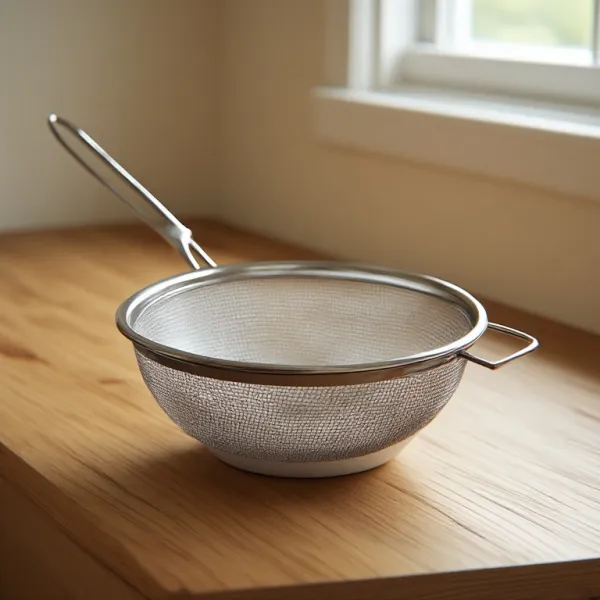
How to do it: Sift the matcha directly over the bowl after you’ve added the eggs and vanilla. Whisk immediately and vigorously until the batter is a smooth, uniform green with no streaks — about 30 seconds.


Melted Butter vs. Creamed Butter

Creamed butter (room-temperature butter beaten with sugar until fluffy) introduces air into the dough, which produces a lighter, more cake-like cookie. Melted butter produces a denser, chewier, more bakery-style cookie with less spread and more chew.

Matcha cookies benefit from the melted-butter approach for two reasons. First, the denser crumb displays the green color more evenly — an aerated, cakey cookie has a finer, paler crumb structure that dilutes the visual. Second, chewy cookies hold the white chocolate pools as puddles rather than as melted areas spread across a thin crispy base.

The melted butter also simplifies the recipe: no stand mixer, no creaming time, no waiting for butter to come to room temperature. Melt, cool briefly, whisk in the sugars.

Optional upgrade: brown the butter before cooling. Brown butter (milk solids cooked to golden amber) adds a toasted, hazelnut-like depth that pairs unusually well with matcha’s grassiness — the two earthy notes complement rather than fight. The method is the same; the only extra step is watching the pan for 3–5 minutes while the butter foams and browns. See viral TikTok brown butter chocolate chip cookies for the full technique.


White Chocolate: Bar vs. Chips

White chocolate chips contain stabilizers that prevent them from fully melting in the oven. They soften but hold their shape — you get rounds of white chocolate rather than pools. Chopped white chocolate bar (Guittard Choc-Au-Lait, Ghirardelli white chocolate bar, or Callebaut) melts into glossy puddles that set as the cookie cools, producing the visual used in TikTok content.

For the best result: use a mix. Fold white chocolate chips into the dough for pockets of chocolate throughout, and press pieces of chopped bar onto the tops of the dough balls before baking for the melted-pool surface look. The chips give you distributed flavor; the bar pieces give you the reveal shot.

For the matcha pairing specifically, higher-quality white chocolate (with real cocoa butter rather than vegetable fat substitutes) has a cleaner, more delicate dairy sweetness that doesn’t overpower the matcha. Avoid “white baking chips” or “white morsels” that contain no cocoa butter at all — they lack the fat structure to balance the bitterness properly.


The Chill Step

These cookies spread significantly if the dough is warm because melted butter starts out liquid. The 30-minute refrigerator rest resolidifies the fat so the cookies hold their height in the oven rather than spreading flat.

The minimum is 30 minutes. Overnight (8–12 hours) produces noticeably better results: the flour hydrates more fully, the texture becomes more cohesive, and the matcha flavor mellows into a more rounded profile rather than a raw, grassy note.

After chilling, the dough will be firm — hard enough that a cookie scoop takes some pressure. That firmness is correct. Cold dough melts slowly in the oven, which is exactly what you want.


Temperature and Timing: Why 350°F

Matcha cookies bake better at 350°F than at the 375°F used for many brown butter cookies. The reason: matcha’s chlorophyll is heat-sensitive and degrades faster at higher temperatures. At 350°F for 10–12 minutes, the exterior sets with a slight golden edge while the interior stays chewy, and the matcha retains most of its color. At 375°F for the same time, the edges over-crisp and the center heat exposure is longer even if the bake time is shorter — more color degradation.

Pull at the first sign that the edges are set and lightly golden, before the centers look done. The centers will finish on the hot pan. If the centers look set in the oven, they’re overdone.


Variations

Matcha crinkle cookies: Replace the white chocolate with powdered sugar coating. Roll each chilled dough ball first in granulated sugar (to seal the surface), then generously in powdered sugar. Bake at 350°F for 10–11 minutes. The oven heat melts the powdered sugar coating and the cookies crack as they puff, revealing the vivid green interior — the classic crinkle look. Deeply visual, and different enough from the white chocolate version to feel like a new recipe.

Matcha and dark chocolate: Swap the white chocolate for 60–70% dark chocolate chunks. Dark chocolate and matcha is a more intense pairing — both are bitter and complex, with high tannin content. Less visually striking (less color contrast) but more adult in flavor. Use chopped bar chocolate for melt.

Matcha shortbread: Reduce butter to ½ cup, use only powdered sugar (⅓ cup), eliminate eggs and leavening, increase flour to 1½ cups, and add 1½ tablespoons matcha. Press into a 9×9 pan, chill 30 minutes, slice, and bake at 325°F for 20–22 minutes. Matcha shortbread has a delicate, crumbly texture and the matcha flavor is much more prominent without the egg-and-butter richness of drop cookies.

Matcha sea salt cookies with no chocolate: Omit the white chocolate entirely and double the flaky sea salt finish. Matcha on its own with salt has a cleaner, more defined flavor — almost savory. Works well as a less sweet option.

Hojicha variation: Swap matcha for hojicha powder (roasted green tea — darker brown, smoky, less bitter than matcha). Hojicha pairs well with white chocolate but has an entirely different flavor profile: toasty, caramel-tinged, and less grassy. The cookies will be brown rather than green, but the flavor is distinctive.


Cost

One batch of 16 large cookies costs approximately $8–12 in ingredients: butter ($1.50), white chocolate ($3–5 for a quality bar or premium chips), flour and sugars ($1–1.50), eggs ($0.50), matcha ($1.20–2.00 for 2 tablespoons of mid-tier culinary grade). That’s $0.50–0.75 per cookie versus $4–7 at a specialty café or bakery.


Related Recipes

For more matcha recipes, the viral TikTok matcha tiramisu applies the same earthy-sweet matcha flavor to a no-bake dessert. The viral TikTok matcha latte is the drink version that introduced most TikTok viewers to the flavor in the first place.

For more TikTok cookie techniques, the viral TikTok brown butter chocolate chip cookie uses the same melted-butter-plus-extra-yolk approach and covers the chilling and carry-over cooking technique in depth. The viral TikTok miso chocolate chip cookies apply the same concept — a Japanese umami ingredient making cookies dramatically more complex — to a different flavor direction.
🥗

Make It Healthier

Love Viral TikTok Matcha White Chocolate Chip Cookies but want a lighter version? Try these simple swaps:

  • ✓Reduce both sugars by 2 tablespoons each — matcha provides its own earthy-bitter complexity, so the cookies taste rich even with slightly less sugar.
  • ✓Use 1 tablespoon of matcha instead of 2 for a subtler flavor if you find full-strength matcha cookies too grassy — the green color will be lighter but still vivid.
  • ✓Swap ½ cup of all-purpose flour for almond flour to reduce carbs and add a slightly nutty depth that complements the matcha (the cookies will spread a touch more).
  • ✓Make 20 smaller cookies instead of 16 larger ones — each drops to about 250 calories, and the smaller size makes the chewy center-to-crispy-edge ratio even better.

Frequently Asked Questions

What matcha should I use for cookies?

Use culinary-grade or ceremonial-grade matcha from a Japanese producer — not commodity matcha sold in bulk baking aisles. The difference is dramatic: quality matcha (Jade Leaf, Encha, Ippodo, Matcha Konomi) stays vivid green after baking and tastes earthy, grassy, and slightly sweet; cheap matcha oxidizes to a drab brown-green in the oven and tastes sharply bitter. You don't need the most expensive ceremonial tea — mid-tier culinary grade ($0.60–$1.00 per tablespoon) is ideal for cookies and widely available on Amazon or Whole Foods. The 2 tablespoons in this recipe cost about $1.20–$2.00 and are the single factor that determines whether your cookies look and taste like a $7 bakery cookie or a disappointing brown-green crumble.

Why sift the matcha into the wet batter instead of the dry ingredients?

Matcha powder clumps aggressively when it hits moisture — sifting it directly into the wet batter (the eggs, butter, and sugar) and whisking immediately disperses each particle into the fat before it can clump. Fat-coated matcha particles integrate smoothly and evenly. If you add matcha to the dry flour first, the clumps survive the mixing process and create bitter green pockets throughout the cookie. It's the same reason you sift cocoa powder into wet ingredients for fudgy brownie recipes: both matcha and cocoa are high-surface-area powders that form stubborn lumps without liquid to break them apart immediately.

Why are my matcha cookies brown instead of green?

Two causes: (1) Low-grade matcha oxidizes in the oven. Quality culinary or ceremonial matcha stays bright green because its chlorophyll content is higher and more stable. Cheap matcha has lower chlorophyll and turns brown-green with heat. (2) Oven temperature too high or bake time too long. Matcha's chlorophyll is heat-sensitive — baking at 350°F for exactly 10–12 minutes (rather than 375°F or longer) preserves more of the green color than a hotter, faster bake. If your cookies are brown, switch matcha brands and lower your oven temperature by 10–15°F. Also confirm your oven is calibrated — many home ovens run 15–25°F hot, which would overbake at the time you expect.

Can I use white chocolate chips instead of chopped white chocolate?

Yes, but chopped bar chocolate gives better visual results. White chocolate chips contain stabilizers that prevent them from fully melting — they soften but hold their round shape. A chopped white chocolate bar (Guittard, Callebaut, Ghirardelli) melts into pools and puddles with visible glossy surfaces, which is the visual that TikTok creators use. For the best of both worlds, use half chips (for pockets of white chocolate throughout) and half chopped bar (for the melty surface pools). Press pieces of chopped bar onto the tops of the dough balls before baking — they melt into the signature look.

Can I make these ahead and freeze the dough?

Yes — frozen dough balls are the best prep-ahead strategy. Scoop the chilled dough into balls, freeze on a parchment-lined sheet until solid (about 2 hours), then transfer to a zip bag. Freeze for up to 3 months. Bake from frozen at 350°F for 13–15 minutes, no thawing needed. The chilling step is essentially built into the freeze, so you skip the refrigerator rest. Baked cookies freeze well too: cool completely, freeze in a single layer, then bag. Microwave from frozen for 20–25 seconds to restore the gooey center.

What does matcha taste like in cookies — will it taste like green tea?

Matcha in cookies tastes earthy, slightly grassy, and subtly bitter in the best way — like a sophisticated herbal counterpoint to the butter and sugar. At 2 tablespoons in a full batch, the matcha flavor is present but not sharp. If you've had a matcha latte, the cookie flavor is similar but more concentrated. The white chocolate pairing is deliberate: white chocolate's sweetness and vanilla notes balance matcha's bitterness the same way milk balances espresso. Most people who say they don't like green tea find they enjoy matcha cookies — the fat and sugar mellow the astringency significantly. For a stronger matcha flavor, increase to 2½ tablespoons; for a very subtle background note, use 1½.

Love this recipe? Share it!

Free PDF: our 12 most-wanted copycat recipes — instant download.

Made it? Buy us a coffee

Every recipe here is free, with no paywalls. If this one was a hit at your table, a small tip keeps new copycats coming.

$

Ratings & Reviews

—
No ratings yet

Rate this recipe

Click a star to rate

Leave a Review

0/500

CS

Copycat Spices Editorial

Researched + fact-checked. Every recipe on Copycat Spices is built from published sources — official ingredient lists, brand-published recipes, interviews and food-science references — and fact-checked before it goes live, then written as clear, step-by-step instructions for home cooks of all skill levels.

Learn more about our mission →