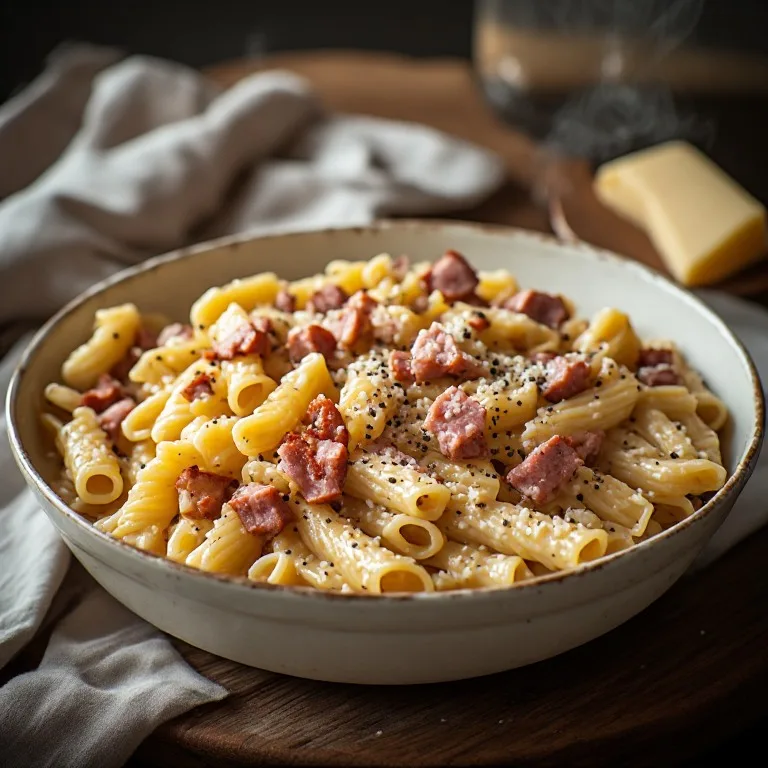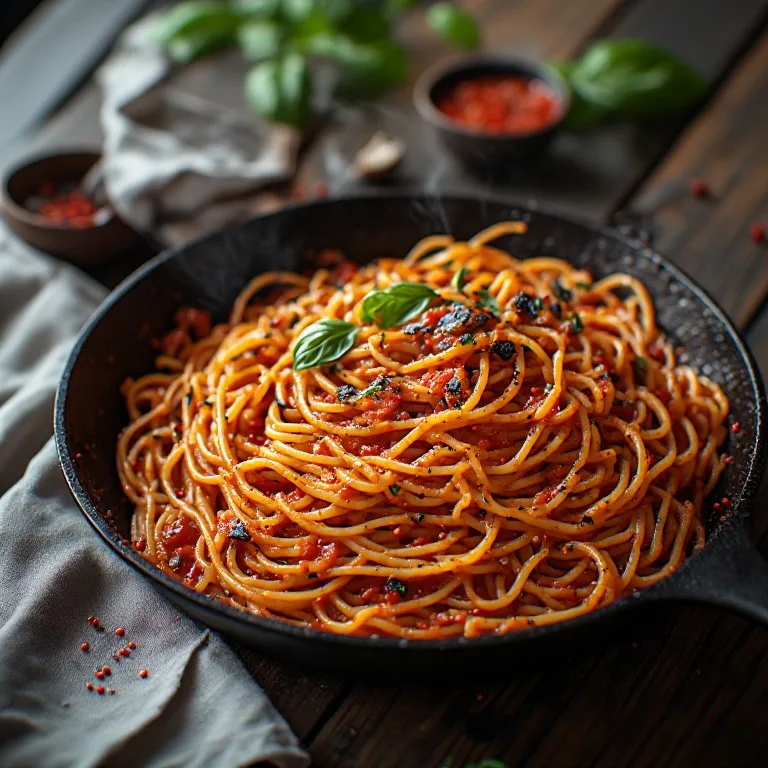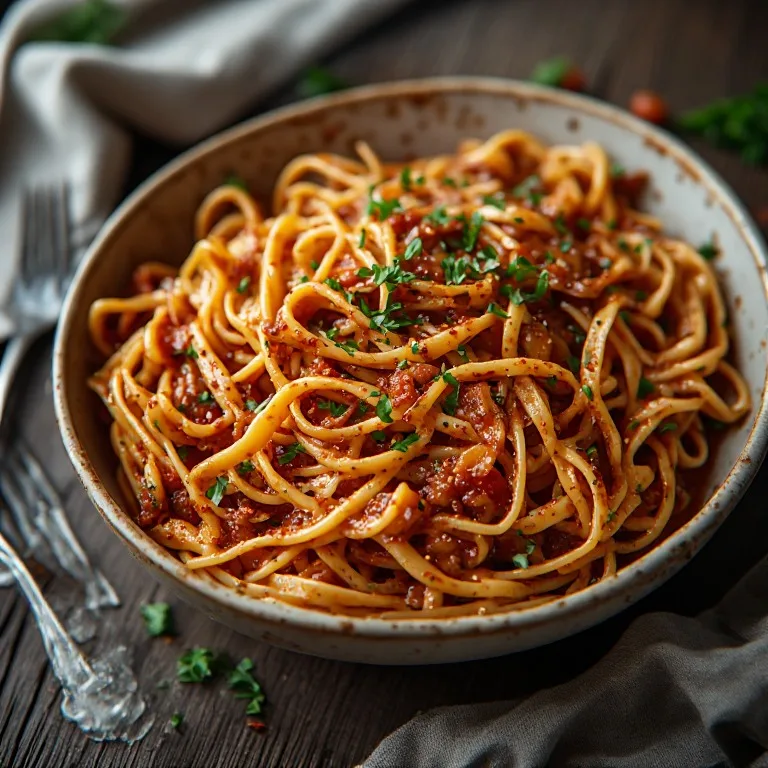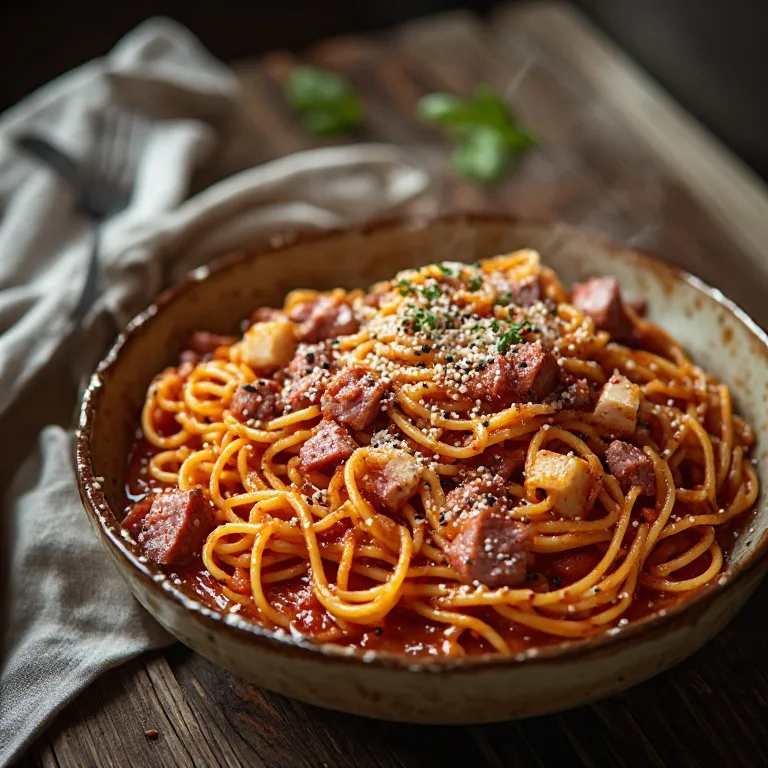


Pasta all’Amatriciana is, along with cacio e pepe, gricia, and carbonara, one of the four canonical Roman pasta sauces. It is not a tomato sauce with bacon in it. The distinction matters because the technique is different: you render the guanciale first, the tomatoes cook in the pork fat, and the Pecorino Romano goes in off the heat at the end. No garlic. No onion. No cream. No basil. The sauce takes about 15 minutes.
On TikTok, amatriciana became a touchstone for the “authentic Italian pasta” content wave — Italian creators making the dish correctly in 60 seconds, followed by reaction videos from Roman nonnas and Michelin-starred chefs either approving or identifying one wrong move. The most-viewed videos share a common structure: the cold-pan guanciale render, the tomatoes going in with a crackle, the Pecorino snow at the end. Millions of people watched and made it. The dish earned that attention.
- Render 6 oz guanciale in a cold pan over medium-low, 8–10 min, remove
- Bloom red pepper flakes in the fat, optional white wine deglaze
- Add 28 oz crushed San Marzano tomatoes, simmer 12–15 min, return guanciale
- Toss al dente rigatoni or spaghetti in the sauce with pasta water
- Off heat: finely grated Pecorino Romano, black pepper, done
- No garlic. No onion. No basil.
What Makes It Roman
The four Roman pastas — cacio e pepe, gricia, carbonara, amatriciana — share a structural logic: pork fat as the sauce base, Pecorino Romano as the cheese, pasta water as the emulsifier. They differ only in what gets added. Cacio e pepe adds black pepper and nothing else. Gricia adds the guanciale to the pepper and cheese. Carbonara adds egg yolks. Amatriciana adds tomatoes.
Despite being named for Amatrice, a mountain town in Lazio, the dish is deeply embedded in Roman food culture. It’s on virtually every trattoria menu in the city. At Da Enzo al 29 in Trastevere or Flavio al Velavevodetto in Testaccio, a plate of rigatoni all’Amatriciana runs €12–15. In the tourist zone near the Colosseum, €20–22. At home with guanciale you ordered online and San Marzano DOP tomatoes, it costs about €3 per serving.
On August 24, 2016, a magnitude 6.2 earthquake largely destroyed Amatrice, killing 299 people. In the weeks after, Italians responded by eating and sharing the dish — not as a symbolic gesture but as a direct act: proceeds from amatriciana at restaurants across Rome and Italy went to the reconstruction fund. The recipe survived even when much of the town didn’t.
The Guanciale Technique
Guanciale is cured pork jowl. Not pork belly (that’s pancetta). Not bacon. The jowl has a higher fat-to-meat ratio and a distinctive flavor — slightly sweet, more delicate than pancetta, with a herbal note from the jowl fat that you don’t find in belly fat.
The single most important technique: start guanciale in a cold pan. Not a preheated pan, not one with hot oil. Cold. Set it over medium-low heat and let the fat slowly render out over 8–10 minutes. This produces:
- Evenly rendered fat with no burned exterior
- Guanciale that’s lightly crispy at the edges but still tender inside
- A pan full of sweet, clear pork fat ready to receive the tomatoes
If you add guanciale to a hot pan, the outside browns immediately before the interior softens. You get crispy strips (fine for bacon, wrong for guanciale) instead of the slightly yielding texture that’s traditional.
You’ll know it’s ready when the pieces have turned from pink to translucent, the edges are just beginning to color, and the pan has accumulated a pool of clear rendered fat. Remove the guanciale and set it aside — it goes back into the sauce later.
Building the Sauce
The tomatoes go directly into the rendered guanciale fat. No additional olive oil. The fat is the cooking medium; it’s what gives amatriciana a richness that feels very different from a simple pomodoro sauce where tomatoes cook in olive oil.
Bloom your red pepper flakes in the fat for 30 seconds first — warm fat draws out the capsaicin and aromatic oils in the chili, so the finished sauce has more depth than if you just dropped them in with the tomatoes. Then add a splash of white wine if you’re using it. It sizzles dramatically, deglazes any browned bits from the guanciale render, and adds a bright acidity that complements the tomatoes.
Crush the San Marzano tomatoes by hand before adding — you want rustic pieces, not a smooth purée. Let the sauce simmer uncovered for 12–15 minutes. You’ll know it’s ready when the fat rises to the surface in distinct orange pools — the water has cooked off enough that fat and tomato solids have partially separated, which is the visual cue that the sauce has properly concentrated. Return the guanciale at this point and let it warm through.
The Pecorino Finish
Pecorino Romano goes in at the very end, off the heat, after the pasta has been tossed in the sauce and the pan has been removed from the burner. This is the same technique as gricia and carbonara: the residual heat melts the cheese without scrambling it or making it grainy.
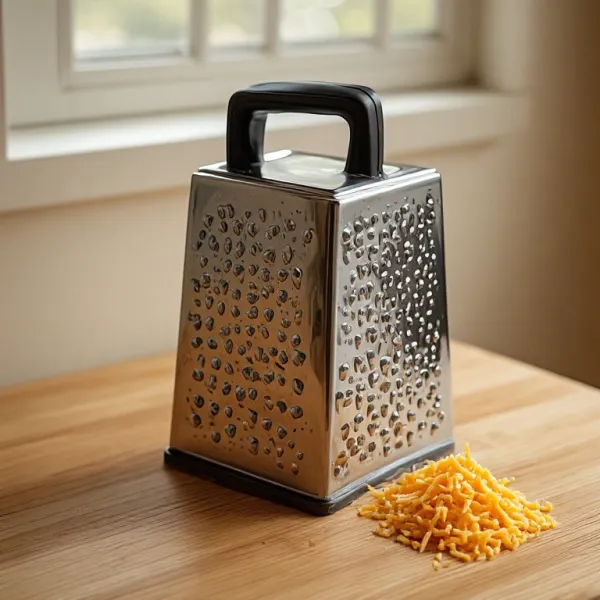
Use a microplane or the fine side of a box grater. Pecorino Romano needs to be powdery to emulsify properly — shredded or roughly grated pieces sit in clumps in the sauce rather than dissolving into it. Add the cheese while tossing constantly with tongs: in motion, it incorporates smoothly; sitting still, it seizes.
The finished sauce should coat every piece of pasta in a thin, glossy layer that has the fat, the tomato, and the faintest creaminess from the cheese and starchy pasta water. If it looks grainy, add more pasta water and keep tossing. If it looks loose, wait 30 seconds — it thickens as it cools slightly.
Garlic and Onion: The Argument
The official 2015 Amatrice municipality recipe: guanciale, canned tomatoes, Pecorino Romano, peperoncino, white wine, salt. No garlic. No onion.
Why? Because guanciale fat and San Marzano tomatoes together produce a specific flavor that garlic and onion obscure rather than enhance. Both are powerful aromatics that shift the dish toward a broader, more familiar Italian-American flavor profile. The authenticated version without them tastes different — cleaner, more purely the taste of rendered pork fat and bright tomato with a salty, sharp cheese finish.
Many Roman cooks add half an onion and no one arrests them. You can add garlic too. But if you’ve never made amatriciana without both, make it the authentic way first. The absence of garlic won’t taste like something’s missing; it will taste like a different dish.
The Pasta Choice
In Amatrice, the traditional shape is spaghetti. In Rome, rigatoni dominates — the tubes catch guanciale pieces and pool sauce inside. Bucatini (hollow, thick spaghetti) is a popular Roman variant that holds up to the robust sauce and gives a satisfying chew. Mezze rigatoni and penne rigate both work well.
Whatever shape you use: cook it 2 minutes less than the package directions and finish it in the sauce with pasta water. Al dente pasta that finishes cooking in the sauce absorbs the flavors differently than fully-cooked pasta that gets sauce ladled over it. The texture is better. The sauce adhesion is better. It tastes more like the restaurant version even though the technique is simpler.