


Pin It

Viral TikTok Spaghetti all'Assassina (Assassin's Spaghetti — the Pasta You're Supposed to Burn)

Viral TikTok Spaghetti all'Assassina (Assassin's Spaghetti — the Pasta You're Supposed to Burn)
Jump to Recipe
Prep 10 min Cook 20 min Serves 2
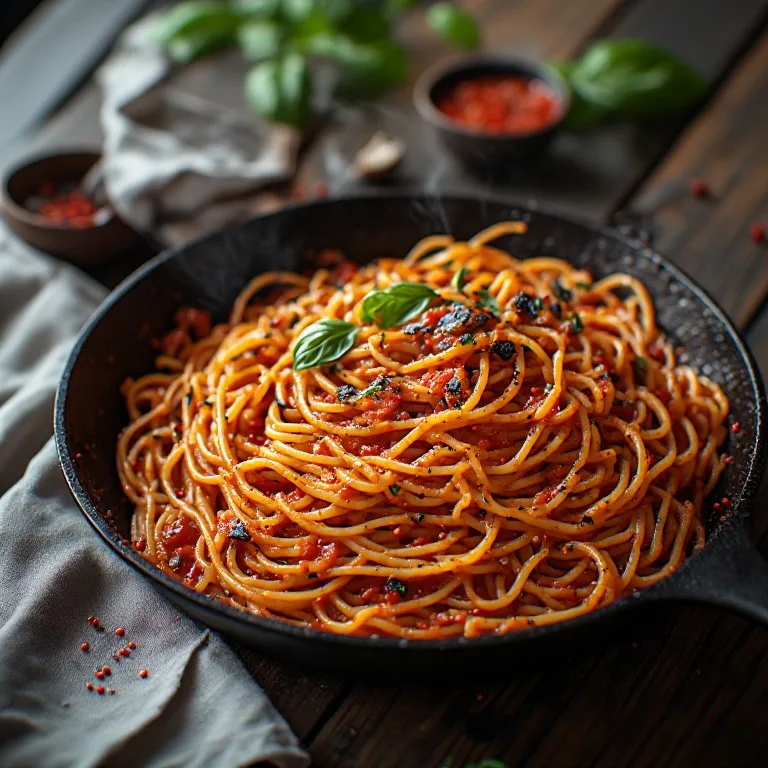
Quick answer: Spaghetti all'assassina is a traditional pasta from Bari, Puglia where raw, dry spaghetti is cooked directly in a screaming-hot iron skillet — no pre-boiling — using a risotto-style technique. You build a warm spicy tomato broth (tomato passata + water + tomato paste + salt), heat generous olive oil with garlic and dried peperoncino until the oil shimmers, add 160g dry spaghetti straight from the package, let it toast and char in the oil for 2–3 minutes, then ladle in the warm broth a little at a time — exactly like a risotto — letting each addition absorb fully before adding the next. The heat stays high throughout. The pasta finishes al dente with parts that are soft, parts that are chewy, parts that are crispy, and some strands that are genuinely charred black at the edges. That's not a mistake. That's the dish.

Shop the tools

Gear matched to this recipe. These are Amazon affiliate links — we may earn a small commission if you buy, at no extra cost to you.

As an Amazon Associate, Copycat Spices earns from qualifying purchases. Product images are generic illustrations, not the exact item listed.

Viral TikTok Spaghetti all'Assassina (Assassin's Spaghetti — the Pasta You're Supposed to Burn)

The rule-breaking pasta from Bari, Puglia that TikTok can't stop making — raw dry spaghetti cooked risotto-style in a screaming-hot iron skillet until it caramelizes, chars, and crisps. No boiling. No draining. The burnt parts are the point.

Medium Prep: 10 min Cook: 20 min Total: 30 min2 servings ~$4.50/serving
Prep10 min
Cook20 min
Total30 min
Servings
2
At home~$4.50/serving
vs
Restaurant~$20.25/serving
You save ~78%

The Story Behind the Recipe

The rule-breaking pasta from Bari, Puglia that TikTok can't stop making — raw dry spaghetti cooked risotto-style in a screaming-hot iron skillet until it caramelizes, chars, and crisps. No boiling. No draining. The burnt parts are the point.

Nutrition Facts

Per serving (2 servings)
Calories590
Total Fat24g
Total Carbs78g
Dietary Fiber5g
Sugars8g
Protein15g
Sodium810mg

* Estimated values based on standard recipe preparation. Actual values may vary.

Ingredients

  • For the tomato broth
  • For the pasta
  • Optional to finish

Instructions

💡
Pro tip: This recipe tastes even better the next day. The flavors need time to meld together in the fridge.
❄️
Storage: Keeps in an airtight container in the fridge for up to 2 weeks. Freezer-friendly for up to 3 months.
🎃 Free Halloween cookbook — download now The Copycat Halloween Cookbook A ready-made, photo-illustrated PDF of our best halloween copycat recipes — free to download, no building required. Pay what you want to support if you love it.

Free PDF — instant download. We'll also send new seasonal copycat recipes now and then; unsubscribe anytime. Or just download it →

Viral TikTok Spaghetti all’Assassina — the Pasta You’re Supposed to Burn

Prep: 10 min | Cook: 20 min | Serves: 2

Most pasta recipes have one rule in common: don’t burn the pasta. Spaghetti all’assassina’s whole point is that you do.

This is a dish from Bari, the capital of Puglia in Italy’s deep south, where raw dry spaghetti goes straight into a screaming-hot iron skillet with olive oil, garlic, and dried chili. It toasts. It chars. Warm spicy tomato broth gets ladled in a little at a time — exactly like you’d make a risotto. The pasta absorbs each addition before the next one goes in. By the end, the strands touching the pan surface are caramelized and crunchy, the ones in the middle are chewy, and some are genuinely blackened. That range of textures within a single plate is what the dish is.

TikTok spread it because the cooking is visually dramatic — raw pasta hissing in hot oil, black smoke, charred strands — and because the technique breaks every pasta rule people think they know. The combination made it irresistible to post.


Where the Dish Comes From

Bari sits on the Adriatic coast of Puglia — the heel of Italy’s boot. The city has its own culinary identity, distinct from Rome or Naples: simpler, more agricultural, built on vegetables, legumes, seafood, and the kind of recipes that make very little look like very much.

Spaghetti all’assassina (also called spaghetti bruciati — burnt spaghetti) is credited to Enzo Francavilla, a chef from Foggia who took over a small Bari trattoria called Al Sorso Preferito in 1967. The origin story goes that two out-of-town diners asked for something spicy and hearty; Francavilla improvised by searing dry spaghetti in an iron pan with oil, garlic, chili, and tomato, cooking it risotto-style and letting it char. The technique was original enough that the dish became associated with the city and eventually spawned the Accademia dell’Assassina, founded in 2013, a Bari culinary institution that codified the recipe and its rules: cast iron pan required, no pre-boiling, broth ladled in like a risotto.

The dish existed in obscurity outside of Puglia for decades. Then TikTok happened.


The Three Things Most Recipes Get Wrong

1. Pre-cooking the pasta. This one completely undoes the dish. The whole technique depends on raw pasta contacting a screaming-hot pan: the dry starch toasts, the surface caramelizes, the pasta develops a nutty flavor before any liquid hits it. Pre-boiled pasta is wet, soft, and already cooked — it can’t toast, it can’t char, it just breaks apart in the heat. There is no shortcut version of this recipe. The raw pasta in hot oil is the recipe.

2. Insufficient pan heat. The pan must be hot before the oil goes in, and the oil must be hot before the pasta goes in. A warm pan produces steamed pasta sitting in tomato sauce. A screaming-hot pan produces charred pasta with concentrated, caramelized flavor. The test: water drops dropped in should vaporize instantly. The first 30 seconds of the pasta in the pan should involve actual sizzling and popping, not quiet simmering. If the pasta isn’t making noise, the pan isn’t hot enough.

3. Adding too much broth at once. This is the risotto instinct most home cooks resist — adding liquid a little at a time feels fussy. But if you pour in a large amount of broth at once, two things go wrong: the pan temperature drops dramatically, stopping the charring process, and the pasta starts boiling in the liquid rather than absorbing it. Add small ladles — 3–4 tablespoons — and wait for each to be almost completely absorbed before the next one goes in.


The Cast Iron Requirement

The Accademia dell’Assassina is specific: the pan must be cast iron (tegame di ferro). This isn’t arbitrary:

Cast iron retains heat at a level no other common home pan does. Once properly heated, it holds that temperature even when room-temperature pasta hits it. A thinner stainless pan drops temperature immediately when the pasta goes in, which means lower charring, longer cooking, and an uneven result. Carbon steel is a good substitute — it behaves similarly and gets very hot. Non-stick is not suitable: most non-stick coatings degrade above 260°C/500°F, and the surface actively prevents the sticky-then-char process that creates the texture.

If you don’t have cast iron, a thick-bottomed carbon steel pan works. An ordinary stainless pan can work but requires more attention. A non-stick pan produces a different dish.


The Tomato Broth

This sounds fancier than it is: it’s warm water with passata, tomato paste, and salt. The goal is a lightly savory, tomato-flavored liquid that gradually cooks the pasta and gives it color and flavor as it absorbs — like a risotto’s stock.

Keep it warm on the lowest burner setting throughout cooking. Cold liquid added to the hot pan drops the temperature significantly, which slows charring. Warm liquid maintains the pan’s heat level so the charring continues between ladles.

The additional tablespoon of tomato paste added directly to the pan midway through is an optional but recommended step: it caramelizes against the hot surface and deepens the concentrated tomato flavor in the finished dish.


The Char Is Not Optional

This is the part that makes people nervous the first time: the pasta is supposed to turn black in spots. You will see smoke. You will smell something that is very close to burning. Some strands will be genuinely charred at the tips or along the side that rested on the pan.

This is correct. The charring creates flavor — the same caramelization chemistry that makes a good sear on meat, a browned onion, or a crust on a crème brûlée. The bitter char at the edge of a strand is part of the dish’s flavor profile, not a mistake to correct.

The finished plate should have this texture range: soft and yielding in the middle of the tangle, al dente at the benchmark spots, chewy-crispy where strands dried out near the top, and genuinely dark and crunchy where they sat on the pan surface. If every strand is the same texture, the dish didn’t work.


What to Serve With It

Spaghetti all’assassina is a strong, full-flavored dish that doesn’t need much company:

  • A very simple salad — dressed with just lemon juice, olive oil, and salt — the acid cuts through the richness
  • A cold, dry rosé or a lighter red — a Primitivo from Puglia is the local pairing; a Sicilian red or even a chilled Nero d’Avola works well
  • Crusty bread — to mop the charred tomato oil left in the pan, which is excellent

Don’t serve it alongside another bold dish. This is the centerpiece; let it be.
🥗

Make It Healthier

Love Viral TikTok Spaghetti all'Assassina (Assassin's Spaghetti — the Pasta You're Supposed to Burn) but want a lighter version? Try these simple swaps:

  • ✓The olive oil is the main calorie driver. You can reduce to 4 tbsp total (2 for cooking + 2 to finish) without fundamentally changing the dish — the oil both conducts the charring heat and is part of the sauce.
  • ✓The sodium is mostly from the tomato paste and passata. Using homemade or no-salt-added passata and adjusting salt to taste at the end brings it down significantly.
  • ✓This is a rich, high-heat dish — it's not designed to be lightened dramatically without changing its character.

Frequently Asked Questions

What is spaghetti all'assassina?

Spaghetti all'assassina (assassin's spaghetti, also called spaghetti bruciati — burnt spaghetti) is a traditional pasta from Bari, the capital of Puglia in southern Italy. What makes it unique is the technique: the spaghetti is never pre-boiled. Instead, raw dry spaghetti goes directly into a very hot iron skillet with olive oil, garlic, and chili, where it toasts and chars before warm spicy tomato broth is ladled in risotto-style, a little at a time. The result is pasta with dramatically varying textures — soft, chewy, crispy, and genuinely charred — all in the same plate. The dish became viral on TikTok because the technique is visually dramatic, counterintuitive, and surprisingly achievable at home.

Who invented spaghetti all'assassina?

The dish is credited to Enzo Francavilla, a chef from Foggia who created it in 1967 at Al Sorso Preferito, the Bari trattoria he had just taken over. As the story goes, two out-of-town diners asked for something spicy and hearty; Francavilla seared dry spaghetti in an iron pan with oil, garlic, chili, and tomato, cooking it risotto-style and letting it char. The restaurant still exists today. The recipe became popular enough in Bari that it eventually spawned its own institution: the Accademia dell'Assassina, founded in 2013 to codify the authentic technique and specify everything from the equipment (cast iron pan) to the exact method. Outside of Bari, the dish was largely unknown until TikTok food creators began sharing videos of the dramatic, charring technique — the combination of breaking pasta rules and the visual payoff made it a natural fit for the format.

Why don't you boil the pasta first?

Because pre-boiling defeats the entire purpose of the dish. The raw pasta goes into the hot oil and toasts — that's how it develops the nutty, slightly smoky flavor and the charred crispy texture that make this dish what it is. Pre-boiled pasta is already soft and wet; it can't toast, it can't char, and it breaks apart in the high heat rather than caramelizing. The technique — raw pasta cooked risotto-style in a hot pan with liquid ladled in gradually — is the recipe. There's no workaround or shortcut version that produces the same result.

What does 'assassina' mean in the name?

The name is debated but the most common explanation is that the dish 'kills' — either because of its intense heat and spiciness (it assassinates your palate), or because the cooking technique is so aggressive it 'murders' the pasta. Another popular interpretation: when the raw pasta hits the screaming-hot oil, it makes a violent hissing sound, like something being killed. The Accademia dell'Assassina in Bari embraces the dramatic name as part of the dish's identity. In Bari dialect it's sometimes called spaghetti bruciati — burnt spaghetti — which is the plainer description of what you're doing.

Is the burnt part actually supposed to be there?

Yes. The charred, blackened strands are not a mistake — they're the defining feature of the dish. The 'burnt' quality is what 'bruciati' in the alternate name refers to. Within a single serving, you should find strands at three to four different textures: soft (where they absorbed liquid without direct pan contact), al dente (the benchmark middle), chewy-crispy (strands that crisped up as the liquid evaporated), and charred-crunchy (strands directly on the pan surface). A plate with no charring is just a spicy tomato pasta. The visual and textural shock of the blackened bits is the whole point.

What kind of pan do I actually need?

Cast iron is the traditional and strongly recommended choice — the Accademia dell'Assassina's official rules specify it. Cast iron holds and radiates heat at the high, sustained temperatures this dish requires, and creates the even, intense contact heat needed for proper charring. A well-seasoned carbon steel pan is a very good substitute. A stainless steel pan works in a pinch but requires more attention to prevent sticking before the tomato liquid goes in. Do not use a non-stick pan: most non-stick coatings degrade at sustained high heat, and the non-stick surface actively prevents the kind of sticking-then-charring that creates the signature texture.

How spicy is it supposed to be?

Traditional spaghetti all'assassina is notably spicy — the peperoncino (dried chili) is a key ingredient, not a finishing garnish. The heat level in Bari is what most people in the US would call 'medium-spicy' — noticeable on every bite, with a building warmth, but not incapacitating. You can adjust the heat by using fewer chili flakes or a milder dried chili, but removing the spice entirely changes the character of the dish significantly. The combination of charred tomato, high heat, and chili is what gives it its 'assassin' quality.

Can I make it for more than 2 people?

You can double the recipe for 4, but you'll need a much larger iron skillet — at least a 35cm/14-inch pan — and the technique becomes harder to execute well. The challenge is maintaining high enough heat with more pasta mass in the pan: more pasta lowers the pan temperature faster, which means slower charring and more risk of the pasta stewing in liquid rather than crisping. For a dinner party, it's better to make two consecutive batches of 2 servings each rather than doubling in one pan. The dish takes only 20–25 minutes once you have the technique, so sequential batches are practical.

Love this recipe? Share it!

Free PDF: our 12 most-wanted copycat recipes — instant download.

Made it? Buy us a coffee

Every recipe here is free, with no paywalls. If this one was a hit at your table, a small tip keeps new copycats coming.

$

Ratings & Reviews

—
No ratings yet

Rate this recipe

Click a star to rate

Leave a Review

0/500

CS

Copycat Spices Editorial

Researched + fact-checked. Every recipe on Copycat Spices is built from published sources — official ingredient lists, brand-published recipes, interviews and food-science references — and fact-checked before it goes live, then written as clear, step-by-step instructions for home cooks of all skill levels.

Learn more about our mission →