
Viral TikTok Poke Bowl — The $18 Restaurant Bowl for $8 at Home
Poke bowls were having their moment at fast-casual restaurants for years — $15 to $20 for a bowl you assembled yourself from a cafeteria-style line — before TikTok made people realize they’d been massively overpaying. The home version isn’t just cheaper. Made correctly, it’s better: fresher fish, properly seasoned rice (most restaurants get this wrong), and toppings that haven’t been sitting in steam trays since 11am.
How It Went Viral
The poke bowl TikTok wave hit hardest in 2022 and 2023, when creators started showing side-by-side breakdowns of restaurant receipts versus what the same bowl cost to make at home. Eight ounces of sushi-grade ahi tuna: $8. Sushi rice: $0.50. Avocado, cucumber, edamame: $3. Spicy mayo drizzle: pennies. Total: about $12 for two full bowls versus $36 at a restaurant. The math was undeniable.
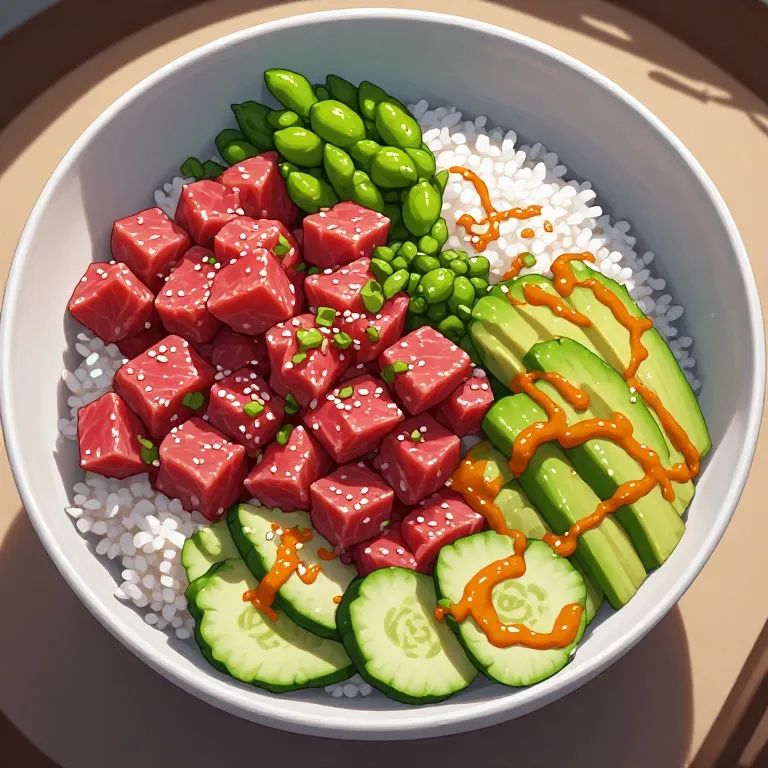
What kept the content circulating, though, was the visual appeal. A well-built poke bowl — bright orange tuna cubes, creamy green avocado fans, vivid edamame, glossy rice — is genuinely beautiful food. The spicy mayo zigzag drizzle, the sesame seed scatter, the dark ribbons of nori: it photographs and videos better than almost anything else in home cooking. Food that looks this polished, made this quickly, is social media gold.
The Technique That Separates Good Poke from Great Poke
There are three techniques that matter, and most casual recipes skip two of them.
Rice seasoning is not optional. Unseasoned rice under a poke bowl tastes like a grain bowl from a meal-prep container. Properly seasoned sushi rice — vinegar, sugar, and salt dissolved and folded in while still warm — has a subtle tang, slight sweetness, and a glossy sheen that makes every bite cohesive. The folding technique matters too: use a cutting motion, not a stirring motion, to season the rice without turning it into a paste. A wooden rice paddle or broad spatula helps. Fan it as you go — the slight cooling creates the right sticky-but-not-gummy texture.
Keep the fish cold and marinate briefly. Cut the tuna or salmon directly from the refrigerator — cold fish holds its shape, warm fish tears. And set a timer when the fish hits the marinade. The soy sauce starts breaking down the protein structure within minutes. At 15 minutes, the fish tastes seasoned, tender, and fresh. At 45 minutes, it’s starting to turn gray, mushy, and the flavor gets muddy. This is the most common mistake home cooks make with poke: they marinate it while they cook the rice, set it aside, get distracted, and an hour later they’re wondering why it doesn’t taste like the restaurant version.
Arrange, don’t mix. Restaurant poke bowls are assembled in distinct sections — rice, then fish in one quadrant, avocado in another, cucumber and edamame in their own areas, garnishes over the top. This isn’t purely aesthetic. It gives you flavor control as you eat: each bite can be a different combination. Tossing everything together up front turns it into a grain bowl, which is fine but not the same dish.
Serving and Meal Prep
The components of a poke bowl are actually excellent for batch prep — just not all at once. Cook a large batch of sushi rice at the beginning of the week; it reheats beautifully with a tablespoon of water and 45 seconds in the microwave. Portion vegetables ahead and store them separately in containers. Mix the marinade base (soy, sesame oil, vinegar, sriracha, ginger) in a jar — it keeps two weeks in the fridge.
The fish is the only element you cannot prep ahead. Buy it the day you’re eating it, marinate it fresh, and serve immediately. This isn’t a dish to build on Sunday and eat on Wednesday. Think of it as: all your prep work means that on the night you want poke, you have 15 minutes of active work between craving and eating.
Variations Worth Trying
Salmon Poke. Salmon is richer and fattier than ahi tuna — the flavor is stronger, the texture more buttery, and it handles the sesame marinade more assertively. Some people prefer it. Use the same technique, same marinade, same timing. Sushi-grade salmon is often cheaper than ahi and easier to find year-round.
Tofu Poke (Vegan). Press a block of extra-firm tofu for 30 minutes to remove excess water. Cut into ¾-inch cubes. The marinade time rule reverses here — marinate tofu for at least 30 minutes, up to 2 hours, since it’s not being broken down by acid. Pan-sear the cubes in a hot skillet with sesame oil for 2 minutes per side to get crispy edges before adding to the bowl. Serve with pickled ginger and extra sesame seeds.
Shrimp Poke. Use 12 large cooked shrimp (thawed from frozen, or poached and chilled). Skip the standard marinade and go straight to spicy mayo as the binder — toss the shrimp in 2 tbsp Kewpie, 1 tbsp sriracha, and a squeeze of lime. This is a looser interpretation of poke but it’s faster and works for people who don’t want to source sushi-grade fish. Top with crushed wonton strips for crunch.
The underlying lesson from poke’s TikTok moment is that premium restaurant experiences often cost what they do because of location, overhead, and convenience — not because the food itself is hard to make. Get the fish right and the rest is assembly.