

Viral TikTok Chipotle Copycat Bowl — $3 vs. $15
A standard Chipotle burrito bowl runs $12–16 depending on protein and toppings. The same bowl made at home, from scratch, with better ingredients costs about $3 per serving when you factor in the full batch. The gap between those two numbers is why this recipe spread across TikTok in every variation imaginable — and why most of the copycat versions still don’t quite get it right.
The two components that make or break the whole bowl: the cilantro-lime rice and the chicken. Get both of those right and the rest falls into place.
The Cilantro-Lime Rice Problem (and the Fix)
Almost every copycat recipe online makes the same mistake with the rice: they add the lime juice and cilantro to hot, steaming rice. At that temperature, the volatile aromatic compounds in cilantro — the ones that create its distinctive bright, slightly citrusy flavor — evaporate within seconds. You end up with seasoned rice that tastes vaguely herby rather than distinctly cilantro-lime.
Chipotle’s actual technique (per their own published recipe details) is to add the seasoning to rice that’s been removed from the heat and allowed to cool slightly. The rice should still be warm — warm enough to absorb the lime juice and meld with the zest — but not actively steaming.
The other detail most recipes skip: lime zest. Lime juice provides acidity; lime zest provides the concentrated citrus oil that gives the rice its aromatic punch. Use the zest of both limes before juicing them, and add it along with the juice when seasoning.
Fold the cilantro in gently with a rice paddle or wide spoon rather than stirring — aggressive stirring breaks the rice grains and creates a gummy texture. Two or three folding passes are enough to distribute the seasoning.
The Chicken: Char is the Flavor
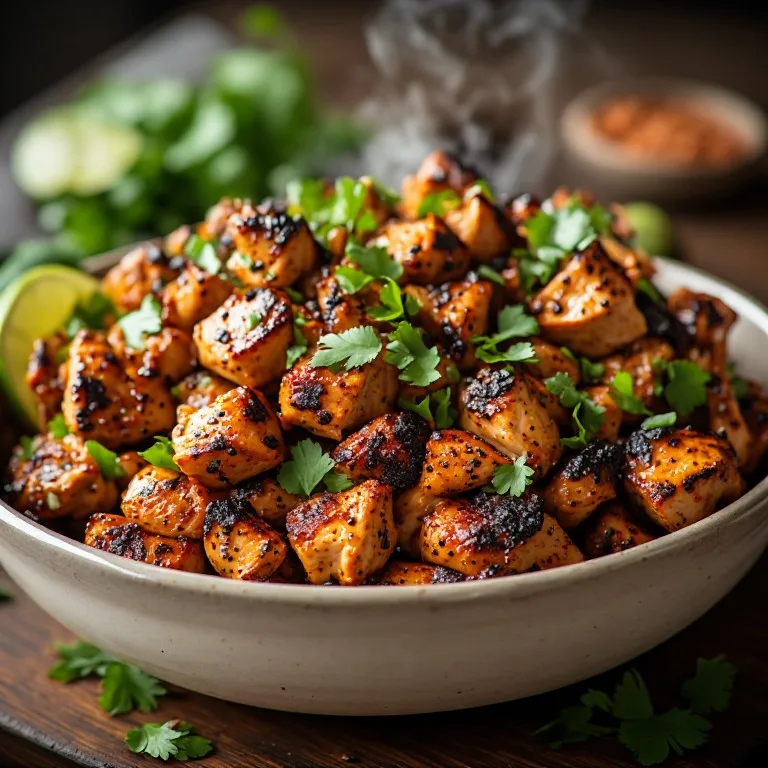
At Chipotle, chicken is cooked on a plancha — a flat griddle — at very high heat, seasoned with their proprietary spice blend, and cooked until the exterior has genuine char marks and darkened, slightly crispy edges. That char is not incidental; it’s a core flavor component.
The spice mix used here (chipotle chili powder, cumin, garlic powder, oregano) is close to Chipotle’s published formula. What matters more than the exact ratios is the cooking method:
The pan must be genuinely hot before the chicken goes in. “High heat” on a home stove takes 2 full minutes of preheating for a cast iron to reach the temperatures needed. You should see a slight haze of smoke before the chicken hits the surface.
Pat the chicken dry. Wet chicken surfaces create steam instead of char. Paper towels, firm pressure, then season. The difference between dry and wet chicken on a hot surface is the difference between a 6-minute sear and 12 minutes of pale, steaming protein.
Leave it alone. Six to seven minutes undisturbed on the first side. Moving it breaks the crust formation and drops the pan temperature. The chicken will release naturally when it’s ready to flip.
Building the Bowl: Order Matters
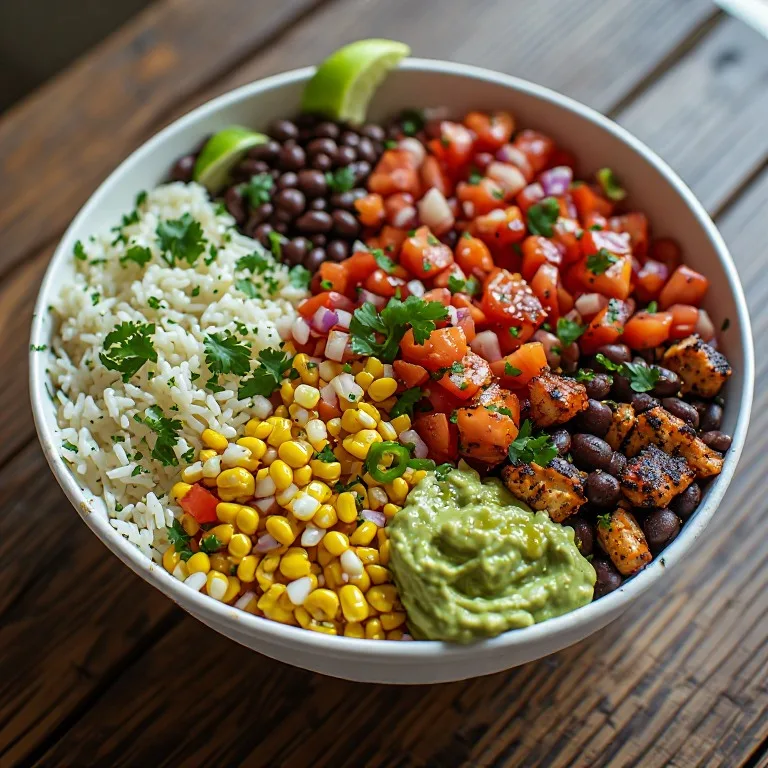
The layering sequence at Chipotle isn’t random — it controls flavor distribution and prevents the whole bowl from turning into one homogeneous mix. At home, follow the same logic:
Bottom layer — rice: The warm base that everything else melts into. Make sure it’s seasoned properly; under-seasoned rice makes the whole bowl taste flat regardless of what’s on top.
Second layer — black beans: Warm, seasoned beans next to the rice means every forkful of rice picks up some bean. Beans that are cold or underseasoned sit inertly instead of contributing.
Third layer — chicken: Sliced or chopped, with any pan juices poured over the top. The residual fat and spice from the chicken drips down through the rice and beans as you eat.
Fresh components on top: Corn salsa and pico de gallo on opposite sides. Keeping them separate maintains visual clarity and lets you control how much of each you scoop in each bite.
Guacamole in the center: The creamy richness needs to be accessible to every section of the bowl. Dead center is the right position.
Vinaigrette last. The olive oil and red wine vinegar dressing ties every element together — it should be drizzled over the top so it coats the fresh components and works its way down.
The Real Chipotle Vinaigrette
This is the detail that most copycat recipes omit entirely. The Chipotle honey vinaigrette — olive oil, red wine vinegar, honey, cumin, garlic, oregano — is what distinguishes the bowl from just a pile of individual components. It ties the warm chicken flavors to the fresh pico and corn with a slightly acidic, savory thread.
Whisk it together and taste before adding: it should be tangy-forward with a background sweetness from the honey and warmth from the cumin. Adjust with an extra splash of vinegar if it tastes flat or a pinch more salt if it tastes sharp.
Variations
Burrito wrap version: Warm a large flour tortilla in a dry pan for 30 seconds per side until pliable. Layer ingredients down the center, fold the sides in, then roll tightly from the bottom. The key for a tight wrap: don’t overfill, and stretch the first fold tight before rolling.
Cauliflower rice version: Sauté riced cauliflower in a tablespoon of olive oil with garlic over medium-high heat for 4–5 minutes until the excess moisture cooks off. Season with lime juice, zest, cilantro, and salt the same way as white rice. Cuts carbs roughly in half.
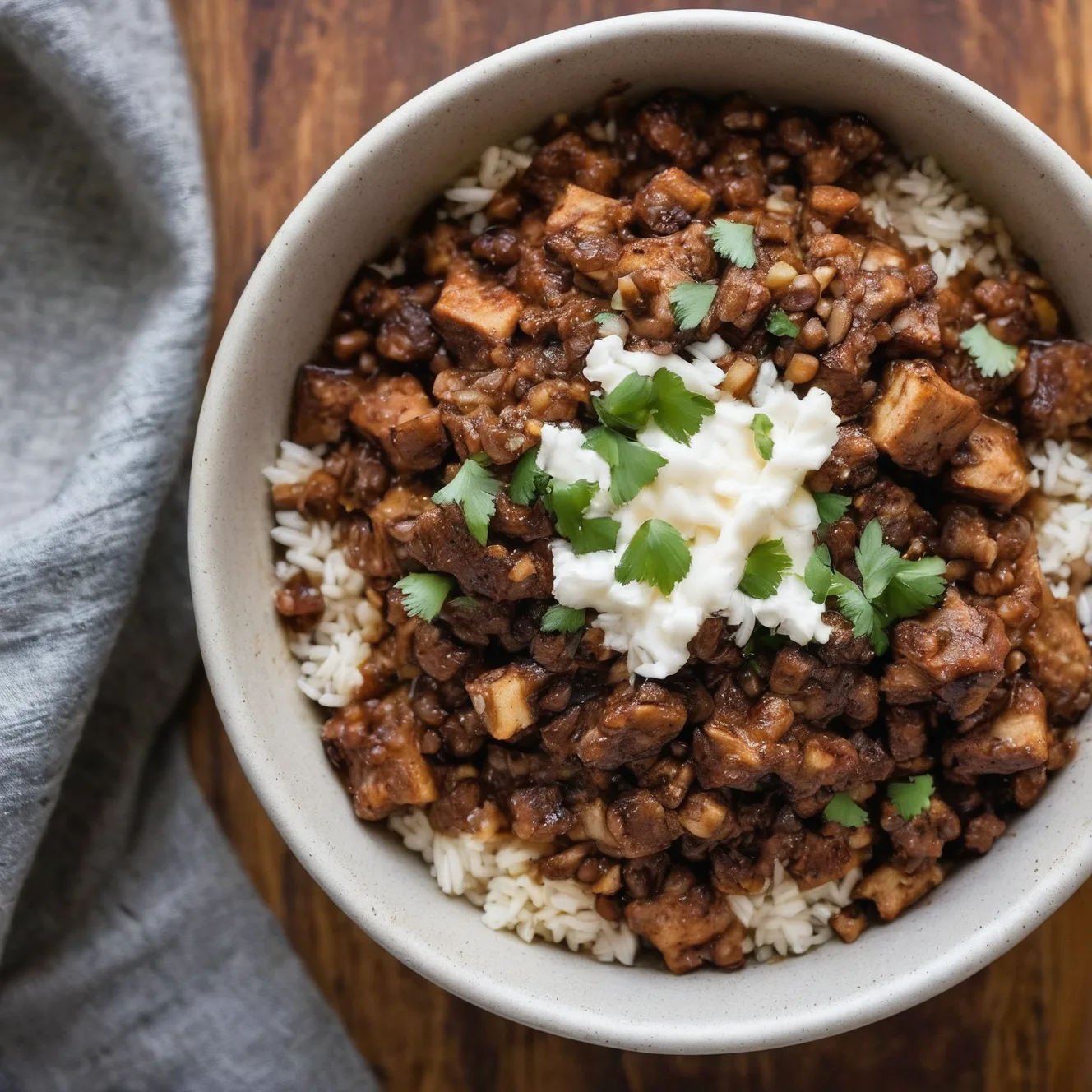
Sofritas (vegan) version: Crumble a block of extra-firm pressed tofu into a hot pan with olive oil. Cook until browned and slightly crispy, 8–10 minutes. Add a sauce of blended chipotle peppers in adobo, tomato paste, cumin, garlic, and a splash of water. Simmer 5 minutes until the tofu is fully coated. It’s a better sofritas than most Chipotle locations actually serve.