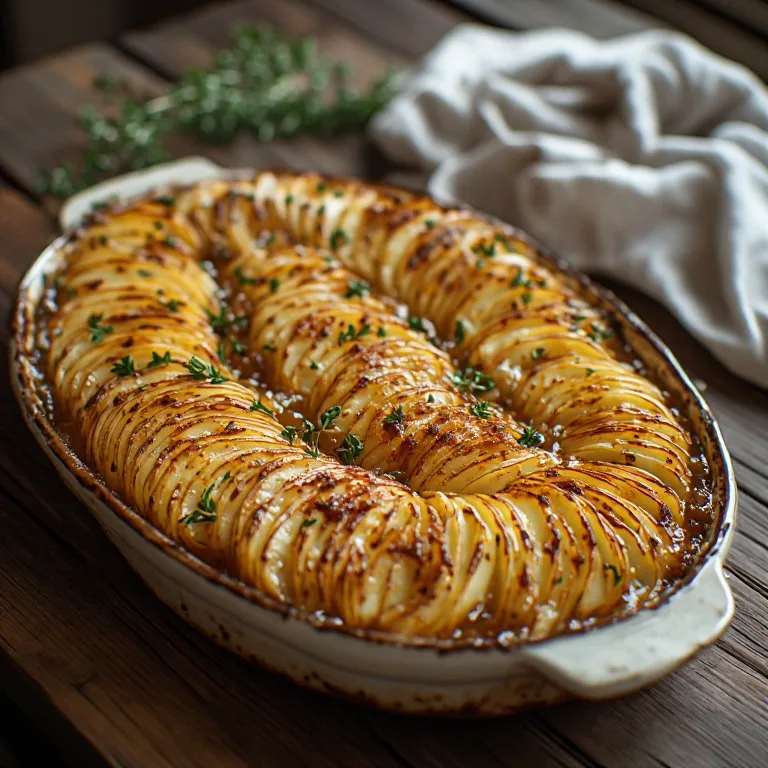


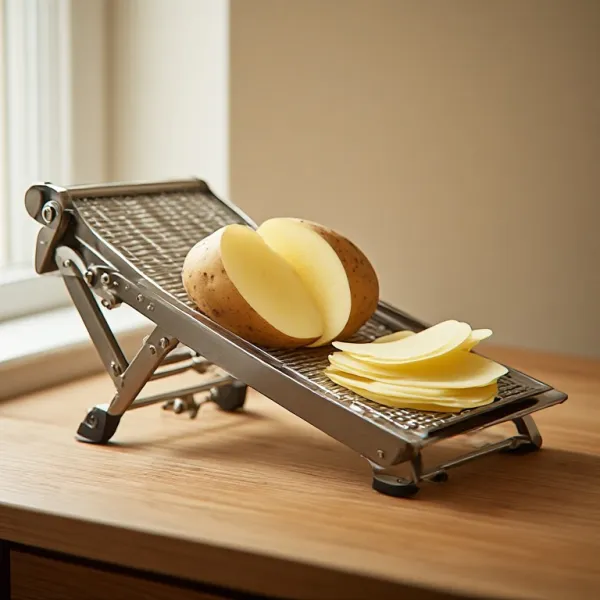
Quick answer: Pommes boulangère is thinly sliced Yukon Gold potatoes layered with caramelized onions and baked in stock until golden and tender. No cream, no cheese. The technique that actually matters: caramelize the onions all the way — 45 minutes minimum — because that’s where all the flavor comes from. The potatoes just absorb it.
Why is pommes boulangère going viral on TikTok?
The short version: it looks fancier than it is, costs almost nothing to make, and delivers flavors that people aren’t expecting from five ingredients.
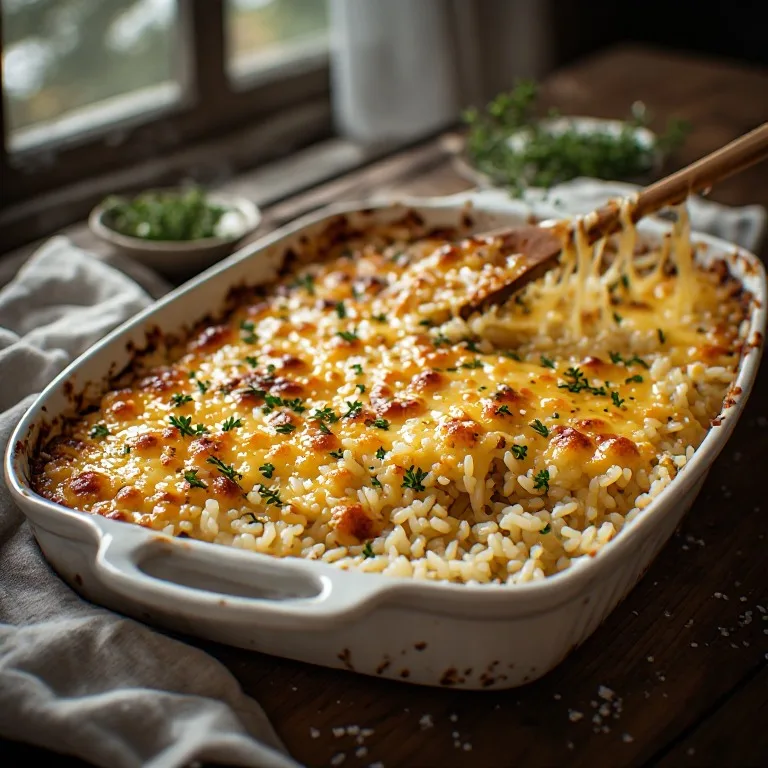
The trend traces to creator Coree Larkin (CocoLarkinCooks), who folded it into a “peasant food” series with a stripped-down five-ingredient version. The videos follow a reliable pattern — the assembled dish going into the oven, a time-lapse, and then the golden-topped result coming out with a satisfying crunch when a spoon breaks the crust. The comments are always the same: “That’s it? That’s all it takes?” When The Kitchn tested the viral recipe, they called the result “incredible.” It earned that response.
What’s also going on is that pommes boulangère gives home cooks a window into a style of French cooking that isn’t about technique tricks or expensive equipment. No béchamel, no ruling out beginners. Just thin potatoes, well-cooked onions, and an oven.
What makes this different from scalloped potatoes?
American scalloped potatoes are baked in a cream or béchamel sauce, often with cheese. They’re deliberately rich and heavy. Pommes boulangère is baked in stock — the potatoes absorb the liquid as it reduces, picking up flavor rather than fat. The top layer crisps into a genuinely crunchy crust (something cream-based gratins can’t achieve because the fat keeps it soft). The result tastes savory and deeply flavored without the heaviness of a cream sauce.
The other structural difference: caramelized onions are layered throughout the dish in boulangère. They’re not an accent — they’re a primary flavor. This is why cutting corners on the caramelization step makes such a noticeable difference.
The one technique that makes or breaks the dish
Caramelize the onions. Properly.
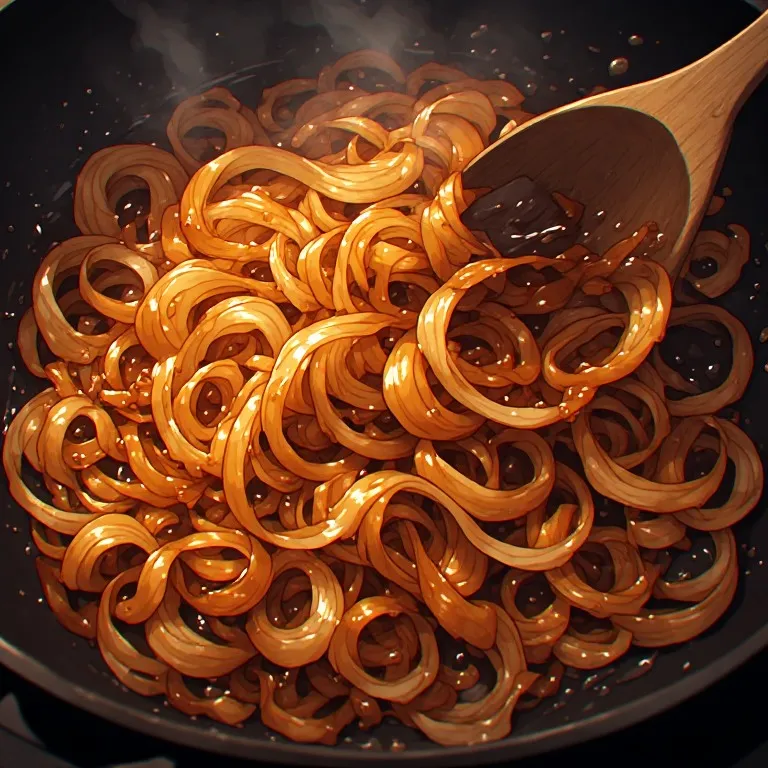
This means 45 minutes minimum over medium heat, stirring regularly, until the onions are amber, jammy, and reduced to almost nothing. Not translucent. Not golden after 15 minutes. Fully caramelized, which is genuinely a different thing.
The reason: raw or half-cooked onions taste sharp and slightly bitter, and they release water into the dish as they cook, which dilutes the stock. Fully caramelized onions have converted their sharp compounds into sugars and savory glutamates — they taste sweet, complex, and almost meaty. That concentrated flavor is what the potatoes absorb as they bake, which is why the dish tastes like something much more complicated than it is.
The garlic and thyme go in at the end of the caramelization time, not the beginning. Add them too early and they’ll burn over 45 minutes of cooking; add them at the last 5 minutes and they’ll bloom in the hot fat without charring.
Ingredient notes
Potatoes: Yukon Gold only. See the FAQ below for why Russets and other varieties don’t work as well.
Stock: It needs to taste good on its own — a weak stock produces weak boulangère. Homemade is best. Store-bought low-sodium is fine. Whatever you use, warm it before pouring it over the assembled layers.
Butter: The recipe uses 3 tablespoons total — 2 for caramelizing and 1 dotted on top. Don’t skip dotting butter on the top layer; it’s what helps the surface crust properly.
Thyme: Fresh is noticeably better here. If you have a thyme plant or can find fresh at the store, use it. Dried works but contributes a slightly dusty note rather than the bright herbal quality of fresh.
What to serve with pommes boulangère
In classical French cooking, pommes boulangère is the traditional accompaniment to gigot d’agneau — roast leg of lamb. The original technique was to roast the lamb directly above the potatoes so the drippings fell into the dish as both cooked. That pairing is exceptional.
For everyday cooking: roast chicken is the most natural pairing. Pork tenderloin, braised short ribs, or a simple pan-seared steak all work. The dish is neutral enough in flavor to accompany almost any roasted or braised meat without competing with it. For a vegetarian meal, serve it as the centerpiece alongside a sharp green salad and roasted broccolini or asparagus.