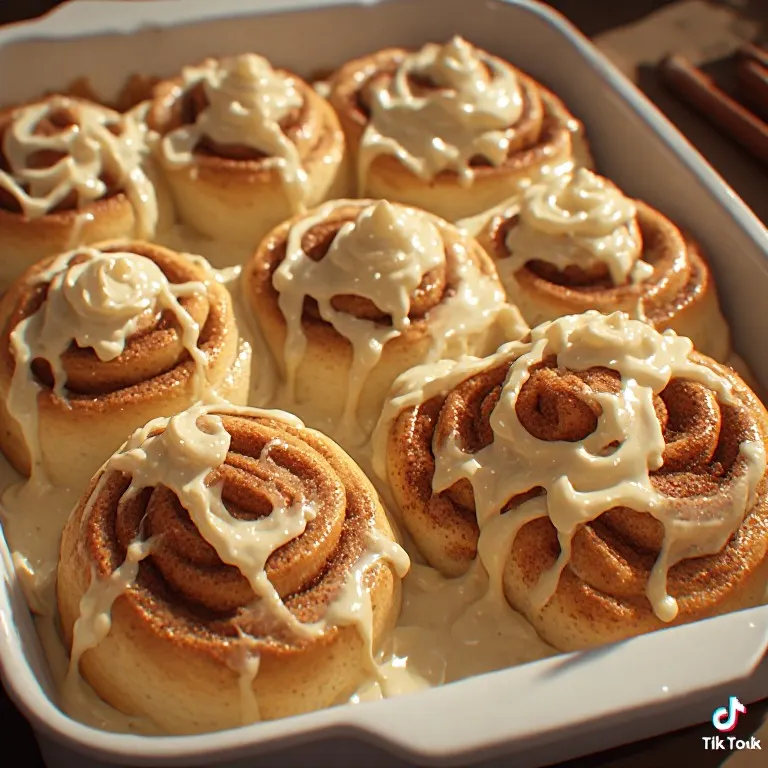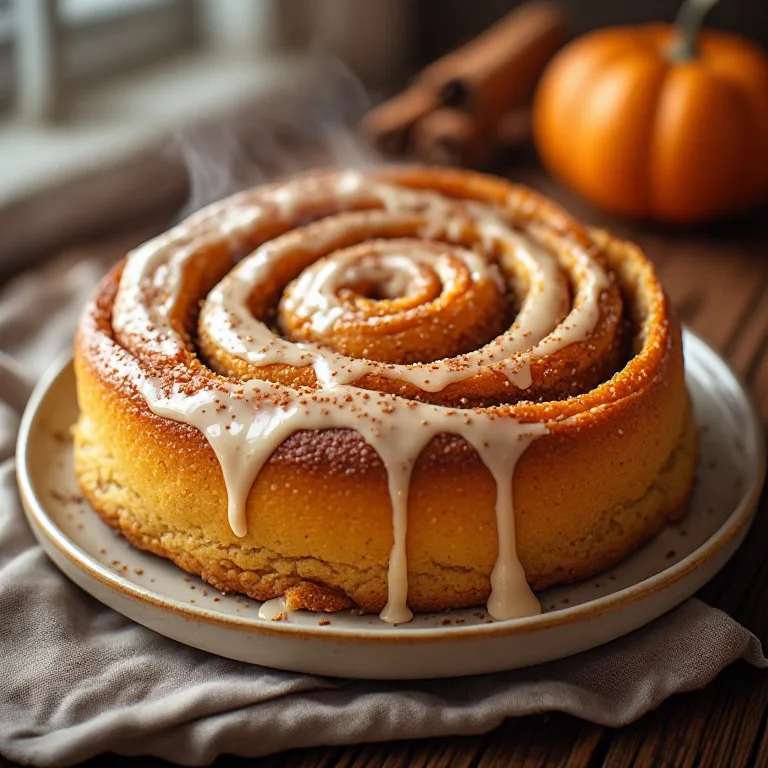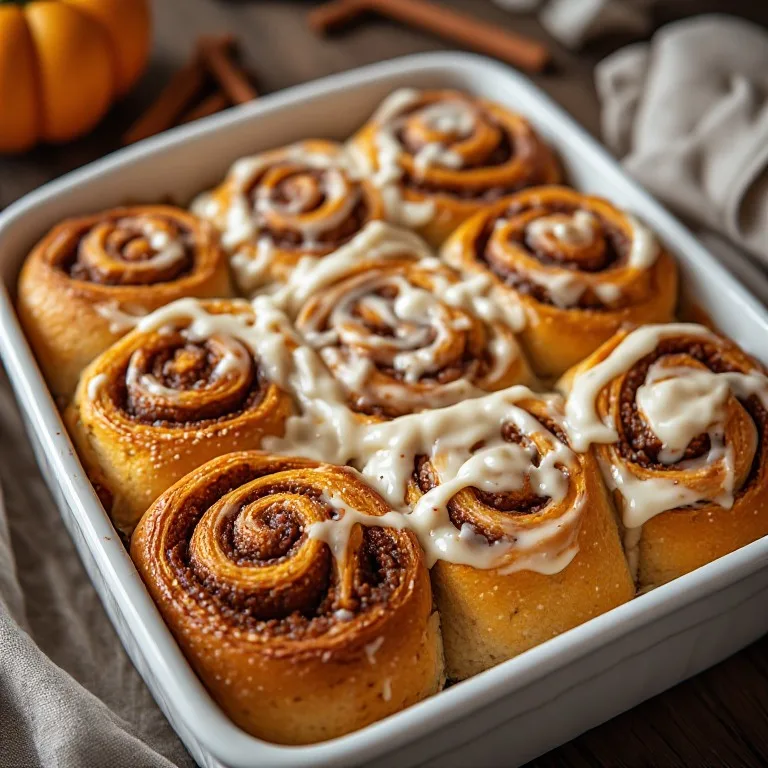

Every fall, TikTok fills up with the same video: someone pulling apart a warm pumpkin cinnamon roll, frosting melting into the orange-tinted swirls, the inside impossibly soft. The comments are always the same too — “how are these so pillowy?” and “why do mine come out dry?”
The answer is in the dough, not the filling.
What Makes These Pumpkin Cinnamon Rolls Different
Most “pumpkin cinnamon rolls” add pumpkin spice to the filling and stop there. That gets you a cinnamon roll with a spiced filling — it doesn’t get you a pumpkin roll. These three things together do:
1. Pumpkin puree in the dough, not just the filling. Half a cup of pumpkin puree replaces some of the liquid in the dough. The starch in the pumpkin gelatinizes during baking and holds moisture inside the roll, which is why pumpkin cinnamon rolls stay softer longer than regular ones. Standard cinnamon rolls begin drying out overnight; pumpkin rolls stay pillowy for two days at room temperature.
2. Pumpkin pie spice in both the dough and the filling. The dough gets 1 teaspoon of pumpkin pie spice, giving the entire roll a warm base note. The filling adds another 1 1/2 teaspoons layered into the brown sugar swirl. You taste the spice throughout — in the bread itself, in the swirl — rather than only in the filling layer.
3. Maple cream cheese frosting, applied warm. Real maple syrup in the frosting adds a woodsy caramel note that plain vanilla cream cheese doesn’t have. Applied while the rolls are still warm (5–8 minutes out of the oven), the frosting melts slightly and flows down into every crevice.
The One Rule: Don’t Overflour the Dough
Pumpkin roll dough is noticeably wetter and stickier than standard cinnamon roll dough. That’s correct — it’s the pumpkin moisture. The instinct when kneading sticky dough is to keep adding flour. Don’t. Add only what’s needed to prevent the dough from leaving wet patches on the counter. It should be soft and slightly tacky when poked, like a very ripe peach. Rolls kneaded with too much flour bake up dense and dry; rolls kneaded with just enough rise into pillowy, open-crumbed buns.
Make-Ahead Overnight Method
After shaping and cutting the rolls into the baking pan, cover tightly with plastic wrap and refrigerate overnight instead of doing the second room-temperature rise. Cold-proofed dough actually develops more flavor than same-day dough — the long, slow fermentation produces more complex taste from the yeast. The next morning, pull the pan from the fridge while the oven preheats and let the rolls stand at room temperature for 30–45 minutes. Then bake as normal. This is the method most serious home bakers prefer.
What the Maple Does in the Frosting
Maple syrup’s distinctive flavor develops when the sap is boiled down — caramelization and browning reactions create a caramel-adjacent, woody-sweet note (the signature compound is even called maple furanone) with no analog in vanilla or powdered sugar. A single tablespoon in the cream cheese frosting is enough to change the profile of the entire roll: the frosting tastes fall-specific rather than just sweet. If you don’t have pure maple syrup (not pancake syrup — those are maple-flavored corn syrup and taste nothing like the real thing), substitute 1 teaspoon vanilla extract. The result is still excellent.