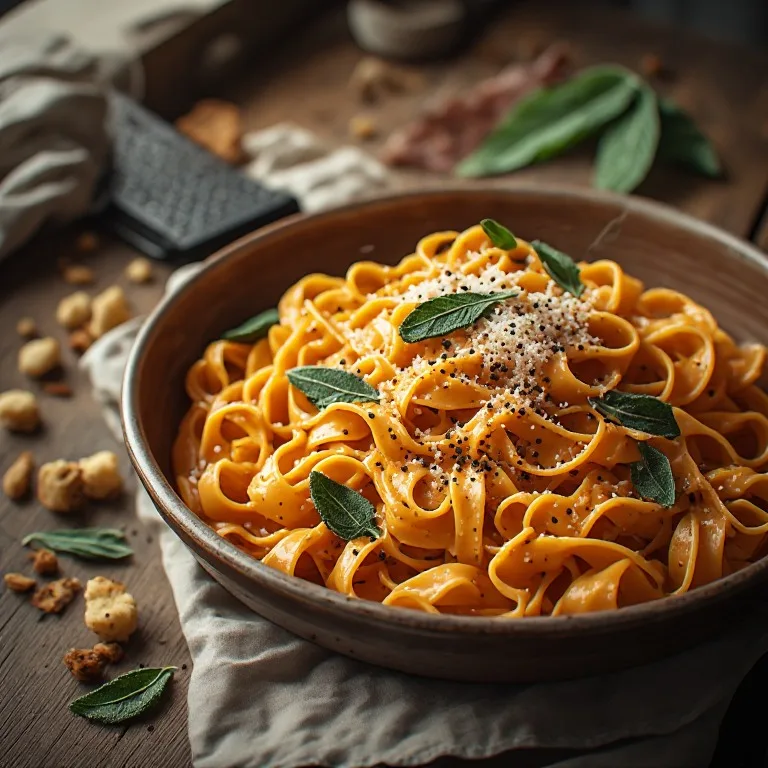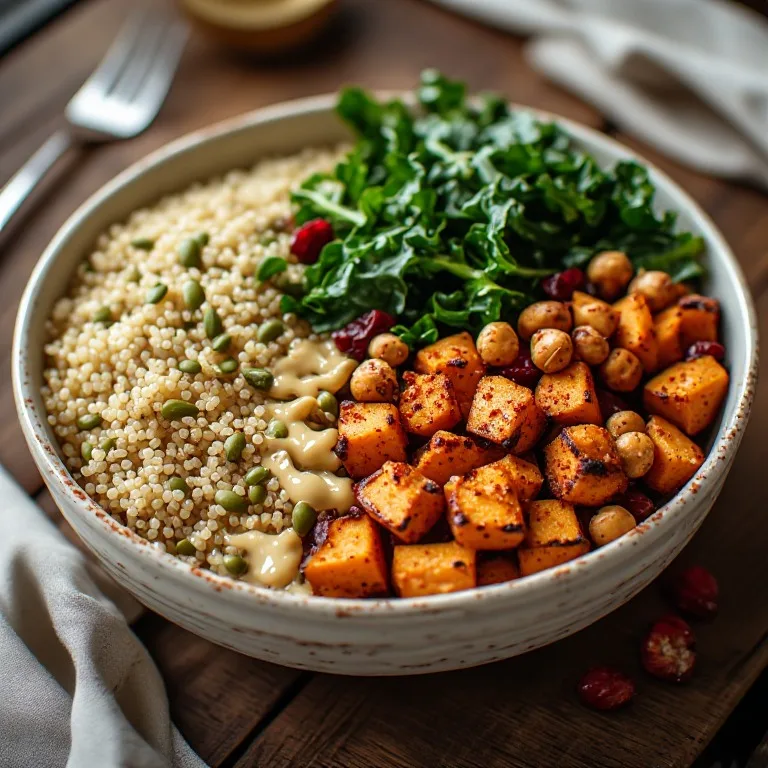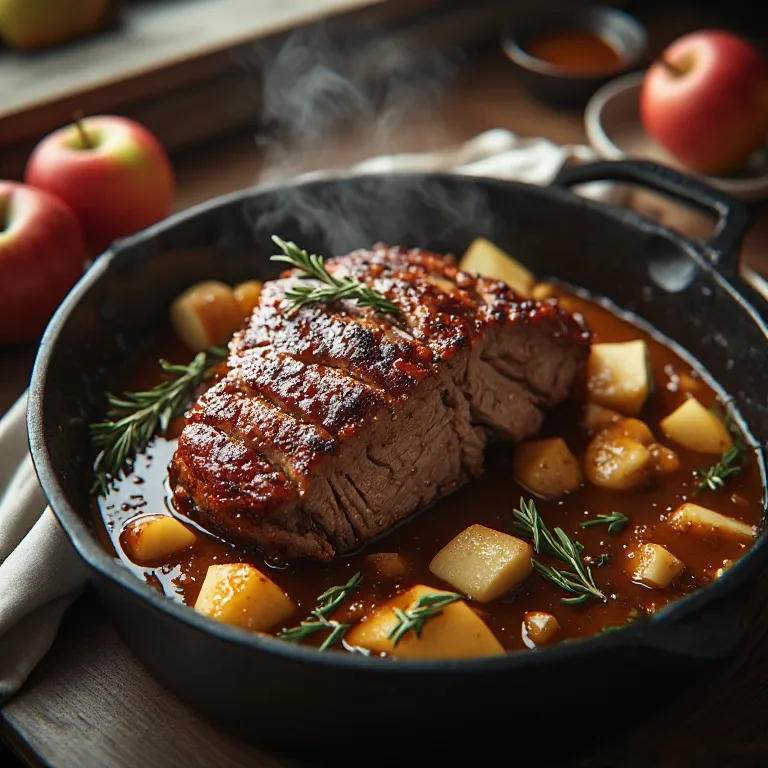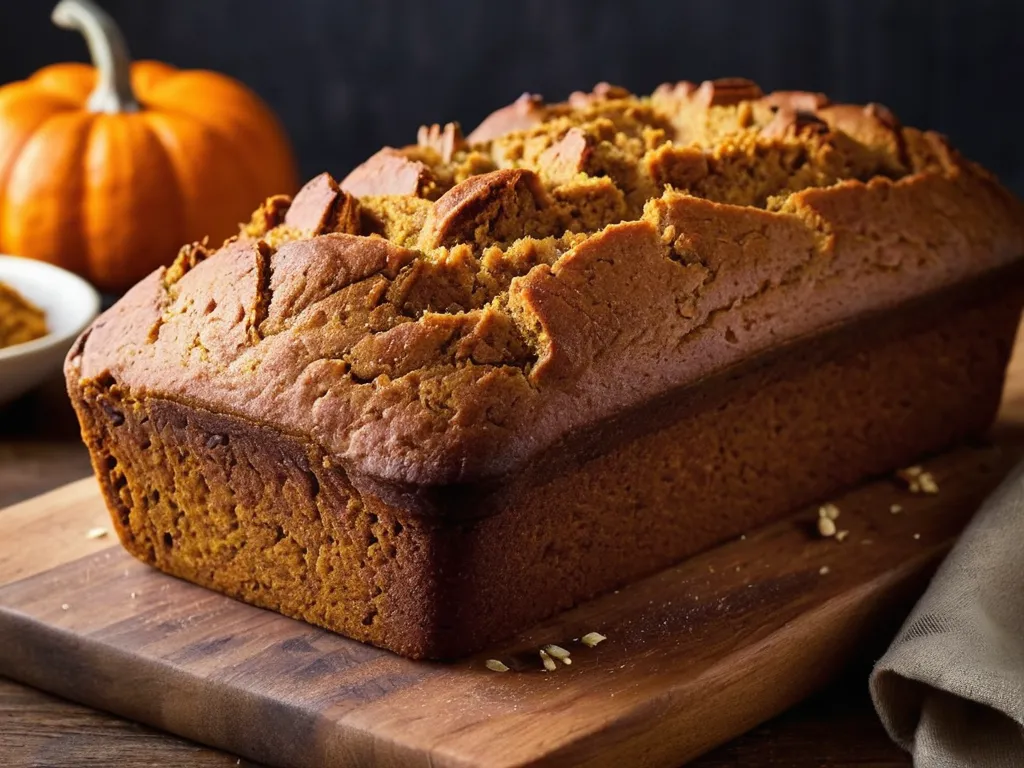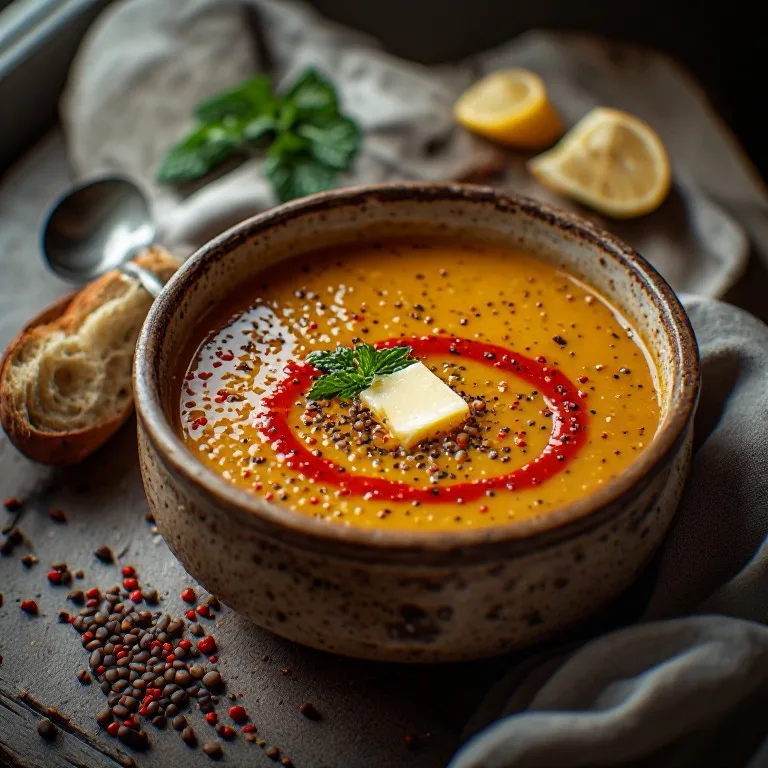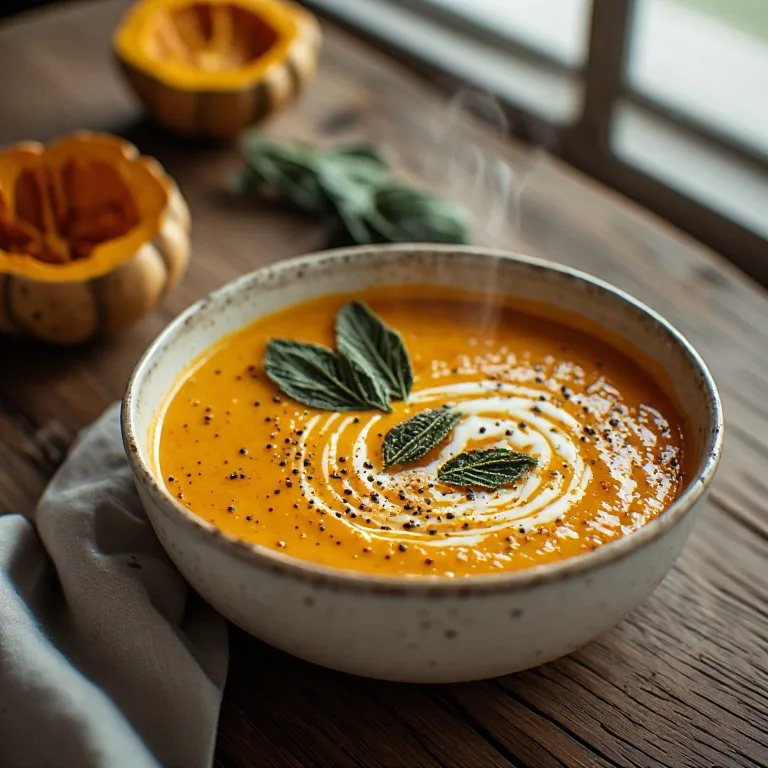



The roasted butternut squash soup dominating FoodTok this fall is not the boiled-and-blended version from a box mix. It is built on one technique that changes the flavor completely: roasting the squash cut-side-down at high heat until the flesh caramelizes against the pan, concentrating the natural sugars and building a layer of Maillard-browned squash on the surface that a blender then folds into the rest of the soup. The result is a soup that is genuinely complex — sweet but not one-note, warm with spice, silky from a small amount of cream, and finished with brown butter and crispy sage that take 90 seconds to make and transform the whole bowl.
The other trick: you never peel the squash. Roast it in its skin, scoop the flesh out after, leave the skin behind.
The TL;DR: halve the squash, seed it, roast cut-side-down 40 to 45 minutes at 425°F; build a spiced onion-apple base in a pot; scoop the squash flesh into the pot; add broth and blend smooth; stir in cream; season generously; drizzle with brown butter and crispy sage.
Why Roasting Changes Everything
Butternut squash has one characteristic that works against it in soup: a lot of water and a naturally sweet, one-dimensional flavor when steamed or boiled. Boiling squash in water dissolves the water-soluble sugars and volatile aromatics into the cooking liquid — you drain them away and the squash that’s left is pale, soft, and mild.
Roasting does the opposite. The dry heat drives off surface moisture and concentrates everything that remains. At 425°F, the natural sugars on the cut surface of the squash undergo caramelization (above 320°F) and Maillard browning (the reaction between sugars and amino acids that produces hundreds of distinct flavor compounds). The golden-brown patches on the flesh where it touched the pan are not burnt — they are the most flavorful part of the squash, and when you scoop that flesh into the blender, they become part of the finished soup.
The difference is not subtle. Roasted butternut squash soup tastes like it was made by someone who knows what they are doing. Boiled butternut squash soup tastes like baby food that someone added stock to.
The No-Peel Method
Raw butternut squash is notoriously difficult to peel. The skin is thick, the squash’s shape has a wide bottom and narrow neck with a curve between them, and the surface is slippery. Food safety incidents involving butternut squash peeling are common enough that cooking teachers specifically warn about it.
Roasting eliminates the problem. You cut the squash in half (a straight vertical cut through the whole squash, stem to base), scoop the seeds out of the bulb end with a large spoon, brush the cut surfaces with olive oil, season with salt and pepper, and place the squash cut-side-down on a sheet pan. The oven does all the work. After 40 to 45 minutes, the flesh is fully softened, caramelized on the bottom, and completely detached from the inner surface of the skin. A large spoon scoops it out in 30 seconds. The skin stays on the pan in one clean curved shell.
This is why the roasted butternut squash soup videos on TikTok get engagement — the no-peel reveal reads as a practical tip, not just a cooking technique. People who have struggled with a peeler and a slippery raw squash understand immediately what this saves.
The Apple: Not Optional
Every great butternut squash soup recipe includes some form of acid or brightness to balance the squash’s sweetness. The apple approach (specifically a tart apple — Granny Smith is the standard) works better than lemon juice or vinegar for one reason: the apple contributes both acid (malic acid) and a distinct sweetness profile (fructose) that creates contrast rather than simple neutralization. The finished soup does not taste like apples. It tastes like a soup where the sweetness of the squash has dimension rather than just one note.
The apple is added to the soup base raw with the onion and garlic, where it softens and partially breaks down in the butter before the squash goes in. It is completely undetectable in the finished blended soup as a distinct ingredient — it has fully integrated into the base.
The Spice Bloom
Cinnamon, nutmeg, and smoked paprika are added to the onion mixture in hot butter before any liquid enters the pot. This 60-second step — the spice bloom — matters more than the specific amounts of each spice.
Ground spices contain volatile aromatic compounds locked in dried cell structures. When they contact hot fat, those structures open and the aromatic compounds release and dissolve into the fat. Fat carries aromatic compounds better than water does. Spices added directly to a water-based liquid — broth, cream, the soup itself — release far fewer of their aromatic compounds and produce a flatter, more muted flavor. The same amount of cinnamon and nutmeg added to the hot butter before the broth produces a soup that smells and tastes noticeably warmer and more complex than a soup where the spices were stirred in at the end.
The bloom is done when you can smell the spices clearly and they have shifted from raw and dry to fragrant and slightly darker — about 60 seconds of constant stirring in the hot butter.
Brown Butter and Sage: The 90-Second Finish
The brown butter sage drizzle is not decoration. It is the textural and flavor contrast that makes a bowl of smooth, sweet soup interesting to eat through to the last spoonful.
Brown butter (beurre noisette) is made by cooking butter past the point where the water has evaporated and continuing until the milk solids (proteins and lactose) begin to caramelize. The moment of transition — pale gold milk solids going amber — produces a nutty, caramel-sweet, slightly complex fat that is categorically different from melted butter. The French name means “hazelnut butter,” and the aroma at that moment is remarkably hazelnut-like.
The sage leaves fry in the browning butter and turn crispy and slightly papery. Raw sage is slightly bitter and can taste medicinal in large amounts; fried in hot butter for 60 to 90 seconds, it turns mild, nutty, and fragrant with a texture that holds up against the smooth soup.
The combined drizzle — amber butter and crispy sage — over a bowl of silky orange soup is the FoodTok payoff moment: a restaurant-looking finishing move that takes 90 seconds.
The technique risk: brown butter goes from perfect to burnt in about 15 seconds. Use a light-colored pan so you can see the milk solids changing color, swirl constantly, and pull the pan off the heat the moment it turns amber. The pan retains heat, so the residual cooking continues for a few seconds after you remove it from the burner — this means you should pull it slightly before it looks done.
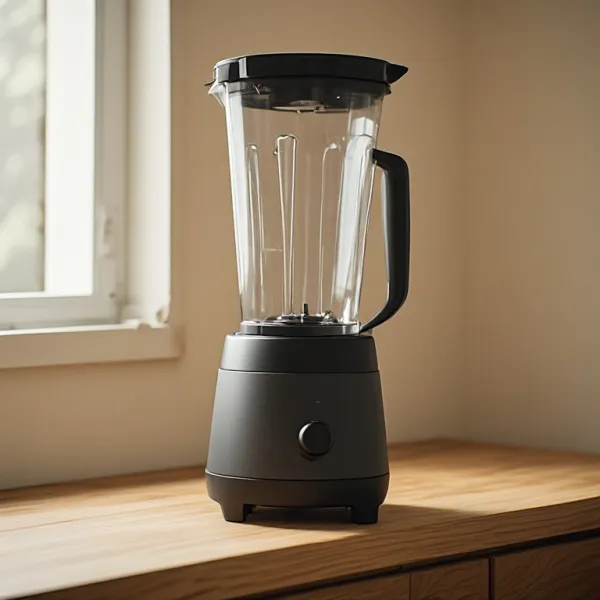
Blender Safety for Hot Soup
The most common hot soup blending accident happens when someone fills a blender too full and presses blend, trapping steam pressure under the sealed lid until it blows off. The soup goes everywhere; the burn risk is real.
Two methods to prevent it:
Immersion blender (easiest): Blend directly in the pot with the pot off the heat. No transfer, no lid risk, no cleanup of a blender jar. The immersion blender produces a slightly less perfectly smooth result than a regular blender — the centrifugal force of a countertop blender is more powerful — but the difference is small and the convenience is large.
Regular blender (smoother result): Let the soup cool 5 minutes. Fill the blender no more than two-thirds full. Remove the center cap from the lid. Fold a kitchen towel twice and hold it firmly over the cap opening. Start on the lowest speed, increase gradually. The towel vents steam while containing the liquid. Blend in two batches if needed.
Making It Your Own
The base recipe is the classic roasted butternut squash soup. The variations below cover the formats spreading most widely on FoodTok in fall 2026:
Curried butternut squash soup: Replace cinnamon, nutmeg, and smoked paprika with 1.5 teaspoons of curry powder, half a teaspoon of turmeric, and half a teaspoon of ground ginger. Add a second can of coconut cream (instead of heavy cream) and finish with a swirl of Greek yogurt and fresh cilantro. No brown butter. This is the Giada-adjacent version circulating widely.
High-protein version: Add 1 cup of full-fat cottage cheese to the blender with the squash and broth. The cottage cheese is completely undetectable in flavor after blending and adds about 6 grams of protein per serving, bringing the bowl to roughly 9 grams. The #ProteinTok interpretation of the classic.
Spicy version: Double the cayenne (or add a full teaspoon of gochugaru instead) and finish with chili crisp instead of brown butter. The sweetness of the squash balances significant heat well — this version can carry more spice than most soups.
Fall harvest dinner: Serve this soup as a starter before the Apple Cider Braised Pork Shoulder, where the apple-and-warm-spice thread runs through both dishes. Finish with the Pumpkin Bread for a cohesive fall menu.
Roasted tomato soup sibling: The technique here — roasting the main ingredient before blending — is the same technique that makes Roasted Tomato Soup work. Both soups follow the same structure: dry roast the vegetable, build a soffritto base, blend together, finish with cream and a flavored fat. Once you understand the structure, you can apply it to nearly any winter squash or roasted vegetable.