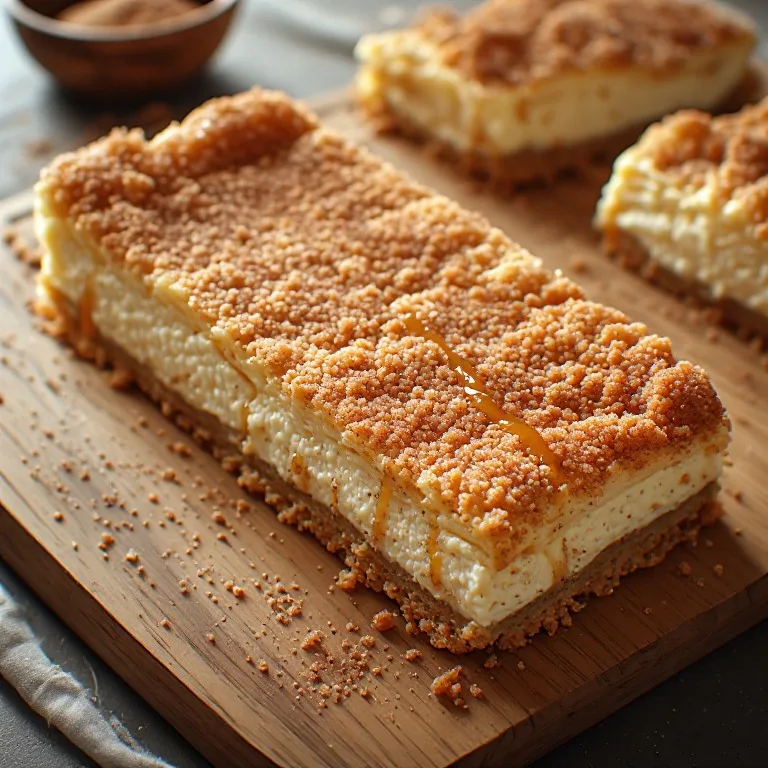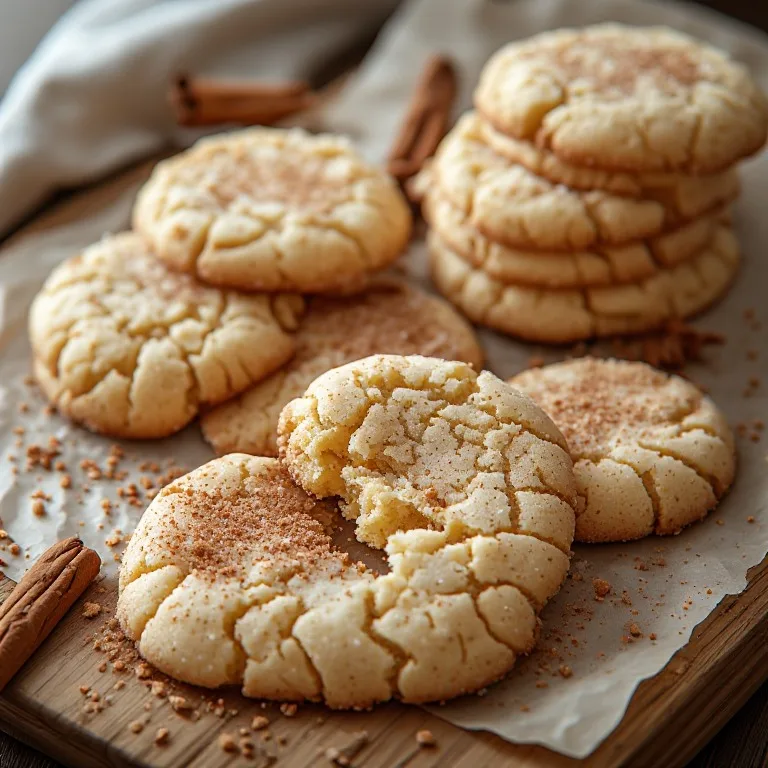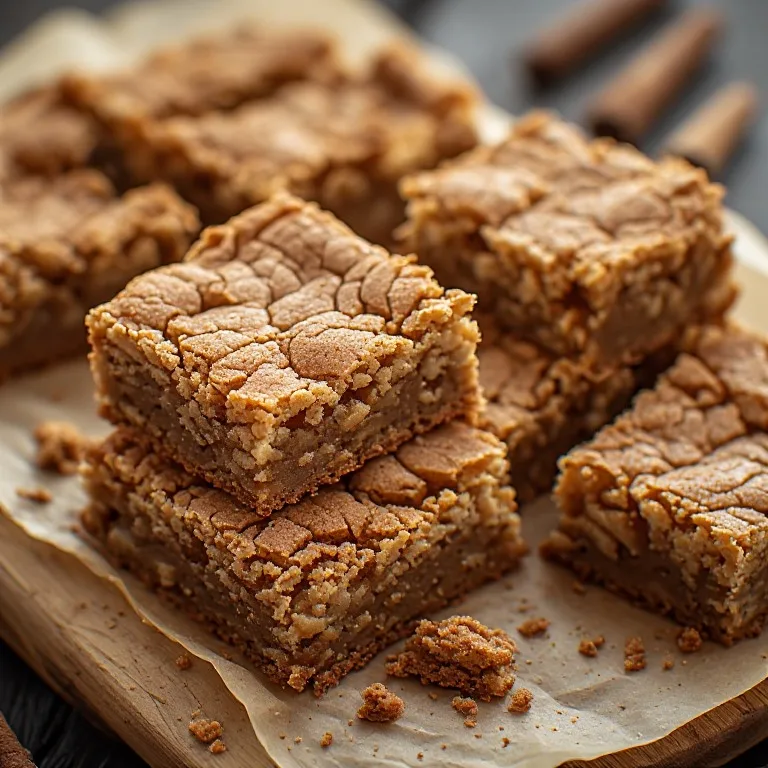



A snickerdoodle blondie is exactly what it sounds like: the entire flavor and texture of a snickerdoodle cookie — the crinkly cinnamon-sugar crust, the dense and chewy center, the faint tang from cream of tartar — baked into a single 8x8 pan with no portioning, no rolling, and no waiting for dough to chill.
The TikTok version went viral in fall 2026 because the reveal is genuinely satisfying: you spread a thick, fudgy batter into a pan, dust it with cinnamon sugar, bake it for 22 minutes, and pull out something that looks like a plateful of snickerdoodles fused into one perfect slab. It cuts into clean bars, holds together at room temperature, and tastes exactly like the cookies — because it is, essentially, a snickerdoodle in bar form.
The recipe takes about 10 minutes of active work. Here’s how to make it correctly.
Why This Works (and What Makes It a Snickerdoodle, Not Just a Cinnamon Blondie)
A standard blondie is butter, brown sugar, egg, vanilla, flour, and a leavener. A snickerdoodle blondie adds two things: cinnamon in the batter, and cream of tartar.
The cinnamon is obvious. The cream of tartar is the ingredient most copycat recipes skip — and it’s what makes this a snickerdoodle. Cream of tartar (potassium bitartrate) is an acid. In a snickerdoodle, it does two things: it creates a faint, clean tang that you don’t consciously notice as sour but that balances the sweetness in a way regular cinnamon sugar bars don’t achieve, and it interacts with baking powder to produce a specific texture — slightly denser and chewier than a standard blondie, with a more pronounced surface crinkle.
Skip the cream of tartar and you have a perfectly decent cinnamon blondie. It just won’t taste like a snickerdoodle.
The Batter: One Bowl, No Mixer
This is a dump-and-stir recipe. No mixer required.
Start with melted butter. Unlike traditional cookies or cakes that cream softened butter with sugar (which incorporates air), blondie batter starts with melted butter. Melted fat = dense, fudgy result. Creamed fat = light, cakey result. Let the butter cool for a few minutes after melting — if it’s still very hot when you add the sugar and eggs, it can partially cook the eggs.
Dissolve the brown sugar into the butter. Whisk the brown sugar into the warm butter for about a minute until no visible granules remain. This matters more than it sounds: undissolved sugar granules create a grainier texture in the final bar. The mixture should look uniform and slightly glossy.
One egg plus one yolk. This is the texture formula. A second whole egg would add extra liquid and egg white, which lifts the batter like a cake. The extra yolk (without its white) adds fat and richness, keeping the bar dense and chewy. If you only have whole eggs and don’t want to separate, use one whole egg — the bars will be slightly less fudgy but still good.
Fold the flour in gently. Once the dry ingredients go in, switch to a spatula and fold — don’t stir, don’t beat, don’t mix with a whisk. Overworked gluten (from overmixing) produces a tough, bready bar. You’re looking for the flour to just disappear — about 15–20 gentle folds. The batter will be thick, closer to cookie dough than cake batter.
The Cinnamon Sugar Crust
This is the visual and textural signature of the recipe. It works because of the butter underneath the sugar.
Before the cinnamon sugar goes on, the top of the batter gets brushed with melted butter — every inch, edge to edge. The butter acts as a binder: it makes the cinnamon sugar mixture adhere to the batter surface rather than sliding around, and it caramelizes during baking to create the thin, slightly crackly crust you see in the TikTok videos.
If you shortcut and just sprinkle the cinnamon sugar without buttering first, it will look blotchy and some of it will blow off when you open the oven. The butter step is 30 seconds and matters.
Reading Doneness
The hardest part of this recipe is pulling the bars at the right time. The center will look underdone when they’re actually done.
The correct cues: the edges have visibly pulled from the parchment and look set; the top surface is fully opaque and crinkled (no wet sheen); a toothpick in the center comes out with 2–3 moist crumbs — not clean, not wet batter, but moist crumbs. If the toothpick is clean, they’ve gone one or two minutes too long and will be drier once cooled.
The bars firm up to their final chewy texture at room temperature, over 45 minutes to an hour. Cutting them warm gives you bars that look raw in the center because the inside is still molten. Cutting them fully cool gives you clean slices that hold their shape.
Four Variations That Work
Brown Butter Snickerdoodle Blondies. Instead of plain melted butter in the batter, brown it first: cook the butter in a light-colored saucepan over medium heat, swirling occasionally, until the foam subsides and the milk solids turn amber and smell nutty — about 5 minutes. Cool it to room temperature before adding the sugar. Brown butter adds a deep toffee, nutty depth that makes these taste considerably more complex than the standard recipe.
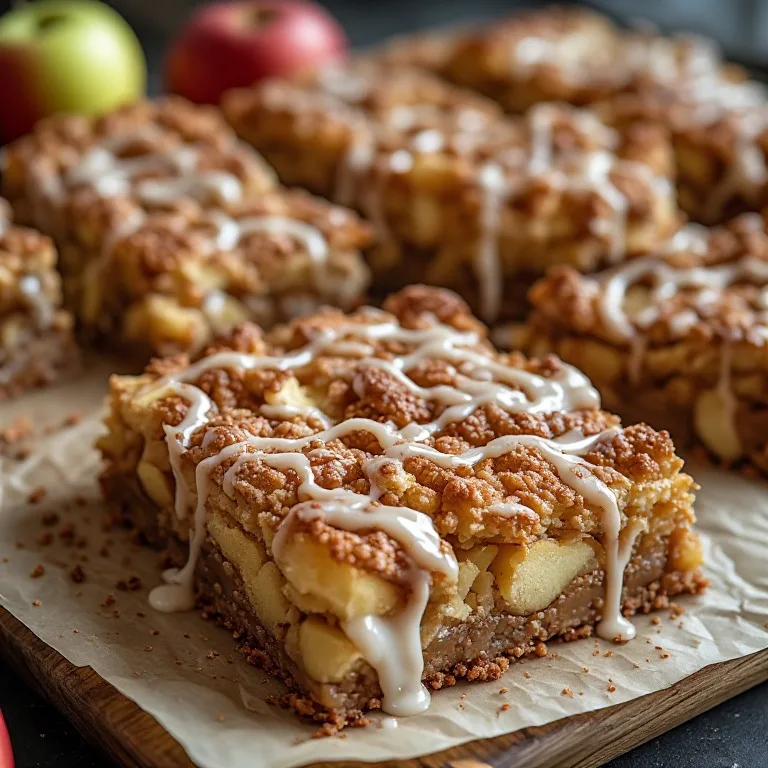
Apple Cider Snickerdoodle Blondies. Add 2 tablespoons of boiled apple cider (reduce ½ cup of cider to 2 tablespoons over medium heat) to the batter along with the vanilla. Swap the cinnamon in the batter for a mix of 1 tsp cinnamon + ½ tsp apple pie spice. The cider adds a concentrated apple note without adding liquid.
White Chocolate Snickerdoodle Blondies. Fold ½ cup of white chocolate chips into the finished batter before spreading. White chocolate’s sweetness and vanilla flavor intensifies the snickerdoodle character. Use good-quality white chocolate chips (Ghirardelli or Guittard, not generic waxy chips) — cheap white chocolate bakes into greasy pockets.
Chai Snickerdoodle Blondies. Replace the 1 tsp cinnamon in the batter with a chai spice mix: ¾ tsp cinnamon + ¼ tsp cardamom + ¼ tsp ginger + pinch of cloves. Use the same chai mix on top. The cardamom adds a floral, slightly citrusy lift that changes the whole profile — still recognizably snickerdoodle but with a spiced chai warmth.
Storage and Make-Ahead
These bars keep well. Store at room temperature in an airtight container for up to 5 days — no refrigeration needed. They’re better on day 2 than day 1: the center firms up overnight, the flavors settle, and they cut cleaner.
For longer storage, wrap individual bars in plastic wrap and freeze for up to 2 months. Thaw at room temperature for 30 minutes. The texture holds well after freezing — slightly denser than fresh, which some people prefer.
The batter can also be made ahead: mix the batter, cover the bowl tightly with plastic wrap, and refrigerate for up to 24 hours. Let it come to room temperature for 15 minutes before spreading into the pan (cold batter won’t spread easily).