
Pin It

Soft and Chewy Snickerdoodle Cookies

Soft and Chewy Snickerdoodle Cookies
Jump to Recipe
Prep 15 min Cook 11 min Serves 36 cookies
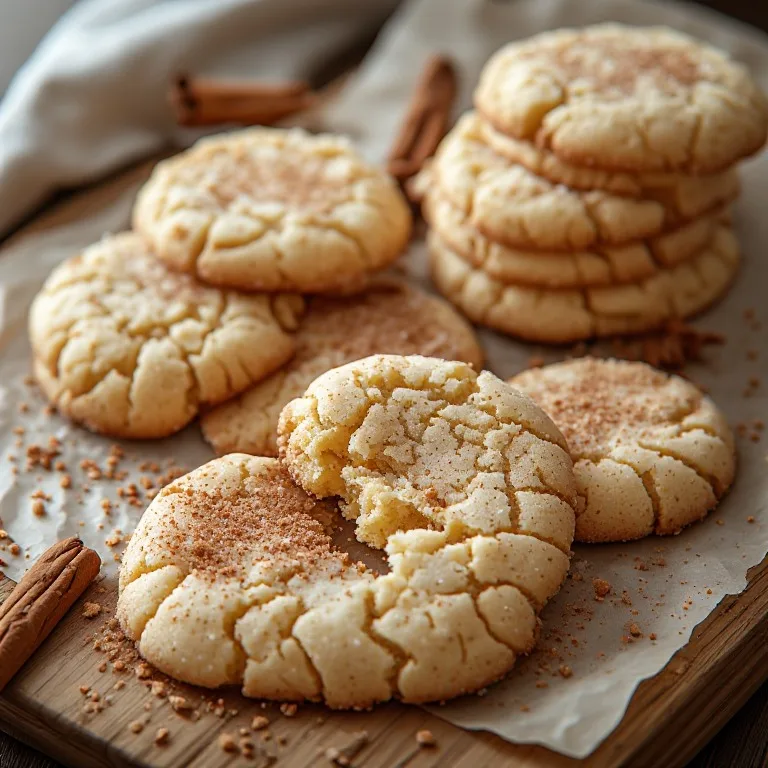
Quick answer: Classic soft snickerdoodles require three things most recipes get wrong: cream of tartar (not baking powder — it's what creates the tang and keeps them chewy), a 375°F oven (hotter and faster than most cookie recipes; high heat sets the exterior quickly while leaving the center soft), and pulling the cookies when they still look underdone at 10–11 minutes. The centers will appear domed and slightly wet — that's correct. They firm to soft and chewy as they cool on the hot pan for 5 minutes. The recipe: whisk 2¾ cups flour + 2 tsp cream of tartar + 1 tsp baking soda + ½ tsp salt. In a separate bowl, beat 1 cup softened butter + 1½ cups sugar until light and fluffy, about 2 minutes. Beat in 2 eggs and 2 tsp vanilla. Fold in the dry ingredients until just combined. Roll into 1½-inch balls (about 2 tablespoons each), coat in cinnamon sugar (¼ cup sugar + 2 tsp cinnamon), and bake at 375°F for 10–11 minutes. Done.

Shop the tools

Gear matched to this recipe. These are Amazon affiliate links — we may earn a small commission if you buy, at no extra cost to you.

As an Amazon Associate, Copycat Spices earns from qualifying purchases. Product images are generic illustrations, not the exact item listed.

Soft and Chewy Snickerdoodle Cookies

The soft, chewy snickerdoodle recipe that TikTok keeps rediscovering every fall. Cream of tartar is non-negotiable, the oven runs hot at 375°F, and you pull them out while the centers still look underdone. Here's exactly why those three things matter.

Easy Prep: 15 min Cook: 11 min Total: 26 min36 cookies servings ~$4.50/serving
Prep15 min
Cook11 min
Total26 min
Servings
36
At home~$4.50/serving
vs
Restaurant~$20.25/serving
You save ~78%

The Story Behind the Recipe

Snickerdoodles are one of the oldest American cookie recipes — the name appeared in print as early as 1889 in New England cookbooks, though the origin of the name is genuinely unknown. The leading theory traces it to the German word "Schneckennudeln" (a twisted cinnamon roll), brought over by Pennsylvania Dutch settlers, but linguists have never settled it. The 1902 cookbook "The Boston Cooking-School Cook Book" by Fannie Farmer is often cited as one of the earliest standardized recipes.

On TikTok, snickerdoodles go viral on a reliable cycle every fall — some creator posts their "perfect soft snickerdoodle" and the comment section fills up with cream of tartar debate, people surprised to learn what makes a snickerdoodle a snickerdoodle (not baking powder), and others who haven't thought about snickerdoodles in years suddenly craving them. A single batch costs about $2.50 to make at home; at a bakery, the same cookie runs $3–4 each. The fall timing is no accident: cinnamon-sugar and pumpkin spice share the same cultural moment, and snickerdoodles are the lower-effort, no-pumpkin answer to the season.

Nutrition Facts

Per serving (36 cookies servings)
Calories120
Total Fat5g
Total Carbs17g
Dietary Fiber1g
Sugars10g
Protein1g
Sodium65mg

* Estimated values based on standard recipe preparation. Actual values may vary.

Ingredients

  • For the dough
  • For the cinnamon-sugar coating

Instructions

💡
Pro tip: This recipe tastes even better the next day. The flavors need time to meld together in the fridge.
❄️
Storage: Keeps in an airtight container in the fridge for up to 2 weeks. Freezer-friendly for up to 3 months.
🎃 Free Halloween cookbook — download now The Copycat Halloween Cookbook A ready-made, photo-illustrated PDF of our best halloween copycat recipes — free to download, no building required. Pay what you want to support if you love it.

Free PDF — instant download. We'll also send new seasonal copycat recipes now and then; unsubscribe anytime. Or just download it →

Every fall, snickerdoodles blow up on TikTok again. Someone posts their “perfect soft snickerdoodle” and the comment section fills with cream of tartar debate, people surprised to learn it’s not just a cinnamon sugar cookie, and a wave of people who haven’t made snickerdoodles in years suddenly craving them. This is the recipe that earns those comments — classic, soft, chewy, with the tang and crinkled crust that make snickerdoodles worth making.

The short version: cream of tartar is non-negotiable, the oven runs hot at 375°F, and you pull the cookies out while the centers still look underdone. All three decisions work together.

What Makes a Snickerdoodle a Snickerdoodle

It is not baking powder. It is not just a cinnamon sugar cookie. The defining ingredients are cream of tartar and baking soda — not baking powder (which contains cream of tartar but in a different ratio, with cornstarch added, and without the same tang or texture effect).

Cream of tartar does three things no substitute replicates:

  1. Creates the signature tangy note — slightly sour, almost citrusy, underneath the cinnamon sugar
  2. Keeps the sugar from crystallizing as the cookies cool, preserving chewiness for days
  3. Combined with baking soda, produces the crinkled surface and even lift

Skip it and you have a good cinnamon sugar cookie. Use it and you have a snickerdoodle.

The Ratio That Actually Works

This ratio produces 36 consistently soft cookies:

  • Flour: 2¾ cups (344g) — spoon and level, don’t scoop
  • Cream of tartar: 2 teaspoons
  • Baking soda: 1 teaspoon
  • Butter: 1 cup (227g), fully softened (not melted)
  • Sugar: 1½ cups (297g)
  • Eggs: 2 large
  • Vanilla: 2 teaspoons

Cinnamon sugar coating: ¼ cup sugar + 2 teaspoons cinnamon. More cinnamon than most recipes call for — you want to taste it through the dough.

The Baking Temperature

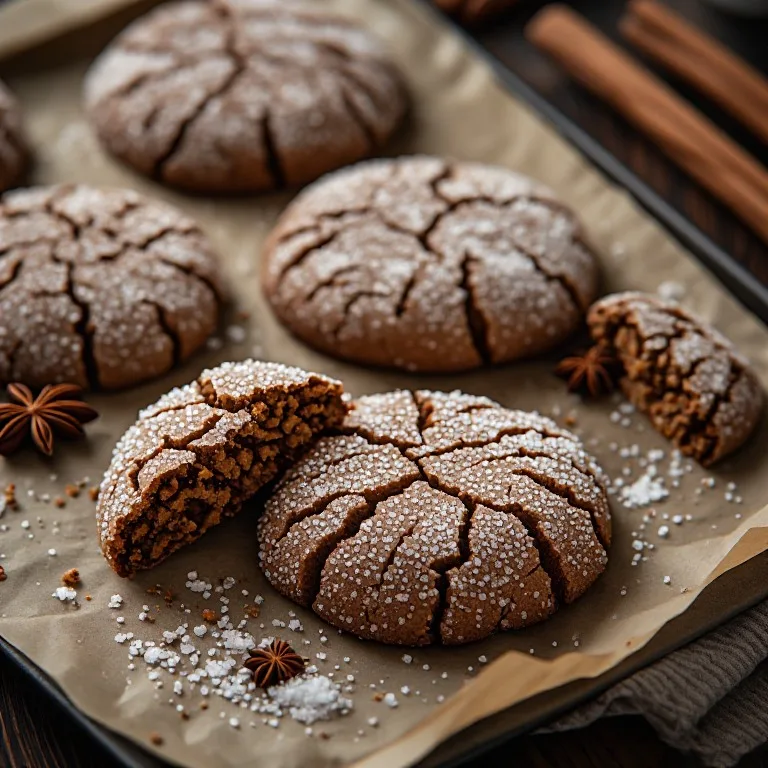
375°F, not 350°F. The hotter oven sets the exterior quickly, creating the crinkled crust while keeping the center genuinely soft. At 350°F, you get a uniformly soft cookie without the textural contrast. The cookies bake in 10–11 minutes — fast and hot, on purpose.

Pull them when they look underdone. The centers should still look domed and slightly soft when you open the oven. They firm to perfect chewiness on the hot pan in 5 minutes of carry-over cooking. Every minute past 11 shifts the texture from chewy toward crispy.

One Optional Step: Brown the Butter

The viral TikTok variation worth trying: brown the butter before using it. Pour the 1 cup of butter into a light-colored saucepan over medium heat, stirring constantly, until the foam subsides and the milk solids turn golden amber and smell nutty — about 5 minutes. Pour immediately into a bowl (including the brown bits), add 2 tablespoons of cold water to replace the evaporated moisture, and refrigerate until the consistency of softened butter, 30–45 minutes. Use exactly as directed above.

The result: snickerdoodles with a noticeably deeper, almost hazelnut-like flavor layered under the cinnamon sugar. Same recipe, same technique, meaningfully different cookie.
🥗

Make It Healthier

Love Soft and Chewy Snickerdoodle Cookies but want a lighter version? Try these simple swaps:

  • ✓Cut sugar in the dough from 1½ cups to 1¼ cups — the cinnamon sugar coating still delivers sweetness on every bite, and the cookies remain soft because the cream of tartar handles texture, not sugar quantity.
  • ✓Brown the butter before using it: pour the melted browned butter into a bowl, add 2 tablespoons of water (to replace the moisture lost), and chill until firm. You get a noticeably more complex flavor with no added calories.
  • ✓Use a 1-tablespoon scoop instead of the 2-tablespoon size to make smaller two-bite cookies at roughly 60 calories each — easy portion control without changing a thing in the recipe (reduce the bake time by about 2 minutes).
  • ✓Swap 3 tablespoons of flour for 3 tablespoons of whole wheat pastry flour for a very subtle nutty note and a tiny boost in fiber — more than that amount and the texture shifts noticeably.

Frequently Asked Questions

What is cream of tartar and why can't I substitute baking powder in snickerdoodles?

Cream of tartar (potassium bitartrate) is a natural acid left over from winemaking — it deposits on the inside of wine casks during fermentation and gets refined into a white powder sold in the spice aisle. In snickerdoodles, it does three specific things. First, it creates the signature tang — that slightly sour, almost citrusy note underneath the cinnamon-sugar that distinguishes a snickerdoodle from a cinnamon sugar cookie. Without it, snickerdoodles taste fine but they taste generic. Second, it keeps the sugar from crystallizing as the cookies cool, which preserves the chewy, tender texture over days instead of the cookies going hard and sandy. Third, combined with baking soda (the base that cream of tartar reacts with), it creates a specific leavening action that produces snickerdoodles' characteristic crinkled surface and even lift. Baking powder contains cream of tartar internally, but also contains cornstarch and different ratios of acid to base — you'd need roughly 1¾ teaspoons of baking powder to replace 2 tsp cream of tartar + 1 tsp baking soda, and the result will still be less tangy, more cakey, and won't crinkle the same way.

Why do snickerdoodles bake at 375°F instead of the usual 350°F?

The hotter oven is what creates the contrast between snickerdoodles' crinkled, slightly crispy exterior and soft, chewy center. At 350°F, cookies bake slowly and evenly throughout — which is ideal for thick drop cookies where you want consistent texture. At 375°F, the exterior of the snickerdoodle sets quickly, forming a thin crust that crinkles as the dough still expanding inside pushes against it. The fast exterior set also means the inside has less time in the oven and stays softer. The result: crispy-edged cinnamon-sugar shell around a genuinely tender center. Baking at 350°F produces snickerdoodles that are uniformly soft (not in a good way) without the textural contrast that makes them worth eating.

My snickerdoodles came out flat and crispy instead of soft and domed. What happened?

Almost always one of three causes: butter too warm, dough not chilled, or overbaked. If your butter was even slightly melted (not just softened), the dough will spread too wide before the exterior sets and you'll get flat, lacey cookies. Softened butter should still hold its shape — it should dent when pressed but not look glossy or slick. Second: a 30-minute chill helps the butter re-solidify before the oven, which reduces spread. Third: baking even 1–2 minutes too long at 375°F makes the difference between soft-and-chewy and crispy. Pull them at 10–11 minutes, when they still look underdone in the center — carry-over heat does the rest.

Do snickerdoodles need to be chilled before baking?

Unlike many drop cookie recipes, classic snickerdoodle dough doesn't require chilling because the dough is stiffer (less butter relative to flour, no melted butter, no add-ins that make it sticky). That said, a 30–60 minute chill produces a slightly thicker, more domed cookie that holds its shape better if you're baking in a warm kitchen. If you have time, chill. If you don't, it still works. The non-negotiables are fully softened (not warm) butter and not overbaking — those matter more than whether the dough is cold.

What's the origin of the name 'snickerdoodle'?

Genuinely unknown. The leading theory traces it to the German word 'Schneckennudeln' — a type of twisted cinnamon roll brought to New England by Pennsylvania Dutch (German-speaking) settlers in the 1700s-1800s. The name may have been anglicized and Americanized over generations into 'snickerdoodle.' Another theory is that it's just a New England nonsense rhyming name from the 1800s — a tradition of giving cookies fanciful names with no descriptive meaning (hermits, gobs, whoopie pies). The name appears in print in New England cookbooks from 1889. By Fannie Farmer's 1902 Boston Cooking-School Cook Book, the recipe had taken its modern form: rolled dough, cinnamon sugar coating, cream of tartar. No one has ever definitively established the name's etymology.

Can I freeze snickerdoodle dough or baked cookies?

Both work well. For dough: scoop and roll the balls, coat them in cinnamon sugar, then freeze on a parchment-lined sheet until solid. Transfer to a zip-top bag and freeze for up to 3 months. Bake from frozen at 375°F — add 2 minutes to the baking time. For baked cookies: let them cool completely, then layer in an airtight container with parchment between layers. Freeze up to 3 months. Thaw at room temperature for 30 minutes or warm in a 300°F oven for 5 minutes to revive the crispy exterior.

Love this recipe? Share it!

Free PDF: our 12 most-wanted copycat recipes — instant download.

Made it? Buy us a coffee

Every recipe here is free, with no paywalls. If this one was a hit at your table, a small tip keeps new copycats coming.

$

Ratings & Reviews

—
No ratings yet

Rate this recipe

Click a star to rate

Leave a Review

0/500

CS

Copycat Spices Editorial

Researched + fact-checked. Every recipe on Copycat Spices is built from published sources — official ingredient lists, brand-published recipes, interviews and food-science references — and fact-checked before it goes live, then written as clear, step-by-step instructions for home cooks of all skill levels.

Learn more about our mission →