Pin It

Snowball Cookies (The Classic Christmas Butter Pecan Cookies)

Snowball Cookies (The Classic Christmas Butter Pecan Cookies)
Jump to Recipe
Prep 20 min Cook 14 min Serves 36 cookies
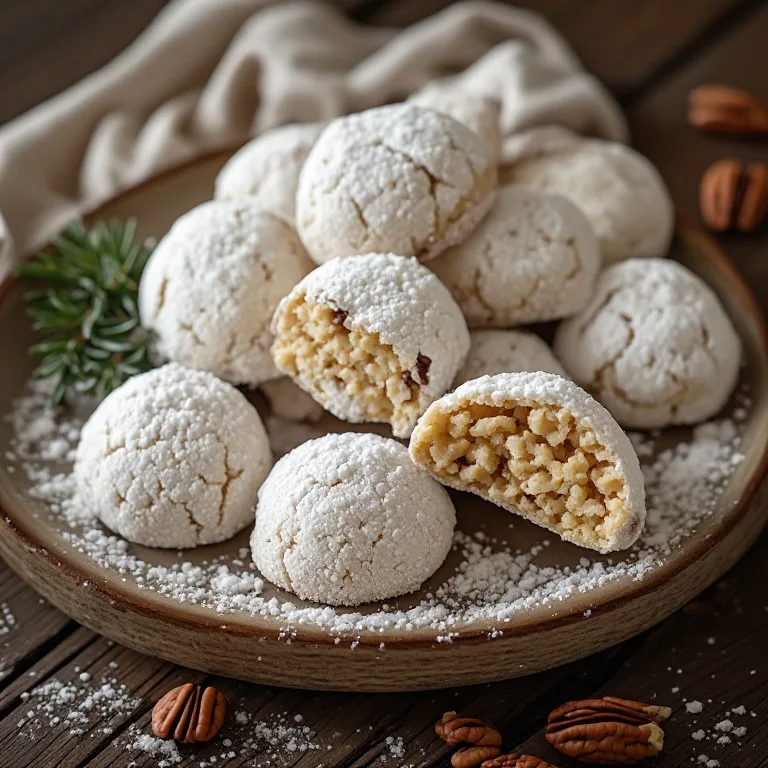
Quick answer: Snowball cookies: beat 1 cup (2 sticks / 225g) room-temperature unsalted butter with ½ cup (60g) powdered sugar and 1 tsp vanilla until pale and creamy, about 3 minutes. Mix in 2¼ cups (270g) all-purpose flour, ¼ tsp salt, and 1 cup (115g) finely chopped toasted pecans. Roll the dough into 1-inch balls; refrigerate 30 minutes. Bake at 350°F on parchment-lined sheets for 12 to 14 minutes — bottoms lightly golden, tops still pale. Roll in powdered sugar while still warm (60 to 90 seconds out of the oven), cool 20 minutes on a wire rack, then roll a second time. The double roll is what creates the signature thick white coating: the first roll melts into the warm cookie and seals the surface; the second roll sticks to the cooled surface and gives the snowy look.

Shop the tools

Gear matched to this recipe. These are Amazon affiliate links — we may earn a small commission if you buy, at no extra cost to you.

As an Amazon Associate, Copycat Spices earns from qualifying purchases. Product images are generic illustrations, not the exact item listed.

Snowball Cookies (The Classic Christmas Butter Pecan Cookies)

Viral TikTok snowball cookies — buttery, melt-in-your-mouth pecan balls rolled twice in powdered sugar so they look like little snowdrifts. The recipe is the same whether you call them Russian tea cakes, Mexican wedding cookies, or Italian wedding cookies. The double-roll technique, how to keep them round, and why the timing of the first roll matters.

Easy Prep: 20 min Cook: 14 min Total: 34 min36 cookies servings ~$2.10/serving
Prep20 min
Cook14 min
Total34 min
Servings
36
At home~$2.10/serving
vs
Restaurant~$9.45/serving
You save ~78%

The Story Behind the Recipe

Snowball cookies go by at least half a dozen names depending on where you grew up — Russian tea cakes, Mexican wedding cookies, Italian wedding cookies, polvorones, butterballs, sand tarts — but the recipe is essentially the same: finely chopped nuts folded into a rich butter-and-flour dough, shaped into balls, baked until barely golden, then rolled in powdered sugar twice. The name "Russian tea cakes" became standard in American cookbooks in the 1950s, though culinary historians haven't traced a definitive origin in Russia. The Fannie Farmer Cookbook and Betty Crocker both popularized versions in mid-century American kitchens, cementing them as a Christmas tin staple. A box of 12 homemade snowball cookies from a bakery runs $18 to $24 in most American cities. Made at home, a batch of 36 costs roughly $4 in ingredients.

The cookies resurface on TikTok every December because the double-roll moment is genuinely satisfying to watch — you pull a tray of pale, rounded cookies from the oven, roll each one in a bowl of powdered sugar while it's still warm (the sugar coats and begins to melt into the surface), let them cool, then roll them again (the second coat stays dry and bright white, giving the snowball look). The ASMR angle is the soft crunch of the first bite revealing a tender, barely-sweet interior through the powdered sugar exterior. The technique is simple enough that first-time bakers produce near-perfect results, which is part of why these videos perform so reliably.

Nutrition Facts

Per serving (36 cookies servings)
Calories110
Total Fat7g
Total Carbs11g
Dietary Fiber0.5g
Sugars4g
Protein1g
Sodium45mg

* Estimated values based on standard recipe preparation. Actual values may vary.

Ingredients

Instructions

💡
Pro tip: This recipe tastes even better the next day. The flavors need time to meld together in the fridge.
❄️
Storage: Keeps in an airtight container in the fridge for up to 2 weeks. Freezer-friendly for up to 3 months.
🎃 Free Halloween cookbook — download now The Copycat Halloween Cookbook A ready-made, photo-illustrated PDF of our best halloween copycat recipes — free to download, no building required. Pay what you want to support if you love it.

Free PDF — instant download. We'll also send new seasonal copycat recipes now and then; unsubscribe anytime. Or just download it →

Snowball cookies are three things at once: the easiest Christmas cookie you can make, one of the most recognizable (people always know what they’re looking at), and one of the few cookies that genuinely improves with a day of rest. The butter and nut oils meld overnight, the powdered sugar coating sets more firmly, and the interior firms from barely-set to melt-in-your-mouth tender.

The name you know them by depends on where you grew up: snowball cookies, Russian tea cakes, Mexican wedding cookies, Italian wedding cookies, polvorones, butterballs, sand tarts. The recipe is essentially the same — butter, powdered sugar, flour, finely chopped toasted nuts, vanilla, salt — shaped into balls and rolled in powdered sugar twice.

The double-roll technique is the whole recipe

Every other technique question in this recipe is secondary to getting the double roll right. Here is how it works and why each part matters:

Roll one: warm, 60 to 90 seconds out of the oven. The cookies need to be warm enough that the powdered sugar begins to melt into the surface but firm enough that they don’t fall apart when handled. 60 to 90 seconds is the window. The first coat will look uneven and slightly translucent — that’s correct. It’s a base layer, not a finished coat.

Cool completely. At least 20 minutes on a wire rack. The powdered sugar base coat needs to set before the second roll; if you rush it, the second coat dissolves into the first.

Roll two: room temperature. The second coat adheres to the dry set surface of the first coat and stays bright white. This is the “snowball” layer — the opaque, white coating that gives these cookies their look. The first roll alone gives a thin, uneven coat. The second roll is what makes them look like they’ve been sitting in a snowstorm.

Getting the shape right

The chilling step is what keeps these round. Butter-heavy, low-flour doughs spread when the fat is soft. Refrigerating the shaped balls for 30 minutes before baking keeps the fat cold long enough for the flour structure to set in the oven. Skip the chill and you get flat, disc-shaped cookies — they taste the same but lose the ball shape that makes them snowballs.

Roll the dough between your palms with gentle pressure. If the dough cracks and won’t come together, it’s too cold — let it sit 5 more minutes at room temperature. If it sticks to your hands and deforms when you place it on the sheet, it’s too warm — refrigerate 15 minutes and try again.

A 1-tablespoon cookie scoop is the right tool for portioning. Consistent size means consistent bake time, and consistent bake time means no batch where half are perfectly done and half are dry.

The nut choice and how to chop them

Pecans are the most common choice in American recipes and give the deepest, richest flavor against the butter and powdered sugar. Walnuts are the traditional nut in most Russian tea cake recipes; almonds appear in Italian and Spanish polvorones. Whatever nut you use, toast it first (8 to 10 minutes at 350°F) — raw nuts taste flat inside a baked cookie, while toasted nuts hold their flavor through the heat.

Chop the nuts very finely — roughly the size of panko breadcrumbs. Large pieces create structural weak points in the dough that split the cookie when you roll it in the sugar. The goal is to have nut flavor evenly distributed through every bite, not occasional large chunks.

Make-ahead and gifting

These cookies improve overnight. The day they’re baked, the powdered sugar coating is fresh but the interior is still very soft. By the next day, the coating has set more firmly and the interior has firmed from soft to the correct melt-in-your-mouth texture. Bake them the day before you need them and store covered at room temperature.

For gifting, layer the cookies with wax paper between layers in a tin or box. The powdered sugar coating is fragile — direct contact between cookies causes the coating to transfer and the surfaces to stick. With proper layering, they travel well and keep for up to 2 weeks at room temperature.

Do not refrigerate. Cold air dries them out within a day. Room temperature in an airtight container is the correct storage.
🥗

Make It Healthier

Love Snowball Cookies (The Classic Christmas Butter Pecan Cookies) but want a lighter version? Try these simple swaps:

  • ✓Toast the pecans before chopping — 8 minutes at 350°F deepens their flavor so you taste the nut more clearly through the butter and sugar, without changing the nutrition at all.
  • ✓Replace ¼ cup of the pecans with finely chopped dark chocolate (70% cacao or higher). The chocolate melts slightly into the baked cookie and creates pockets of bittersweet contrast that balance the powdered sugar coating.
  • ✓Chill the dough balls for 30 minutes before baking. Cold dough holds its round shape through the oven; room-temperature dough spreads and flattens. The chilling step is what gives you the true snowball shape.
  • ✓Use a small cookie scoop (1-tablespoon size) to portion every ball the same size. Consistent size = consistent bake time = no batch where half the cookies are underdone and half are overbaked.

Frequently Asked Questions

What is the difference between snowball cookies, Russian tea cakes, and Mexican wedding cookies?

The recipe is almost identical across all three names — butter, powdered sugar, flour, finely chopped nuts, vanilla, and salt, shaped into balls and double-rolled in powdered sugar. The main variation is the nut: pecans are most common in American recipes (both the Southern-style 'snowball cookie' and the Mexican wedding cookie versions); walnuts appear in many 'Russian tea cake' recipes; almonds show up in Italian and Spanish polvorones. The fat ratio and sugar amount are slightly different in regional variations — polvorones tend to use lard or vegetable shortening and are sandier in texture — but the basic technique and result are the same. You can use any of the names on your cookie tin; no one will argue with you.

Why do my snowball cookies spread flat instead of staying round?

The dough was too warm when it went into the oven. Butter-heavy, low-flour doughs spread aggressively when the fat isn't cold enough to hold its structure before the starch sets. The fix: after you roll the dough into balls, refrigerate them on the baking sheet for 30 minutes before baking. Cold dough holds its shape through the first several minutes of oven heat until the flour structure sets. Room-temperature dough starts spreading from the moment it hits the hot sheet. If your kitchen is warm and the dough balls soften before you finish rolling them all, refrigerate the finished tray immediately rather than letting them sit out.

When exactly should I do the first powdered sugar roll?

60 to 90 seconds after the pan comes out of the oven — not immediately, and not after the cookies cool. Still-warm cookies are fragile and the powdered sugar melts unevenly if you roll them while they're too hot; wait one minute for the surface to firm slightly. The warm surface causes the powdered sugar to partially dissolve and adhere as a base coat, which is what the second roll sticks to. If you wait until the cookies are fully cool for both rolls, the powdered sugar doesn't adhere well to the first coat and slides off the second. The sequence — warm first roll, cool second roll — is the technique that creates the thick, snowy look.

Can I use walnuts instead of pecans?

Yes. Walnuts are the traditional nut in many Russian tea cake recipes; pecans are more common in American Southern and Mexican wedding cookie versions. The textures are similar — both need to be finely chopped so they distribute evenly through the dough and don't create large chunks that split the cookie when you shape it. Almonds also work well (finely ground or very finely chopped) and are used in Italian and Spanish versions. Toast whichever nut you use before adding it to the dough — raw nuts taste flat inside a baked cookie, while toasted nuts hold their flavor through the oven.

Why do my cookies crack and fall apart when I roll them in the powdered sugar?

Two possible causes. First, the cookies may be too hot — if you roll them immediately out of the oven (before that 60-to-90-second rest), the surface is still fragile and the rolling pressure can split them. Second, the pecans may be chopped too coarsely. Large nut pieces create structural weak points in the dough; if the nut-to-dough ratio is right but the pieces are large, you get cookies that crumble at the nut edges when handled. Chop the nuts very finely — pieces roughly the size of panko breadcrumbs — or pulse them in a food processor until they're about ⅛-inch pieces. A well-formed snowball cookie should hold together easily when rolled.

How long do snowball cookies keep, and can I freeze them?

Stored in an airtight tin at room temperature, snowball cookies keep well for 10 to 14 days — the high butter content keeps them tender, and the powdered sugar coating protects the surface. Refrigeration dries them out; room temperature is better for short-term storage. For longer storage, freeze the baked-but-unrolled cookies: let them cool completely, freeze on a sheet pan until solid, then transfer to a freezer bag. They keep frozen for up to 3 months. When ready to serve, thaw at room temperature for 30 minutes and roll in powdered sugar (do one roll only at this point, since they never got the warm first roll). The texture after freezing and thawing is slightly less tender than fresh-baked but still very good.

Can I make the dough ahead and refrigerate it overnight?

Yes. After mixing, the dough can be refrigerated (wrapped or in an airtight container) for up to 3 days. When ready to bake, let the dough sit at room temperature for 10 to 15 minutes — just enough to soften slightly so it rolls without cracking. Scoop and roll into balls directly, then bake from the refrigerator-cold state (the cold dough holds its shape even better than chilled-then-refrigerated balls). The overnight rest actually improves flavor slightly — the butter firms and the nut oils meld into the dough more fully.

Love this recipe? Share it!

Free PDF: our 12 most-wanted copycat recipes — instant download.

Made it? Buy us a coffee

Every recipe here is free, with no paywalls. If this one was a hit at your table, a small tip keeps new copycats coming.

$

Ratings & Reviews

—
No ratings yet

Rate this recipe

Click a star to rate

Leave a Review

0/500

CS

Copycat Spices Editorial

Researched + fact-checked. Every recipe on Copycat Spices is built from published sources — official ingredient lists, brand-published recipes, interviews and food-science references — and fact-checked before it goes live, then written as clear, step-by-step instructions for home cooks of all skill levels.

Learn more about our mission →