

Pin It

Viral TikTok Spam Musubi — Hawaii's Glazed Spam Rice Block, Made at Home

Viral TikTok Spam Musubi — Hawaii's Glazed Spam Rice Block, Made at Home
Jump to Recipe
Prep 10 min Cook 20 min Serves 8 pieces
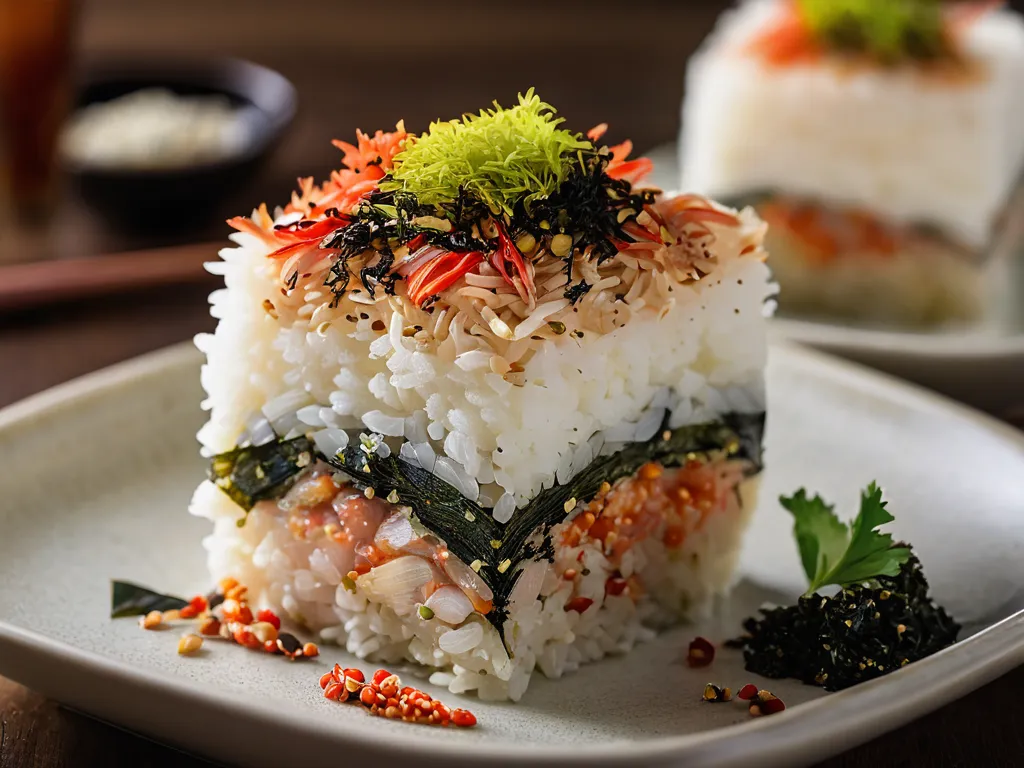
Quick answer: Cook 2 cups short-grain rice; let it sit off heat for 10 to 15 minutes until warm but not steaming hot. Cut one can of SPAM Classic into 8 equal slices. Heat a dry non-stick skillet over medium-high heat — no oil — and sear spam 2 minutes per side until golden-brown. Reduce heat to medium-low. Whisk together 3 tablespoons soy sauce, 2 tablespoons mirin, and 1½ tablespoons sugar until sugar dissolves; pour over the spam slices. Baste each slice 30 seconds per side until lacquered and sticky. Remove and rest on a plate. Cut 4 nori sheets in half lengthwise so you have 8 strips about 8×3 inches. Wet your hands lightly. Using a musubi mold (or the empty spam can with both ends removed): lay one nori strip shiny-side-down on a flat surface. Center the mold on the nori. Press ½ cup warm rice firmly into the mold, compacting it into a solid block. Sprinkle furikake if using. Place one glazed spam slice on top. Press down on the spam and lift the mold straight up. Fold one nori flap over the top, then the other flap, overlapping slightly. Dab water on the end to seal. Eat within 15 minutes — nori goes from crisp to chewy as it absorbs moisture from the rice. The three failures: cold rice (won't compact and falls apart), unglazed or burned spam (glaze must go on after the sear over reduced heat), and assembling too early (nori sogginess is irreversible).

Shop the tools

Gear matched to this recipe. These are Amazon affiliate links — we may earn a small commission if you buy, at no extra cost to you.

As an Amazon Associate, Copycat Spices earns from qualifying purchases. Product images are generic illustrations, not the exact item listed.

Viral TikTok Spam Musubi — Hawaii's Glazed Spam Rice Block, Made at Home

How to make viral spam musubi at home: the soy-mirin-sugar glaze that caramelizes the spam, why warm rice is non-negotiable, and the three things TikTok versions get wrong.

Easy Prep: 10 min Cook: 20 min Total: 30 min8 pieces servings ~$4.50/serving
Prep10 min
Cook20 min
Total30 min
Servings
8
At home~$4.50/serving
vs
Restaurant~$20.25/serving
You save ~78%

The Story Behind the Recipe

How to make viral spam musubi at home: the soy-mirin-sugar glaze that caramelizes the spam, why warm rice is non-negotiable, and the three things TikTok versions get wrong.

Nutrition Facts

Per serving (8 pieces servings)
Calories270
Total Fat11g
Total Carbs30g
Dietary Fiber0g
Sugars4g
Protein7g
Sodium1050mg

* Estimated values based on standard recipe preparation. Actual values may vary.

Ingredients

  • Rice
  • Spam and Glaze
  • Assembly

Instructions

💡
Pro tip: This recipe tastes even better the next day. The flavors need time to meld together in the fridge.
❄️
Storage: Keeps in an airtight container in the fridge for up to 2 weeks. Freezer-friendly for up to 3 months.
🎃 Free Halloween cookbook — download now The Copycat Halloween Cookbook A ready-made, photo-illustrated PDF of our best halloween copycat recipes — free to download, no building required. Pay what you want to support if you love it.

Free PDF — instant download. We'll also send new seasonal copycat recipes now and then; unsubscribe anytime. Or just download it →

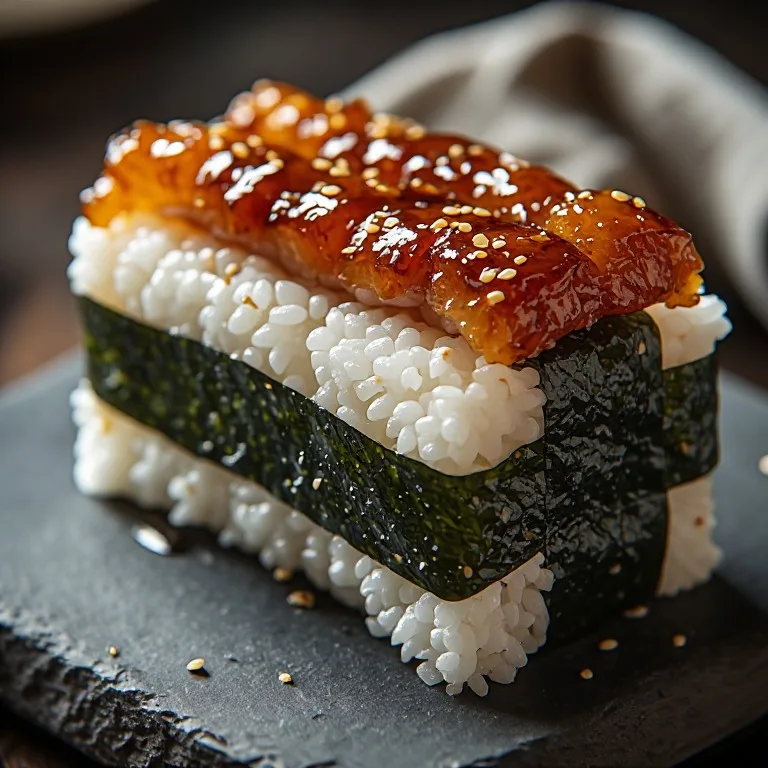
Spam musubi is Hawaii’s ultimate convenience-store snack: a block of sticky short-grain rice, a glazed slab of seared Spam, and a strip of roasted nori wrapped tight around both. It costs about $2 at any 7-Eleven in Honolulu. On the mainland, recreating it used to mean finding an Asian grocery and knowing what you were doing. TikTok changed that — but TikTok versions have three consistent problems that make them worse than the real thing.

The Three Things Most TikTok Versions Get Wrong

1. Cold rice — and why warm rice is non-negotiable

Short-grain rice compacts into a self-holding block because of starch gelatinization: during cooking, the starch granules swell and become sticky. While the rice is still warm, that starch is active and pliable — press it hard, it bonds. Once the rice cools below roughly 100°F, the starch firms up and the bonds become rigid rather than formative. Pressing cold rice gives you crumbly chunks that don’t hold when the mold is lifted.

Most TikTok videos skip this detail because the creator made the rice fresh off camera. Home cooks following along try to use leftover refrigerator rice, press it, and wonder why the musubi crumbles onto the nori. The fix is simple: use rice cooked within the last hour, and let it rest 10 to 15 minutes after cooking. Warm-to-the-touch is the target. If you’re reheating day-old rice, microwave it with 2 tablespoons of water, tightly covered, for 45 seconds and press immediately.

2. Unglazed spam — or glaze burned at high heat

Plain-fried spam is edible but one-dimensional: aggressively salty, slightly porky, no depth. The soy-mirin-sugar glaze is what distinguishes Hawaiian-style musubi from putting spam on rice. It adds a sticky, sweet-savory lacquer that caramelizes against the seared spam surface.

The problem is timing. The glaze needs to go on after the sear, over reduced heat. Added to a screaming-hot pan, the sugar burns within 20 seconds — you get a dark, bitter coating instead of a sticky, honey-like one. The correct sequence: get the spam golden-brown and crispy in a dry hot pan (no oil — spam renders its own fat), then reduce the heat to medium-low, pour in the glaze, and baste each slice for 30 seconds per side until it’s glossy and thick. The glaze should be thick enough to coat a spoon before it hits the spam — if it runs off, cook it a few more seconds.

3. Assembling too early — the nori sogginess problem

Roasted nori has a crisp, seaweed-forward snap when fresh. The moment it contacts warm, moist rice, it starts absorbing moisture. At 5 minutes: still mostly crisp. At 15 minutes: noticeably softer. At 30 minutes: distinctly chewy. At 45 minutes and beyond: fully pliable, almost wet.

Most TikTok recipe videos show a platter of musubi assembled and left sitting — beautiful for the shot, but the nori is soft by the time the creator takes a bite. The traditional Hawaiian convenience-store approach handles this correctly: musubis are either eaten immediately after being made, or wrapped in plastic wrap the moment they’re assembled. The plastic seals out air (which speeds moisture transfer) and holds the nori in a stable middle-ground state for up to 45 minutes. For at-home batches: assemble, wrap in plastic if not eating immediately, and eat within that 45-minute window.

Why Spam in Hawaii

During World War II, military supply chains flooded Hawaii with Spam — it was portable, shelf-stable protein that didn’t require refrigeration. Hawaii’s Japanese and Filipino communities, already familiar with rice ball culture (onigiri in Japanese cuisine), began using the spam can itself as a rice mold and the Spam slice as the filling. The rectangular shape is a direct result of pressing rice into the spam can. By the 1970s and 1980s, musubi was being sold at school cafeterias, sporting events, and convenience stores across the islands. 7-Eleven Hawaii reportedly sells thousands per day.

Musubi began appearing on TikTok in 2022 and 2023, largely through Hawaiian and Japanese-American creators sharing nostalgic childhood recipes. By 2025-2026, US Foods was tracking it as one of the year’s biggest mainland restaurant adoption trends — musubi bowls, chicken katsu musubis, and banh mi musubis started appearing on menus in Los Angeles, New York, and Austin. The home-cook version (spam + rice + nori) remains the most searched and most made.

The Glaze Ratio That Works

The three-ingredient glaze — soy sauce, mirin, sugar — can be adjusted based on how sweet or salty you want the result:

  • Standard Hawaiian (balanced): 3 tbsp soy sauce : 2 tbsp mirin : 1½ tbsp sugar
  • Sweeter (more caramelization): 3 tbsp soy sauce : 2 tbsp mirin : 2 tbsp brown sugar
  • More savory (umami-forward): 3 tbsp soy sauce : 1 tbsp mirin : 1 tbsp sugar + ½ tsp sesame oil added off heat

The key is whisking the sugar into the soy and mirin before pouring it into the hot pan. Undissolved sugar granules can burn in spots even at reduced heat. If you want to be precise, microwave the glaze mixture for 30 seconds and stir until fully dissolved before using.

The Furikake Question

Furikake — a dry Japanese seasoning blend of dried fish, sesame seeds, nori flakes, salt, and often MSG — gets sprinkled between the pressed rice and the spam slice. It adds umami depth and a tiny crunch that plain rice doesn’t have. Most Hawaiian convenience-store musubis include it.

The most common type is nori-komi furikake (sesame + seaweed + bonito flakes). Wasabi furikake adds subtle heat. There are vegetarian versions made without bonito. If you can’t find furikake, toasted sesame seeds plus a pinch of MSG and a few torn bits of nori from a spare sheet gets you 80% of the way there. Find furikake at any Asian grocery store, Mitsuwa, or online — a single bag lasts for many batches.

Make-Ahead and Storage

Spam musubi is one of the few make-ahead rice dishes that actually works, with one condition: wrap in plastic wrap immediately after assembly. The plastic creates an airtight seal that holds the nori in a stable state. Wrapped musubis keep at room temperature for 45 minutes, or in the refrigerator overnight. Eat refrigerated musubi at room temperature or after a 20-second microwave — never eat cold rice if you can avoid it, the texture goes from sticky to hard. The nori will be softer after refrigeration but the musubi is still genuinely good the next day.

Do not freeze — the rice texture becomes grainy and mealy after thawing.

Related Recipes
🥗

Make It Healthier

Love Viral TikTok Spam Musubi — Hawaii's Glazed Spam Rice Block, Made at Home but want a lighter version? Try these simple swaps:

  • ✓Use SPAM Lite (33% less fat, 25% less sodium) — it sears and glazes identically to SPAM Classic and the calorie difference per musubi is about 40 calories. The trade-off is a slightly firmer, less rich texture.
  • ✓Brown rice works but requires adjustment: cook it fully soft (it won't compact quite as firmly as short-grain white), and press it more aggressively. The nuttier flavor pairs well with the sweet-soy glaze.
  • ✓Reduce sodium significantly by swapping full-sodium soy sauce for low-sodium soy sauce in the glaze — cuts about 200mg per musubi — and rinsing the spam slice briefly under cold water before searing (removes surface salt, reduces total sodium by ~15% per slice).

Frequently Asked Questions

Why is my musubi falling apart when I remove it from the mold?

Almost always rice temperature. Cold rice — even briefly refrigerated rice — doesn't have active enough starch to bind under pressure. The starch molecules in short-grain rice need to be warm and slightly tacky to interlock under compression. Press the rice when it's still warm from cooking: not so hot it burns your hands, but clearly warmer than room temperature. If your rice has cooled, microwave it with 2 tablespoons of water, tightly covered with plastic wrap, for 45 seconds and press immediately. The second common cause is long-grain rice — it simply doesn't have the starch structure to hold.

Can I make spam musubi ahead of time?

Yes, with one essential step: wrap each musubi tightly in plastic wrap the moment it's assembled. The plastic creates a sealed environment where the nori stays pliable rather than going fully crispy or fully soggy — it's a middle ground that holds reasonably well for up to 45 minutes at room temperature or overnight in the refrigerator. Refrigerated musubi should be eaten at room temperature or after a 20-second microwave. Avoid making a batch and leaving it unwrapped on a counter — the nori will go from crisp to chewy to soggy in a predictable 20-minute window.

What does furikake add, and is it required?

Furikake is a dry Japanese seasoning blend — typically dried fish flakes, sesame seeds, dried seaweed flakes, salt, and sometimes MSG. Sprinkled between the rice and spam, it adds umami depth and a subtle crunch that raw rice doesn't have. It's not required, but most Hawaiian convenience-store musubis include it. Any style works: regular (nori + bonito + sesame), wasabi furikake (adds light heat), or the simpler sesame-salt varieties. Find it at Asian grocery stores or online.

Can I use a different protein instead of spam?

Yes. The most common substitutions are chicken katsu (fried breaded chicken cutlet, sliced to fit), teriyaki chicken (same glaze concept), salmon (seasoned and pan-seared), and scrambled egg. Korean convenience stores also popularize tuna mayo musubis (canned tuna mixed with Kewpie mayo and sriracha) and buldak (fire chicken) versions. The rice-nori structure works with any firm filling that can be pressed flat enough to wrap. Avoid watery fillings — excess moisture soaks the nori immediately.

Why is my nori wet and falling apart before I've even eaten the musubi?

The rice was too hot when you assembled it. Steam from very hot rice condenses against the nori immediately and begins softening it before you've taken a single bite. Let the rice cool to warm — 10 minutes off heat — before pressing. Also check that your nori sheets are fresh and dry; a partially opened pack left out overnight absorbs ambient humidity and won't have the snap needed for good musubi.

What does 'shiny side down' for the nori actually mean?

Roasted nori sheets have two distinct surfaces: a shiny, slightly smoother side and a rougher, more matte side. Place the nori with the shiny side facing down on your work surface (so it faces outward when the musubi is wrapped). The shiny side is slightly more moisture-resistant and keeps the musubi looking clean. More practically, the rough side grips the rice better, which helps the wrap hold its shape. If you can't tell the difference, either side works — the shiny-side rule matters more for aesthetics than structure.

Is spam musubi actually Hawaiian in origin?

Yes. Spam musubi developed in Hawaii during and after World War II, when Spam became a staple protein due to military supply chains. Hawaii's Japanese and Filipino communities adapted the Japanese rice ball (onigiri) concept to use spam as the filling. The rectangular shape comes from pressing the spam can itself as a mold. Today musubi is sold in nearly every Hawaiian convenience store (7-Eleven Hawaii sells thousands daily), school cafeteria, and ABC Store — it is arguably Hawaii's most iconic quick meal. The dish began appearing on TikTok widely in 2022-2024 and saw a major mainland restaurant adoption wave in 2025-2026.

Do I need to season the rice with vinegar like sushi rice?

No. Authentic Hawaiian spam musubi uses plain short-grain rice with just a pinch of salt — not sushi rice (which is seasoned with rice vinegar, sugar, and additional salt). Vinegared rice changes the flavor balance significantly, making the musubi taste like sushi rather than the savory-sweet Hawaiian original. The confusion is understandable because many recipes label short-grain rice as 'sushi rice' in grocery stores, but the vinegar seasoning is a separate preparation step, not an inherent property of the rice variety.

Love this recipe? Share it!

Free PDF: our 12 most-wanted copycat recipes — instant download.

Made it? Buy us a coffee

Every recipe here is free, with no paywalls. If this one was a hit at your table, a small tip keeps new copycats coming.

$

Ratings & Reviews

—
No ratings yet

Rate this recipe

Click a star to rate

Leave a Review

0/500

CS

Copycat Spices Editorial

Researched + fact-checked. Every recipe on Copycat Spices is built from published sources — official ingredient lists, brand-published recipes, interviews and food-science references — and fact-checked before it goes live, then written as clear, step-by-step instructions for home cooks of all skill levels.

Learn more about our mission →