


Pin It

Spatchcock Chicken

Spatchcock Chicken
Jump to Recipe
Prep 20 min Cook 45 min Serves 4
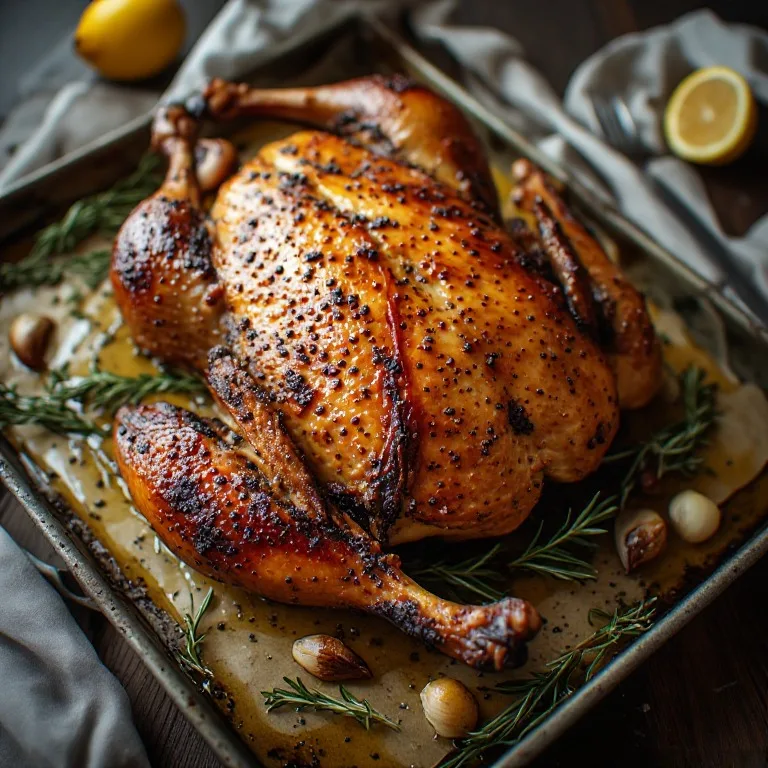
Quick answer: Backbone removed, whole chicken pressed flat, seasoned with garlic-herb compound butter under the skin, and blasted at 450°F for 45 minutes — crispy skin on every surface, even cooking throughout, in half the time of a traditional roast. The technique that makes home cooks feel like professionals.

Spatchcock Chicken

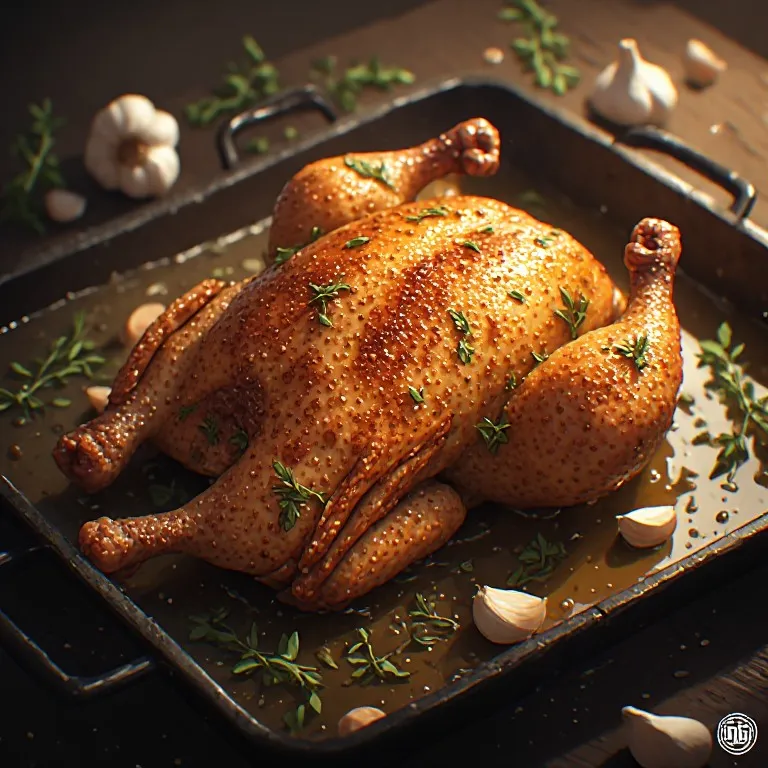
Whole chicken with the backbone removed and flattened, roasted at high heat in 45 minutes — the fastest way to perfectly crispy-skin, juicy whole chicken you'll ever make.

Medium Prep: 20 min Cook: 45 min Total: 1h 5m4 servings ~$4.50/serving
Prep20 min
Cook45 min
Total1h 5m
Servings
4
At home~$4.50/serving
vs
Restaurant~$20.25/serving
You save ~78%

The Story Behind the Recipe

Whole chicken with the backbone removed and flattened, roasted at high heat in 45 minutes — the fastest way to perfectly crispy-skin, juicy whole chicken you'll ever make.

Nutrition Facts

Per serving (4 servings)
Calories450
Total Fat24g
Total Carbs3g
Dietary Fiber0g
Sugars0g
Protein54g
Sodium710mg

* Estimated values based on standard recipe preparation. Actual values may vary.

Ingredients

Instructions

💡
Pro tip: This recipe tastes even better the next day. The flavors need time to meld together in the fridge.
❄️
Storage: Keeps in an airtight container in the fridge for up to 2 weeks. Freezer-friendly for up to 3 months.
🎃 Free Halloween cookbook — download now The Copycat Halloween Cookbook A ready-made, photo-illustrated PDF of our best halloween copycat recipes — free to download, no building required. Pay what you want to support if you love it.

Free PDF — instant download. We'll also send new seasonal copycat recipes now and then; unsubscribe anytime. Or just download it →

Spatchcock Chicken — The Technique That Makes Home Cooks Look Professional

Spatchcocking is one of those cooking techniques that sounds complicated until someone explains what it actually is: remove the backbone, press the bird flat. That’s it. The result is a whole chicken that roasts in 45 minutes instead of 90, develops even crispy skin across every surface including the thighs and wings, and produces more consistent doneness because no part is hidden from the oven’s heat.

When TikTok creators started documenting the backbone-removal step in real time — the shears cutting through cartilage, the crack of the breastbone being pressed flat — the reaction was half horror and half immediate desire to try it. The before-and-after was just too good.

Why Flat Chicken Is Better Chicken

The engineering logic is elegant. A trussed, upright whole chicken is essentially a ball of protein with highly unequal thickness. The breast, which sits at the top and faces the heat directly, is the thickest part. The thighs are denser muscle with more fat. The wings are thin. Traditional roasting requires low-and-slow heat to let the breast cook through before the thighs fall apart — but the compromise leaves the breast dry by the time the thigh’s collagen has rendered.

Spatchcocking eliminates the compromise. Everything is the same height. Everything faces the heat at the same angle. The oven can run at 450°F — the temperature that creates proper Maillard browning on the skin — because there are no hidden parts to worry about.

The Compound Butter Under the Skin

Butter and herbs applied under the skin rather than on top of it changes the outcome entirely. Butter on top of the skin melts and runs off into the pan. Butter pushed directly against the meat bastes the chicken from within throughout the entire cook — the fat renders slowly, the garlic and herbs infuse the meat, and the breast stays genuinely juicy even at 450°F.

The technique requires confidence. Slide your fingers under the breast skin from the neck end and push toward the thigh, loosening the membrane. The skin tears if you’re aggressive, but it’s more forgiving than it looks. You want to reach both breast lobes and both thigh caps.

The 450°F Roast

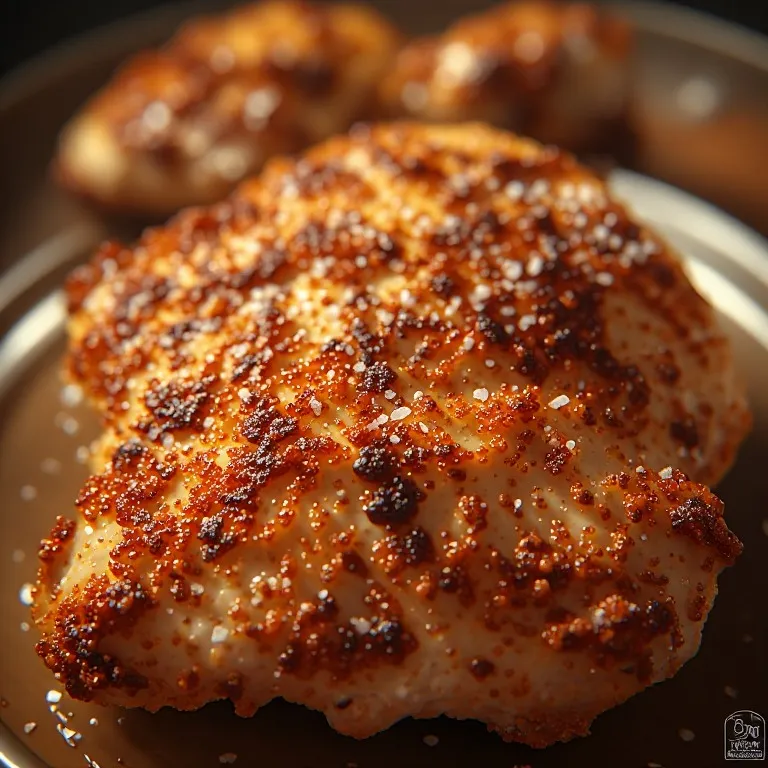
The specific temperature matters. Lower temperatures (375°F) don’t produce the kind of skin that makes people stop talking. At 450°F, the skin goes through a rapid rendering phase where the subcutaneous fat underneath liquefies and crisps the outer layer into something genuinely shatteringly good. The breast meat, with the compound butter underneath, baste throughout and doesn’t dry out in the 45-minute cook time.

Watch it the last 10 minutes — the skin can go from perfectly golden to too dark quickly at this temperature.

Three Variations

Jerk spatchcock chicken: Marinate the pressed flat chicken in a jerk marinade (allspice, scotch bonnet, thyme, green onion, ginger, soy, lime) for 4 hours or overnight before roasting. The flat surface area means the marinade penetrates much deeper than it would with a whole bird. Roast at 425°F and serve with rice and peas.

Harissa spatchcock chicken: Blend 3 tablespoons harissa paste with 2 tablespoons olive oil and 1 tablespoon honey. Rub under and over the skin. Roast with sliced red onion and cherry tomatoes in the pan — they become a ready-made sauce. Serve with couscous and yogurt.

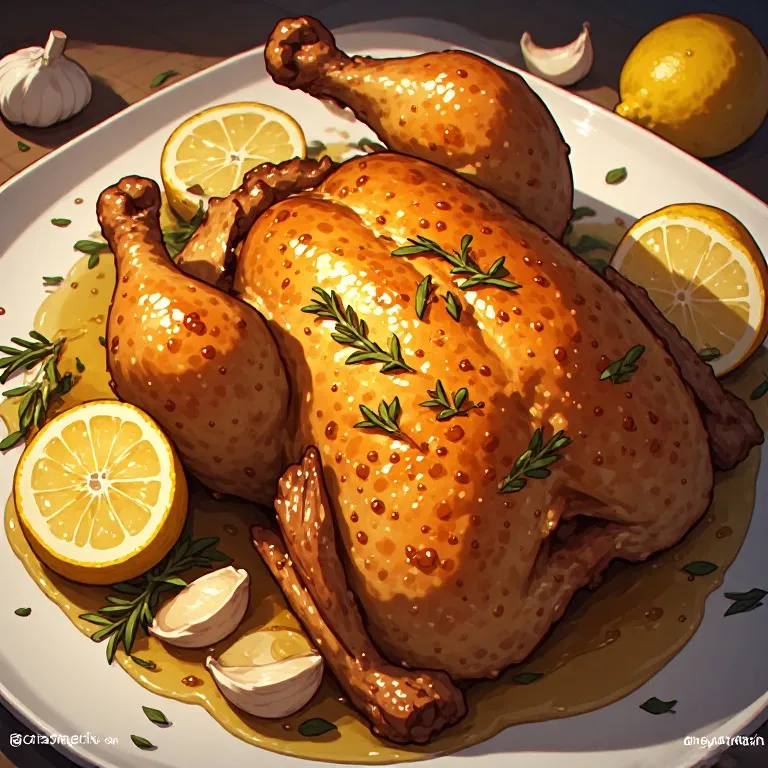
Spatchcock chicken over bread: Place thick slices of crusty sourdough in the roasting pan to catch all the drippings. Set the spatchcocked chicken directly on top. As the chicken roasts, the bread toasts and absorbs the rendered fat and juices. This bread, pulled out and sliced after the chicken rests, is the best part of the meal. A Zuni Café technique made famous and viral.
🥗

Make It Healthier

Love Spatchcock Chicken but want a lighter version? Try these simple swaps:

  • ✓Remove the skin before eating to dramatically reduce saturated fat — the butter under the skin still flavors the meat even after the skin is discarded
  • ✓Use 1 tablespoon butter and 1 tablespoon olive oil instead of 3 tablespoons butter to reduce saturated fat
  • ✓Roast the chicken over a bed of vegetables — halved onions, carrots, and potatoes — to build in a side dish with zero extra effort
  • ✓Use the backbone and carcass to make stock — spatchcocking produces a whole chicken carcass immediately, making same-day stock possible

Frequently Asked Questions

What is spatchcocking and why does it make chicken cook faster?

Spatchcocking (also called butterflying) means removing the backbone and pressing the bird flat. A whole, trussed chicken has uneven thickness — the breast is thicker, the thigh is denser, and they need to reach the same internal temperature. The trussed shape limits airflow and forces low-and-slow cooking. Flattened, every part is exposed to direct heat simultaneously and the thickest points are thinner, allowing high-heat cooking that takes 45 minutes instead of 90.

Do I need special equipment to remove the backbone?

Heavy-duty kitchen shears are strongly recommended. Standard scissors will struggle or slip. A cleaver works, as does a sharp, heavy chef's knife, but shears give the most control. You're cutting through cartilage and thin bone — the joints at the top and bottom of the backbone are the thickest points.

The skin isn't crispy — what happened?

Either the skin wasn't dried thoroughly before seasoning, the oven wasn't hot enough (must be 450°F), or the chicken was wet when it went in. Dry the skin meticulously — paper towel until you can't extract more moisture. The overnight fridge rest is the most reliable solution.

Can I spatchcock and then grill instead of roast?

Yes — and spatchcocked chicken is arguably even better on a grill. Start skin-side down over medium-high direct heat for 5 minutes to char and render the skin, then move to indirect heat (350°F) for 30–35 minutes until 165°F. Finish with 2 minutes of direct heat skin-side down for extra char.

Love this recipe? Share it!

Free PDF: our 12 most-wanted copycat recipes — instant download.

Made it? Buy us a coffee

Every recipe here is free, with no paywalls. If this one was a hit at your table, a small tip keeps new copycats coming.

$

Ratings & Reviews

—
No ratings yet

Rate this recipe

Click a star to rate

Leave a Review

0/500

CS

Copycat Spices Editorial

Researched + fact-checked. Every recipe on Copycat Spices is built from published sources — official ingredient lists, brand-published recipes, interviews and food-science references — and fact-checked before it goes live, then written as clear, step-by-step instructions for home cooks of all skill levels.

Learn more about our mission →