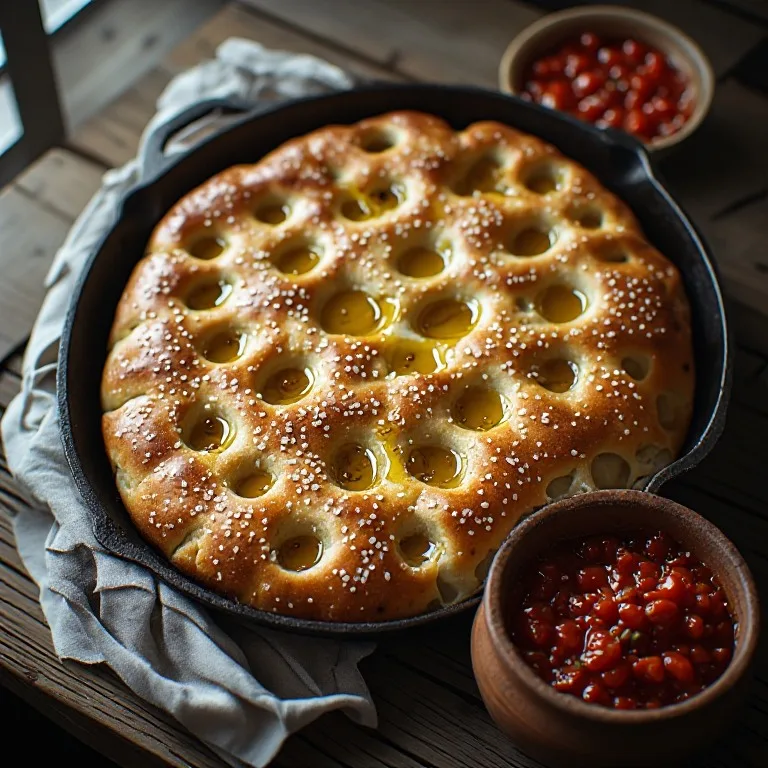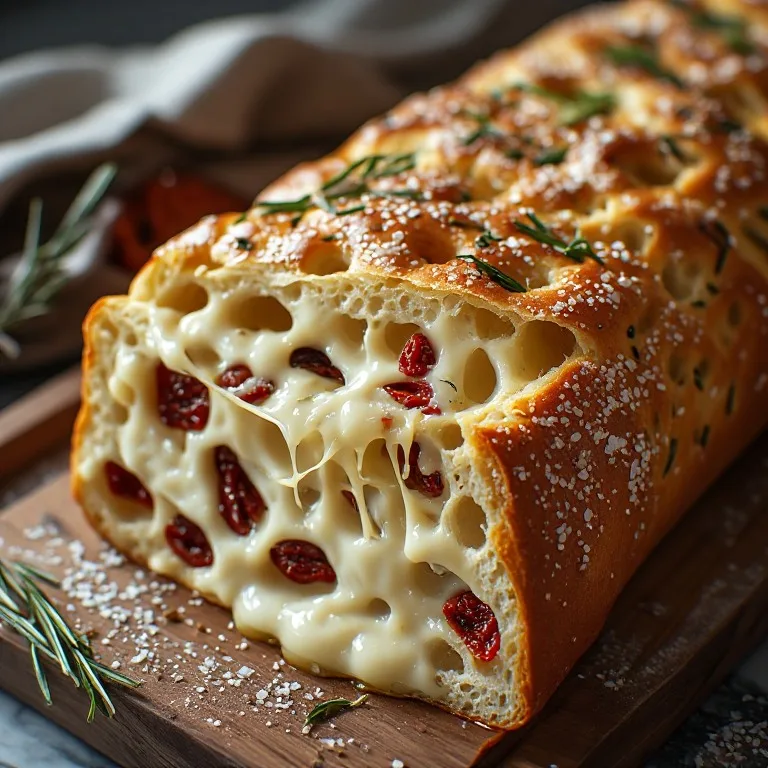

Golden outside, molten cheese inside — this is what happens when you stuff focaccia like a pillow instead of decorating its top like a garden.
Why Stuffed Focaccia Went Viral
The appeal is structural. Focaccia’s high-hydration dough — about 75–80% water relative to flour — is stretchy, forgiving, and soft in a way that lower-hydration doughs aren’t. It stretches flat over a pile of mozzarella without tearing, and even imperfectly sealed edges tend to bond back together during the final proof as the dough relaxes. It’s the same base dough you’d use for a classic restaurant-style focaccia; here it simply gets a second layer and a filling.
The bake temperature does the rest. At 425°F, mozzarella hits a specific range — fluid enough to stretch dramatically when you cut the bread, but not so thin that it immediately pools. The cheese pull that drives the viral videos happens in that exact window: right after the 10-minute rest, when the cheese has gone from molten to lightly set but still fully pulling.
The Most Important Step Is the Second Proof
After you close the top layer of dough over the cheese and seal the edges, the bread needs 30–40 minutes of rest before it goes in the oven. This isn’t a nice-to-have — it’s what keeps the cheese inside.
When you first seal the bread, the top layer of dough is essentially just resting on the bottom layer, pressed together at the edges. During the rest, two things happen: the dough relaxes and the edge seam starts to bond. By the time the bread hits the oven, the seal is structural rather than just pressure. Skip this step and the mozzarella melts, becomes liquid, and forces its way out through any weak point in the seam.
The 30-minute proof also gives you the dimpling window. Right before it goes in the oven, you press deep indentations across the entire top surface with well-oiled fingers. These dimples do two things: they push the dough down into the oil in the pan (building the crispy bottom) and they prevent large air bubbles from forming across the top during baking.
The Filling: Keep It Dry
The main cause of a soggy interior is a wet filling. Fresh mozzarella packed in water holds a significant amount of liquid. Blot it thoroughly with paper towels before using it — enough that the outside is dry to the touch. If you use shredded low-moisture mozzarella, this isn’t an issue.
Sun-dried tomatoes should come from the oil-packed variety for maximum flavor. Drain them and chop them so no piece is larger than about ½ inch — large chunks create uneven pockets in the filling.
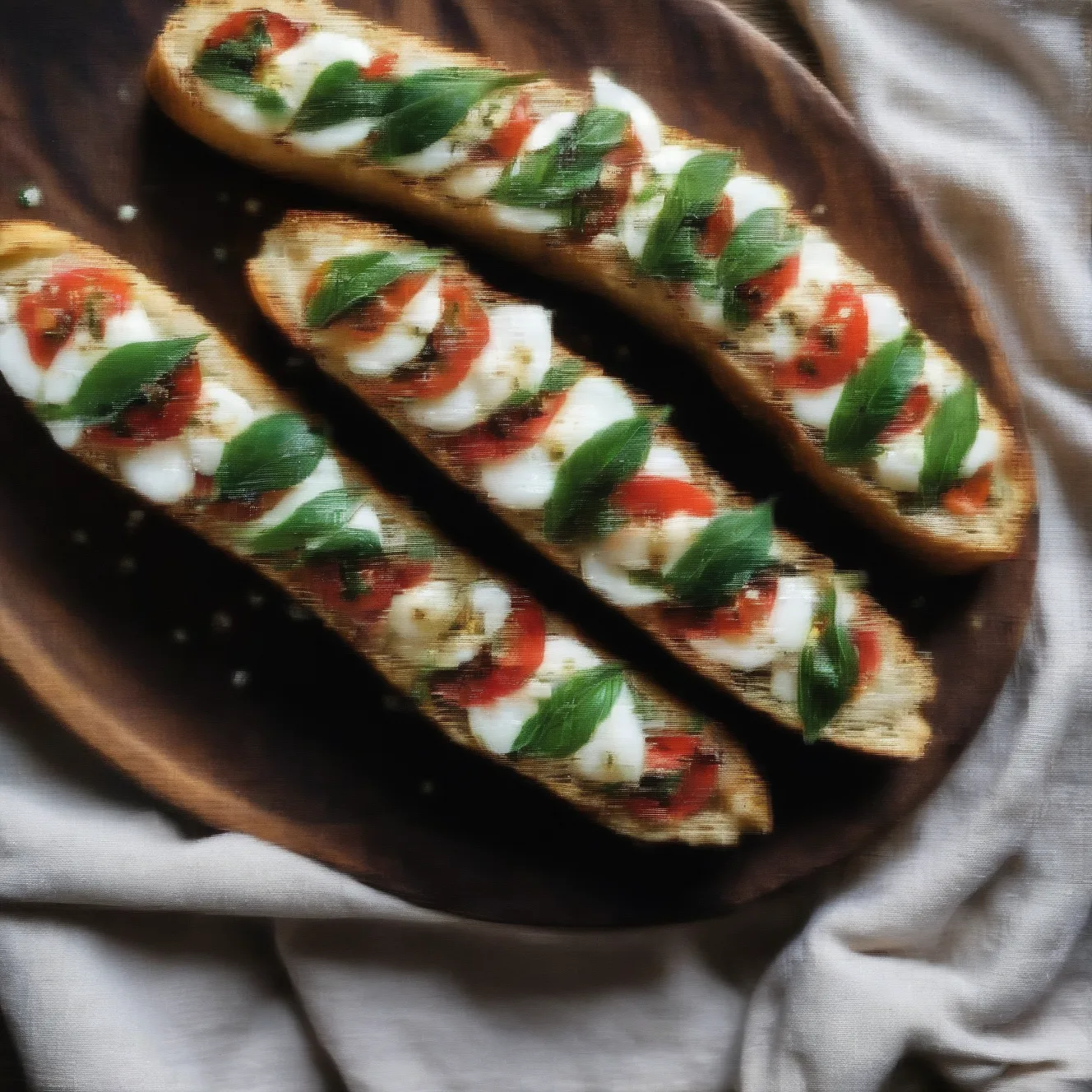
Fresh basil should be torn, not chopped, and added as whole leaves. It wilts perfectly inside the sealed bread and retains more aroma than chopped basil, which releases essential oils faster and can taste bitter when trapped in heat.
Variations
Four cheese: Replace the mozzarella with a mix of torn mozzarella, shredded fontina, crumbled gorgonzola, and grated Parmesan — about 2 oz each. Skip the sun-dried tomatoes; add a thin spread of roasted garlic paste on the dough before the cheese.
Pepperoni pizza focaccia: Add a layer of thin-sliced pepperoni or soppressata over the mozzarella. The pepperoni renders and crisps slightly inside the sealed bread, releasing its spiced fat into the cheese. A few dollops of crushed San Marzano tomatoes (drained, not sauced) add tomato flavor without making the dough wet.
Spinach and ricotta: Sauté 5 oz baby spinach until completely wilted, then squeeze every drop of water from it with a clean kitchen towel. Mix with ¾ cup whole-milk ricotta, 2 tbsp Parmesan, a pinch of nutmeg, and black pepper. Spread as the filling. The ricotta doesn’t pull like mozzarella but melts into a creamy, rich center.
Fig and prosciutto: Spread a thin layer of fig jam on the bottom dough layer, top with torn prosciutto and shredded provolone, then close and seal. The sweetness from the fig and the salt from the prosciutto create a sweet-savory bread that works as an appetizer or alongside a cheese board.
Make It Ahead
The dough is the part that benefits most from time. Mix it the night before, skip the 1-hour rise, and refrigerate the covered bowl 8–16 hours — a cold ferment deepens the flavor and makes the dough even easier to stretch. Pull it out 30–45 minutes before assembling, then proceed with the filling, the sealed 30-minute proof, and the bake exactly as written.
You can also assemble the whole loaf, stop after the sealed proof, and freeze the unbaked pan under two layers of plastic wrap. Thaw overnight in the fridge and bake straight from cold, adding about 5 minutes. Baked and cooled, individual slices freeze well for up to 2 months — the fat from the oil and cheese keeps the crumb from drying out. If you want a plain companion bread for the table without the cheese pull, the same oven and oil technique powers a batch of Olive Garden–style breadsticks.