


Pin It

Ci Siamo Cast Iron Focaccia with Tomato Conserva

Ci Siamo Cast Iron Focaccia with Tomato Conserva
Jump to Recipe
Prep 20 min active (plus 14–18 hrs cold ferment) Cook 30 min Serves 8
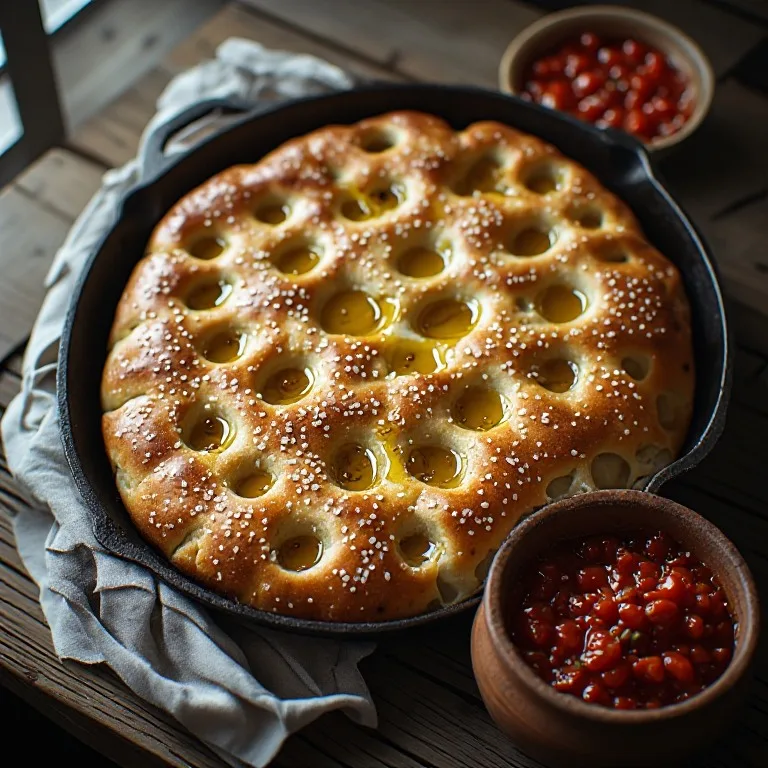
Quick answer: Ci Siamo's cast iron focaccia gets its signature shatteringly crisp bottom and bubbly interior from three things: high hydration (80% water by weight), overnight cold fermentation for depth, and a fully preheated cast iron skillet with a generous quarter-cup of olive oil. Mix 500g bread flour with 400g lukewarm water and 0.75 tsp instant yeast into a shaggy dough. Add 2 tsp salt and 2 tbsp olive oil; fold to incorporate. Do three sets of stretch-and-folds 30 minutes apart, then cover and refrigerate 12 to 18 hours. The next day, let the dough temper at room temp 1.5 hours. Pour a quarter cup of olive oil into a 12-inch cast iron skillet, turn the dough into it, and fold it over itself once so the bottom is oiled. Let it relax 30 minutes, then press it toward the edges with well-oiled fingers, dimpling deeply every 30 minutes for 1.5 to 2 hours until the dough fills the pan and the dimples are lazy and slack. Drizzle 2 more tablespoons of olive oil over the surface. Bake at 475°F on the bottom rack for 25 to 30 minutes — the bottom will be deeply golden and crisp from the cast iron, the top blistered and golden. Meanwhile, make the tomato conserva: halve 1 lb cherry tomatoes, toss with 4 smashed garlic cloves, 1/4 cup olive oil, 1 tsp chili flakes, and 1 tsp salt, and roast at 275°F for 2.5 to 3 hours until jammy and concentrated. Mash roughly and stir in 2 more tablespoons of fresh olive oil. Serve the focaccia warm in the skillet — whole, or torn at the table — with the conserva alongside. At Ci Siamo, the focaccia is $16 per order and arrives at every table before anything else is ordered. At home it costs about $4 in ingredients.

Ci Siamo Cast Iron Focaccia with Tomato Conserva

Copycat of the cast iron focaccia from Ci Siamo, Yelp's #1 US restaurant in 2026. High-hydration dough cold-fermented overnight, baked in an oiled cast iron skillet for a shatteringly crisp bottom and open, bubbly interior. Served with a 3-hour slow-roasted tomato conserva.

Medium Prep: 20 min active (plus 14–18 hrs cold ferment) Cook: 30 min Total: 18h 50m8 servings ~$4.50/serving
Prep20 min active (plus 14–18 hrs cold ferment)
Cook30 min
Total18h 50m
Servings
8
At home~$4.50/serving
vs
Restaurant~$20.25/serving
You save ~78%

The Story Behind the Recipe

Ci Siamo opened at 440 West 33rd Street in Manhattan West in October 2021 under Danny Meyer's Union Square Hospitality Group. The name is Italian for "here we are" — or in kitchen shorthand, "we're ready." Chef Hillary Sterling, a four-time James Beard Award nominee who came up at Lupa Osteria Romana and worked under Missy Robbins at the Michelin-starred A Voce before running Vic's in NoHo, built the restaurant around a wood-burning oven that runs through every dish: vegetables blackened over embers, pasta finished with wood-fire fat, whole fish painted with smoke. In 2026, Yelp named Ci Siamo the #1 restaurant in the United States, generating a reservation surge that now books the room four to six weeks out. The bread and pastry program is run by Claudia Fleming — the legendary pastry chef who defined American restaurant desserts at Gramercy Tavern through the 1990s and 2000s, whose 2001 cookbook "The Last Course" is still passed around culinary schools as a reference. It is not common for a restaurant of Ci Siamo's caliber to have a figure of Fleming's stature overseeing a bread basket.

The cast iron focaccia arrives at every table without being ordered, which is the restaurant's way of telling you how confident they are in it. Reviewers reach for words like "perfection" and "the best focaccia I've ever had" — what they're describing is the contrast between a shatteringly crisp bottom, almost like fried bread, and an interior that is soft, open, and bubbly the way naturally leavened bread is, with irregular holes and a tender crumb that holds olive oil the way a sponge holds water. It comes with a small bowl of tomato conserva — slow-roasted cherry tomatoes reduced to a thick, concentrated paste and finished with olive oil and chili flakes. The two together cost $16 and reliably arrive before you've even looked at the menu. At home, the same combination costs roughly $4.

Nutrition Facts

Per serving (8 servings)
Calories315
Total Fat12g
Total Carbs44g
Dietary Fiber2g
Sugars3g
Protein7g
Sodium510mg

* Estimated values based on standard recipe preparation. Actual values may vary.

Ingredients

  • For the focaccia
  • For the tomato conserva

Instructions

💡
Pro tip: This recipe tastes even better the next day. The flavors need time to meld together in the fridge.
❄️
Storage: Keeps in an airtight container in the fridge for up to 2 weeks. Freezer-friendly for up to 3 months.
🎃 Free Halloween cookbook — download now The Copycat Halloween Cookbook A ready-made, photo-illustrated PDF of our best halloween copycat recipes — free to download, no building required. Pay what you want to support if you love it.

Free PDF — instant download. We'll also send new seasonal copycat recipes now and then; unsubscribe anytime. Or just download it →

Ci Siamo’s cast iron focaccia is the first thing that arrives at every table at Yelp’s #1 US restaurant in 2026 — a high-hydration, cold-fermented bread baked in an oiled cast iron skillet until the bottom shatters like fried dough and the interior opens into the kind of large, irregular bubbles you usually only see in naturally leavened bread. Served with a slow-roasted tomato conserva, it costs $16 at the restaurant. At home, it costs about $4.

What Makes the Ci Siamo Focaccia Different

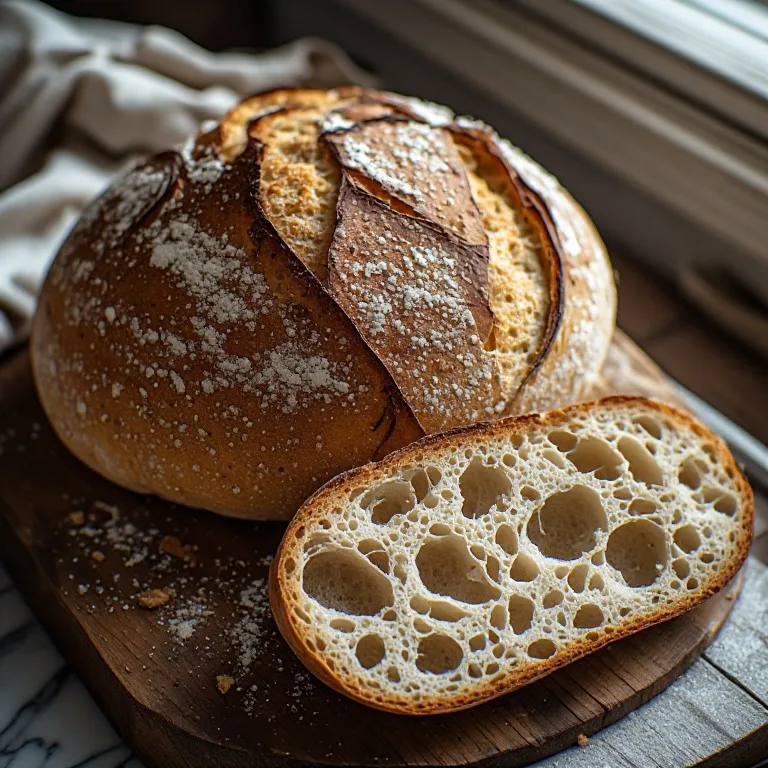
Most focaccia recipes use a dough that’s 65 to 70% water by weight — workable, shapeable, and easy to handle. Ci Siamo’s version uses 80% hydration: four parts flour to three-point-two parts water. That extra moisture produces two things that lower-hydration focaccia can’t match: the large, irregular, open holes in the interior (steam expansion from all that water) and the extremely tender, almost cloud-like crumb.

The second key is the cold overnight ferment. A fast room-temperature rise develops yeast activity quickly but shallowly. A 12-to-18-hour cold rest develops complex sugars and mild acidity that you can taste — a faint tang, a hint of depth that makes you reach for a second piece.

The third key is the cast iron. Pour a quarter cup of olive oil into the skillet, bake at 475°F on the bottom rack, and the bottom essentially fries. You get a crust that holds its crunch for the first 20 minutes out of the oven — not the soft, oily base of a sheet-pan focaccia, but something closer to deep-fried bread with a light, airy center.

The Tomato Conserva

Tomato conserva is not a sauce. It is a reduction: cherry tomatoes halved and roasted at 275°F for nearly three hours until they collapse, caramelize, and concentrate into a thick, jammy paste. You mash it roughly and finish it with fresh olive oil and a hit of chili flakes. The result is intensely sweet, savory, and slightly spicy — nothing like fresh tomato, everything like the best possible sun-dried tomato paste you’ve ever had.

It keeps for two weeks in the refrigerator and is useful well beyond focaccia: stir it into pasta, spread it on bruschetta, use it as the base for a pizza, or spoon it over roasted chicken.

Planning Notes

This recipe requires a day of lead time for the cold ferment — the hands-on work is about 30 minutes spread over two days, with overnight refrigerator time in between. The tomato conserva can be made up to 2 weeks in advance, stored refrigerated, and brought to room temperature before serving.

Day 1 (morning or evening): Mix dough → stretch and fold three times → refrigerate. Day 2: Pull dough 1.5 hours before baking → dimple and proof in oiled cast iron (1.5 hours) → bake 25–30 minutes. Make conserva 3 hours before eating.

Focaccia Without the Full Overnight Rest

If you need same-day focaccia, increase the yeast to 1.5 tsp and let the dough rest at room temperature for 4 hours total, doing stretch-and-folds every 45 minutes for the first 3 hours. The crumb will still open well from the high hydration; what you lose is the complexity of flavor from the cold ferment. It is good. It is not as good.
🥗

Make It Healthier

Love Ci Siamo Cast Iron Focaccia with Tomato Conserva but want a lighter version? Try these simple swaps:

  • ✓Use whole wheat flour for up to 30% of the bread flour (150g whole wheat, 350g bread flour). The bran adds fiber and a nuttier flavor; above 30% the dough becomes more dense and the crumb less open, so this is the ceiling for keeping the Ci Siamo texture.
  • ✓The tomato conserva is inherently light — 1 lb of tomatoes roasted in olive oil yields a full bowl of intensely flavored dip. Use it liberally; it has far fewer calories and far more lycopene per tablespoon than butter or cheese-based spreads.
  • ✓Reduce the olive oil in the skillet from ¼ cup (4 tablespoons) to 3 tablespoons. The bottom will be slightly less shattery-crisp but still significantly crunchier than a sheet-pan focaccia. This saves roughly 120 calories across the whole loaf.
  • ✓Serve with a small green salad dressed with lemon and olive oil rather than as an accompaniment to pasta — the focaccia is substantial enough to anchor a light meal, and the conserva adds enough flavor that the bread needs no other accompaniment.

Frequently Asked Questions

What makes Ci Siamo's focaccia different from ordinary focaccia?

Three things. First, the hydration is very high — 80% water by weight to flour, compared to the 65–70% in most home recipes. More water means more steam during baking, which drives the large, open bubbles in the crumb. Second, overnight cold fermentation at refrigerator temperature: the cold slows the yeast so the dough develops flavor over 12 to 18 hours rather than 1 to 2. The difference is a more complex, slightly tangy, wheaty taste that a quick same-day rise cannot produce. Third, the cast iron skillet with a quarter-cup of olive oil. Cast iron holds heat more intensely and evenly than any other baking surface in a home oven, and it does not cool when the cold dough touches it. The result is a bottom that essentially fries in the olive oil — deeply golden, crackly, with a crunch that holds for the first 10 minutes out of the oven. A sheet pan will give you a good focaccia; the cast iron gives you Ci Siamo's focaccia.

Do I really need a cast iron skillet or can I use a sheet pan?

You can use a sheet pan, but the bottom will be softer and less crisp. The whole point of the cast iron technique is that it retains extreme heat and delivers an almost frying effect to the bottom crust — the olive oil pools and maintains a consistent temperature that a thin sheet pan cannot match. If you use a sheet pan, use a dark non-stick one rather than a shiny aluminum sheet pan (dark pans absorb heat better), double the bottom rack and preheat it in the oven with the oven for at least 30 minutes before baking, and use a generous 3 tablespoons of olive oil on the pan surface. You will get a good focaccia. You will not get the shatteringly crisp bottom that distinguishes Ci Siamo's version. For a dinner party where the presentation matters, the 12-inch cast iron is worth it.

What is tomato conserva and how is it different from tomato sauce?

Tomato conserva is slow-roasted or slow-cooked tomatoes that have been reduced to a very concentrated, almost paste-like condiment — jammy and thick, with an intense sweetness and acidity that long cooking develops. Tomato sauce is fast-cooked, fluid, and meant to coat pasta. Conserva has no liquid; it is closer to a sun-dried tomato paste in texture and intensity. At Ci Siamo, the conserva is served at room temperature in a small bowl beside the focaccia, as a dipping medium or spread. You use it the way you would use butter with bread, but it has far more complexity — sweetness from the slow roast, a low heat from chili flakes, a grassy finish from fresh olive oil. The technique is simple: halve cherry tomatoes, oil them generously, roast at a very low temperature (275°F) for 2.5 to 3 hours until they collapse and concentrate, then rough-mash and finish with more olive oil. The conserva keeps refrigerated for 2 weeks and can be stirred into pasta, spread on toast, or used as a pizza base.

Why does the dough need to be so wet and sticky?

High-hydration doughs (75–80% water to flour) are harder to handle than lower-hydration ones — they stick to everything and can feel impossible to shape. But the wetness is what produces the light, open, bubbly interior that distinguishes this focaccia from a dense, bread-like one. When a very wet dough hits a hot oven, the water in the dough turns to steam rapidly, pushing the crumb open into large, irregular holes. A drier dough produces a denser, more even crumb — fine for a basic focaccia, wrong for this one. The solution is not to shape this dough like a normal loaf — instead, you pour it into an oiled pan, fold it once, and let gravity do the work as it proofs. Your hands stay oiled throughout so the dough doesn't stick to you; the pan holds the form. If you have ever handled a very wet pizza dough or a ciabatta dough, this is the same idea.

What does 'stretch and fold' mean and why do it instead of kneading?

Stretch and fold is a low-effort technique that develops gluten strength in wet doughs without the mess and effort of hand-kneading a sticky mass. You reach under the dough in the bowl, stretch one side up as far as it will go without tearing, then fold it over the center. Rotate the bowl 90 degrees and repeat — four folds total per set. You do this three times at 30-minute intervals during the initial 2-hour room-temperature rest. Over the three sets, the dough transitions from a shaggy, nearly liquid mass to a slightly stronger, smoother dough that holds together better. This is all you need before the cold ferment: the overnight cold rest continues developing the gluten slowly. You do not need a stand mixer; you do not need to knead on a floured counter. The high hydration and the stretch-and-fold method together are what make this bread doable with no equipment beyond a bowl and a cast iron skillet.

Can I make this the same day without an overnight rest?

Yes, but the flavor will be noticeably different — milder, more yeasty, less complex. If you need to make it the same day, increase the yeast to 1.5 tsp (rather than 3/4 tsp) and let the dough rest at room temperature for 4 hours total before the pan proof, doing stretch-and-folds every 45 minutes for the first 3 hours. The crumb will still open nicely from the high hydration — the cast iron bottom will still be crisp. What you lose is the tangy, developed flavor that comes from a long cold ferment. For a dinner party, the overnight rest is the move — you mix the dough the morning before (or the night before that), refrigerate, and have nothing to do day-of except the pan proof and bake.

How do I know when the focaccia is done baking?

Check two things: the bottom crust and the internal temperature. For the bottom: use a thin spatula to lift one edge of the focaccia from the skillet at the 25-minute mark. The bottom should be deeply golden — mahogany, not pale gold — and the edge should feel firm and crisp. If it looks pale or soft, give it 3 to 5 more minutes. For the top: the surface should be blistered and golden-brown with a few darker spots. Internal temperature should read 200 to 210°F on an instant-read thermometer inserted in the center. The bread will seem a little soft when it first comes out; it firms up in 5 minutes as it cools. Err toward more time rather than less — underbaked focaccia has a gummy interior, and the cast iron's high heat means the bottom won't burn in the last few minutes if the rest of the bread is almost done.

Love this recipe? Share it!

Free PDF: our 12 most-wanted copycat recipes — instant download.

Made it? Buy us a coffee

Every recipe here is free, with no paywalls. If this one was a hit at your table, a small tip keeps new copycats coming.

$

Ci Siamo is a trademark of its owner, used here only to describe the dish this recipe recreates. This is an independent copycat written in our own words — Copycat Spices is not affiliated with, endorsed by or sponsored by Ci Siamo.

Ratings & Reviews

—
No ratings yet

Rate this recipe

Click a star to rate

Leave a Review

0/500

CS

Copycat Spices Editorial

Researched + fact-checked. Every recipe on Copycat Spices is built from published sources — official ingredient lists, brand-published recipes, interviews and food-science references — and fact-checked before it goes live, then written as clear, step-by-step instructions for home cooks of all skill levels.

Learn more about our mission →