Ube Pancakes
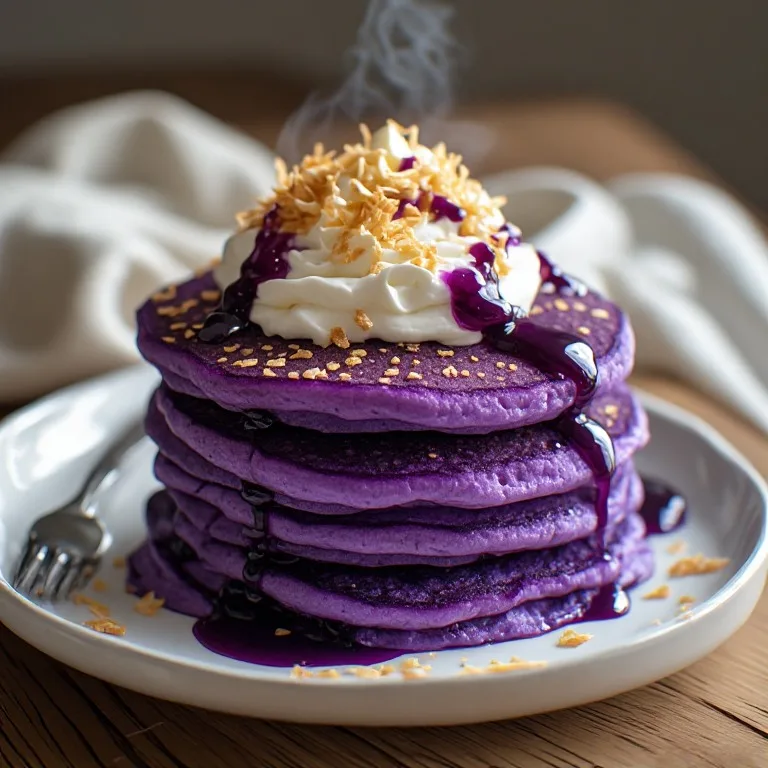
Quick answer: Whisk ube halaya into warm coconut milk until smooth. Beat in 2 eggs, 3 tablespoons melted butter, 1 teaspoon ube extract, and 1 teaspoon vanilla. In a separate bowl, whisk 1½ cups flour, 2 tablespoons sugar, 1½ teaspoons baking powder, ½ teaspoon baking soda, and ½ teaspoon salt. Fold wet into dry, then stir in ½ cup buttermilk until just combined — lumpy batter is correct. Rest 5 minutes. Cook ¼ cup portions on a buttered griddle over medium heat, 2–3 minutes per side. Top with warmed ube halaya, coconut whipped cream, and toasted coconut.
Shop the tools
Gear matched to this recipe. These are Amazon affiliate links — we may earn a small commission if you buy, at no extra cost to you.
 Illustrative imageLodge 10.25" Cast Iron SkilletThe restaurant-grade sear most copycats depend onCheck price on Amazon →
 Illustrative imageStainless Steel SaucepanThe everyday pot for syrups, sauces, and small-batch simmersCheck price on Amazon →
 Illustrative imageFlat-Top Stovetop GriddleCheesesteaks, smash burgers, and diner-style toastCheck price on Amazon →
As an Amazon Associate, Copycat Spices earns from qualifying purchases. Product images are generic illustrations, not the exact item listed.
Ube Pancakes
The viral TikTok ube pancakes — vivid violet stacks made with ube halaya and coconut milk. Why they actually turn purple (it's the extract), and the one technique that keeps the color from fading to grey on the griddle.
Easy
Prep: 10 min
Cook: 20 min
Total: 30 min4 servings
~$4.50/serving
At home~$4.50/serving
vs
Restaurant~$20.25/serving
You save ~78%
The Story Behind the Recipe
Ube (pronounced "oo-beh") is a purple yam native to the Philippines that has been a cornerstone of Filipino dessert culture for generations — ube halaya, the sweetened jam made from boiled and mashed purple yam, coconut milk, and butter, is as central to Filipino celebrations as birthday cake is in the West. The TikTok ube moment built slowly: Trader Joe's Ube Ice Cream became a cult product in 2021, then Jollibee and Red Ribbon brought ube desserts to American malls, and in spring 2026 Starbucks rolled out its Iced Ube Coconut Macchiato to coffeehouses nationwide (after testing it in Reserve stores), which put the flavor in front of millions of non-Filipino customers searching for "that purple drink." Filipino-American creators flooded #FoodTok with ube riffs on every dish they grew up loving, and ube pancakes emerged as the format that best showed off what makes the ingredient so irresistible to a camera: the color.
A well-made ube pancake stack is a genuinely startling violet, and it's worth being honest about where that color comes from. Ube's own pigment (anthocyanin, the same compound in blueberries and red cabbage) is heat- and pH-sensitive, so the natural purple from ube halaya alone drifts toward grey-brown against a hot griddle and the batter's alkaline baking soda. That is why the ube extract is the technique that matters: it carries concentrated ube flavor plus a color-stable purple that holds all the way through cooking where the halaya can't. Be aware that most supermarket extracts — McCormick's, for one — get that vivid punch from added coloring (FD&C dyes) rather than from yam alone, so this is a bright, fun breakfast rather than a whole-food one. Filipino home cooks reach for the extract without a second thought. A jar of ube halaya runs about $5 at any Asian grocery store, and a small bottle of ube extract runs another $5–7 and lasts for months. At brunch spots that have added ube pancakes to their menus, the same stack costs $16–22. This version takes 30 minutes and tastes exactly as good.
Nutrition Facts
Per serving (4 servings)Calories310
Total Fat10g
Total Carbs48g
Dietary Fiber1g
Sugars12g
Protein8g
Sodium420mg
* Estimated values based on standard recipe preparation. Actual values may vary.
Ingredients
- Batter
- For cooking
- For serving
Instructions
Pro tip: This recipe tastes even better the next day. The flavors need time to meld together in the fridge.
Storage: Keeps in an airtight container in the fridge for up to 2 weeks. Freezer-friendly for up to 3 months.
Free PDF — instant download. We'll also send new seasonal copycat recipes now and then; unsubscribe anytime. Or just download it →
🎉 Your Halloween Cookbook is ready!
It's free — but if it's worth something to you, you can pay what you want. It keeps the recipes coming.
$
✓ Downloading your free Halloween Cookbook — check your downloads folder. Happy cooking!
Make It Healthier
Love Ube Pancakes but want a lighter version? Try these simple swaps:
- ✓Swap all-purpose for white whole wheat flour (1:1) — adds 3g fiber per serving with no noticeable change in flavor or fluffiness.
- ✓Use light coconut milk instead of full-fat to save about 80 calories per serving; the pancakes will be slightly less rich but still deeply flavored.
- ✓Replace the unsalted butter with virgin coconut oil (same amount) — it reinforces the coconut note already in the batter and the pancakes cook identically.
- ✓Skip the ube halaya drizzle and serve with a thin spread of halaya (about 1 tablespoon per serving) — adds the flavor hit while cutting roughly 50 calories versus a thick warm drizzle.
Frequently Asked Questions
Where do I find ube halaya and ube extract?
Any Filipino or Asian grocery store stocks both. Look for ube halaya in the canned goods or refrigerated section — Red Ribbon, Goldilocks, and Roland are reliable brands. Ube extract is usually near the baking supplies. If you don't have a local Asian grocery, both are easy to order online from Amazon or Filipino specialty retailers. Ube halaya in a jar keeps in the refrigerator for 2 weeks after opening.
Can I use purple sweet potato instead of ube?
Not as a direct swap. Purple sweet potato (Okinawan sweet potato) and ube are related but distinct — purple sweet potato has an earthier, more savory flavor profile and a different texture when cooked. Ube is nuttier, slightly vanilla-adjacent, and more delicate. You can make a passable version with purple sweet potato purée, but add an extra tablespoon of sugar to compensate for the lower natural sweetness, and expect the flavor to be noticeably different. Taro is also sometimes confused with ube — taro has a starchy, almost nutty flavor and is not a substitute here.
Why did my ube pancakes turn grey or brown instead of staying purple?
This is almost always missing or insufficient ube extract. The natural anthocyanin pigment in ube is heat-sensitive and pH-sensitive — it shifts from purple to blue and then grey-brown with heat and the alkaline baking soda in the batter. Ube extract holds the color through cooking; most supermarket brands do this with a concentrated, color-stable formula that includes added coloring, which is why a teaspoon delivers the vivid violet when the halaya alone fades. Use a full teaspoon; if you're still getting grey tones, your extract may be old or diluted — add another ¼ teaspoon. The acid in the batter (buttermilk) also helps stabilize the purple — it's working in your favor.
Can I make the batter the night before?
You can refrigerate the mixed batter overnight, but expect slightly less rise — the baking powder activates on contact with liquid, and a long rest means some of that lift is spent before the batter hits the griddle. A better approach: mix and refrigerate the wet and dry ingredients separately, then combine them in the morning. The pancakes will be just as fluffy as a fresh batter.
Can I make ube halaya at home?
Yes, though it takes about 45 minutes. You need 1 lb purple yam (fresh or frozen, labeled 'ube' at Filipino grocery stores — not purple sweet potato), 1 can sweetened condensed milk, ½ can (7 oz) coconut cream, and 4 tablespoons butter. Boil the yam until soft, mash until very smooth, then cook in a pan with the remaining ingredients over medium-low heat, stirring constantly, until thick and pulling away from the sides of the pan. It's worth making if you want to use it for more than pancakes — ube halaya keeps in the refrigerator for 2 weeks and is a great spread on toast, a filling for mochi or cinnamon rolls, or a swirl in ice cream.
What does ube taste like — and is it different from taro?
Ube has a mild, sweet flavor often described as a cross between vanilla and pistachio, with a subtle nuttiness and an almost floral quality that's unique to it. It's much less earthy than taro. Cooked ube has a creamy, starchy texture. Taro is starchier, more savory, and significantly earthier — it's in a different flavor category entirely. The biggest misconception is that ube = purple = taro because both can be purple and are used in Asian desserts. They are completely different plants. Purple sweet potato is closer to ube in flavor than taro is, but still noticeably more earthy.
Love this recipe? Share it!
Made it? Buy us a coffee
Every recipe here is free, with no paywalls. If this one was a hit at your table, a small tip keeps new copycats coming.
$
💛 Support checkout is coming soon — the cookbook stays free either way.
Ratings & Reviews
Rate this recipe
Click a star to rate