


Pin It

Viral TikTok Tornado Omurice — Korea's Hypnotic Egg Swirl, Made at Home

Viral TikTok Tornado Omurice — Korea's Hypnotic Egg Swirl, Made at Home
Jump to Recipe
Prep 15 min Cook 15 min Serves 2
Quick answer: Make ketchup fried rice: sauté diced onion and garlic in butter over medium-high heat, add 2 cups day-old cooked rice and stir-fry 2 minutes, toss with 2 tablespoons ketchup and 1 teaspoon soy sauce, pack into a small bowl and flip onto the center of a plate to form a dome. For each tornado egg: whisk 3 large eggs with 1 tablespoon milk, strain through a fine-mesh sieve (do not skip this — the chalaza cords create tears), season with salt. Heat an 8-inch non-stick pan over medium heat, add 1½ teaspoons neutral oil plus ½ teaspoon butter. When butter foam dies down, pour in strained eggs. Wait 8 to 10 seconds until a 3 to 4mm cooked ring forms around the entire edge. Place one chopstick at 12 o'clock touching the inner edge of the ring, the second chopstick at 6 o'clock directly opposite. Pull both simultaneously toward the center. When they are ½ inch apart, hold them still in one hand. With the other hand, spin the pan in smooth circular rotations 5 to 7 times — the outer egg rim gathers up around the chopsticks into a spiral. Stop when 90% set with a slight custardy gloss in the center. Slide the tornado directly onto the rice dome. Drizzle ketchup on top. The three most common failures: using a 10 or 12-inch pan (eggs too thin to gather), skipping the strain (chalaza cords resist the spin and tear the tornado), and spinning the chopsticks instead of the pan.

Shop the tools

Gear matched to this recipe. These are Amazon affiliate links — we may earn a small commission if you buy, at no extra cost to you.

As an Amazon Associate, Copycat Spices earns from qualifying purchases. Product images are generic illustrations, not the exact item listed.

Viral TikTok Tornado Omurice — Korea's Hypnotic Egg Swirl, Made at Home

How to make viral tornado omurice at home: three eggs, two chopsticks, one 8-inch pan over the ketchup fried rice base. The three technique fixes most home cooks miss.

Medium Prep: 15 min Cook: 15 min Total: 30 min2 servings ~$4.50/serving
Prep15 min
Cook15 min
Total30 min
Servings
2
At home~$4.50/serving
vs
Restaurant~$20.25/serving
You save ~78%

The Story Behind the Recipe

How to make viral tornado omurice at home: three eggs, two chopsticks, one 8-inch pan over the ketchup fried rice base. The three technique fixes most home cooks miss.

Nutrition Facts

Per serving (2 servings)
Calories520
Total Fat19g
Total Carbs58g
Dietary Fiber1g
Sugars8g
Protein28g
Sodium820mg

* Estimated values based on standard recipe preparation. Actual values may vary.

Ingredients

  • Ketchup Fried Rice (makes 2 servings — prepare first)
  • Tornado Egg (per serving — make each one separately, not together)
  • Sauce (choose one)

Instructions

💡
Pro tip: This recipe tastes even better the next day. The flavors need time to meld together in the fridge.
❄️
Storage: Keeps in an airtight container in the fridge for up to 2 weeks. Freezer-friendly for up to 3 months.
🎃 Free Halloween cookbook — download now The Copycat Halloween Cookbook A ready-made, photo-illustrated PDF of our best halloween copycat recipes — free to download, no building required. Pay what you want to support if you love it.

Free PDF — instant download. We'll also send new seasonal copycat recipes now and then; unsubscribe anytime. Or just download it →

Tornado omurice is a Korean street food version of Japan’s omurice — ketchup fried rice under a swirled, spiral egg — and it keeps going viral on TikTok because the finished product looks like something that requires professional kitchen training. It doesn’t. But it does require understanding three specific things that the videos show without explaining, and most home cooks get all three wrong on the first try.

Three Reasons Most Home Versions Fail

Watching the tornado technique on TikTok looks like fluid effortlessness. The video is usually under 60 seconds. The actual physical mechanics of what’s happening are invisible unless someone explains them.

Wrong pan size. The tornado is governed by egg depth. Three eggs in an 8-inch pan create a layer deep enough to gather, ruffle, and climb when spun. The same three eggs in a 10-inch pan are thinner — they’ll slide around rather than gather. In a 12-inch pan, they spread into a nearly flat film that simply cannot curl into a spiral. The pan size is structural, not preference. Every successful tornado video is using a pan between 18cm and 22cm (7 to 8.5 inches). If you own only larger pans, this is the only recipe where buying a small non-stick pan is actually necessary.

Skipping the strain. Every egg has chalaza — two dense, ropelike cords of egg white that anchor the yolk in the center of the egg. They appear as thick white strands in the whisked egg mixture. When a tornado spins, the thin egg membrane should glide smoothly; chalaza create fixed points that resist movement and cause the tornado to catch and tear at those spots. Straining takes 30 seconds. The sieve catches the cords. The strained egg is visibly smoother and slightly more liquid than unstrained. Skip this step and you’re betting against yourself.

Spinning the chopsticks instead of the pan. This is the most common error and the most invisible one, because from a distance it’s hard to tell which is moving. The chopsticks go still once they meet in the center; the pan spins. The reason: the tornado forms because the stationary chopsticks act as a central axis that the outer spinning egg gathers toward. If the chopsticks rotate, they just push the egg in circles and nothing gathers. If the pan rotates while the chopsticks stay fixed, the egg rim climbs the chopsticks in a spiral. The distinction is mechanical — chopsticks stationary, pan moving — and it’s the actual technique.

The Ketchup Fried Rice Base

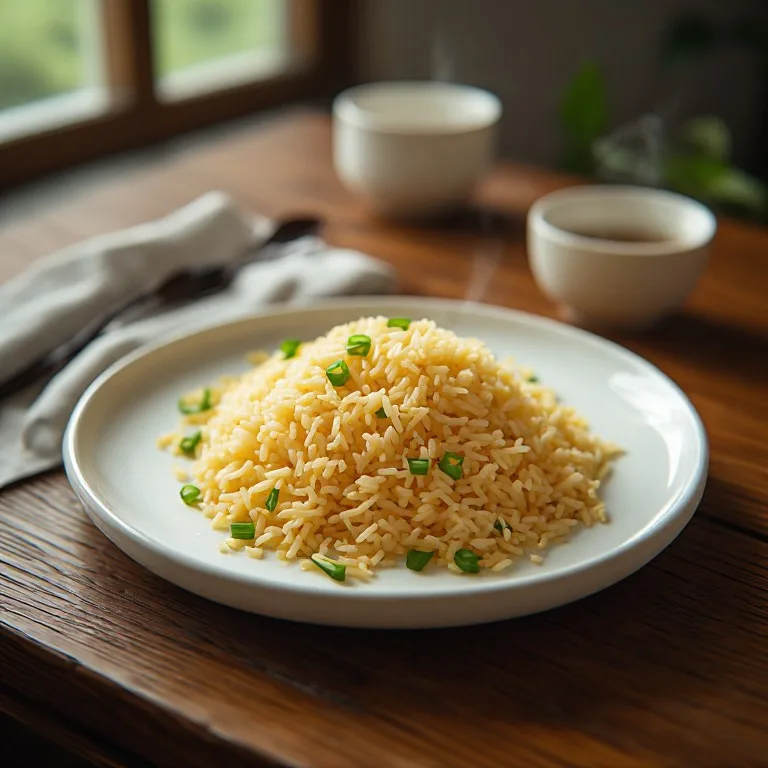
Ketchup is traditional and it’s good. People who assume ketchup sounds wrong are consistently surprised by how it tastes in context: the sweetness and acidity of ketchup meet soy sauce and sesame oil, and the result is a savory, slightly sweet rice that is specifically Japanese-Korean in character rather than generically Asian.

Day-old rice is essential. Freshly cooked rice has too much surface moisture — it clumps against the pan, steams into the oil rather than frying, and the ketchup slides off rather than coating. Rice that has dried in the refrigerator for at least a few hours (ideally overnight) has separated, drier grains that fry instead of steam and absorb the ketchup coating evenly. This is the same principle that makes restaurant fried rice noticeably better than home versions: restaurants use cold, day-old rice.

Pack the rice into a dome using a small bowl or ramekin. Press firmly — loosely packed rice falls apart when inverted. The dome shape is the presentation that makes this visually complete, and it also creates a stable surface for the tornado egg to drape over.

Reading the Pan Temperature

The egg-cooking stage fails when the pan temperature is wrong in either direction. Too hot: the egg sets and firms at the edges before a clean ring forms, the surface bubbles and browns before you can spin it, and you end up with an overdone omelette. Too cool: the ring forms too slowly, the whole egg starts to set uniformly before you can gather it, and the tornado tears because the egg is already too cooked to be pliable.

Medium heat on a home stove. The test for the oil being ready: the butter foam should subside without browning. When you pour the egg in, you should hear a gentle, steady sizzle — not an aggressive pop and spit (too hot) and not silence (too cool). If the egg doesn’t sizzle, the pan needs more time. If it spits loudly, remove the pan from the heat for 20 seconds and let it cool slightly before continuing.

The 8-inch pan heats faster than larger pans because of the smaller surface area. Preheat it for exactly 1 minute rather than the 2 to 3 minutes you might use for a larger pan.

Sauce Options

Ketchup is served straight or barely altered. This is correct; it’s the traditional topping and the flavor is designed for it. A thin squeeze-bottle drizzle around the top of the tornado is the restaurant presentation.

The upgraded version uses ketchup plus Worcestershire sauce plus a small amount of warm water — the ratio is roughly 2:1:1. This adds a savory depth that rounds the sweetness of the ketchup without changing its fundamental character. It’s closer to what Japanese omurice restaurants use as their demi-glace drizzle. It’s not a demi-glace, but it reads similarly without the four-hour reduction.

Sriracha-ketchup is the TikTok variant: two tablespoons ketchup, half a teaspoon sriracha. The heat is mild — you’re not making a spicy dish, you’re cutting the sweetness of the ketchup with a little acidity and capsaicin. This is the version most appealing to people who find plain ketchup too sweet.

The Beginner Fallback

If the spinning technique fails in the first one or two attempts, there is a simpler version that produces a pleated, gathered egg rather than a true spiral. After pulling the chopsticks to the center, push the egg from one side to the other repeatedly — like folding an omelette back and forth — while tilting the pan slightly. The result is ruffled and multi-layered but not a tornado. It still looks significantly better than a flat omelette and teaches you the egg handling skills that make the tornado possible on the next attempt.

Most people succeed at the tornado by their third try. The first attempt is almost always a tear or a flat egg because the pan or straining was off. The second attempt usually produces something recognizable. The third is where it clicks.

Why the Omurice is Ketchup and Not Tomato Sauce

The choice of ketchup is specific and intentional. Tomato sauce lacks the sugar and vinegar that ketchup contributes; plain tomato paste is too concentrated and too bitter. Ketchup’s sweetness and slight acidity complement the savory soy sauce in the rice and create the recognizable flavor that makes omurice taste like itself rather than a generic rice dish. Japanese and Korean food culture has incorporated ketchup into yoshoku (Western-influenced Japanese) cooking since the early 20th century without irony — it’s a pantry staple in Japanese home kitchens for this reason.

If ketchup genuinely doesn’t appeal to you, yakisoba sauce or okonomiyaki sauce are Japanese pantry alternatives with similar sweetness and slightly more savory depth. Both work in the rice and as a topping sauce. They’re less readily available in American grocery stores but worth finding if you make omurice regularly.
🥗

Make It Healthier

Love Viral TikTok Tornado Omurice — Korea's Hypnotic Egg Swirl, Made at Home but want a lighter version? Try these simple swaps:

  • ✓Use 2 whole eggs plus 1 egg white per serving — cuts about 50 calories and 5g fat while keeping enough mass for the tornado to form. The white adds volume without richness.
  • ✓Cauliflower rice (riced cauliflower, stir-fried until dry) works as the base — it needs the same ketchup-soy treatment and the lower moisture content actually makes it easier to pack into a dome than regular cauliflower preparations. Saves ~120 calories per serving.
  • ✓Skip the butter in both the fried rice and the egg — use only neutral oil. The texture difference is minor; butter contributes flavor but not the structural elements.

Frequently Asked Questions

Why does my tornado tear when I start spinning the pan?

Two likely causes. First: you didn't strain the eggs. Chalaza — the dense white cords attaching the yolk to the egg white — don't integrate smoothly into the egg mass and create weak spots where the tornado catches and splits. Straining takes 30 seconds and eliminates this. Second: your pan is too large, so the eggs spread too thin and don't have enough depth to form a connected ruffle. The egg needs to be thick enough to gather — in an 8-inch pan with 3 eggs this works; in a 12-inch pan with the same 3 eggs, the thin film just slides rather than gathers.

Do I have to use chopsticks, or can I use something else?

Chopsticks are the correct tool because their length gives you leverage across the full diameter of an 8-inch pan, and their thinness doesn't block your view of the egg. Two skewers work almost as well. Two thin knife handles or the back ends of wooden spoons can substitute in a pinch — anything narrow and long that can rest against opposite sides of the pan simultaneously. Do not use anything wider than about ¼ inch; thick tools displace too much egg and prevent the tornado from pulling cleanly.

What's the difference between omurice and tornado omurice?

Omurice (omelette rice) is a Japanese dish — ketchup fried rice wrapped in or topped with a plain egg omelette. It has been popular in Japan since the early 1900s. Tornado omurice is a Korean street food variation that uses the same ketchup rice base but replaces the plain omelette with the swirled spiral egg technique. The tornado technique became internationally known after Korean street food vendor videos spread on YouTube and TikTok in the early 2020s. Both are legitimate; the tornado is more visually dramatic and the spiral creates different texture than a flat wrapped omelette — each bite has layers of cooked and custardy egg rather than uniform thickness.

Can I add vegetables or other proteins to the fried rice?

Yes — the ketchup fried rice base is flexible. Common additions: diced carrot (¼-inch, added with the onion to cook through), frozen peas or corn (add after the rice to just warm through), diced spam (a classic Korean and Japanese choice — cook it first until the edges caramelize slightly), leftover rotisserie chicken, shrimp (season and sauté before the rice). Keep the ketchup and soy sauce ratio the same regardless of what you add — 2 tablespoons ketchup to 1 teaspoon soy sauce is the flavor baseline. Avoid watery vegetables like zucchini or fresh tomatoes — they release water that makes the rice soggy.

Can I use a different sauce instead of ketchup?

Yes, with caveats. Ketchup is traditional and correct — it's what gives omurice its sweet-savory character, and home cooks who think it sounds wrong are usually surprised by how good it actually tastes on the dish. Soy sauce and butter (the 'Japanese demi-glace' style) is a richer, less sweet alternative: 1 tablespoon soy sauce plus 1 tablespoon unsalted butter melted together. Mushroom demi-glace (reduced chicken or beef stock with soy sauce and Worcestershire) is what high-end Japanese omurice restaurants serve. Tonkatsu sauce (okonomiyaki sauce) is another common Japanese choice — slightly thicker and tangier than ketchup. What doesn't work: pasta marinara sauce (too acidic, wrong flavor register), plain tomato paste (too thick, no sweetness balance), cheese sauce (overwhelms the egg's delicate texture).

The tornado came out but the center is too runny — what went wrong?

You stopped spinning too early or your pan was too cold. 90% set means only the very center has that custardy gloss — not a puddle of liquid. If you have a quarter-inch of liquid egg pooling in the center, continue spinning for 2 to 3 more rotations and then let it sit in the pan (off heat) for 15 seconds before sliding. If this is a recurring issue, check your pan temperature: medium heat on most home stoves is enough; if your stove runs cool, go medium-high and reduce the initial wait time after pouring to 6 seconds.

Which version is the one on TikTok?

The Korean street-food format: a dome of ketchup fried rice topped with the dramatic spinning-pan tornado egg, finished with a ketchup or demi-glace drizzle. That's the presentation that keeps going viral. The Japanese original (see the omurice-vs-tornado question above) wraps the egg flat or folds it into a simple omelette over the rice — same flavor, far less spectacle. If you're recreating a specific TikTok you saw, you almost certainly want the tornado.

Love this recipe? Share it!

Free PDF: our 12 most-wanted copycat recipes — instant download.

Made it? Buy us a coffee

Every recipe here is free, with no paywalls. If this one was a hit at your table, a small tip keeps new copycats coming.

$

Ratings & Reviews

—
No ratings yet

Rate this recipe

Click a star to rate

Leave a Review

0/500

CS

Copycat Spices Editorial

Researched + fact-checked. Every recipe on Copycat Spices is built from published sources — official ingredient lists, brand-published recipes, interviews and food-science references — and fact-checked before it goes live, then written as clear, step-by-step instructions for home cooks of all skill levels.

Learn more about our mission →