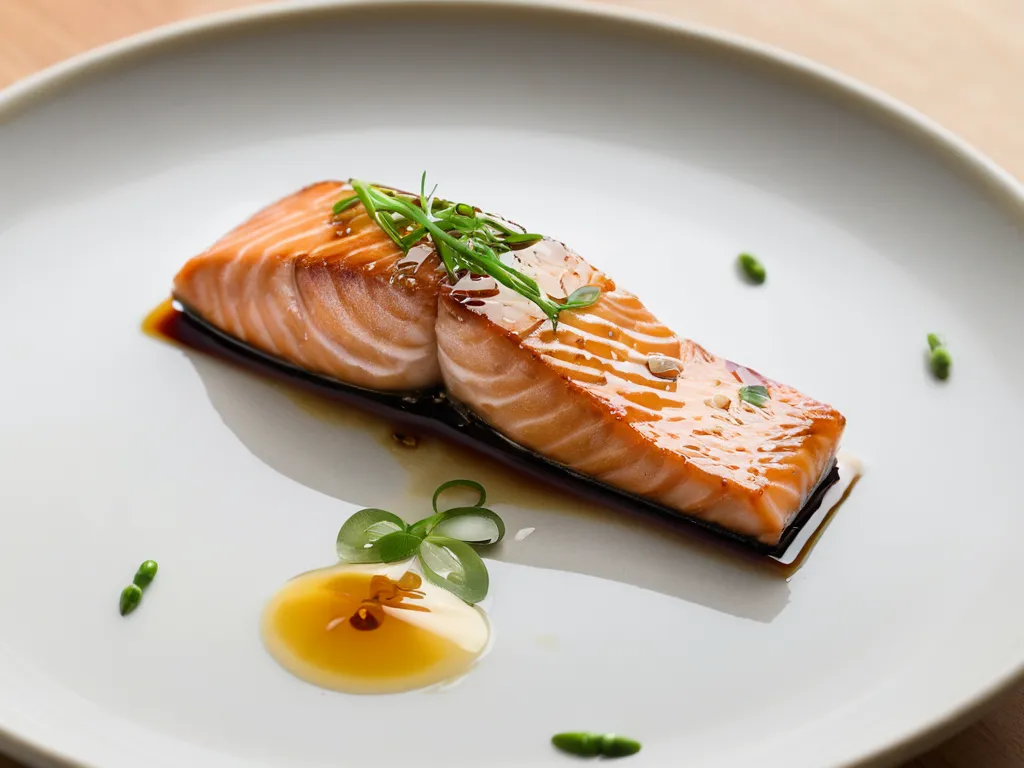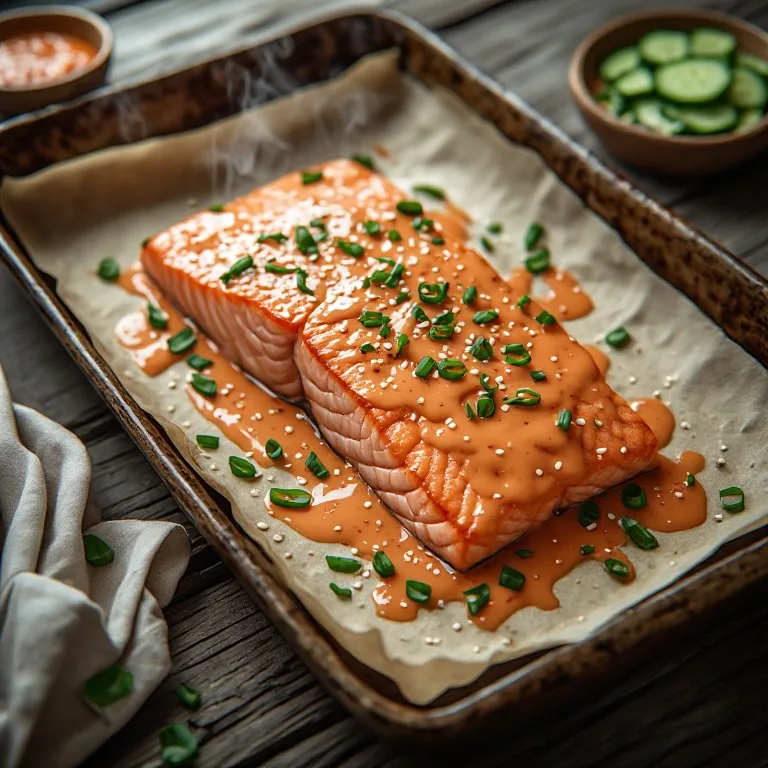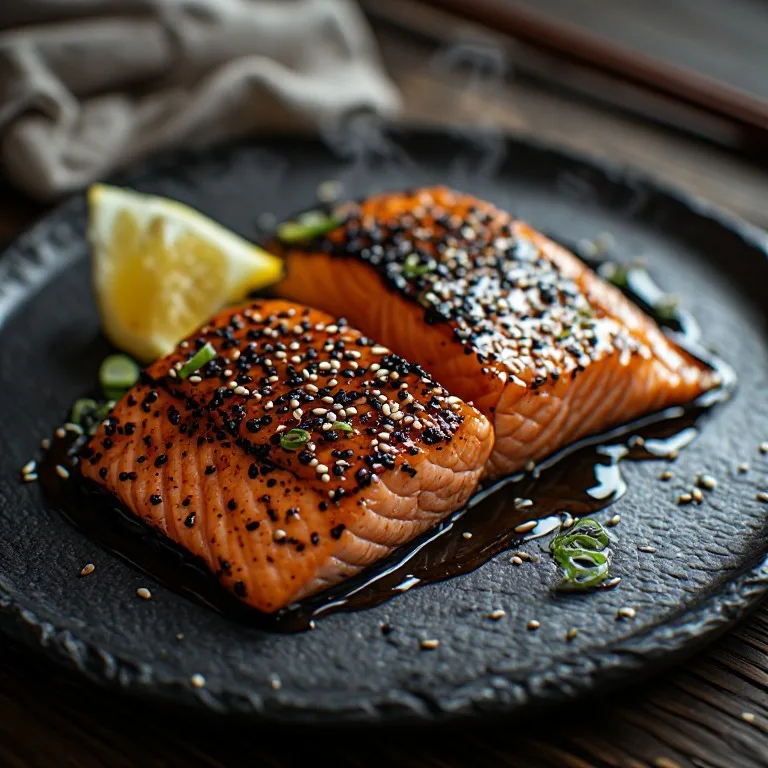



The viral TikTok yuzu honey salmon is the fastest path from a package of fish to a restaurant-quality plate: four ingredients in the glaze, eight minutes under the broiler, lacquered caramelization that looks like it took an hour.
What Makes the Yuzu Honey Glaze Work
The caramelization is not magic — it’s chemistry. Honey provides fructose and glucose, both of which brown faster than table sugar under dry heat. At broiler temperatures (500°F+), the sugars hit their Maillard threshold quickly, turning from amber to deep brown in a short window. Yuzu juice contributes natural sugars of its own plus acidity, which slows the soy sauce’s sodium from drawing moisture to the surface too fast. The result is a glaze that stays on the fish rather than pooling in the pan.
The two-stage glaze application (spoon once before, once at the three-minute mark) builds layers. The first pass partially dries and sets; the second builds on top of it. A single heavy glaze at the start often slides off or burns at the edges before the fish is cooked through.
Yuzu vs. Lemon: What You’re Actually Tasting
Yuzu’s aromatics come from a distinct terpene profile — it shares limonene with lemon but carries a much higher load of aromatic compounds like linalool and various esters, which give it a floral, almost tropical top note absent in lemon or lime. Yuzu is still genuinely tart (its pH sits in the same acidic range as lemon), but the dense aroma reads first, so the fragrance registers before the sharpness does. Under the broiler, the heat drives off the most volatile aromatics first — which is why squeezing a small amount of fresh yuzu over the finished dish recovers what the cooking erased.
If yuzu is unavailable, 1 tablespoon lemon + 1 tablespoon lime gets close in acid level and adds some citrus complexity, but the floral note won’t be there.
Broiler vs. Pan: Which Is Better
Broil wins for the glaze. The top-down radiant heat at 500°F concentrates the sugars faster and gives that characteristic charred-edge, glossy-center finish the TikTok videos show. Pan-searing at 400–450°F takes longer to caramelize the same sugars, and the sauce tends to pool in the pan rather than adhere to the fillet.
Pan-searing wins for the skin. If a crispy, blistered salmon skin matters to you, sear it skin-side down in cast iron first, then apply the glaze to the flesh side and finish in the oven at 400°F for 4 to 5 minutes. You get the crispy skin and the caramelized glaze, at the cost of two pans.
Make-Ahead and Leftover Notes
The glaze keeps refrigerated for up to two weeks — make a double or triple batch and store it. The cooked salmon keeps for up to three days refrigerated. Reheat gently: 300°F oven for 8 minutes, or 60 seconds in the microwave covered with a damp paper towel. The glaze will re-soften but not re-caramelize.