You’ve followed the spice quantities in a curry recipe exactly, added everything to the pot as instructed, and ended up with something that tastes vaguely of the right spices but flat — like the idea of a curry more than the thing itself. Then you order takeout from a good Indian restaurant and wonder what they’re doing differently.
Often, it comes down to one step: they bloomed their spices in fat before anything else happened.
Why spices need fat
Most of the compounds responsible for spice flavor — capsaicin in chili, curcumin in turmeric, the essential oils in cumin and coriander — are fat-soluble, not water-soluble. This means they dissolve in fat far more readily than in water or stock.
When you add ground spices directly to a water-based liquid (a broth, a tomato base, even a curry), they technically flavor it, but you’re extracting only a fraction of what’s available. When you bloom those same spices in hot oil or butter first, the fat becomes a vehicle for the full range of flavor compounds — and that infused fat then carries those flavors throughout every drop of the dish.
The difference isn’t subtle. It’s the difference between a dish that tastes seasoned and one that tastes alive.
Toasting first: the dry-heat step
For whole spices — cumin seeds, coriander seeds, mustard seeds, cardamom pods, whole dried chilies — a brief dry toast before blooming builds an extra layer of flavor through the Maillard reaction.
Heat a dry skillet over medium heat. Add the whole spices in a single layer and shake the pan continuously. Within 1–3 minutes (depending on the size of the spice), you’ll hear them begin to pop slightly and smell a warm, toasty fragrance that wasn’t there before. The moment that fragrance peaks — and before any hint of bitterness or burning appears — pull them off the heat and onto a cool plate.
Let them cool slightly, then grind them if needed. Freshly toasted and ground cumin or coriander is a fundamentally different ingredient from the pre-ground powder that’s been in a jar for a year. Flavor balance is dramatically easier when your aromatic base starts this good.
Blooming ground spices in fat
After toasting and grinding whole spices (or working with good pre-ground ones), the blooming step goes like this:
1. Heat your fat first. Add oil, butter, or ghee to the pan over medium to medium-high heat. For most applications, you want the fat hot enough that a pinch of cumin sizzles immediately when added — but not so hot it smokes aggressively.
2. Add your spices. Ground spices go in first before any other aromatics. Use a spatula or spoon to stir them constantly from the moment they hit the oil.
3. Cook for 30–60 seconds. You’re looking for the smell to shift — from raw and powdery to rich, toasty, and bloomed. The spices will darken slightly (this is good) and the oil will take on their color immediately.
4. Add your aromatics immediately. Onion, garlic, ginger — these go in right after the spices to stop the blooming before it becomes burning. Their moisture will bring the temperature down and create the aromatic base for your dish.
If you’re adding ground spices mid-recipe (say, you’re building a chili and adding spices after the onions), clear a small space in the center of the pan, let it get a bit dry, add the spices, and bloom them in that spot for 30 seconds before stirring them into the rest. This works almost as well as blooming them at the start.
The tadka: India’s finishing move
Tadka (also called tarka or chaunk depending on region) is the most spectacular expression of the blooming principle. Instead of blooming at the start of cooking, you make a separate batch of spice-infused fat at the very end and pour it, sizzling, over a finished dish.
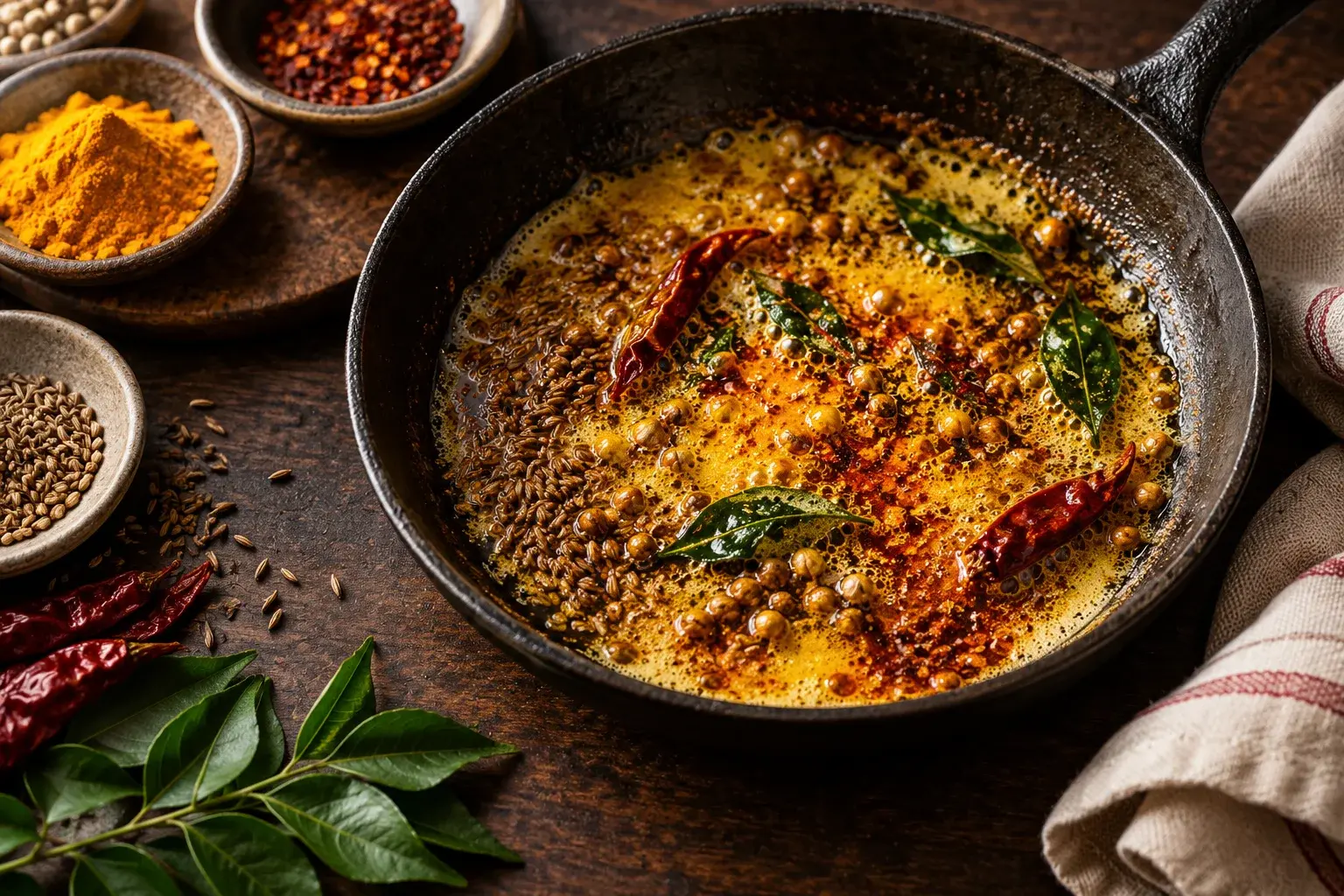
The technique: heat a small pan or ladle over high heat. Add a spoonful of ghee until it shimmers and almost smokes. Add whole spices — mustard seeds, cumin seeds, dried red chilies, curry leaves — and let them pop and bloom for 10–15 seconds. Then pour the entire contents, oil and all, directly onto the finished dal, soup, or curry.
The sizzle and aromatics that rise from the pour are part of the dish’s character. Tadka adds a burst of fresh spice flavor on top of the cooked base — so the finished dish has both the mellow depth of long-cooked spices and the sharp, bright pop of freshly bloomed ones. It’s a form of layering flavor that few home cooks attempt but almost anyone can execute.
Paprika, turmeric, and the color question
Two spices worth special attention for blooming:
Paprika — smoked or sweet — is extremely fat-soluble and blooms to a brilliant red-orange within seconds. This is how Spanish and Hungarian cooks get their signature color and flavor into dishes. Add it to hot oil, bloom for 30 seconds, and your oil becomes deeply flavored and vividly pigmented. (Note: paprika burns faster than most spices — keep the heat at medium and move quickly.)
Turmeric blooms similarly, turning oil a deep golden yellow. Its primary compound, curcumin, is famously fat-soluble — studies on bioavailability show it’s absorbed far better when consumed with fat, which is exactly what blooming provides. Beyond health, bloomed turmeric has a warmer, richer, less raw flavor than turmeric added to water directly.
Common mistakes
- Blooming in cold fat: The spices just sit there. Fat needs to be hot enough to sizzle before the spices go in.
- Adding too many spices at once: A thick paste of spices in a small amount of oil burns on the outside before the inside blooms. Use enough fat to let the spices move freely.
- Walking away: Blooming takes 30–60 seconds. It goes from perfectly bloomed to burned in about 15 more. Stay at the stove.
- Skipping the step entirely: If a recipe says “add spices,” it almost always means bloom them. The step is sometimes implied.
Making it a habit
Once you make blooming a default step — something you do before adding liquids or other aromatics — you’ll find it works in cuisines far beyond Indian cooking. A roux for gumbo benefits enormously from blooming the Cajun spice blend in the fat before adding stock. A tomato sauce deepens when you bloom dried oregano and chili flakes in olive oil before the tomatoes go in. A compound butter for steak starts with toasted and bloomed spices folded in while the butter is soft.
The principle is universal: fat extracts and carries flavor in ways that water can’t. Sixty seconds with a hot pan and a spoonful of oil is the smallest investment with the largest return in your cooking.
Now pick a recipe below — something spiced, something you’ve made before — and bloom the spices this time. Taste the difference.