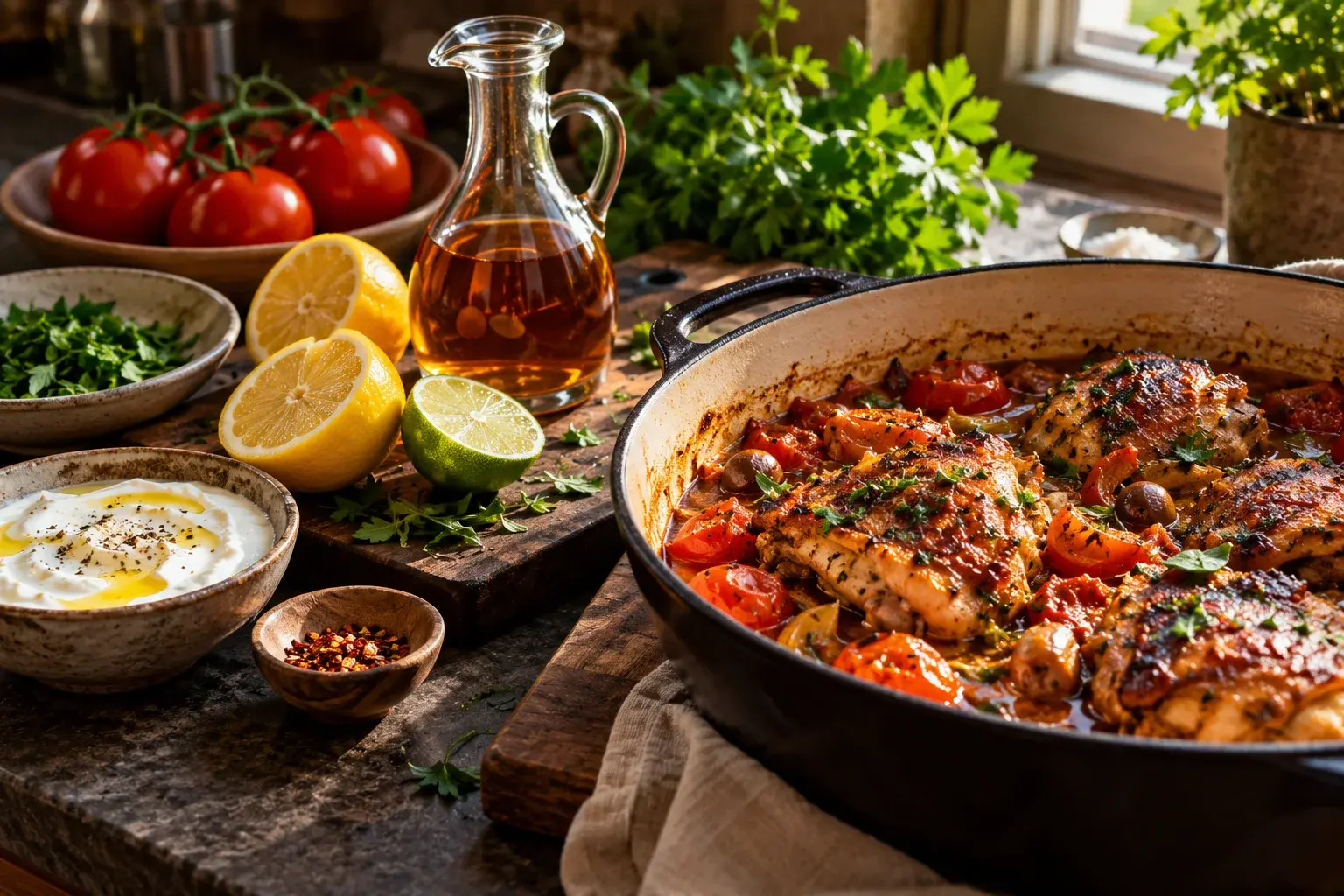
There’s a version of this that happens to almost every home cook. You make a pot of chili, a braise, a pan of roasted vegetables. You season carefully, taste it, decide it’s good but somehow dull, and reach for more salt. The salt doesn’t quite fix it. You add more. Still something’s off. You serve it and it’s fine — but not the version in your head.
The thing you were reaching for was acid. Not more salt.
Acid is the most consistently underused flavor tool in the home kitchen, and it’s also the one that makes the biggest visible difference when you start applying it deliberately. It’s why restaurant food often tastes brighter and more “complete” than the same dish made at home from the same recipe. Chefs finish plates with acid constantly — a squeeze of lemon over fish, a splash of vinegar into a pan sauce, a spoonful of pickled something on a braise — because they know what it does.
What Acid Actually Does
Acid does several distinct things at once, and all of them are useful:
It separates and lifts flavors. A rich, savory dish without acid is like a photograph that’s slightly out of focus — all the elements are there but they smear into each other. Acid brings them into focus. After you add a splash of vinegar to a braise that’s been simmering for two hours, you can suddenly taste the beef, the tomatoes, and the herbs as individual things again.
It cuts through richness and fat. This is why a wedge of lemon always comes with fried fish, and why a vinaigrette over a steak salad works so well. Fat is satisfying but can feel heavy; acid provides the contrast that makes richness feel like pleasure rather than excess.
It suppresses bitterness. A slightly bitter vegetable — broccoli rabe, radicchio, certain kales — softens when you dress it with something acidic. This is also why tomatoes (acidic) and red wine (acidic) work so well in braises with bitter aromatics.
It makes the dish taste finished. This is the hardest to explain but the easiest to taste. A soup or sauce without acid often feels like it’s almost there but not quite. The acid closes the loop. It’s the equivalent of a full stop at the end of a sentence.
Sources of Acid and When to Reach for Them
Understanding the character of different acid sources lets you match them to dishes rather than just “add whatever’s closest.”
Fresh Citrus Juice
Lemon, lime, and orange juice are the most volatile acids — they’re vivid and immediate, but they fade fast. This means two things: add them last (right before serving, ideally), and don’t cook them for long. A whole lemon squeezed over a finished chicken roast, a lime squeezed into guacamole right before it hits the table, a half-orange squeezed into a vinaigrette. Fresh juice, not bottled — the bottled versions are cooked and oxidized and taste hollow.
Dishes that love fresh citrus: seafood of all kinds, avocado dishes (like copycat Chipotle guacamole), light salads, grain bowls, anything fresh and bright.
Vinegars
More stable than citrus juice and more varied in character:
- Red wine vinegar: sharp, winey, slightly fruity. Works in braises, pan sauces, marinades, and vinaigrettes. Use it wherever you’d deglaze with red wine.
- Apple cider vinegar: mild, fruity, slightly sweet. Excellent in slaws, braised greens, barbecue-adjacent dishes, and anything American-Southern.
- Sherry vinegar: nutty, complex, and rounded. The secret weapon in Spanish cooking. Works anywhere red wine vinegar does, with more sophistication.
- Rice wine vinegar: clean and gentle. Use it in Asian-adjacent dishes — dressings like Benihana-style ginger dressing, stir-fries, pickled cucumbers.
- Balsamic vinegar: sweet, syrupy, and complex. Best used sparingly as a finishing drizzle on roasted vegetables, grilled meat, or strawberries.
Wine and Spirits
Dry white wine and dry red wine are acids that also carry flavor. When you deglaze a pan with wine — after searing chicken, for example — you’re adding acid, complexity, and the brown fond (which is where the umami is). Learn to deglaze well and you’ve solved half the “why doesn’t my cooking taste like a restaurant’s” problem. See how to deglaze a pan sauce for the technique.
Fermented and Cultured Dairy
Yogurt, sour cream, crème fraîche, and buttermilk are mild acids with fat attached. They cool and brighten simultaneously — a spoonful of plain yogurt stirred into a spicy curry, or a dollop of crème fraîche over a roasted beet soup, does something a squeeze of lemon alone can’t because it adds fat and acid in the same gesture.
Tomatoes and Tomatillos
These are acidic, mildly sweet, and umami-rich all at once — which is why they’re foundational to so many cuisines. Canned whole tomatoes, fresh tomatoes, tomatillos (especially for salsas and green sauces), and tomato paste all carry background acidity that holds a dish together.
Pickles and Capers
These punch far above their weight as finishing elements. A few capers on a pan sauce, a spoonful of drained pickle brine stirred into a braise, some quick-pickled red onion on a taco — acid, brine, and brightness in one small addition.
How Much to Add
This is where recipes fail you. The right amount of acid depends on the dish, the brand and age of your citrus or vinegar, your palate, and how much richness you’re cutting through. A starting point:
- For a dish that serves 4: start with 1–2 teaspoons of lemon juice or vinegar, stir, wait 30 seconds, taste. Repeat.
- For a large pot of soup or braise (6+ servings): start with 1 tablespoon and work up from there. Two tablespoons of cider vinegar in a 6-quart pot of chili is not unusual.
- For a vinaigrette: aim for a 3:1 ratio of fat to acid as a baseline, then adjust to taste — some vinaigrettes work better at 2:1.
When to Add Acid: Timing Matters
The biggest mistake with acid is adding it too early. Add most of your acid at the very end of cooking, off the heat or just before serving. The delicate aromatic compounds in citrus juice and most vinegars evaporate above about 140°F (60°C) — they’re the first thing to leave when you turn the heat on.
The exceptions:
- A cup of wine or a can of tomatoes going into a long braise — the volume is high enough that acidity survives, and they contribute other flavors the dish needs
- Acid marinades — citrus and vinegar in a marinade denature protein and carry flavor into the surface of meat or fish (for more than an hour with citrus and you risk a mealy texture, though, so time them carefully)
The Quick Check
Not sure if your dish needs acid? The Flavor Balancer is the fastest way to find out — paste in your ingredient list and it scores the recipe’s acid level across the full eight-axis framework described in the 8 flavor axes. If acid is the gap, it’ll tell you which source fits the dish best.
The next time something tastes flat after you’ve already salted it, reach for a lemon instead of the salt shaker. Most of the time, that’s the answer.