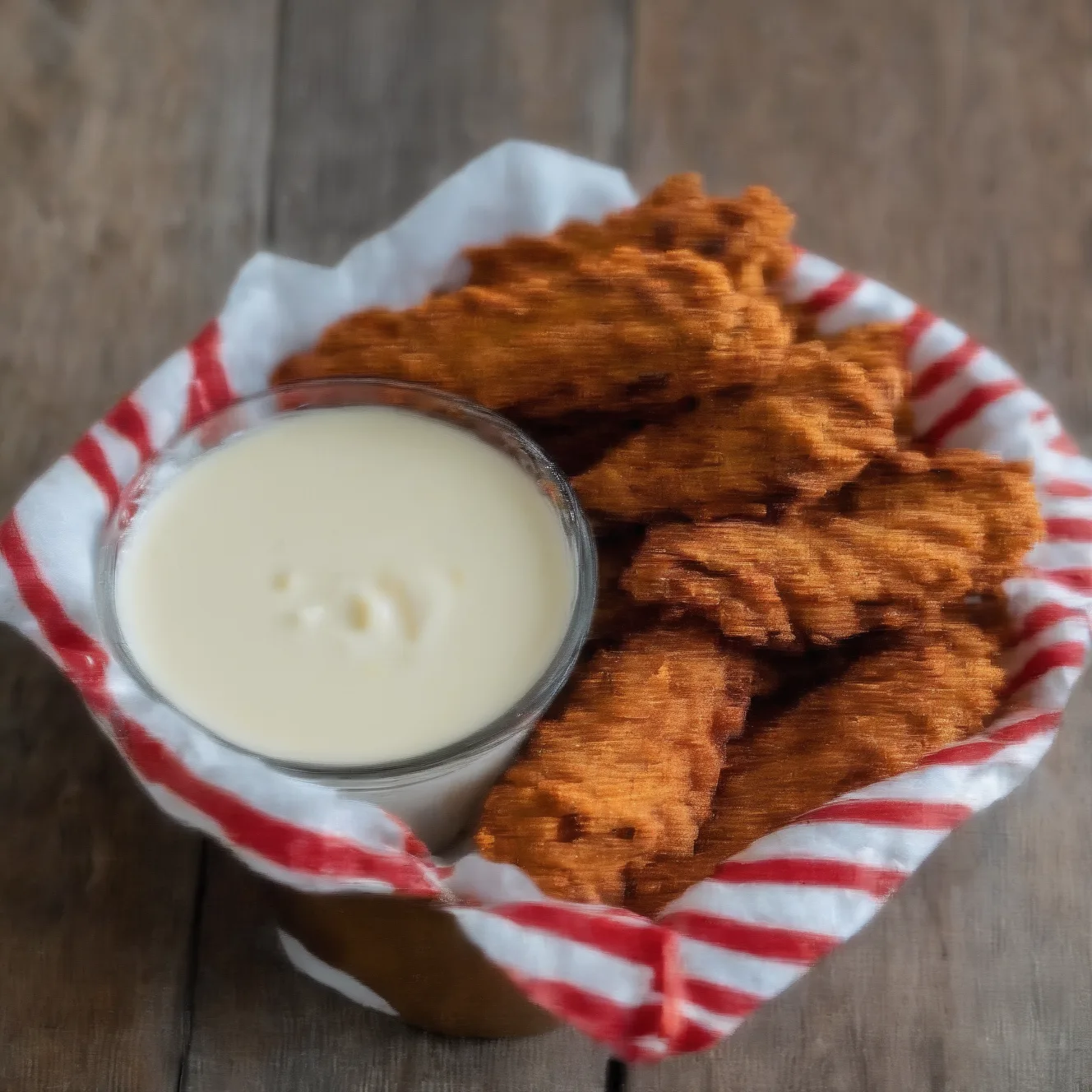
Copycat Dave’s Hot Chicken Tenders (All 7 Heat Levels)
Prep: 30 min (plus 8–12 hr brine) | Cook: 15 min | Makes: About 16 tenders (serves 4)
Dave’s Hot Chicken started as a parking lot popup in East Hollywood in 2017. Dave Kopushyan had been cooking at Thomas Keller’s Bouchon LA — the Napa Valley legend’s Los Angeles outpost — when he and his friends set up a folding table and started serving Nashville hot chicken tenders. By 2021, Drake had invested. Today Dave’s has grown to more than 400 locations and a waitlist-worthy opening wherever it lands.
The menu is deceptively simple: tenders or sliders, seven heat levels, kale slaw, and fries. What makes it different from the hundreds of Nashville hot competitors is technical precision — Kopushyan’s fine dining background shows in the consistency. The overnight brine produces measurably more tender chicken. The oil temperature holds exactly. The heat paste is calibrated, not approximate. In June 2025, Roark Capital acquired the chain for roughly $1 billion.
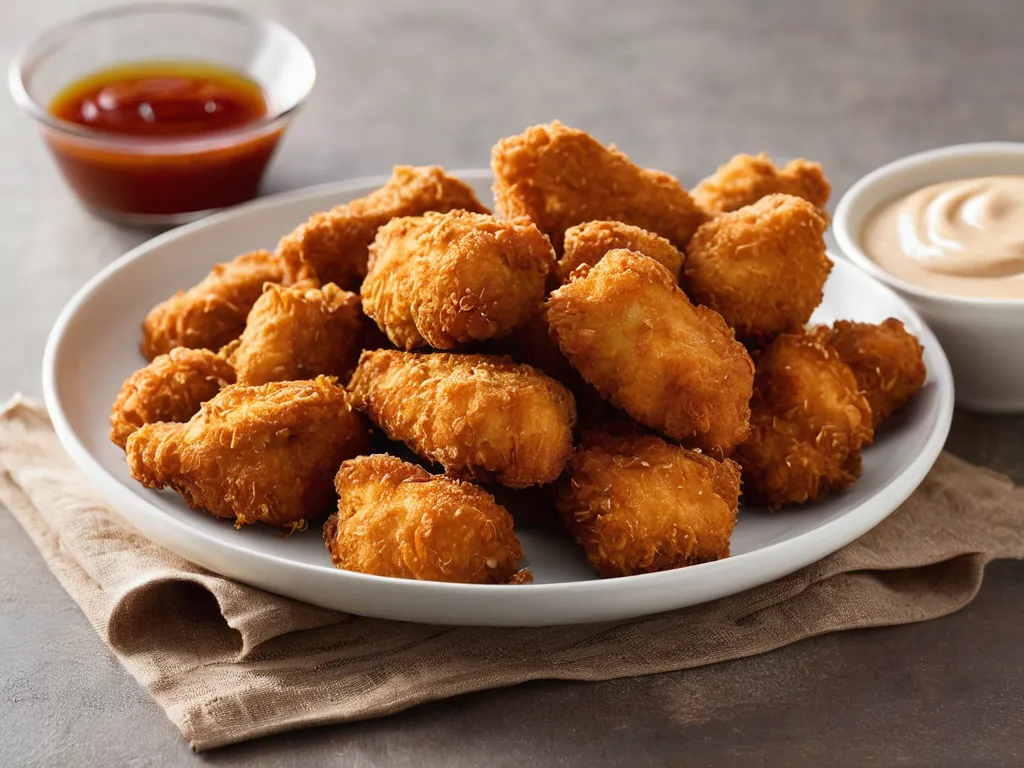
This recipe replicates the whole thing: the tenders, the paste in all seven heat levels, and the kale slaw.
The Heat Level Guide
Dave’s heat system controls the paste with one variable: cayenne. Everything else stays the same. Here are the ratios for all seven levels, for one batch of heat paste (the 1/4 cup oil base):
| Level | Cayenne | What It Feels Like |
|---|---|---|
| No Spice | 0 | Savory, smoky, slightly sweet — no heat at all |
| Lite Mild | 1/2 tsp | A whisper of warmth; barely detectable capsaicin |
| Mild | 1 tbsp | Distinct but gentle; smoky, noticeable without burning |
| Medium | 2 tbsp | Clear heat that builds with each bite; Dave’s most-ordered level |
| Hot | 3 tbsp | Serious heat; burning in the mouth with lingering warmth |
| Extra Hot | 4 tbsp | Very hot; capsaicin buildup that persists well after eating |
| Reaper | 4 tbsp cayenne + 1 tbsp Carolina Reaper powder | Genuinely extreme; waiver and 18+ required at the restaurant; have dairy ready |
Start at Medium or below if you are not a confirmed hot chicken eater. The Reaper level at Dave’s makes grown adults tear up — it is not hyperbole.
Why the Overnight Brine Matters
Most Nashville hot recipes skip or shorten the brine. Dave’s does not.
Buttermilk contains lactic acid, which gently denatures muscle proteins in chicken. Over 8–12 hours, this penetrates through a thick tender (not just the outer layer), producing a noticeably more tender bite than 1-hour brined chicken. The fat in the buttermilk also coats the muscle fibers, making the final product juicier against the dry frying environment.
The garlic powder and hot sauce in the brine add background flavor that cooks into the meat rather than sitting on the surface. When you eat a Dave’s tender and think the chicken itself is seasoned — that’s the brine.
Short brine (under 2 hours): the coating tastes right but the interior is firmer than it should be. Overnight brine: you notice the difference on the first bite.
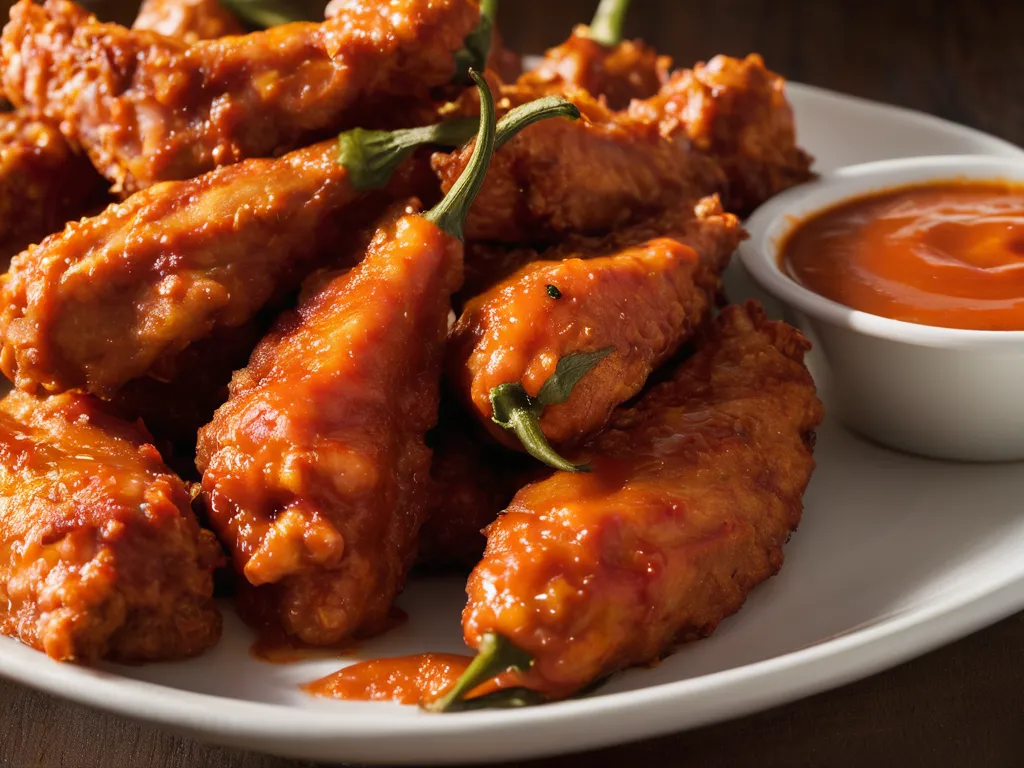
The Nashville Hot Paste Technique: Why Hot Oil
The critical step is blooming spices in hot frying oil, not making a sauce.
When cayenne, smoked paprika, and garlic powder hit 350°F oil, the fat immediately extracts the fat-soluble flavor and color compounds from the spices. You can see it happen: the oil turns deep orange-red in seconds. These compounds — capsaicin, carotenoids, allicin derivatives — do not dissolve in water. Simmering the same spices in water for an hour produces a fraction of the flavor intensity.
The brown sugar does two things: it dissolves into the hot oil to create gloss and helps the paste cling to the crust, and it rounds the raw heat of the cayenne with sweetness so the flavor isn’t one-dimensional.
Prince’s Hot Chicken in Nashville — the original, opened in 1945 — invented this oil-bloom technique. Dave’s uses the same principle, applied with the precision Kopushyan carried out of Thomas Keller’s kitchen.
The Double Dredge and Why Cornstarch
The textural contrast at Dave’s — a light, shatteringly crispy exterior on juicy chicken — comes from two decisions: the double dredge and the cornstarch.
Double dredge (flour → buttermilk → flour) builds more surface area than a single dredge. The second flour coat bonds to the wet buttermilk layer and creates a second crust shell, producing the thick, craggy exterior that shatters on the first bite. Single-dredge chicken fries up smoother and thinner.
Cornstarch alters the starch structure of the coating. Flour alone produces a bready, slightly chewy crust. A 75/25 flour-to-cornstarch ratio produces a lighter, more brittle crust that holds its crunch longer. This is why restaurant-style fried chicken stays crispy for 15–20 minutes on a wire rack while home fry attempts get soft quickly.
The 15-minute rest after dredging is also load-bearing: the flour absorbs moisture from the buttermilk layer and sticks to itself, preventing the coating from peeling in the oil.
The Kale Slaw: Not Just a Side
Dave’s kale slaw is functional, not decorative. It solves the problem that every Nashville hot chicken has: the spice makes you want something cold, creamy, and crunchy between bites.
Kale holds up to dressing better than cabbage alone. The thick leaves don’t wilt or go limp in 30 minutes the way shredded iceberg does. Finely shredded — ribbons, not chunks — it provides crunch without the coarseness of uncut kale.
The dressing is intentionally restrained: mayo + apple cider vinegar + a small amount of sugar. No celery seed, no bell pepper, no elaborate additions. Its job is contrast, not competition with the chicken.
On the slider, the slaw goes on top of the tenders inside the bun, where the creamy dressing intercepts the heat paste on the way to your mouth and cuts its intensity.
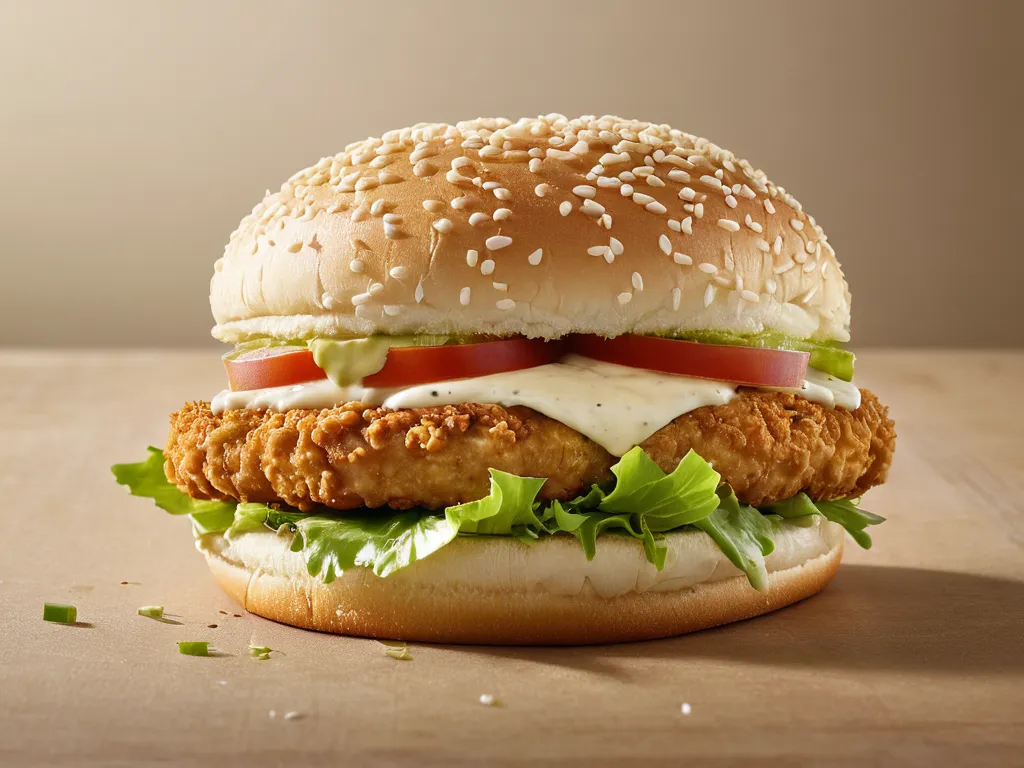
The Slider Build
Dave’s sliders use:
- Soft potato bun — Dave’s uses a potato bun; toast it with butter for richness and structure against the paste. A brioche slider bun is a fine substitute.
- Dave’s sauce — a creamy, tangy comeback-style sauce (mayo, ketchup, mustard, and a splash of pickle brine). It’s the one sauce on the slider, and it cools the paste a little on the way down.
- Dill pickle chips — the sharp, tangy brine cuts the richness of the fried coating and the fat in the sauce. Dill is the traditional Nashville hot pickle; the acidity is the point.
The assembly order matters: sauce first (it adheres to the bun and prevents soaking), then tenders, then pickles and a little kale slaw, then top bun. Extra slaw goes on the side.
Variations
Nashville hot chicken sandwich — use chicken thighs instead of tenders (bone-in, deboned and pounded flat to even thickness) for more fat and deeper flavor. Add 2 minutes to the fry time per side. Same paste.
Hot honey finish — add 2 tablespoons of hot honey (Mike’s Hot Honey or homemade) drizzled over the paste immediately after painting. The sweetness amplifies the heat’s delayed burn in an interesting way.
Oven “Nashville hot” shortcut — dredge and bake at 425°F for 25 minutes on a wire rack set over a sheet pan; still bloom the paste in 1/4 cup of neutral oil heated in a small saucepan. Not as crispy but significantly less mess.
All-thigh version — boneless, skinless chicken thighs cut into tender-sized strips, brined and fried the same way. Thighs have more fat and stay juicier during frying; the paste absorbs better. This is the version to make if your chicken tends to dry out.
Cost Comparison
A 4-piece tender combo at Dave’s Hot Chicken runs about $15–17 in most markets in 2026. A full homemade batch — enough for 16 tenders — costs approximately $18–22 in total ingredients (chicken, buttermilk, oil, spices, slaw), which comes to $4.50–5.50 per serving of four tenders. You also end up with better control over heat level, fresher oil, and the ability to customize the brine and paste to taste.
More Fried Chicken Copycat Recipes
- Popeyes Chicken Sandwich — the pickle-brined fried chicken sandwich that outsold everyone in 2019
- Chick-fil-A Chicken Sandwich — the pressure-cooked rival with the peanut oil fry
- KFC Original Recipe Fried Chicken — the 11-herb-and-spice formula, fried low and slow at 325°F
- Wingstop Lemon Pepper Wings — the dry-rub wings that inspired the wing chain’s lemon pepper dominance