
Pin It

Antoine's Oysters Rockefeller (New Orleans' 125-Year Secret, Decoded)

Antoine's Oysters Rockefeller (New Orleans' 125-Year Secret, Decoded)
Jump to Recipe
Prep 25 min Cook 5 min Serves 4 (24 oysters)
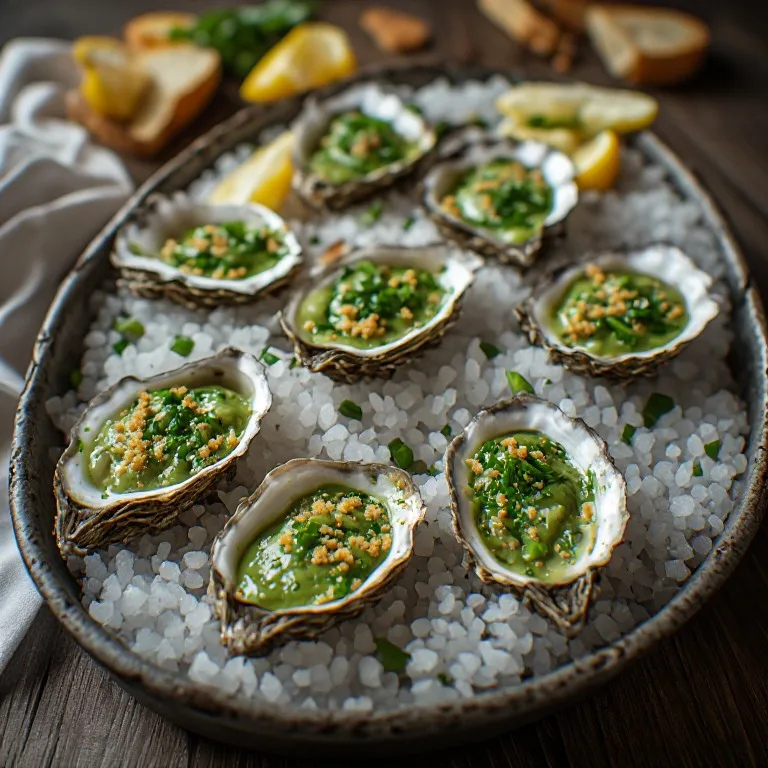
Quick answer: Open 24 Gulf oysters on the half-shell and nestle them in a deep baking pan packed with rock salt — the salt holds the shells level and flat so the sauce doesn't spill. To make the herb sauce: blend 3 tablespoons unsalted butter (softened), 1/2 cup packed flat-leaf parsley leaves, 1/2 cup packed watercress leaves (no stems), 4 scallion greens (coarse-chopped), 2 tablespoons fennel fronds or anise greens (or 1 teaspoon anise seed, bloomed in 1 teaspoon hot water and strained), 2 celery ribs (coarse-chopped), 1 tablespoon fresh breadcrumbs, 1.5 tablespoons Pernod or other anise liqueur, 1/2 teaspoon Tabasco, and 1/2 teaspoon kosher salt in a food processor until completely smooth and bright green — stop before it warms from the friction of the blade, or the color will dull. Taste: the sauce should be herby and bright with a clear anise note and mild heat. Spoon about 1.5 teaspoons of the green sauce over each oyster, spreading to cover the surface completely. Scatter a pinch of fine dry breadcrumbs over each one. Preheat the broiler to its highest setting and position the rack 4 to 5 inches from the heat. Broil 3 to 4 minutes until the crumbs are golden and the sauce is bubbling at the edges. The oyster itself should be just barely set — still plump, not shrunken. Serve immediately on the rock salt bed with lemon wedges and French bread. Do not use spinach. The original Antoine's recipe does not contain spinach; the green comes entirely from the herbs above. Nearly every Oysters Rockefeller served outside of Antoine's uses spinach — it is a version of the dish, not the original.

Shop the tools

Gear matched to this recipe. These are Amazon affiliate links — we may earn a small commission if you buy, at no extra cost to you.

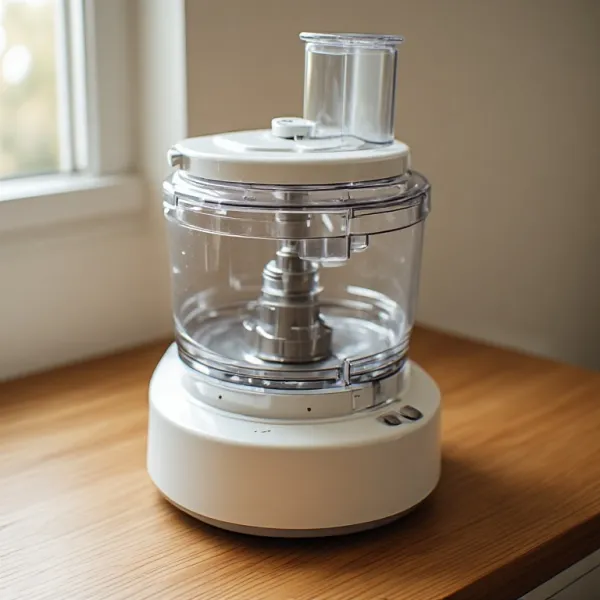
As an Amazon Associate, Copycat Spices earns from qualifying purchases. Product images are generic illustrations, not the exact item listed.

Antoine's Oysters Rockefeller (New Orleans' 125-Year Secret, Decoded)

The famous Antoine's Oysters Rockefeller, made at home: no spinach (the original never had it), fresh herbs pureed smooth, Pernod for the anise backbone, and Gulf oysters broiled on a bed of rock salt. New Orleans' most famous dish since 1899.

Medium Prep: 25 min Cook: 5 min Total: 30 min4 (24 oysters) servings ~$4.50/serving
Prep25 min
Cook5 min
Total30 min
Servings
4
At home~$4.50/serving
vs
Restaurant~$20.25/serving
You save ~78%

The Story Behind the Recipe

The famous Antoine's Oysters Rockefeller, made at home: no spinach (the original never had it), fresh herbs pureed smooth, Pernod for the anise backbone, and Gulf oysters broiled on a bed of rock salt. New Orleans' most famous dish since 1899.

Nutrition Facts

Per serving (4 (24 oysters) servings)
Calories95
Total Fat5g
Total Carbs6g
Protein8g

* Estimated values based on standard recipe preparation. Actual values may vary.

Ingredients

  • Herb sauce
  • For the top
  • To serve

Instructions

💡
Pro tip: This recipe tastes even better the next day. The flavors need time to meld together in the fridge.
❄️
Storage: Keeps in an airtight container in the fridge for up to 2 weeks. Freezer-friendly for up to 3 months.
🦃 Free Thanksgiving cookbook — download now The Copycat Thanksgiving Cookbook A ready-made, photo-illustrated PDF of our best thanksgiving copycat recipes — free to download, no building required. Pay what you want to support if you love it.

Free PDF — instant download. We'll also send new seasonal copycat recipes now and then; unsubscribe anytime. Or just download it →

Copycat Antoine’s Oysters Rockefeller (New Orleans’ 125-Year Secret, Decoded)

Prep time: 25 min (mostly shucking) Cook time: 5 min Servings: 4 as a first course (24 oysters)

Antoine’s Oysters Rockefeller is the most copied and most misunderstood dish in American culinary history. Invented in 1899 at Antoine’s Restaurant in New Orleans’ French Quarter — where it has been served continuously for more than 125 years — the dish has spawned thousands of imitations that share its name and almost nothing else. The single most important thing to know before you start: the original contains no spinach. The green comes from fresh herbs. Every recipe that includes spinach is a version of a version of the dish.

A Dish Born from Scarcity

Jules Alciatore, son of Antoine’s founder Antoine Alciatore, created Oysters Rockefeller in 1899 when the brown snails (escargots de Bourgogne) that the restaurant had been importing from France became unavailable — a supply disruption common in the era before refrigerated shipping. He needed a substitute for the snails that would take the same rich, herbed butter treatment. Gulf oysters, available in abundance from Louisiana’s coastal waters, fit the format.

The sauce he created used the aromatic greens available to him in Louisiana: watercress, parsley, scallion greens, fennel fronds, celery — pureed smooth with butter and spiked with Herbsaint (or its predecessor, absinthe). He named it for John D. Rockefeller, then the richest man in America, because the sauce was, as he put it, as rich as Rockefeller himself.

The recipe has never been published. Antoine’s has served an estimated 3 to 4 million portions in 125 years, and the kitchen’s version remains the restaurant’s most guarded secret.

The Three Things Most Copycat Recipes Get Wrong

1. Spinach. The original Antoine’s recipe contains no spinach. Roy Alciatore — who ran the restaurant through the mid-20th century — stated this explicitly and repeatedly. The green color comes entirely from the herbs. Spinach entered the picture as the dish spread across New Orleans and America in the early 1900s; it was a cheaper, easier stand-in for watercress that produced a similarly green result. Today, a spinach-based Oysters Rockefeller is a legitimate dish — but it is not Antoine’s.

2. Missing the anise backbone. The Pernod (or Herbsaint, the more historically correct New Orleans substitute) is essential, not optional. It provides the aromatic anise character that distinguishes this dish from generic baked oysters with herb butter. You should be able to taste it. One and a half tablespoons in the full batch is the correct quantity — enough to be present without dominating. Recipes that list it as optional or reduce it to a teaspoon produce a flat, generic result.

3. Over-broiling. The oyster inside the shell should finish just barely set — plump and silky, not shrunken and rubbery. The broiler’s job is to toast the breadcrumbs and bubble the sauce. Three to four minutes under a hot broiler is enough. The oyster carries over in the residual heat of the shell. Pull it early.

Making the Herb Sauce

The sauce comes together in a food processor in about three minutes. The key is to work cold: chill the processor bowl in the freezer for ten minutes before you start, and refrigerate the sauce until you’re ready to use it. Cold sauce on cold oysters, then a fast blast under the broiler — that sequence preserves the bright green color and the fresh herb flavor. If you process warm ingredients, or if the sauce sits at room temperature, the chlorophyll degrades and the sauce turns olive-gray.

Taste the raw sauce before it goes on the oysters. It should be bright, herby, and clearly anise-forward with mild heat. If the anise note is missing, you’ll miss it in the finished dish too.

Shucking at Home

Shucking 24 oysters takes about 20 minutes once you have the technique. Buy an oyster knife ($10 to $15) — it is the only safe tool for this. The rock salt bed serves two purposes: it holds the shells level so the sauce doesn’t spill before you get them under the broiler, and it holds heat at the table so the oysters arrive sizzling.

If you have never shucked oysters before, practice on a few before you commit to the full batch. The hinge releases with a firm, twisting motion — not force. Once the hinge goes, the rest is simple.

More Classic Restaurant Dishes Made at Home

Frequently Asked Questions

Does Antoine's Oysters Rockefeller really contain no spinach?

This is the defining claim, and the evidence is strong but not absolute — the recipe is still officially secret. Roy Alciatore, who ran Antoine's through the mid-20th century, stated categorically that the original contained no spinach. The restaurant has never published the recipe. What is clear: the dish was invented in 1899 when brown snails (escargots de Bourgogne) that Antoine's had been importing from France became unavailable. Jules Alciatore, Antoine's son, created a replacement using Gulf oysters and a rich green herb sauce made from locally available greens. The most widely accepted theory, supported by food historians including Rien Fertel and the research in Poppy Tooker's writings on New Orleans food, is that the sauce was made with a combination of watercress, scallion greens, parsley, fennel or anise greens, and other aromatic herbs — but not spinach, which was not commonly cultivated in Louisiana at the time. Spinach entered the picture when the dish spread across New Orleans and the United States in the early 20th century; spinach was a cheaper, easier substitute for watercress that produced a similarly green sauce. Today, virtually every Oysters Rockefeller served outside of Antoine's uses spinach — it has become the canonical version of a dish that has diverged significantly from its source. Antoine's serves its version still, with the recipe still guarded, and the sauce is notably brighter, greener, and more herbaceous than the spinach versions most people know.

Why is the dish called Oysters Rockefeller?

Jules Alciatore named it for John D. Rockefeller — who was, in 1899, the richest man in the United States and arguably the world. Alciatore's description of the sauce as 'so rich it could only be named for the world's richest man' was the public explanation. The name captured both the sauce's luxuriousness — a heavily buttered, herb-rich preparation — and the timing: Rockefeller's wealth was the dominant cultural shorthand for extreme affluence at the turn of the century. The name was also strategically brilliant marketing. Antoine's had been open since 1840 and was already a French Quarter institution, but Oysters Rockefeller gave the restaurant a signature dish that newspapers and tourists immediately associated with it. The dish made national and international news within years of its creation. Today, the name 'Oysters Rockefeller' has become generic — used to describe dozens of different baked oyster preparations with green toppings, almost none of which resemble what Jules Alciatore created in 1899.

What is the Pernod doing in the sauce, and can I substitute something else?

Pernod provides the anise backbone that distinguishes Oysters Rockefeller from other baked oyster preparations. The anise flavor is not subtle — it is a central element of the dish, not a background note. The original Antoine's sauce likely used absinthe (the anise-flavored spirit that was the predecessor to Pernod before the U.S. absinthe ban in 1912) or a similar anise liqueur. When absinthe became unavailable, Pernod — a legal anise-flavored liqueur — became the standard substitute. The quantities are small (1 to 1.5 tablespoons for 24 oysters) but meaningful: without it, the sauce is just a buttered herb mixture. With it, the dish has a specific character that is immediately recognizable. Substitutes: any anise-flavored liqueur works — Ricard, Herbsaint (the New Orleans classic, made specifically as an absinthe substitute and slightly more authentic than French Pernod), Pastis, or actual absinthe (now widely available again since the U.S. ban was lifted in 2007). Herbsaint is the most historically appropriate choice for a Louisiana Gulf oyster preparation; it was developed in New Orleans in 1934. Do not substitute anise extract or anise seed alone — the alcohol acts as a carrier for the flavor compounds and thins the sauce slightly in a way that extract cannot replicate. If you cannot source any anise liqueur, add 1/2 teaspoon of ground anise to the herb blend and increase the butter slightly to compensate for the missing liquid, but the result will be noticeably different.

What oysters should I use, and how do I open them safely at home?

For authenticity, use Gulf oysters — Crassostrea virginica from the Gulf of Mexico or the East Coast, which are large, plump, and briny. Gulf oysters (from Louisiana, Mississippi, or Texas) are the closest to what Antoine's serves. Good alternatives: East Coast oysters like Blue Points (Long Island), Wellfleets (Cape Cod), or Chesapeake Rappahannocks all work well. Avoid Pacific oysters (Crassostrea gigas) — they are sweeter, smaller, and cook differently; their smaller size means they overcook faster under the broiler. Buy oysters the same day you plan to serve them. They should smell like the ocean, not like ammonia. To open safely: fold a thick dish towel into a square, place the oyster cup-side down on the towel with the hinge facing you, and grip firmly with your non-dominant hand through the towel. Insert an oyster knife into the hinge (not the side) with a firm, twisting motion — not a jab. Once the hinge releases, run the knife under the top shell to sever the adductor muscle, then remove the top shell. Run the knife under the oyster body to free it from the bottom shell so it can move freely but stays in place with its liquor. Discard any oyster that smells off or will not close when tapped before opening. For 24 oysters, plan 20 minutes of shucking time until you develop a rhythm.

Can I use pre-shucked oysters from a jar instead of shell oysters?

Pre-shucked oysters from a jar work for the flavor of the recipe but not for the presentation. The rock salt + shell presentation is half the dish at Antoine's — the sizzling shells arriving at the table, the visual drama, the way you eat directly from the shell. Jarred oysters also tend to be smaller and less plump than freshly shucked Gulf oysters; they release more liquid during cooking, which can thin the sauce and make it pool in the baking dish rather than sitting on the oyster. If you must use jarred oysters: drain them very well, pat dry gently, place in small ramekins or an oven-safe pan, spread the sauce over them, and bake at 400°F for 8 to 10 minutes until set. It produces a reasonable Oysters Rockefeller in flavor if not in form.

What does Antoine's restaurant look and feel like? Should I try to visit?

Antoine's is one of the most historically atmospheric restaurants in the United States. It occupies the same address at 713 St. Louis St. in the French Quarter it has held since 1840, with 15 private dining rooms (including the Mystery Room, the Rex Room for Mardi Gras royalty, and the 1840 Room) spread across a sprawling layout that covers most of a city block. The main dining room has white tablecloths, ceiling fans, antique tile floors, and decades of autographed photographs covering every available wall. It operates on the French menu tradition — the menu is printed in French with English translations, a holdover from its founding. Waiters tend toward a formal professionalism that reads as old-fashioned by current standards, which is precisely the point. The restaurant is not trendy; it is permanent. Yes, you should visit if you are in New Orleans. Call ahead — the restaurant takes reservations and the private rooms book for special events. Beyond the Oysters Rockefeller, the pommes de terre soufflées (puffed potato pillows), the baked Alaska (another dish they popularized in America), and the classic Chicken Rochambeau are all worth ordering. Budget approximately $60 to $90 per person for a full dinner.

Why does the sauce turn a dull green after cooking instead of staying bright?

Heat destroys the chlorophyll in the fresh herbs, converting it from bright green (chlorophyll-a and chlorophyll-b) to olive or gray-green (pheophytin). This happens quickly — within 2 to 3 minutes of direct heat. Two factors control how much the color dulls: the temperature of the sauce before broiling, and the duration under the broiler. Make the herb sauce cold — chill the food processor bowl in the freezer for 10 minutes before blending, and if possible, work in a cold kitchen. The sauce should be refrigerator-cold when it goes on the oysters. Under a very hot broiler for only 3 to 4 minutes, the surface browns the breadcrumbs before the heat fully penetrates the green sauce underneath, preserving more of the bright color in the body of the sauce. If you broil at lower heat or for longer, the sauce dulls throughout. The other fix: a pinch of baking soda in the sauce (1/8 teaspoon total) maintains the magnesium ion in chlorophyll that keeps it green. This is a restaurant trick — the alkaline environment slows pheophytinization. It does not affect flavor at this quantity. Antoine's own sauce may have a slightly dull green from decades of recipe refinement prioritizing flavor over color, or it may use a version of this trick — no one outside the kitchen knows.

Love this recipe? Share it!

Free PDF: our 12 most-wanted copycat recipes — instant download.

Made it? Buy us a coffee

Every recipe here is free, with no paywalls. If this one was a hit at your table, a small tip keeps new copycats coming.

$

Antoine's is a trademark of its owner, used here only to describe the dish this recipe recreates. This is an independent copycat written in our own words — Copycat Spices is not affiliated with, endorsed by or sponsored by Antoine's.

Ratings & Reviews

—
No ratings yet

Rate this recipe

Click a star to rate

Leave a Review

0/500

CS

Copycat Spices Editorial

Researched + fact-checked. Every recipe on Copycat Spices is built from published sources — official ingredient lists, brand-published recipes, interviews and food-science references — and fact-checked before it goes live, then written as clear, step-by-step instructions for home cooks of all skill levels.

Learn more about our mission →