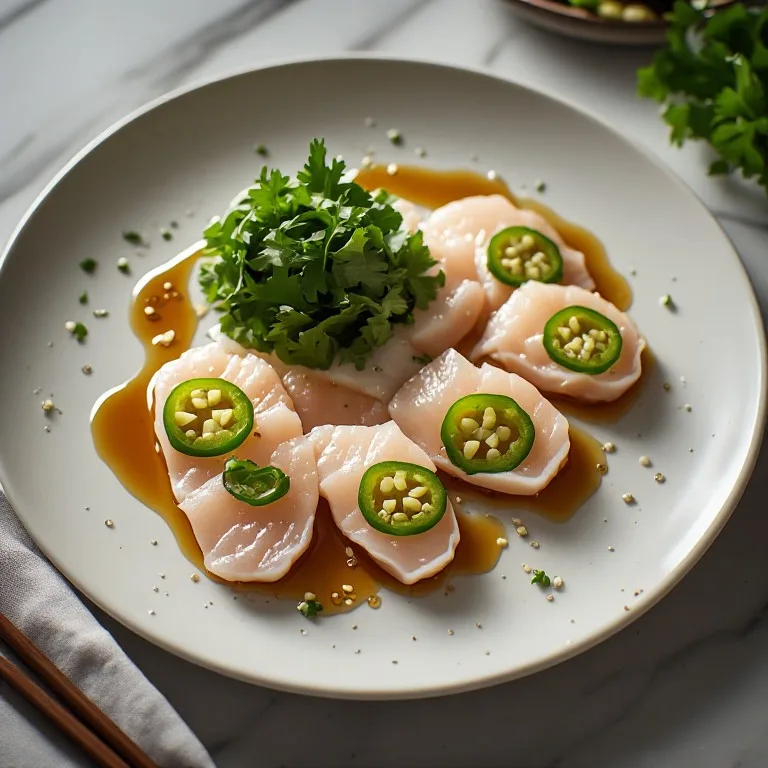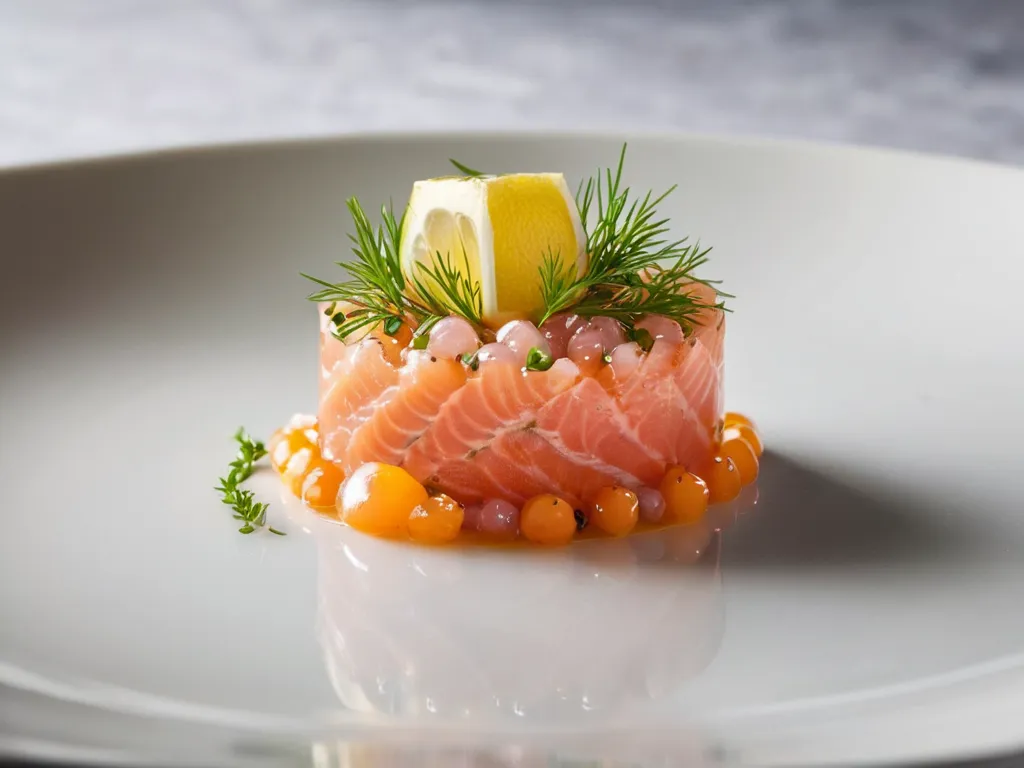

Copycat Le Bernardin Tuna Tartare (Made at Home)
Prep time: 30 min (vinaigrette can be made 3 days ahead; crisps 3 hours ahead) Cook time: 10 min (for the crisps; the tuna is raw) Servings: 4 appetizer portions
Why Most Le Bernardin Tuna Tartare Recipes Get It Wrong
Le Bernardin, the 3-Michelin-star French seafood restaurant on West 51st Street in Midtown Manhattan, has served tuna tartare since its New York opening in 1986. The dish has evolved considerably, but the most widely cited copycat recipe on the internet is drawn from the 1998 cookbook.
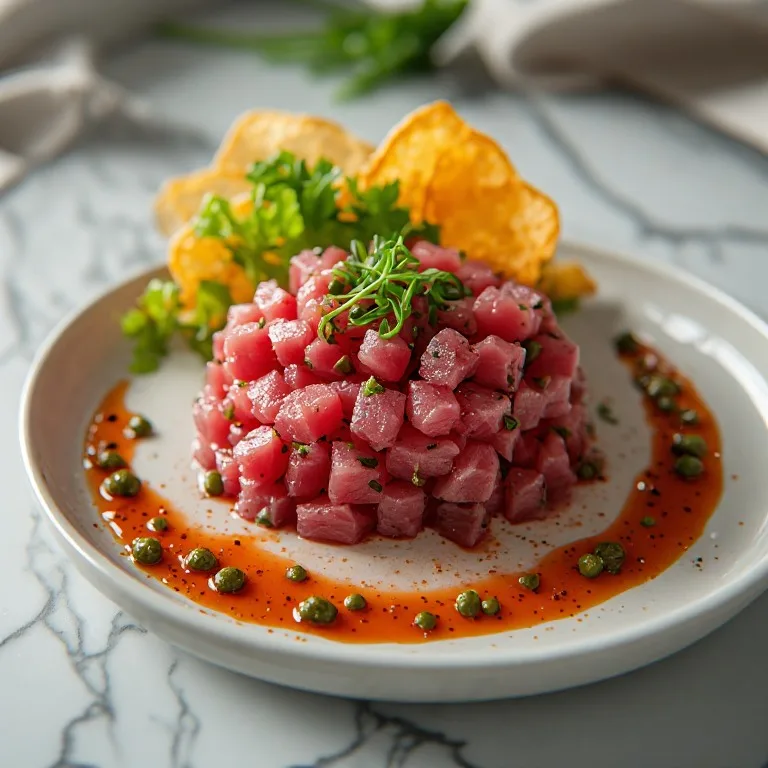
That recipe — a French-bistro preparation with cornichons, Dijon mustard, sherry vinegar, minced spring onion, Tabasco, and Belgian endive leaves as scoops — is technically a real Le Bernardin recipe. It is not, however, the dish you are served in 2025 or 2026. The tuna tartare currently on the menu uses a roasted piquillo pepper vinaigrette (smoky, sweet, built on fire-roasted Spanish peppers) served with sweet potato crisps. If you have been making the 1998 endive version and wondering why it tastes nothing like your visit to Le Bernardin, now you know why.
There is also a famous intermediate version — the Asian-style preparation with cold-infused ginger oil, real wasabi paste, jalapeño, cilantro, yuzu, and Sriracha — that circulates widely. That version is documented from multiple Eric Ripert interviews and cooking appearances in the 2000s and early 2010s and was on the menu in various forms during that period. Most food-media coverage of “Le Bernardin tuna tartare” refers to this version.
This recipe covers both: the current piquillo version and the Asian-style ginger oil version. The techniques that apply to both are covered below.
The Three Things That Actually Make This Dish Work
1. Knife-cut only — never a food processor
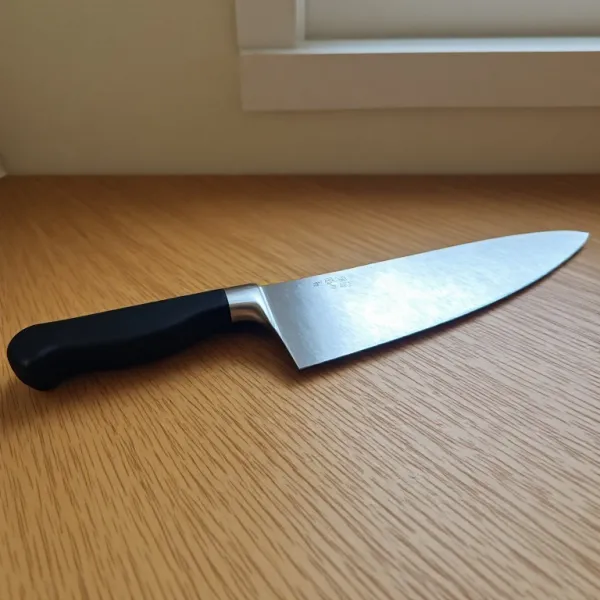
This is stated so often in Le Bernardin’s context that it has become a cliché, but it is genuinely important. A food processor chops tuna through impact and friction — the blades hit the fish, cell walls rupture, and the texture rapidly becomes paste. Even two pulses is too many.
A sharp knife cuts by shearing cleanly through the flesh along a line, leaving the adjacent cells intact. The resulting cube has structural integrity — it holds its shape under a fork, releases its juices gradually, and has a clean surface that accepts dressing without becoming waterlogged.
Cut ¼-inch dice. At Le Bernardin, the kitchen cuts each service using a specific knife stroke: planks against the grain, then strips, then cubes, each cut single-motion with a sharp blade. The time from cut to plate is under 30 minutes.
2. Dress at the last moment — not in advance
Tuna oxidizes visibly within 10 to 15 minutes of contact with acid (lemon juice, yuzu, vinegar). The myoglobin in the flesh reacts with oxygen and turns gray — the same mechanism that turns cut red meat brown on a grocery display. The gray is not a safety issue, but the texture also changes: acid begins to denature the protein, and the fish weeps liquid, producing the puddle of juice under a tartare that was dressed too early.
At Le Bernardin, the tartare is dressed to order. For home cooking, mise en place everything else (vinaigrette, crisps, frisée, chives) and cut and dress the tuna no more than 10 minutes before you bring the plate to the table. This changes the experience entirely.
3. Start with a cold bowl and cold tuna
Eric Ripert’s kitchen always chills the mixing bowl before dressing tuna. The practical reason: a warm surface warms the outermost layer of the diced tuna within seconds, which accelerates both oxidation and the structural softening that follows. Fifteen minutes in the freezer or 2 minutes with ice water in the bowl is enough. The tuna should stay cold on ice until the moment of dressing.
The Current Version: Piquillo Pepper Vinaigrette with Sweet Potato Crisps
The piquillo pepper vinaigrette is the key to the contemporary dish. Roasted piquillo peppers from Navarra, Spain — fire-roasted by hand, hand-peeled, packed in their own juices — produce a vinaigrette that tastes smoky, sweet, and gently acidic. It does not taste like French bistro food. It does not taste like anything you would make from a generic supermarket red pepper.
The vinaigrette is blended smooth with shallot, sherry vinegar, and a small amount of Dijon, then emulsified with olive oil. It is spooned around the base of the tartare — not poured over it — so the tuna itself is barely touched, the piquillo contributes on each bite rather than overwhelming, and the dish has visual definition.
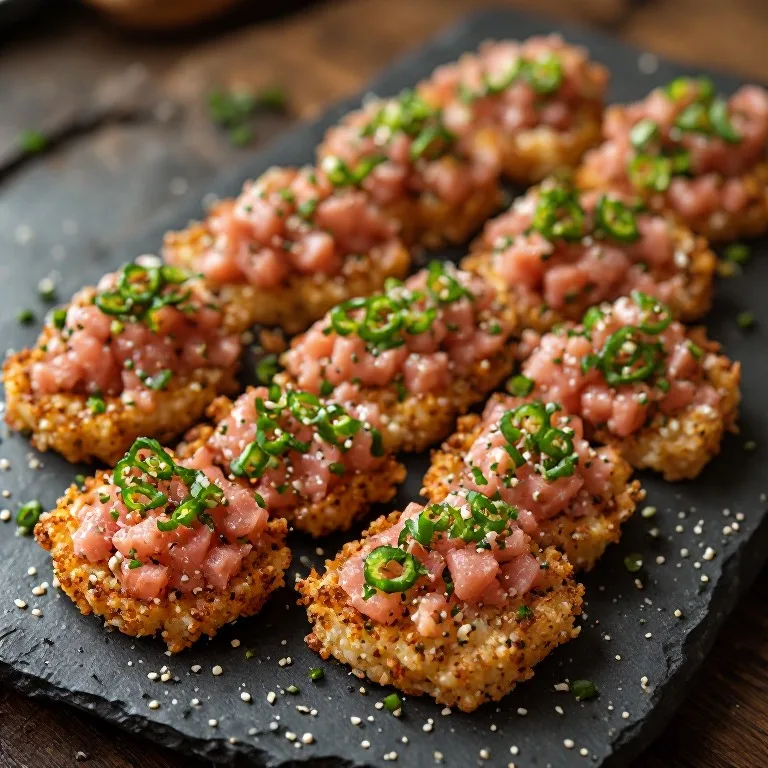
The sweet potato crisps are fried or baked paper-thin and act as the textural element — what gaufrette chips or endive leaves do in other versions. They also add sweetness that echoes the piquillo’s natural sugar.
The Asian-Style Ginger Oil Version
This is the version most diners picture when they say “Le Bernardin tuna tartare” — it got wide press between roughly 2005 and 2015 and spawned a generation of copycat pages.
The signature technique is the cold-infused ginger oil. Raw grated ginger is combined with canola oil at room temperature and left for at least 2 hours (overnight in the refrigerator is better). The oil is then strained and the ginger solids discarded. The result tastes like fresh ginger — bright, aromatic, slightly citrusy — rather than cooked ginger, which is what you get if you heat the infusion even briefly. The distinction matters for raw fish; the fresh aromatic compounds complement it, where cooked-ginger notes fight it.
The ginger oil is combined with wasabi paste (real paste from a tube — not wasabi powder, which has a harsher heat), scallions, minced jalapeño, cilantro, yuzu juice, and a small splash of Sriracha. This mixture is prepared first, tasted and adjusted, and then the diced tuna is folded in at the very last moment.
Gaufrette waffle chips — thin-cut, deep-fried, crosshatched — are the traditional accompaniment, though fried potato chips work. The chips are served alongside for scooping, not on top.
About Le Bernardin
Le Bernardin opened in Paris in 1972, founded by siblings Gilbert and Maguy Le Coze. They moved the restaurant to New York City in 1986 and received four New York Times stars within months of opening. Gilbert Le Coze died suddenly in 1994; Eric Ripert, then 29 and already his sous chef, took over as executive chef and has run the kitchen since.
The restaurant has held three Michelin stars continuously since the New York Michelin guide launched in 2005 — the longest streak of any restaurant in the city. Its organizing philosophy appears in the menu’s three categories: Almost Raw, Barely Touched, and Lightly Cooked. The kitchen does not make its own fish; it reveals the fish.
Current prices: the four-course prix-fixe dinner is $218 per person (2026). The eight-course chef’s tasting is $350. Lunch (weekdays) is $135 for three courses. The tuna tartare appears in the Almost Raw section.
The restaurant is located at 155 West 51st Street, between Sixth and Seventh Avenues, Midtown Manhattan. It is closed Sundays.
Frequently Asked Questions
What is sushi-grade tuna and where do I buy it?
Sushi-grade is a marketing term with no legal definition in the United States — no government body certifies tuna. In practice it means the fish was frozen to FDA guidelines (at -4°F for 7 days, or -31°F for 15 hours) to kill parasites, and is fresh enough to eat raw. Buy from a Japanese fish market or grocery (Mitsuwa, H Mart, Marukai), a dedicated fishmonger who supplies sushi restaurants, or Costco, which sells sashimi-grade yellowfin with excellent quality control. Ask any retailer: “Was this frozen for parasite kill?” Buy the day you serve it.
Which version should I make?
If you want to replicate the experience of eating at Le Bernardin right now, make the piquillo pepper version. If you want the recipe that most internet food culture associates with Le Bernardin, make the ginger oil version. Both are excellent. The piquillo version is lighter and more elegant; the ginger oil version has more aggressive flavor and is more forgiving for first-time attempts.
Can I substitute canned roasted red peppers for piquillos?
Yes — use fire-roasted red peppers in oil (not in vinegar) plus ¼ teaspoon of smoked paprika per 4 peppers. The result is a step down in complexity but still a good vinaigrette. The sweet, smoky depth that piquillos provide comes from their specific variety and the hand-roasting process; standard red peppers are blander and lack the natural sweetness.
Why did my tuna turn gray?
Oxidation. The myoglobin in tuna reacts with oxygen and turns gray within 10 to 15 minutes of contact with acid or air exposure. Dress the tartare no more than 10 minutes before serving and keep the bowl chilled. Tuna that has been pre-cut and stored exposed in the refrigerator also oxidizes — cut the fish as close to serving as possible and keep it on ice until that moment.
Can I make this with salmon instead of tuna?
Salmon tartare is a different (and good) dish but it is not this recipe. Sushi-grade king salmon with a similar ginger oil dressing works well, though salmon’s higher fat content produces a richer, creamier texture than tuna. Reduce any acid slightly — salmon’s fat amplifies acid more than tuna’s leaner flesh does. For the piquillo version, salmon and piquillo is a great combination; the vinaigrette’s sweetness plays off salmon’s fat in an interesting way.
The crisps went soft by the time I served them. What happened?
Either the sweet potato slices had surface moisture before frying or baking (dry them very thoroughly between paper towels — visible dryness is not enough; press firmly), or you stored the finished crisps in a closed container. Closed storage traps steam and softens them within 30 minutes. Store uncovered at room temperature and they stay crisp for 2 to 3 hours.