


Pin It

Babbo Pappardelle Bolognese (The Famous Bolognese, Made at Home)

Babbo Pappardelle Bolognese (The Famous Bolognese, Made at Home)
Jump to Recipe
Prep 25 min Cook 3 hrs 15 min Serves 6
Quick answer: Render 4 oz of finely diced pancetta in a Dutch oven or wide heavy pot over medium-low heat until the fat has released and the pieces are lightly golden, about 8 minutes. Add 1 medium onion (finely diced), 2 celery stalks (finely diced), and 1 carrot (finely diced) and cook, stirring occasionally, until fully softened and starting to turn pale gold, about 10 to 12 minutes. Add 4 minced garlic cloves and cook 1 more minute. Raise the heat to medium-high, add 8 oz ground beef (80/20), 8 oz ground pork, and 8 oz ground veal (or substitute additional beef or pork) and cook, breaking the meat into small pieces with a wooden spoon, until no pink remains — about 8 minutes. Stir in 2 tablespoons of tomato paste and cook for 2 to 3 minutes, stirring constantly, until it turns brick-red and sticks slightly to the bottom of the pot (this caramelizes the paste and eliminates the raw tomato flavor). Pour in 1 cup of dry white wine and scrape up every browned bit from the bottom. Bring to a brisk simmer and cook until the wine is almost completely absorbed, about 5 minutes. Add 1 cup of whole milk, stir, and cook until it absorbs into the meat, about 5 more minutes. Add 2 cups of chicken or beef stock, bring to a gentle simmer, reduce the heat to the lowest possible setting, and cook uncovered — stirring every 30 to 40 minutes and adding more stock in ½-cup increments if the sauce tightens before the time is up — for 3 full hours. The finished sauce should be a rich, unified, moist ragu with very little visible liquid. Season with salt and pepper. To serve: bring a large pot of salted water to a boil, cook 1 lb fresh pappardelle (or 12 oz dried) to just under al dente, reserve 2 cups of pasta water, and drain. Toss the pasta in the pot with the ragu over medium heat, adding splashes of pasta water as needed to coat each ribbon. Off heat, stir in 2 tablespoons of butter and 1/2 cup of finely grated Parmigiano-Reggiano. Serve with extra Parmigiano.

Shop the tools

Gear matched to this recipe. These are Amazon affiliate links — we may earn a small commission if you buy, at no extra cost to you.

As an Amazon Associate, Copycat Spices earns from qualifying purchases. Product images are generic illustrations, not the exact item listed.

Babbo Pappardelle Bolognese (The Famous Bolognese, Made at Home)

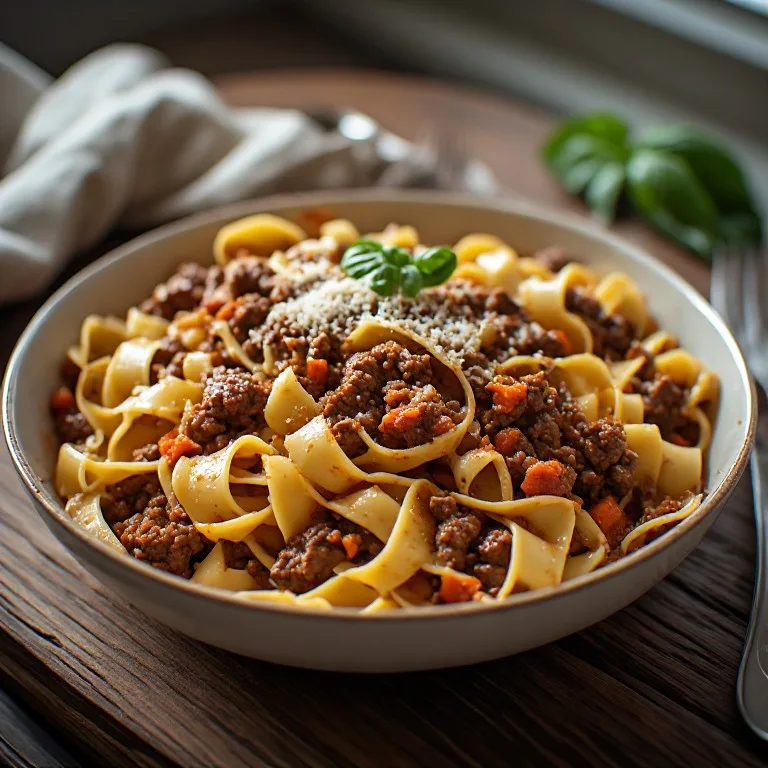
Babbo's celebrated Bolognese, made at home: pancetta as the fat base, white wine instead of red, and whole milk added to tenderize the meat — three techniques the restaurant version uses that most recipes skip. Mario Batali's ragu simmers for three hours until it's the richest meat sauce you've ever made.

Medium Prep: 25 min Cook: 3 hrs 15 min Total: 3h 40m6 servings ~$4.50/serving
Prep25 min
Cook3 hrs 15 min
Total3h 40m
Servings
6
At home~$4.50/serving
vs
Restaurant~$20.25/serving
You save ~78%

The Story Behind the Recipe

Babbo opened in 1998 in the former Coach House space on Waverly Place in Greenwich Village, and from the start Mario Batali and Joe Bastianich committed to Italian regional cooking with an intensity that Manhattan Italian restaurants hadn't shown before. The Bolognese sauce — properly ragu alla Bolognese, a slow-cooked meat sauce from the city of Bologna in Emilia-Romagna — became one of Babbo's anchoring pastas. What set it apart from the thick, heavily tomatoed meat sauces that American diners called "Bolognese" was the technique from the source: pancetta rendered first for the fat base, white wine deglazing the meat rather than red, whole milk added to tenderize the proteins and enrich the sauce without cream, and almost no tomato beyond a small spoon of paste. The recipe appears in The Babbo Cookbook and has been replicated across food blogs for two decades, but most versions substitute olive oil for the pancetta, use red wine, or pile in crushed tomatoes — pulling the finished sauce far from what the restaurant produces. A pasta course at Babbo runs $28 to $36, and a reservation requires weeks of planning through their online system. A full batch of this ragu at home, enough for six generous portions, costs about $25 in ingredients. The almost entirely passive three-hour simmer is the only real ask — active time is under 30 minutes. Bolognese is also one of the few sauces that genuinely improves the next day: make it the night before, refrigerate it overnight, skim the solid fat from the top, and reheat gently. The ragu deepens, the flavors meld, and the texture becomes even more cohesive.

Nutrition Facts

Per serving (6 servings)
Calories580
Total Fat24g
Total Carbs56g
Dietary Fiber3g
Sugars7g
Protein32g
Sodium670mg

* Estimated values based on standard recipe preparation. Actual values may vary.

Ingredients

Instructions

💡
Pro tip: This recipe tastes even better the next day. The flavors need time to meld together in the fridge.
❄️
Storage: Keeps in an airtight container in the fridge for up to 2 weeks. Freezer-friendly for up to 3 months.
🎃 Free Halloween cookbook — download now The Copycat Halloween Cookbook A ready-made, photo-illustrated PDF of our best halloween copycat recipes — free to download, no building required. Pay what you want to support if you love it.

Free PDF — instant download. We'll also send new seasonal copycat recipes now and then; unsubscribe anytime. Or just download it →

Babbo opened in 1998 in the former Coach House space on Waverly Place, and one of the dishes that defined it was not the headline-grabbing offal preparations or the famous mint love letters — it was the pappardelle with Bolognese, a dish that looked unremarkable on the menu and tasted unlike anything in the category.

The difference is technique, specifically three things most recipes skip: pancetta rendered as the fat base so the soffritto cooks in cured pork rather than olive oil, white wine used for the deglaze instead of red, and whole milk added after the wine to tenderize the meat proteins before the stock goes in. These are the classical details documented in the original 1982 recipe registered with Italy’s Academy of Cuisine in Bologna — a recipe that specifies white wine and milk but has been routinely simplified or Americanized in the decades since.

A reservation at Babbo, a dinner for two with wine, tax, and tip, runs $200 or more. The ragu at home, a full six-serving batch, costs about $25 in ingredients. The three-hour simmer is almost entirely passive — once the meat, wine, and milk have gone in and the heat is turned to its lowest setting, the sauce asks almost nothing of you. It also improves the next day, which makes it one of the better weekend projects in the category.

The Three Technique Details That Separate This From a Generic Meat Sauce

1. Pancetta as the fat base, not olive oil

Most Bolognese recipes start with a glug of olive oil. Babbo starts by rendering diced pancetta — Italian dry-cured pork belly — and building the soffritto in the rendered fat. The pancetta fat coats the onion, celery, and carrot, flavors the caramelization that develops as they cook, and leaves a faint cured-pork undertone running through the finished sauce that olive oil cannot produce.

The pancetta pieces themselves stay in the pot throughout the entire braise, eventually softening into the sauce and becoming nearly indistinguishable from the ground meat — but their rendered fat was the entire point. Use a slab of pancetta from the deli counter, cut into small dice yourself, rather than the pre-sliced rounds that are too thin to render properly.

2. White wine instead of red

Classical Bolognese from Emilia-Romagna uses white wine. The choice is deliberate: red wine’s tannins and anthocyanins can give a long-simmered beef sauce a slightly bitter, astringent edge underneath the richness, while white wine deglazes and adds acidity without changing the sauce’s color or introducing tannins. The finished sauce reads as lighter and cleaner, with the meat flavor more prominent and less obscured by wine character.

The switch also matters for the milk step that follows: the white wine’s gentle acidity helps denature the milk proteins quickly when the two combine, keeping the sauce from curdling in the rare cases where the heat is too high.

3. Whole milk before the stock

Adding whole milk to a hot pan of browned meat looks wrong at first — the milk bubbles and seems to break apart. It is not breaking; it is absorbing. Milk proteins surround the meat fibers and inhibit the toughening that happens when muscle proteins contract under prolonged heat. The result is meat that stays more tender over the three-hour simmer than it would otherwise be, and a sauce that has a subtle creaminess without a drop of cream.

This step was described and defended at length by Marcella Hazan in Essentials of Classic Italian Cooking, and it appears in The Babbo Cookbook for the same reason: it is what the original dish calls for, and it works.

Why Three Hours

The temptation with Bolognese is to shorten the cooking time. After 45 minutes, the sauce smells finished and tastes good. At 90 minutes, it tastes better. At three hours, it tastes like something qualitatively different: the soffritto vegetables have completely dissolved into the sauce, the meat has broken down into smaller fragments that cling rather than clump, and the combined liquids have reduced to a cohesive, barely-sauced texture that is nothing like a wet pasta sauce.

The three-hour mark is the point at which Bolognese behaves like Bolognese rather than a meat sauce that happens to be over pasta. Do not shorten it.

Finishing the Pasta

The ragu finishes in the pasta cooking pot — the pasta goes directly in from the boiling water with tongs, carrying starchy water with it, and gets tossed with the sauce over medium heat until each ribbon is coated. Butter and Parmigiano go in off the heat, which keeps the cheese from seizing into grainy clumps.

The pasta water is not optional. The dissolved starch emulsifies the butter and fat from the sauce into a gloss that clings to the ribbons rather than pooling at the bowl’s bottom. Reserve at least two cups before draining anything.

Cost Comparison: Babbo vs. Home
Per Serving at BabboPer Serving at Home (6 servings)
Pasta course~$30–36—
Full batch—~$25
Per serving~$30–36~$4–5

The cost at home reflects the pancetta (about $5 for 4 oz), the three-meat blend (about $12 total), and stock. Wine, milk, tomato paste, and aromatics together add another $4 to $5. Fresh pappardelle from a pasta shop runs $6 to $8 for 1 lb; good dried is $3 to $4.

Tips and Variations
  • Make it the day before. The ragu is genuinely better after 24 hours in the refrigerator. The fat floats to the surface, solidifies, and can be skimmed off in one clean sheet before reheating — which also reduces the saturated fat content of the finished dish.
  • Scale the batch and freeze. The ragu freezes well for three months. Freezing it in quart containers means a restaurant-quality pasta dinner on any weeknight from a batch made once on the weekend.
  • For a classical Emilian depth, add chicken livers. A traditional enrichment some ragù recipes use: 2 oz of finely minced chicken livers, briefly sautéed and stirred into the ragu in the last 30 minutes of cooking. They dissolve into the sauce entirely and add savory depth without a detectable liver flavor — the same trick that defines Babbo’s beef cheek ravioli filling.
  • Short pasta also works. Rigatoni, paccheri, or even wide egg noodles will catch the ragu in a different way than pappardelle — more sauce per bite in the tube shapes, less in the broad ribbons. The dish changes character but stays excellent.
More Iconic Italian Restaurant Pastas Made at Home
🥗

Make It Healthier

Love Babbo Pappardelle Bolognese (The Famous Bolognese, Made at Home) but want a lighter version? Try these simple swaps:

  • ✓Use 90/10 ground beef instead of 80/20 and reduce the pancetta to 2 oz — the pancetta fat is the more impactful swap and the sauce still has genuine depth with half as much.
  • ✓The ragu freezes perfectly for up to 3 months. Making a double batch and freezing half costs almost no extra time; pairing frozen ragu with whole-wheat pappardelle adds 4g of fiber per serving.
  • ✓The sauce improves 24 hours in the fridge, and refrigerating it lets you skim the solidified fat layer from the top — a simple step that reduces saturated fat meaningfully without changing the flavor.
  • ✓Serve over half pasta, half zucchini noodles (spiralized zucchini tossed raw into the hot ragu for 1 minute) to cut the carbs while keeping the Bolognese front-and-center.

Frequently Asked Questions

What makes Babbo's Bolognese different from a regular meat sauce?

Three things separate it from a standard American-Italian meat sauce. First, the fat base: Babbo renders pancetta first, so the soffritto (onion, celery, carrot) cooks in cured pork fat rather than olive oil — that pork background runs through the finished sauce. Second, white wine: the choice of white over red keeps the sauce cleaner and less tannic; red wine's tannins can make a long-simmered beef sauce taste slightly bitter, while white wine lightens it. Third, whole milk added after the wine: this is the classical Bolognese technique described in Marcella Hazan's work and present in the original 1982 official recipe registered with Italy's Academy of Cuisine. The milk proteins denature gently in the heat, tenderizing the meat and giving the sauce a subtle richness without any dairy taste. Most American interpretations skip it entirely.

Can I use red wine instead of white?

You can, and many home cooks do. The sauce will taste more robust and slightly darker in color, with a faint tannic bitterness underneath the richness. For a long, gentle simmer like this one, the difference shrinks — both versions end up deeply flavored. But if you're specifically trying to replicate Babbo's version as it appears in The Babbo Cookbook, use white. A dry, inexpensive Pinot Grigio, Soave, or Vermentino works perfectly; avoid anything labeled 'sweet' or 'off-dry.' The wine you drink at dinner with the pasta is fine — cook with something you'd actually drink.

Is the milk essential, or can I skip it?

The milk is optional in a practical sense — the ragu will still be excellent without it. But it does something real: when whole milk is added to hot meat and allowed to simmer until absorbed, the milk fats and proteins coat the muscle fibers and partially inhibit toughening. The finished meat stays more tender and slightly creamier in texture, and the acidity from the wine is gently tempered. Marcella Hazan, who documented the classical Bolognese technique thoroughly, was emphatic that the milk step is what separates a proper ragu from a generic meat sauce. If you want the Babbo result, add it. If you need to make the dish dairy-free, use unsweetened oat milk or just skip it — the technique still produces a rich, good sauce.

Do I need fresh pasta, or can I use dried?

Either works, and dried pappardelle from a good brand (Cipriani, De Cecco, or Baia Pasta's egg-enriched pappardelle) is genuinely excellent here. Fresh pasta has a silkier texture and egg-enriched flavor that pairs especially well with a rich ragu — if you can buy fresh pappardelle at a pasta shop, it's worth it. The texture difference is noticeable but not dramatic; what matters more is not over-cooking either. Pull the pasta a minute before the package says, since it finishes in the sauce. Tagliatelle is the most traditional shape for Bolognese (the official recipe filed with Bologna's Chamber of Commerce in 1972 specifies fresh tagliatelle 8mm wide when cooked — a width the filing famously pegs at exactly 1/12270 of the height of the city's Asinelli Tower). Rigatoni and penne work too, in a different way: short tubes hold the sauce inside and produce a more American-Italian style dish.

How long can I store leftover Bolognese?

The ragu keeps in the refrigerator for up to 4 days. It freezes well for up to 3 months — portion it in zip-top bags or quart containers and thaw overnight in the refrigerator. Reheat gently over low heat with a splash of stock or water to loosen it; don't boil it. Store the ragu without pasta if possible — cooked pasta absorbs the sauce in the refrigerator and the texture suffers. Cooking a fresh portion of pasta to order and folding in ragu from the fridge is the right approach for leftovers.

What can I substitute for veal?

Ground pork is the easiest substitution — use 16 oz ground pork and 8 oz ground beef, or all three as a 50/25/25 beef-pork-veal split depending on what you can find. Ground turkey (dark meat) adds a different richness and works surprisingly well. Some versions use ground lamb for part of the mix — it adds a slightly gamey, earthy depth that plays well against the pancetta. The three-meat mix that Batali uses (beef, pork, veal) is a deliberate balance of fat content and flavor: beef for structure and richness, pork for fat and sweetness, veal for tender texture and mild flavor. Skipping veal entirely in favor of more beef and pork shifts the sauce toward a slightly denser, more robust flavor — still very good.

Can I make this in an Instant Pot or slow cooker?

Yes to both. For the Instant Pot: follow all the stovetop steps through the milk addition, then add the stock and pressure cook on high for 45 minutes with a 15-minute natural release. Open the lid, cook on Sauté setting for 10 to 15 minutes uncovered to evaporate some liquid and concentrate the sauce. The result is good but missing some of the textural depth that comes from the slow evaporation in a conventional simmer. For a slow cooker: do the rendering and browning on the stovetop, then transfer everything to the slow cooker with the stock. Cook on low for 6 to 8 hours. The texture is excellent and the hands-off time is a genuine advantage — this is a good option for making the ragu overnight or while you're out.

Why does the recipe call for so little tomato?

Classical Bolognese is not a tomato sauce with meat in it. It is a meat sauce with a small amount of tomato in it — the tomato exists to add color, a slight acidity, and umami, but it is not the defining flavor. Most American recipes labeled 'Bolognese' use a full can of crushed or diced tomatoes, which produces something closer to a marinara with ground meat: a red, tomato-forward sauce where the tomato is the star. The Babbo version, like a proper Emilian ragu, uses only 2 tablespoons of tomato paste — enough to deepen the color and add body, not enough to change the character of the dish. If you want a thicker or more tomato-forward sauce, you can add up to half a cup of crushed tomatoes, but you'll be making a different dish.

Love this recipe? Share it!

Free PDF: our 12 most-wanted copycat recipes — instant download.

Made it? Buy us a coffee

Every recipe here is free, with no paywalls. If this one was a hit at your table, a small tip keeps new copycats coming.

$

Babbo is a trademark of its owner, used here only to describe the dish this recipe recreates. This is an independent copycat written in our own words — Copycat Spices is not affiliated with, endorsed by or sponsored by Babbo.

Ratings & Reviews

—
No ratings yet

Rate this recipe

Click a star to rate

Leave a Review

0/500

CS

Copycat Spices Editorial

Researched + fact-checked. Every recipe on Copycat Spices is built from published sources — official ingredient lists, brand-published recipes, interviews and food-science references — and fact-checked before it goes live, then written as clear, step-by-step instructions for home cooks of all skill levels.

Learn more about our mission →