

Prep time: 1 hr Cook time: 3 hrs Servings: 8–10
Rao’s has operated at 455 East 114th Street in East Harlem since 1896. It has ten tables. Seven of those tables belong, in the most practical sense, to regulars who have had them for years — in some cases, for decades, inherited through families the way seats are passed at a sports franchise. The restaurant is technically open to the public, in the sense that the law does not prevent you from calling and asking for a reservation. You will almost certainly not get one. The line of people who tried before you and failed includes Warren Buffett, according to a well-circulated account, and extends in every direction from there.
The food that comes out of that kitchen is Italian-American cooking from the East Harlem tradition: lemon chicken, meatballs, braciole, and the jarred marinara that grew into the best-selling premium pasta sauce in the country — its parent company, Sovos Brands, was bought by Campbell for $2.7 billion in 2024. At the center of it is the Sunday Gravy — the slow-simmered meat sauce that defines Italian-American Sunday cooking the way that a paella defines Spanish Sunday cooking or a braised lamb defines Greek Easter.
It is not quick. Making Sunday Gravy the Rao’s way takes a full afternoon: braciole to roll and tie, meatballs to fry, sausage to brown, and then a pot of San Marzano tomatoes to simmer with all of it for three hours. It fills the kitchen with a smell that is among the best things a kitchen can smell like. It makes enough food for a real Sunday dinner for eight to ten people, with the traditional structure: pasta with the gravy first, then the meats as a second course, with bread for the table and pecorino for grating. The cost in groceries is around $55 to $65 — a fraction of what a comparable restaurant would charge, if you could find one.
Why It’s Called Gravy
In Italian-American communities from New York and New Jersey — particularly those with Neapolitan and Calabrian roots — tomato sauce that has been enriched by long cooking with meat is called “gravy,” not “sauce.” The most straightforward explanation is linguistic: “sugo,” in southern Italian dialects, referred to any cooking liquid — pan drippings, enriched braising liquid, the savory liquid poured over food. When those immigrants arrived in America and encountered “gravy” (the word for rich, fat-enriched, poured-over-a-starch liquid in American cooking), it became the natural translation of “sugo.” And a Sunday Gravy specifically — thick with rendered fat from multiple meats, dark and complex from hours of simmering — is in every physical sense closer to what Americans call “gravy” than to a fresh, quick tomato sauce.
The debate between “gravy” and “sauce” is genuinely a regional and generational marker. In the Italian-American communities of the Northeast, it is gravy; everywhere else, sauce. Both are correct. The substance is the same.
The Three Components and What Each Does
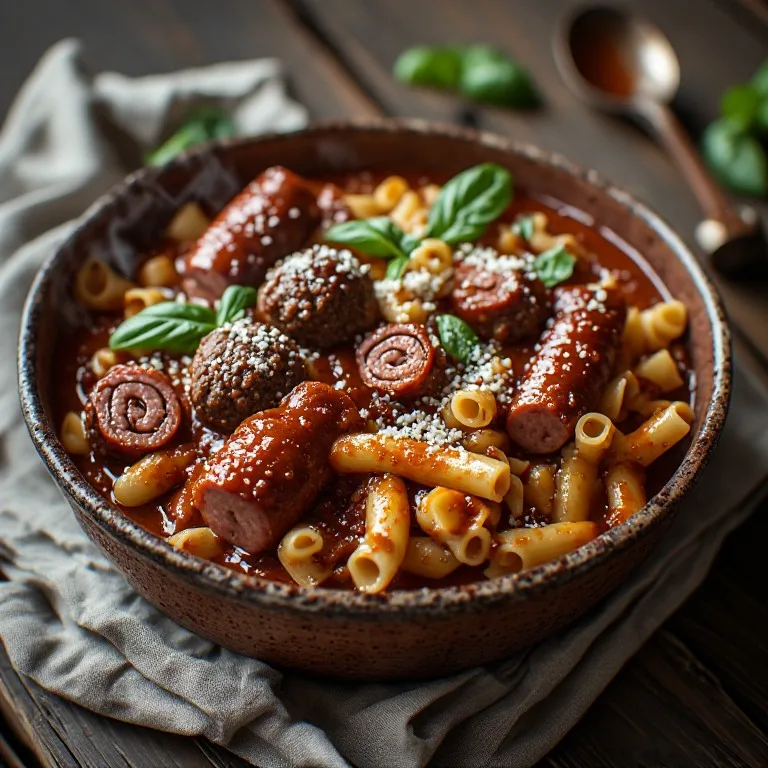
Sunday Gravy is built from three distinct meat components, each contributing something different to the finished sauce and to the meal:
The braciole contributes gelatin. Pounded thin top round has an enormous amount of surface area relative to its volume — more than any other cut in the pot. As it braises, the collagen in that thin beef slowly dissolves into the sauce, giving it a silky, slightly sticky body and a deep beef flavor that you cannot get from meatballs alone. It is also the most visually impressive component when served: the sliced roll, with its green-flecked filling visible in a tight spiral, is the centerpiece of the meat platter.
The sausage contributes fat and spice. The fennel and pepper and pork fat from sweet Italian sausage disperses into the sauce in a way that rounds out the tomato acidity and adds a warm, herbaceous background note. This is the component that makes the sauce smell like a Sunday kitchen. Without it, the gravy tastes clean and meaty; with it, it tastes like Sunday.
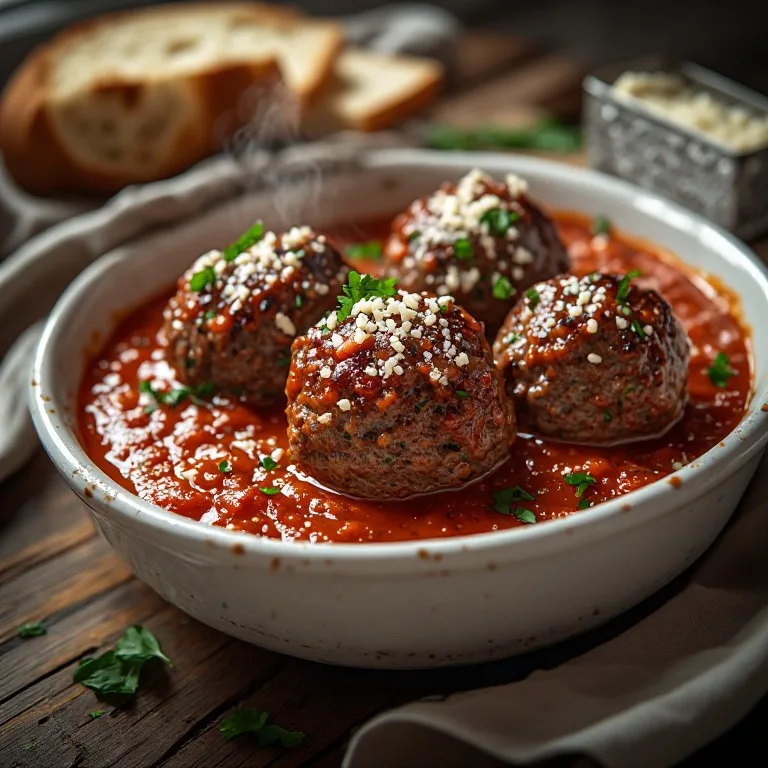
The meatballs contribute concentrated beef-and-pork flavor. The combination of ground beef and pork, with Pecorino and garlic and the wet bread that keeps them tender, produces little nuggets of seasoned meat that absorb flavor from the sauce while releasing their own. They also play the practical role of stretching the meal — twenty meatballs for ten people gives everyone two, plus braciole and sausage.
The Browning Step Is Not Optional
Before any of the meats go into the sauce, every one of them is browned — the braciole deeply, the sausage to a good color on all sides, the meatballs fried until the crust is set. This is not a preliminary step you can skip when pressed for time. The Maillard reaction that produces that brown crust generates hundreds of flavor compounds that do not exist in pale, steam-cooked meat. Those compounds dissolve into the olive oil and tomato sauce during the braise. Unbrowned braciole simmered for three hours produces gray, pallid meat in a thinner sauce. Browned braciole produces dark, flavorful meat and a sauce with complexity. The difference in the finished dish is substantial enough that experienced cooks can tell whether the meats were browned in the first sip.
Take the time to brown each component properly: deep mahogany on the braciole, good color on all sides of the sausage, a real fried crust on the meatballs. Don’t rush it by crowding the pan (which causes steaming rather than browning) or turning the meat before the crust has set (it will tear). The first two or three hours are the sauce’s character-building time; these first thirty minutes in the pan are what the sauce builds from.
The Three-Hour Simmer
The sauce is finished when the braciole is completely tender — fork-tender, with the beef yielding easily when you push a fork through it. For 1/8-inch-thick pounded top round, this typically takes 2.5 to 3 hours of very gentle simmering. “Very gentle” means exactly that: the surface of the sauce should barely bubble, showing an occasional slow pop but no sustained rolling boil. A vigorous boil will toughen the meat (agitation can do this in braised dishes) and reduce the sauce too quickly, concentrating the salt before the flavors have had time to develop properly.
Every 20 to 25 minutes, stir gently — more a slow rotation of the ingredients than an active stir. Move the braciole and sausage around so no piece spends the entire three hours against the same part of the pot. Be careful with the meatballs, which are structurally complete but soft enough to break apart with aggressive handling. They can rest undisturbed more than the other components; just make sure they are submerged or sauced.
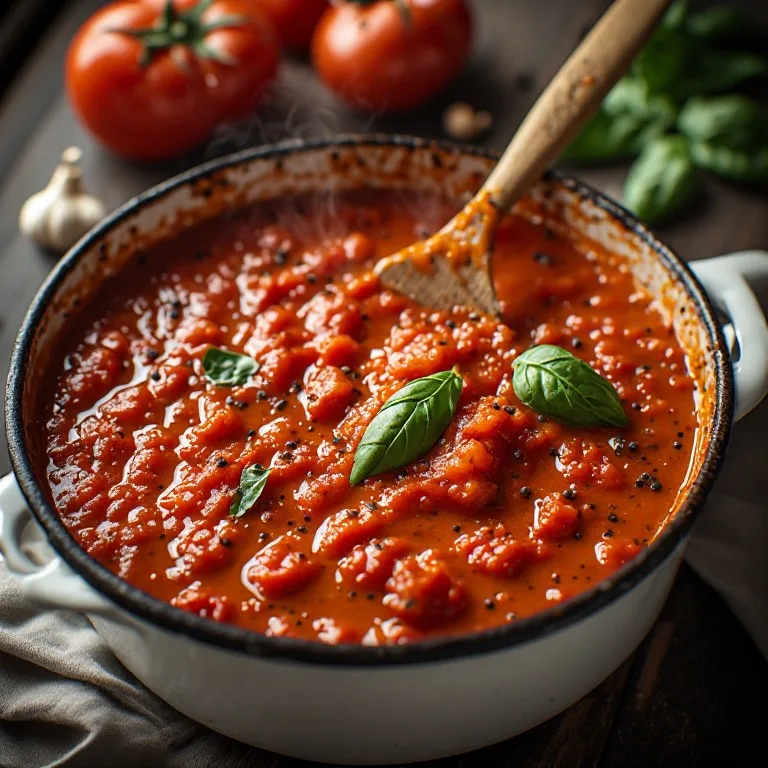
The sauce is done when it is deep red-brown, slightly thickened, with a visible layer of orange-red fat on the surface and a smell that fills the entire apartment. The braciole is done when a fork slides through the thickest part without resistance. These usually happen at the same time.
Serving the Sunday Way
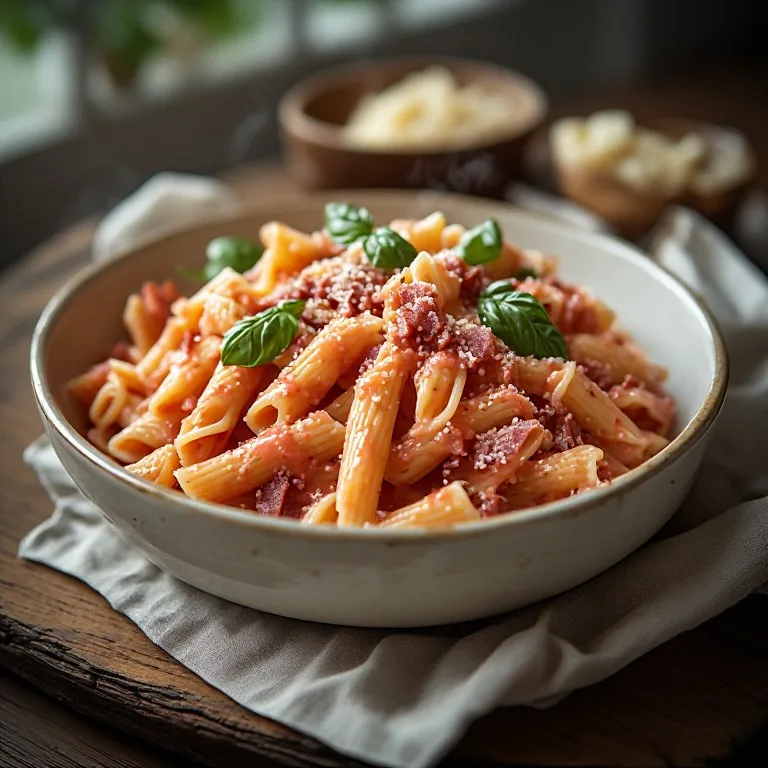
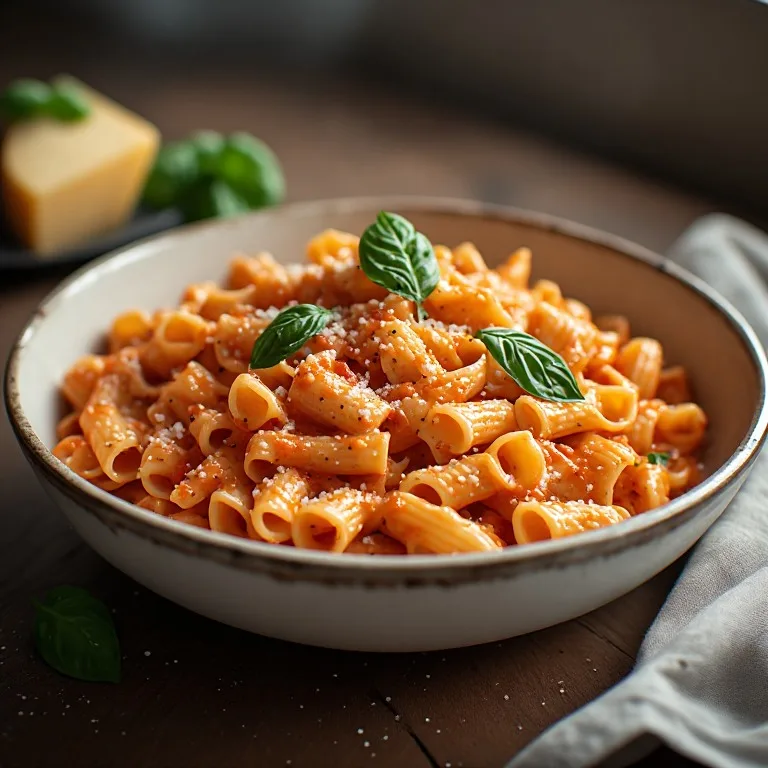
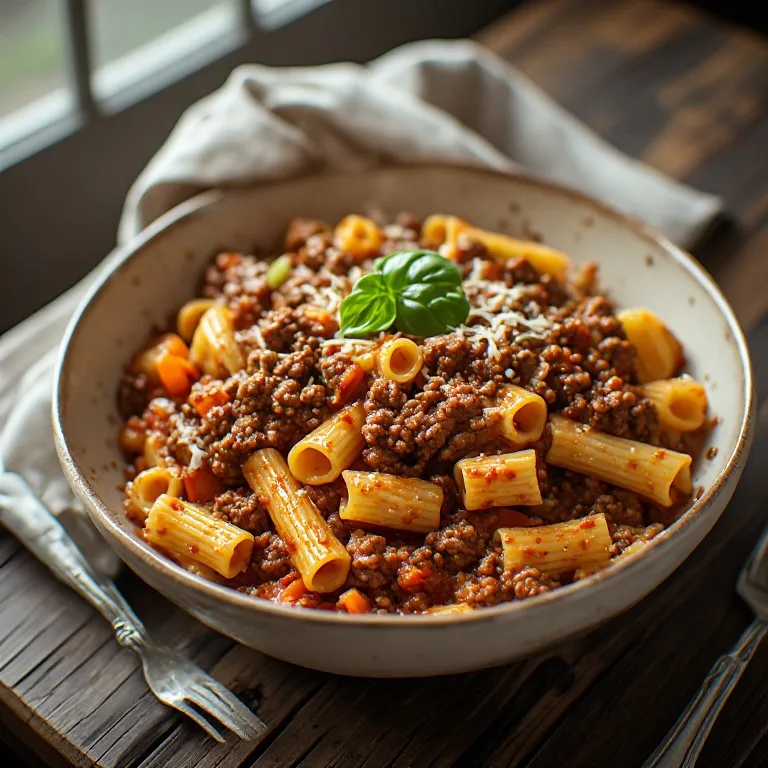
The traditional Italian-American Sunday dinner is two courses, not one bowl. The first course is the pasta — rigatoni or perciatelli, tossed in the gravy, served in wide bowls or on plates with an extra spoon of sauce on top and plenty of grated cheese. Then the table clears for the second course: the meats on a platter, more sauce alongside, bread. This structure — a modest pasta course, then the meats — naturally controls portion sizes in a way that a single bowl of pasta heaped with every component does not. It also gives the meal its shape: a beginning, a middle, and an end, with conversation and bread in between.
This is the structure that Rao’s uses. It is also the structure that made Sunday Gravy a tradition rather than just a dinner — the sauce had to be good enough, and the meal substantial enough, to organize an entire day around. This one is.