


Pin It

Rezdôra Tagliatelle al Ragù Modenese (The Famous Flatiron Pasta, Made at Home)

Rezdôra Tagliatelle al Ragù Modenese (The Famous Flatiron Pasta, Made at Home)
Jump to Recipe
Prep 30 min Cook 7 hr Serves 4
Quick answer: Rezdôra's ragù modenese uses prosciutto di Parma and mortadella (finely minced) plus ground pork, cooked with a soffritto of onion, carrot, and celery, then simmered in chicken stock with a parmigiano-reggiano rind for 6–7 hours at the barest possible simmer — no wine, no cream, no tomato. The prosciutto and mortadella slowly dissolve over those hours, turning from distinct pieces into a deeply savory, silky sauce. Stir in finely grated parmigiano at the end. Toss with fresh egg tagliatelle and pasta water until every strand is coated. The single technique that makes or breaks this dish: the heat must stay at a bare murmur — one or two bubbles breaking the surface every few seconds. A real simmer makes the pork tight and grainy; the right low heat lets the cured meats melt into the sauce the way Modena's nonnas intended.

Shop the tools

Gear matched to this recipe. These are Amazon affiliate links — we may earn a small commission if you buy, at no extra cost to you.

As an Amazon Associate, Copycat Spices earns from qualifying purchases. Product images are generic illustrations, not the exact item listed.

Rezdôra Tagliatelle al Ragù Modenese (The Famous Flatiron Pasta, Made at Home)

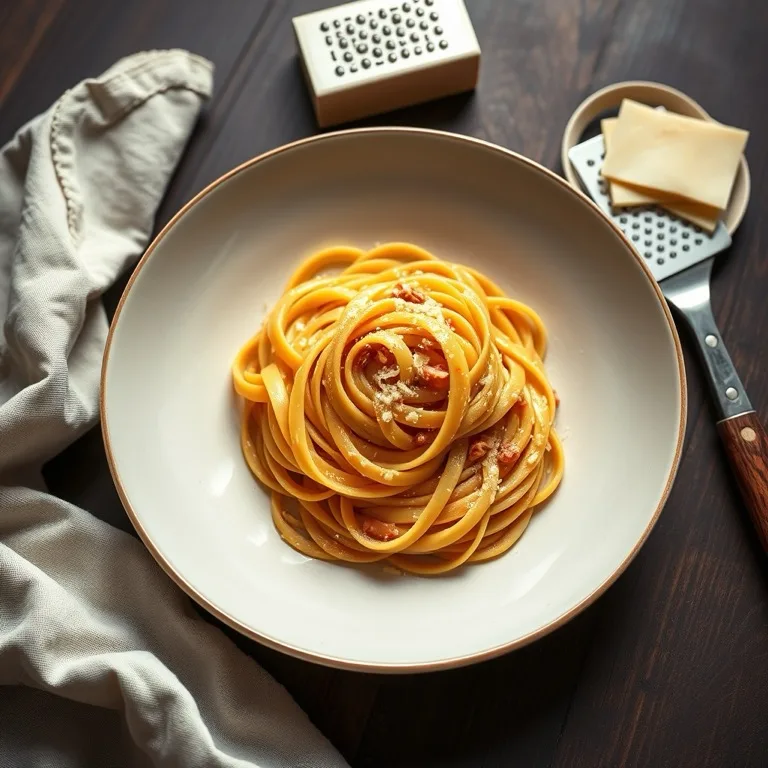
The famous Rezdôra tagliatelle al ragù modenese, made at home: prosciutto di Parma and mortadella slowly melted into ground pork with a parmigiano rind and chicken stock over 6–7 hours. No wine, no cream, no tomato — just cured meat, soffritto, and time. ~$5/serving vs. $28 at the restaurant.

Medium Prep: 30 min Cook: 7 hr Total: 7h 30m4 servings ~$4.50/serving
Prep30 min
Cook7 hr
Total7h 30m
Servings
4
At home~$4.50/serving
vs
Restaurant~$20.25/serving
You save ~78%

The Story Behind the Recipe

Rezdôra opened in the Flatiron district in 2019. Chef Stefano Secchi trained at Massimo Bottura's three-Michelin-starred Osteria Francescana in Modena, Italy — one of the most decorated restaurants in the world — before returning to New York to open his own place. The name rezdôra is the Emilian dialect word for the woman of the house, specifically the matriarch who made the pasta and ran the kitchen. Secchi learned this ragù from Laura Morandi, the nonna in residence at Hosteria Giusti in Modena, where the recipe had been in her family for generations. A table at Rezdôra runs $28 for the tagliolini al ragù and requires booking weeks ahead — it is consistently one of the hardest reservations in the city.

Ragù modenese is Bolognese's quieter neighbor: where Bolognese is built from beef and pork braised with white wine, whole milk, and sometimes cream, the Modenese style uses prosciutto di Parma and mortadella alongside ground pork, simmered in nothing but chicken stock for 6–7 hours with a parmigiano rind. No wine. No dairy beyond the finishing cheese. The cured meats do not brown the way fresh meat does — they slowly melt into the fat and stock, contributing a depth that cooked-in-the-same-time fresh pork cannot match. The home version costs about $20 for four servings and takes a patient Saturday afternoon.

Nutrition Facts

Per serving (4 servings)
Calories680
Total Fat30g
Total Carbs58g
Dietary Fiber3g
Sugars5g
Protein38g
Sodium920mg

* Estimated values based on standard recipe preparation. Actual values may vary.

Ingredients

  • For the ragù
  • For the pasta

Instructions

💡
Pro tip: This recipe tastes even better the next day. The flavors need time to meld together in the fridge.
❄️
Storage: Keeps in an airtight container in the fridge for up to 2 weeks. Freezer-friendly for up to 3 months.
🎃 Free Halloween cookbook — download now The Copycat Halloween Cookbook A ready-made, photo-illustrated PDF of our best halloween copycat recipes — free to download, no building required. Pay what you want to support if you love it.

Free PDF — instant download. We'll also send new seasonal copycat recipes now and then; unsubscribe anytime. Or just download it →

Rezdôra opened at 27 East 20th Street in the Flatiron in March 2019. The name is the Emilian dialect word for the woman who runs the household — specifically the keeper of the pasta, the one who rolled the dough every morning and built the family’s food culture from the inside out. Stefano Secchi, the chef, trained at Massimo Bottura’s Osteria Francescana in Modena before returning to New York with the explicit goal of making the most rigorously regional Emilian pasta kitchen in America. He largely succeeded. The restaurant has held a Michelin star every year from 2021 through 2025 and drew critical recognition that put it among the city’s hardest tables. Rezdôra’s reservation system, like its inspiration, requires patience and timing.

The signature dish is the tagliolini al ragù — $28 a bowl, a tight reservation required. This is that dish.

What makes ragù modenese different from Bolognese

Bolognese is Bologna’s sauce. Modenese is Modena’s — a city 40 kilometers away that does everything slightly differently. Where the registered Bolognese recipe (filed with the Bologna Chamber of Commerce in 1982) uses beef and pork with white wine and whole milk, Modenese ragù builds on prosciutto di Parma and mortadella alongside ground pork. No wine. No cream. Just chicken stock, a parmigiano rind, and 6 to 7 hours.

This is not a simpler sauce. It is a more focused one. The cured meats — already salted, seasoned, and fat-forward from the curing process — contribute what fresh beef needs wine and dairy to achieve. The prosciutto and mortadella do not brown in the same way fresh meat does. They melt. Over the course of the long, low braise, they gradually lose their distinct texture and dissolve into the stock, building a richness and umami depth that tastes completely different from the winier, creamier Bolognese tradition next door.

The parmigiano rind: the secret ingredient that disappears

The rind from a wedge of parmigiano-reggiano — the hard, waxy outer edge that accumulates in the back of the cheese drawer — goes into the pot at the start of the braise and stays until the end. Over 6 to 7 hours in chicken stock, it slowly leaches a concentrated umami into the sauce. The rind itself goes soft and puffed; you discard it before serving. What stays behind is invisible but present in every spoonful: a depth of dairy and salt that no amount of finishing cheese can replicate, because the finishing cheese adds texture and flavor on top, while the rind seasons the liquid itself.

This is a technique used throughout Emilian home cooking — parmiggiano rinds are kept specifically for long-braise soups and sauces, never thrown away. A good cheese counter will often sell or give you rinds. Save your own from any wedge you buy.

The heat problem: why “bare simmer” matters here

Most ragù recipes say “simmer” and mean “simmer.” This one means something stricter. For ragù modenese to work, the temperature must stay at an absolute minimum — one or two small bubbles breaking the surface every few seconds, not a gentle simmer, not a steady steam. The reason is the prosciutto and mortadella: at a real simmer (185–200°F), the proteins in these cured meats tighten rapidly and the texture becomes grainy. At a bare murmur (around 160–170°F), they slowly relax and melt into the fat and stock over hours rather than seizing up.

The Emilian word for this cooking state is a “palpito” — a heartbeat. The pot should breathe, not bubble. If your lowest burner setting is still too hot, use a flame diffuser, move the pot partially off the burner, or use the oven at its lowest setting (200°F) after building the soffritto and browning the pork on the stovetop.

On fresh pasta vs. dried

The ragù is good enough to make a meal with dried pasta, but the restaurant uses fresh egg pasta and the texture difference is significant. Fresh tagliatelle has a porosity and elasticity that dried pasta lacks — it grips the sauce and absorbs it slightly rather than holding it at the surface. If buying fresh pasta, look for a refrigerated egg pasta from a pasta shop or Italian deli rather than shelf-stable “fresh” pasta, which is drier and closer to dried pasta in character. If making your own: a dough of 00 flour plus one egg and two additional yolks per 100g of flour, rested 30 minutes, rolled to setting 5 or 6 on a home pasta machine, then cut to 6mm ribbons.

The quality of the parmigiano also matters — grate it yourself from a wedge. Pre-grated powdered parmigiano does not melt the same way and will give the sauce a grainy, sandy finish rather than the silky coat that makes a bowl at Rezdôra look the way it looks.
🥗

Make It Healthier

Love Rezdôra Tagliatelle al Ragù Modenese (The Famous Flatiron Pasta, Made at Home) but want a lighter version? Try these simple swaps:

  • ✓Use 8 oz of prosciutto and omit the mortadella to reduce the fat content. The sauce will be leaner and slightly less rich but still deeply flavored — the prosciutto carries the Modenese character on its own.
  • ✓Reduce the parmigiano finish from 1 cup to 1/2 cup to cut saturated fat; the sauce is already savory from the rind, so the difference in flavor is less than you'd expect.
  • ✓Serve with a smaller portion of pasta (3 oz per person instead of 4 oz) and bulk up the bowls with a warm arugula salad alongside, which is how trattorie in Modena often serve it.

Frequently Asked Questions

What is ragù modenese and how is it different from Bolognese?

Both are slow-cooked meat sauces from Emilia-Romagna, Italy — Bologna and Modena are neighboring cities about 40 kilometers apart — but they use different meats, different liquids, and produce different flavors. Bolognese (registered with the Bologna Chamber of Commerce since 1982) uses a combination of beef and pork braised with dry white wine, whole milk, and sometimes a small amount of tomato or paste. It is rich, creamy, and beefy. Ragù modenese swaps the fresh beef for prosciutto di Parma and mortadella — two cured meats that bring their own salt, fat, and complexity without needing wine or dairy to coax flavor out of them. The liquid is chicken stock, not wine. There is no cream or milk. The result tastes deeply savory and umami-forward rather than creamy or winey. The cured meats essentially melt over the long simmer, contributing richness that cooked-in fresh beef cannot replicate in the same time.

Why does this recipe use prosciutto AND mortadella?

They contribute different things. Prosciutto di Parma is air-cured, lean, and intensely savory — it melts into the sauce over the long braise and provides concentrated pork flavor and salt. Mortadella is an emulsified, lightly spiced pork product (studded with fat and pistachios in classic form) that contributes creaminess and a subtle spiced-pork undertone once it cooks down. Together, they replace what Bolognese gets from beef — that meaty, mineral base — with something cured and more complex. The combination is specifically Modenese, tied to Modena's identity as the capital of Italian cured meats: Prosciutto di Modena, Mortadella di Bologna (made just next door), and Zampone Modena are all regional specialties. Using them in a ragù is not a shortcut or a trick — it is the traditional approach.

Can I make this in a slow cooker or Instant Pot?

A slow cooker works very well for the ragù — after building the soffritto and browning the pork on the stovetop, transfer everything to a slow cooker and cook on LOW for 8 to 10 hours. The result is close to the stovetop version; the gentle, consistent heat of a slow cooker on LOW mimics the bare-murmur stovetop simmer. An Instant Pot will work but produces a slightly different texture — the pressure cooking softens the meat faster but the flavors do not have the same time to integrate. If using an Instant Pot, pressure cook on HIGH for 90 minutes with a natural release, then simmer uncovered on the Sauté setting for 20–30 minutes to concentrate the sauce. The 7-hour stovetop braise is still the best result because the long, slow reduction gradually concentrates the prosciutto and mortadella into the sauce in a way that fast pressure cooking compresses rather than develops.

What pasta shape does Rezdôra use — tagliatelle or tagliolini?

Rezdôra menus list it as tagliolini al ragù. Tagliolini is a narrower cut than tagliatelle — roughly 2mm wide versus 6–8mm wide — and typical of the Modena area rather than the broader tagliatelle tradition from Bologna. Both are fresh egg pasta made with the same dough; the difference is how you cut the rolled sheet. For home cooks, tagliatelle is far easier to find in stores or to cut by hand (a wider ribbon is more forgiving than a narrow one), and the ragù works beautifully with either. If you are making fresh pasta from scratch and want to be precise, roll to about 1/16 inch (setting 5 on most home pasta machines) and cut into 2mm ribbons for tagliolini, or 6mm for tagliatelle. Both are correct — the ragù itself is the dish, and the pasta is a vehicle.

Why no wine, no cream, and no tomato in ragù modenese?

Because the cured meats provide what wine and dairy are added to compensate for in Bolognese. In a standard Bolognese, white wine is deglazing the pan and adding acidity; whole milk is softening the texture and adding fat. Fresh beef and pork need those additions to become rich and flavorful during a long braise. Prosciutto and mortadella arrive already cured, salted, and fat-forward — they bring their own complexity without wine or dairy to build it. The parmigiano rind, which cooks in the stock for the full 6–7 hours, contributes umami and a subtle dairy note without cream. The absence of tomato is also traditionally correct for ragù modenese: tomato was introduced to Italian cooking relatively late and is not part of the original Emilian tradition for this sauce. Some recipes add a small amount of tomato paste as a concession to modern taste, but the classic version omits it.

How long does ragù modenese keep and can I freeze it?

The ragù keeps for up to 5 days in the refrigerator in a sealed container. The flavor improves on day 2 and day 3 as the components continue to meld. It also freezes exceptionally well — portion it into freezer-safe containers (leave 1/2 inch of headspace for expansion) and freeze for up to 3 months. Thaw in the refrigerator overnight and reheat gently in a saucepan over low heat, adding a splash of chicken stock or water if it seems too thick. The sauce's long cooking time and cured-meat base make it more stable in both cold storage and freezing than cream-based sauces, which can break during reheating. Many Emilian home cooks make a large batch specifically to freeze in portions.

What does dinner at Rezdôra cost?

The tagliolini al ragù runs $28 per serving. Pasta dishes range from about $26 to $38. A full dinner with antipasto, pasta, dessert, and wine by the glass typically runs $90 to $130 per person before tax and tip. Getting the table is the first challenge: Rezdôra books through Resy, releases tables 30 days in advance, and fills within hours of the reservation window opening. Prime times on Friday and Saturday require either booking the moment the window opens or checking for cancellations. The home version costs roughly $20 for four servings — about $5 per person — with the same prosciutto, mortadella, parmigiano, and fresh pasta the restaurant uses.

Love this recipe? Share it!

Free PDF: our 12 most-wanted copycat recipes — instant download.

Made it? Buy us a coffee

Every recipe here is free, with no paywalls. If this one was a hit at your table, a small tip keeps new copycats coming.

$

Rezdôra is a trademark of its owner, used here only to describe the dish this recipe recreates. This is an independent copycat written in our own words — Copycat Spices is not affiliated with, endorsed by or sponsored by Rezdôra.

Ratings & Reviews

—
No ratings yet

Rate this recipe

Click a star to rate

Leave a Review

0/500

CS

Copycat Spices Editorial

Researched + fact-checked. Every recipe on Copycat Spices is built from published sources — official ingredient lists, brand-published recipes, interviews and food-science references — and fact-checked before it goes live, then written as clear, step-by-step instructions for home cooks of all skill levels.

Learn more about our mission →