


Copycat Scarpetta Spaghetti Pomodoro (The Famous One from 88 Madison Avenue, Made at Home)
Prep time: 20 min Cook time: 40 min Servings: 4
Scott Conant had already received three-star reviews from The New York Times for two restaurants — L’Impero and then Alto — when he opened Scarpetta in 2008 in New York’s Meatpacking District. He named it after a gesture: in Italian, “fare la scarpetta” means using a piece of bread to wipe the last sauce from your plate. It translates literally as “making the little shoe.” It is something you do when the food is worth it.
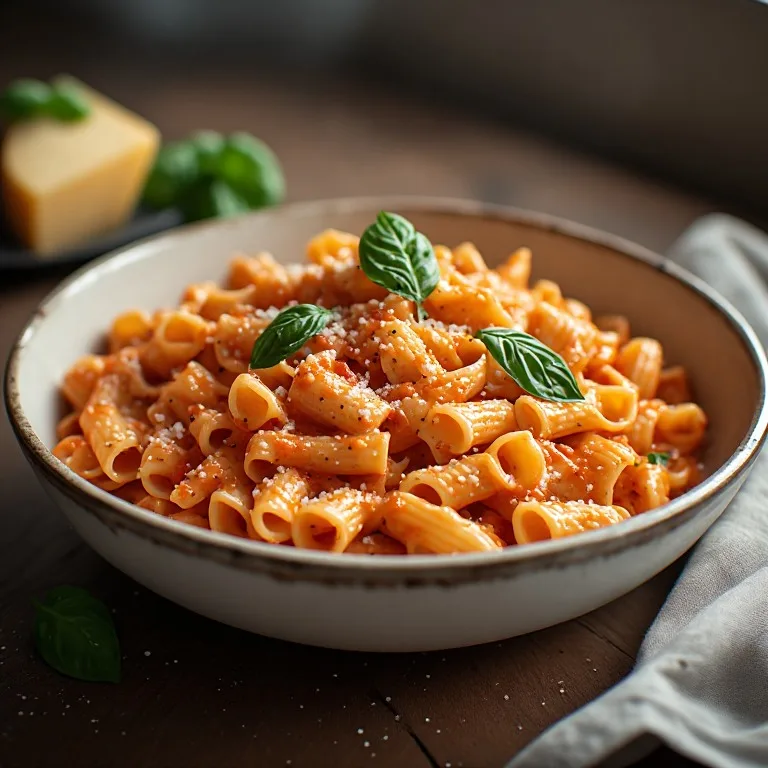
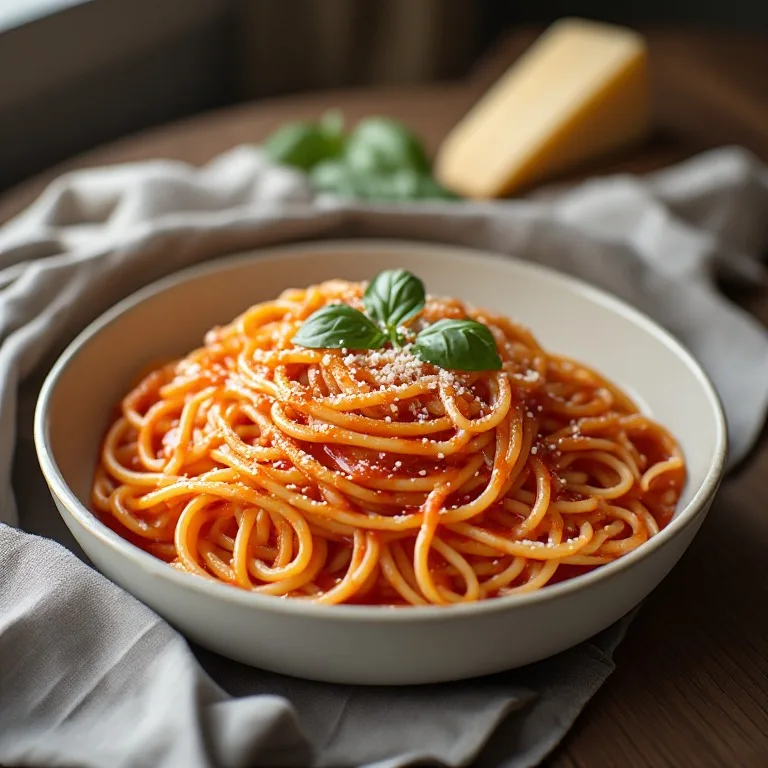
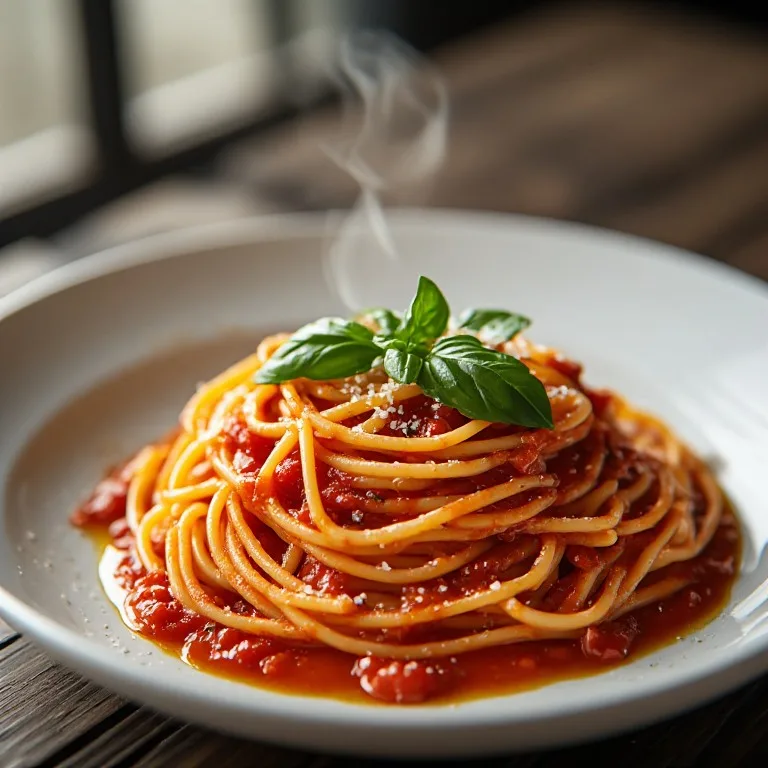
The restaurant moved from the Meatpacking District to 88 Madison Avenue in NoMad, where it operates now. The three-star New York Times review followed the original opening in 2008. The James Beard Foundation nominated it for Best New Restaurant in 2009. None of that is what the restaurant is known for among the people who eat there. What it is known for is a single pasta: spaghetti, tomato, basil. That is the full name of the dish, and the current price is around $34. It arrives under a cloche, which is lifted at the table. A dollar from every order goes to the Food Education Fund.
At home, it costs about six dollars and feeds four.
What Makes This Different from Marinara
The dish looks like simplicity. Tomatoes, spaghetti, basil. Most cooks who try to replicate it from that description make something that tastes fine but does not taste like Scarpetta. The gap is not the tomatoes — it is the structure.
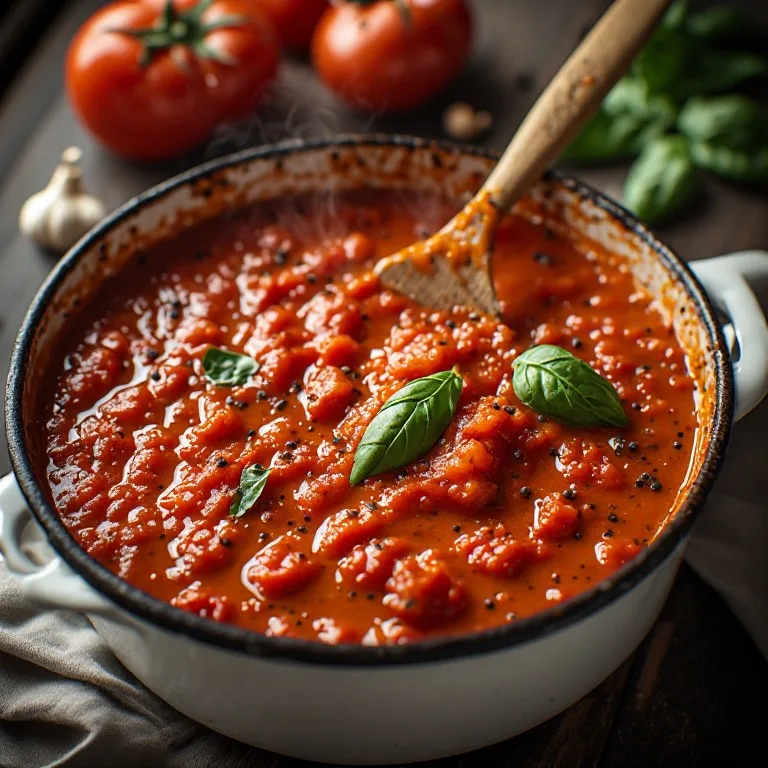
Conant’s recipe has two separate cooked components that combine only at the pasta-finishing stage. The first is the tomato sauce, cooked alone without garlic or aromatics in the pan. The second is a garlic-basil infused oil, made by warming smashed garlic and whole basil sprigs in olive oil over low heat until the garlic turns golden, then steeping the oil off-heat and straining out all the solids. That infused oil is added at the finish — into the sauce, and again when the pasta finishes in the pan.
This is the technique that separates the Scarpetta version from every standard tomato pasta:
The tomatoes never cook with raw garlic. Garlic in direct high heat produces a sharp, aggressive flavor; garlic infused slowly into oil and then removed produces a soft, mellow depth that carries through the fat without any bite. The sauce is clean in a way that sautéed-garlic sauces are not.
The basil goes in at the end, off heat, sliced thin. It does not stew into the sauce. It stays bright.
The pasta finishes in the pan with pasta water, not in a colander. The starch from the water binds the sauce to the pasta. Combined with the emulsified olive oil, the sauce coats each strand rather than pooling at the bottom of the bowl.
And butter, added off heat, gives the finished sauce gloss and a slight richness — the mantecatura step that turns a tomato sauce into something that looks like it came from a restaurant kitchen. The sauce will turn a slightly deeper orange when the butter integrates. That is the visual cue it is ready.
No onions. Conant has been famously clear on this for a long time, particularly regarding raw red onions in finished pasta. The aversion became well-known through his years on Chopped; a 2009 episode in which he warned a contestant, was ignored, and then had to taste the dish became a much-referenced food-television moment. His description: “I taste them, and it kinda makes me angry.” The sentiment applies beyond onions. This dish has four components. There is no room for additions that do not belong.
The Infused Oil
The infused oil is the step most home recipes skip or misidentify. Many copycat versions of this dish tell you to sauté garlic in olive oil and then add tomatoes — that is a different dish. The actual technique is slower and the results are categorically different.
Use a small saucepan so you do not need to use extra oil to submerge the garlic. The heat must be genuinely low — the oil should bubble gently around the garlic cloves, not spit. Eight to ten minutes of gentle cooking, then the heat comes off and the oil steeps for another ten minutes. The resulting oil is golden, fragrant, and mellow. Strain it completely. The garlic and basil go in the trash. Their job is done.
Half of that oil goes into the sauce during the pasta-finishing step. The rest goes in with the pasta water for the emulsification. Between those two additions, a pound of spaghetti gets coated in garlic-basil-infused fat that carries the flavor of the aromatics without any of the harshness of cooking them directly.
Tomatoes: Fresh or Canned
Conant adjusts by season. In late summer, he uses fresh ripe plum tomatoes — blanched briefly, peeled by the scored-bottom ice-bath method, seeded, and crushed by hand or with a masher. Outside of peak tomato season, he uses canned DOP San Marzano whole tomatoes. The published recipe in his cookbook calls for 30 fresh tomatoes; the Food Network version calls for canned. Both are correct depending on the month.
For a home cook, canned San Marzano is the reliable year-round answer. Out-of-season fresh tomatoes are watery and produce a flat sauce regardless of technique. If you are making this in August and have genuinely ripe plum tomatoes, use them and skip the can. Any other month, use a good can.
Do not skip the masher. Conant is specific about this: potato masher, not blender, not food mill. The blender produces a smooth, uniform purée that looks and behaves differently in the pan. The masher breaks the tomatoes into an irregular, textured sauce that has body. That body is what the pasta holds.