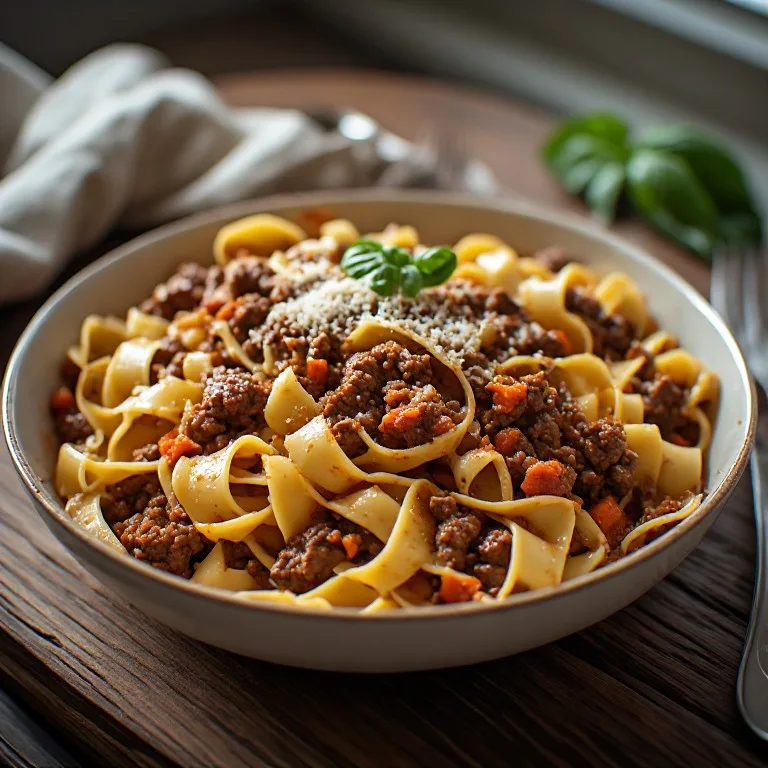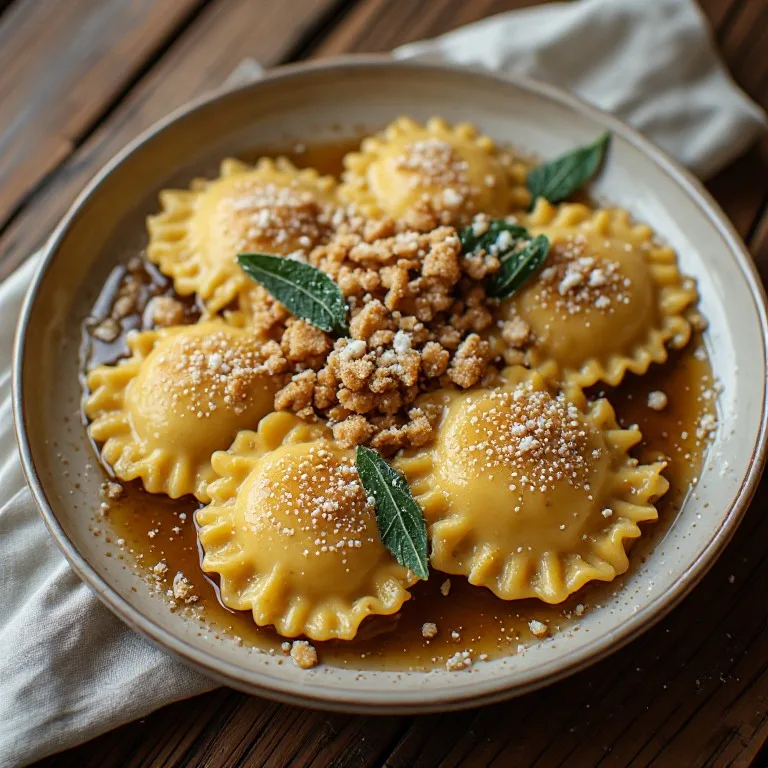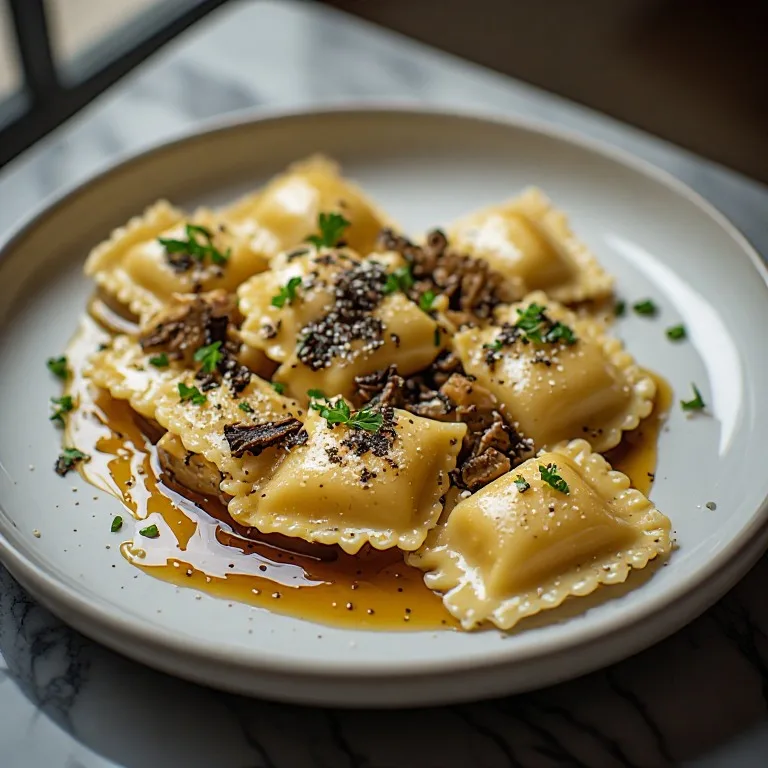

Copycat Babbo Beef Cheek Ravioli (The Famous One, Made at Home)
Prep time: 1 hr 30 min active (spread over 2 days) Cook time: 4 hrs (mostly passive braising) Servings: 6
Babbo Ristorante opened in 1998 at 110 Waverly Place in Greenwich Village, in a former carriage house that Mario Batali and Joe Bastianich turned into what became, for two decades, one of the most difficult reservations in New York City. The restaurant earned a Michelin star, which it held until the 2009 guide. It redefined what Italian-American cooking could aspire to. And from nearly the beginning, it had the beef cheek ravioli.
The dish — officially listed on the menu as “Beef Cheek Ravioli with Crushed Squab Liver and Black Truffles” — was developed by Mark Ladner, who served as Babbo’s chef de cuisine for years under Batali and is responsible for the dish’s precise technique. The recipe was published in The Babbo Cookbook (Clarkson Potter, 2002) and reprinted in Lucky Peach, making it one of the more well-documented restaurant signatures in New York food history. The home version uses chicken livers rather than squab; the principle is the same.
Babbo closed in 2022. It reopened in October 2025 under restaurateur Stephen Starr, with Ladner back in the kitchen. The beef cheek ravioli returned with him. A reservation is easier to get now than it was at the peak, but the dish is still $34 to $38 a plate — per person, dinner only. This recipe makes six full portions for roughly the same cost as two plates at the restaurant.
What Makes This Recipe a Weekend Project (and Why That’s the Point)
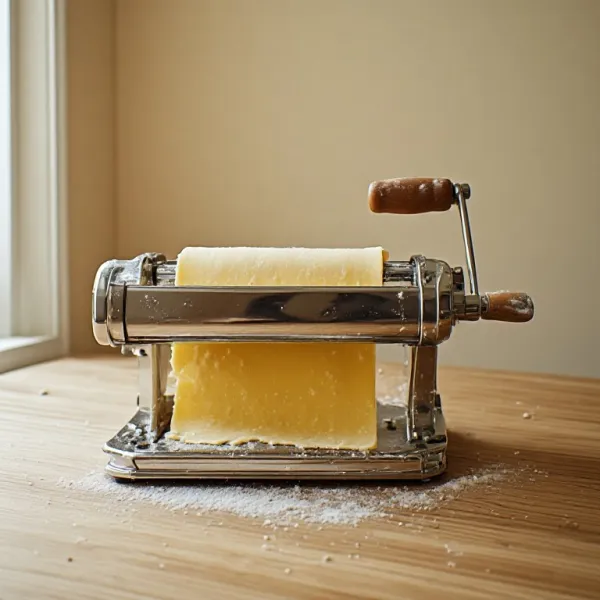
This is not a Wednesday-night dinner. The beef cheeks need 3.5 to 4 hours in the oven; the filling needs to chill overnight to firm up for handling; the pasta needs to rest before rolling. Spread across two days, the active time is about 90 minutes total, but the schedule matters.
The reward for that timeline is a dish that is genuinely different from anything a recipe with less time produces. Beef cheeks braised slowly until fully collapsed, pureed with barely-cooked chicken livers, rolled into thin pasta and served in a butter sauce with truffle — this is what restaurant cooking actually does, and it is achievable at home.
The Three Things Most Copycat Recipes Get Wrong
1. Leaving the chicken livers out of the filling
The most common home version of this recipe uses just braised beef cheeks as the filling. That produces a good meat ravioli. It does not produce the Babbo dish.
The chicken livers in the filling are not for flavor in the conventional sense — when properly cooked and pureed with the beef, they do not taste “livery.” What they add is savory depth: glutamates and other umami compounds that amplify the meatiness of the beef and create a filling that reads as restaurant-quality complex rather than home-cooked stew. The same logic applies to the livers in the sauce, where they dissolve into the butter and contribute a barely-detectable but clearly present richness.
The livers must be barely cooked — just past raw, still slightly pink inside — before they go into the food processor. Overcooked chicken livers become grainy and harsh; briefly cooked ones purée into a smooth, mild paste that disappears into the filling and does exactly the job Ladner designed them for.
2. Stopping the braise too early
Most recipes tell you to braise beef until “fork-tender.” For a steak or roast, that is the right benchmark. For this filling, it is not enough.
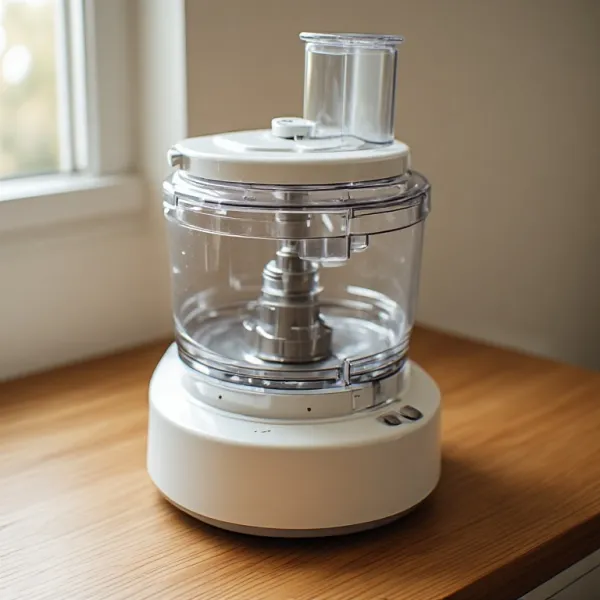
Beef cheeks have an exceptionally high ratio of connective tissue to muscle fiber. That connective tissue is collagen, and collagen converts to silky gelatin only over long, slow, wet heat — usually at least 3.5 hours at 300°F for cheeks. At the fork-tender stage, some of that collagen is still intact. The food processor will turn the meat into a chunky, slightly gummy paste rather than a smooth mousse.
The target doneness is past fork-tender: the cheeks should visibly slump when you try to lift them, and they should fall apart when touched. At that stage, the collagen has fully converted and the filling will process into something that is almost spreadable. That texture is what separates this dish from a standard braised meat ravioli.
3. Using truffle oil instead of real truffle
Black truffle oil is sold at Whole Foods, Trader Joe’s, and specialty stores in small dropper bottles. It is almost always made with synthetic 2,4-dithiapentane — a chemical compound that mimics one aromatic component of truffle but not the whole. It smells convincingly like truffle from the bottle. In a hot pan, it turns sharp and artificial in a way that anyone who has eaten real truffle will immediately recognize.
For this sauce, black truffle paste (available at Italian specialty stores and online) is a vastly better substitute than truffle oil. It is made from real truffles and holds up to brief heat. Fresh or frozen black truffle shavings are the ideal. If you cannot find any of these, the dish is still excellent finished with just good butter and Parmigiano — that is honest; truffle oil is not.
Cost Comparison: Home vs. Babbo
The two specialty ingredients here are beef cheeks and truffle paste. Everything else is standard grocery territory.
| At Babbo | Homemade (6 servings) | |
|---|---|---|
| Per plate | ~$36 | — |
| Full batch | ~$216 | ~$55–70 |
| Per serving | ~$36 | ~$10–12 |
Beef cheeks run $6 to $9 per pound at butchers, less at Latin or Korean markets. A jar of truffle paste costs $10 to $18 and makes several batches. Chicken livers are typically $2 to $3 per pound.
Tips and Variations
- Freeze half the filling. The braising effort produces more filling than one meal requires, by design. The cookbook recommends doubling the batch and freezing half. Extra filling keeps in the freezer for 3 months and thaws overnight in the refrigerator — a future batch of ravioli requires only making pasta dough.
- The tricorner shape matters but is forgiving. The Babbo ravioli are triangular — half-moons with the tips pulled together. Most home cookbooks show square or rectangular ravioli; the round-into-tricorner shape takes one or two tries to get consistent but is easy once the technique clicks. If it is not clicking, make half-moons: the filling and sauce are the point, not the geometry.
- Wonton wrappers as a shortcut. If pasta rolling feels like too much for one session, round wonton wrappers (available at any Asian grocery store) work well for the filling and produce a respectable result. The texture is slightly chewier and the flavor is neutral rather than eggy, but the filling and sauce will still carry the dish. Use them as an inner seal layered over another wrapper if you find the single wrapper tears at the edges.
- Save the braising liquid. The liquid left in the pot after the beef cheeks are done is an intensely flavored broth. Strain it, skim the fat, and reduce by half — it becomes a deeply savory sauce for polenta, a braise for vegetables, or a soup base. Do not discard it.
- Make it in advance (but cook the pasta fresh). The filling keeps refrigerated for 3 days. The sauce base can be made and refrigerated for up to 2 days, then rewarmed gently. The assembled uncooked ravioli can be made up to 6 hours ahead and held on a semolina-dusted tray. Cook the pasta to order — it does not hold once cooked.
Storage and Reheating
Leftover cooked ravioli store in the refrigerator for up to 2 days but do not reheat well — the pasta absorbs the sauce and becomes soft and thick. The smarter approach is to cook only what you plan to eat and keep the assembled uncooked ravioli refrigerated or frozen. Frozen uncooked ravioli (see instructions above) keep for 3 months and cook directly from frozen with 2 to 3 extra minutes.
More Iconic NYC Restaurant Dishes Made at Home
- Copycat Lilia Mafaldine with Pink Peppercorns — Missy Robbins’s Williamsburg signature: the ruffled pasta, browned butter, and the whipped ricotta technique that home versions skip
- Copycat Carbone Spicy Rigatoni Vodka — the other impossible-to-get Greenwich Village reservation, and the step most copies rush past (the tomato paste caramelization)
- Copycat Via Carota Insalata Verde — the West Village salad that Bon Appétit called the best in New York, and the technique behind the shockingly simple dressing
- Copycat Peter Luger Porterhouse — the Brooklyn steakhouse’s dry-aged approach, the broiler method, and why the butter matters
- Copycat Momofuku Bo Ssäm — David Chang’s pork shoulder that launched a thousand dinner parties, and the two-phase salt-and-sugar cure that makes it what it is