


Pin It

Ben's Original Long Grain & Wild Rice

Ben's Original Long Grain & Wild Rice
Jump to Recipe
Prep 5 min Cook 45 min Serves 4
Quick answer: The copycat secret for Ben's Original Long Grain & Wild Rice is two-fold: (1) start the wild rice 20 minutes before the long grain, since true wild rice needs 45–55 minutes total while long grain needs only 18–20; and (2) replace the commercial seasoning packet with chicken broth as your cooking liquid, a small splash of soy sauce for umami depth, and the specific herb quartet in the packet — dried thyme, sage, marjoram, and rosemary — alongside parsley and onion powder. Most copycat recipes miss those four herbs entirely and wonder why the result tastes flat. Toast the long grain rice in butter for 2 minutes first, then combine with the partially cooked wild rice and seasoned broth. The result: fluffy, separate, nutty grains with the earthy wild rice thread and the Thanksgiving-herb depth that makes this side dish so distinctively different from plain rice pilaf.

Shop the tools

Gear matched to this recipe. These are Amazon affiliate links — we may earn a small commission if you buy, at no extra cost to you.

As an Amazon Associate, Copycat Spices earns from qualifying purchases. Product images are generic illustrations, not the exact item listed.

Ben's Original Long Grain & Wild Rice

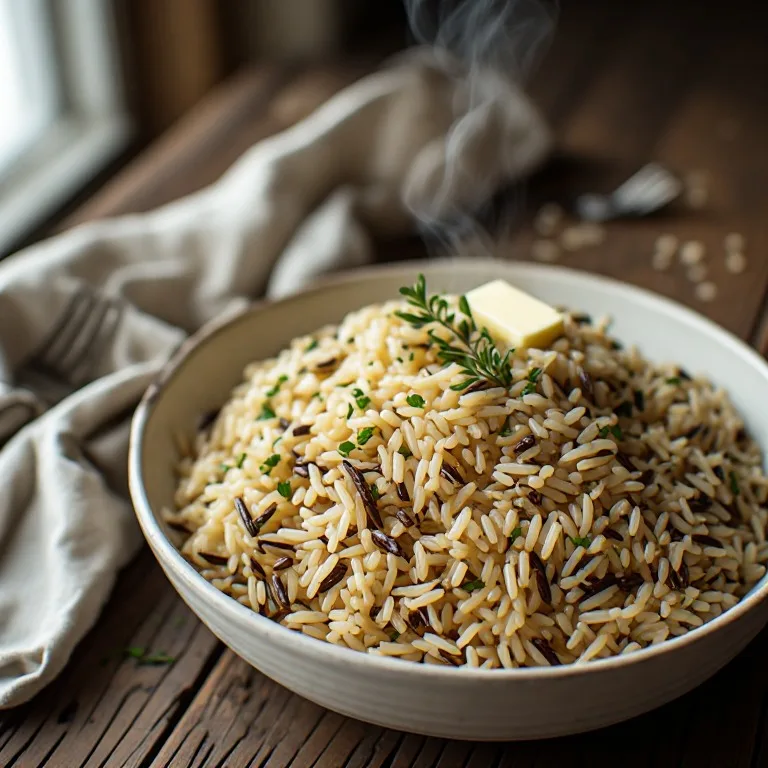
Make the copycat recipe for Uncle Ben's (now Ben's Original) Long Grain & Wild Rice at home — fluffy separate grains, earthy wild rice, and the signature savory-buttery depth from the seasoning packet, achieved without any packets. Serves 4, about $1.50 vs $3+ a box.

Easy Prep: 5 min Cook: 45 min Total: 50 min4 servings ~$4.50/serving
Prep5 min
Cook45 min
Total50 min
Servings
4
At home~$4.50/serving
vs
Restaurant~$20.25/serving
You save ~78%

The Story Behind the Recipe

Ben's Original — sold for decades under the name Uncle Ben's — was introduced in 1947 by Converted Rice Inc. in Houston, Texas, built around a patented parboiling process that pre-gelatinizes the rice starch before milling. Parboiled (converted) rice cooks up firm and distinctly separate rather than sticky or clumped, which was the commercial breakthrough: the box promised "no sticky rice, every time," and it delivered reliably enough to become the dominant brand in the U.S. for generations. The Long Grain & Wild Rice variety added a second element — a small proportion of wild rice (technically a grass seed, Zizania palustris, not botanically rice at all) that added earthy, nutty complexity and a contrasting dark strand in the bowl.

The brand's name and imagery — "Uncle Ben," depicted as a smiling Black man in a bow tie — drew criticism for decades as racially coded iconography from the Jim Crow era, the "Uncle" honorific specifically evoking a demeaning form of address. In June 2020, during the wave of corporate reviews prompted by the Black Lives Matter movement, parent company Mars announced the rename. By September 2020, the product appeared on shelves as Ben's Original, with a redesigned package. The iconic seasoning packet inside the box remained unchanged: hydrolyzed soy protein, autolyzed yeast extract, onion powder, parsley, celery seed, and salt — a savory depth-building blend that this from-scratch copycat recreates using chicken broth and soy sauce instead.

Nutrition Facts

Per serving (4 servings)
Calories235
Total Fat3g
Total Carbs44g
Dietary Fiber2g
Sugars0g
Protein5g
Sodium420mg

* Estimated values based on standard recipe preparation. Actual values may vary.

Ingredients

Instructions

💡
Pro tip: This recipe tastes even better the next day. The flavors need time to meld together in the fridge.
❄️
Storage: Keeps in an airtight container in the fridge for up to 2 weeks. Freezer-friendly for up to 3 months.
🦃 Free Thanksgiving cookbook — download now The Copycat Thanksgiving Cookbook A ready-made, photo-illustrated PDF of our best thanksgiving copycat recipes — free to download, no building required. Pay what you want to support if you love it.

Free PDF — instant download. We'll also send new seasonal copycat recipes now and then; unsubscribe anytime. Or just download it →

Ben’s Original Long Grain & Wild Rice — the box that anchored a thousand Thanksgiving tables for decades — is one of the most recognized side dishes in American grocery history. The formula is simple: parboiled long grain white rice, a small proportion of earthy wild rice, and a savory seasoning packet that does more work than it looks like. This copycat nails the same flavor without the packet — just chicken broth, soy sauce, and the right approach to handling two rices that cook at very different speeds.

Why homemade beats the box

A box of Ben’s Original Long Grain & Wild Rice runs $2.50–3.50 at most grocery stores and serves 3 people on the directions (or 4 as a generous side). This recipe costs under $1.50 in ingredients and feeds 4 comfortably. More importantly, you control the sodium — the commercial version, made with packet + water, delivers about 590–630mg sodium per serving, mostly from the seasoning packet’s salt and hydrolyzed protein concentrate. This copycat lands around 420mg using low-sodium broth, or as low as 280mg if you omit the added salt and let the broth carry it.

The ingredient that makes the biggest flavor difference is one that surprises people: 1 teaspoon of low-sodium soy sauce. The commercial packet achieves its savory depth through hydrolyzed soy protein — broken-down soy protein that releases free glutamates, the same compounds that make soy sauce and parmesan taste so rich and satisfying. A small amount of soy sauce in the cooking liquid replicates this exactly, without making the rice taste Asian-inflected or out of place.

The timing problem (and how to solve it)

True wild rice — Zizania palustris, the semi-aquatic grass native to Minnesota, Wisconsin, and the Canadian Great Lakes — takes 45–55 minutes to fully cook from raw. Long grain white rice takes 18–20 minutes. The commercial Ben’s Original product uses quick-cook processed wild rice that has been partially pre-cooked; it matches the long grain’s timeline in the box instructions.

For the from-scratch version, the solution is straightforward: boil the wild rice separately for 20 minutes before combining it with the long grain rice. By the time the long grain rice is done in 18–20 minutes of covered simmering, the wild rice — which entered at 20 minutes already cooked and entered the second stage at 20 minutes of further cooking — finishes at a pleasantly chewy, not crunchy, texture. It takes an extra 20 minutes of mostly-idle pre-cook time, not active work.

What “converted rice” actually means

The original Uncle Ben’s (now Ben’s Original) built its brand on “converted” rice, a specific parboiling process. Before milling, the rice is soaked, pressure-steamed, and dried. This drives water-soluble nutrients from the outer bran into the endosperm (converted rice retains more B vitamins than regular milled rice), and more relevantly for cooking, it pre-gelatinizes the outer starch layer of each grain. That pre-gelatinized surface is what makes converted rice stay firm and separate after cooking, where plain long grain rice might become sticky or clump. The from-scratch copycat achieves a similar effect by toasting the long grain rice in butter first — the fat coats and lightly seals the surface of each grain, creating a moisture barrier that keeps the grains distinct through the simmer.

Uses beyond Thanksgiving

The earthy, savory profile of this rice pairs widely:

  • Stuffed bell peppers: Replace the plain white rice in any stuffed pepper recipe with this blend for a more complex filling. The wild rice adds chewy texture that holds up inside peppers after baking.
  • Chicken and wild rice bake: The classic casserole — chicken thighs, cream of mushroom soup, and a box of this rice — works exactly the same way with the homemade version. Combine cooked rice, cream of mushroom (or homemade mushroom sauce), and chicken; bake at 350°F for 35 minutes.
  • Cold wild rice salad: Let the cooked rice cool completely, then toss with dried cranberries, toasted pecans, diced apple, and a Dijon vinaigrette. This works as a Thanksgiving side, a grain bowl base, or a potluck contribution.
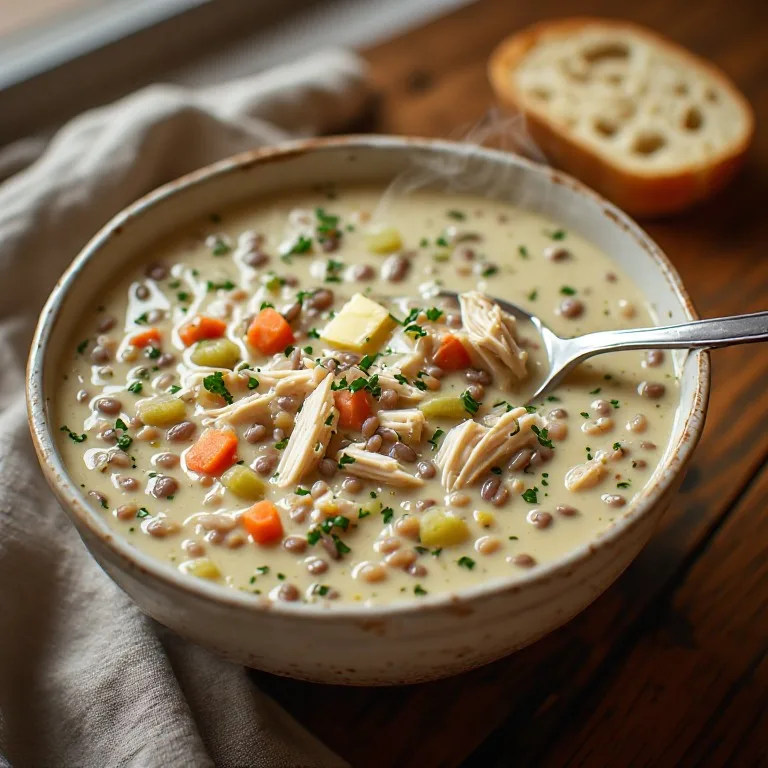
  • Panera Cream of Chicken & Wild Rice Soup: Panera’s recipe specifically calls for a box of Ben’s Original as the soup’s rice component — the seasoning packet contributes flavor that plain wild rice doesn’t. This homemade version, with the same seasoning balance, substitutes directly.
Storage

Cooked rice keeps in an airtight container in the refrigerator for up to 4 days. To reheat: sprinkle 2 tablespoons of water over the rice and microwave covered on medium power for 90 seconds, then let rest 1 minute covered before serving. The wild rice component holds its texture better through refrigeration and reheating than plain long grain white rice does — it won’t turn mushy.
🥗

Make It Healthier

Love Ben's Original Long Grain & Wild Rice but want a lighter version? Try these simple swaps:

  • ✓Swap chicken broth for low-sodium vegetable broth to make this vegetarian — the soy sauce carries the umami depth on its own, and the earthy wild rice profile doesn't need meat-based flavor.
  • ✓Reduce the butter to 1 teaspoon and use olive oil for the remaining fat to lower saturated fat without losing the toasting step's flavor benefit.
  • ✓Add ¼ cup finely diced celery and ¼ cup finely diced onion to the butter before toasting the rice — they soften in 3 minutes and add vegetable bulk and freshness that pushes the calorie density down while making each serving more filling.
  • ✓For a lower-sodium version, use unsalted broth and omit the salt from the recipe, tasting after the rest period — the soy sauce and natural broth often provide enough sodium without any added salt.

Frequently Asked Questions

What is the copycat recipe for Uncle Ben's Long Grain & Wild Rice?

The copycat for Uncle Ben's (now Ben's Original) Long Grain & Wild Rice uses 1 cup long grain white rice, ¼ cup true wild rice, 1¾ cups low-sodium chicken broth, 1 tablespoon butter, 1 teaspoon soy sauce, ½ teaspoon onion powder, ¼ teaspoon dried parsley, ¼ teaspoon celery flakes, ¼ teaspoon dried thyme, ¼ teaspoon dried sage, ¼ teaspoon dried marjoram, ⅛ teaspoon dried rosemary, ½ teaspoon fine salt, ⅛ teaspoon black pepper, and an optional pinch of turmeric for color. The key technique: pre-cook the wild rice for 20 minutes in boiling salted water, drain it, then combine it with the toasted long grain rice and broth in a saucepan and simmer covered for 18–20 minutes. The soy sauce replicates the yeast extract in the commercial packet, and the thyme-sage-marjoram-rosemary herb quartet is the specific flavor profile most copycat recipes miss.

Why does Uncle Ben's Long Grain & Wild Rice taste so good?

Three reasons: (1) the parboiled (converted) long grain rice cooks up firm and separate, which means each grain carries flavor individually rather than clumping; (2) the seasoning packet contains autolyzed yeast extract and hydrolyzed soy protein — savory umami depth-builders that make the rice taste richer than plain rice seasoned with just salt; and (3) the small proportion of true wild rice adds an earthy, nutty chewiness that contrasts with the fluffy long grain. The combination of umami depth + textural contrast is what distinguishes it from plain rice pilaf.

Why did Uncle Ben's change its name to Ben's Original?

In June 2020, parent company Mars announced a review of the Uncle Ben's brand following widespread criticism that the name and imagery — a smiling Black man in a bow tie labeled 'Uncle Ben' — were rooted in racial stereotyping. The 'Uncle' honorific was historically used as a demeaning form of address toward Black men in the American South during the Jim Crow era. By September 2020, the product was rebranded as Ben's Original. The recipe, packaging size, and products themselves were unchanged — only the name and the image on the box were updated.

What is in the Ben's Original seasoning packet?

The commercial seasoning packet in Ben's Original Long Grain & Wild Rice contains: salt, yeast extract, maltodextrin, onion, dried parsley, dried celery, dried spinach, sugar, black pepper, thyme, sage, marjoram, rosemary, nutmeg, natural flavors, and turmeric (for color). The yeast extract is the key savory depth-builder — it functions similarly to MSG, boosting umami without a distinct flavor of its own. The herb quartet of thyme, sage, marjoram, and rosemary gives the packet its characteristic earthy, Thanksgiving-adjacent flavor profile that most copycat recipes leave out. In this from-scratch copycat, chicken broth replaces the water called for on the box, soy sauce replicates the yeast extract's umami, and those four herbs are added explicitly.

Why does wild rice take so long to cook and how do I fix it?

True wild rice (Zizania palustris, a semi-aquatic grass native to the Great Lakes region) has a very tough outer hull that resists water absorption. It takes 45–55 minutes at a full simmer to soften to a pleasantly chewy texture. Long grain white rice takes only 18–20 minutes. The commercial Ben's Original box gets around this by using quick-cook wild rice that has been pre-processed. The from-scratch copycat solves it by pre-cooking the wild rice for 20 minutes before combining it with the long grain rice — the wild rice enters the final simmer at 20 minutes already cooked, and exits at 40 minutes total (the long grain rice's 18–20 minutes get it the rest of the way). The two rices arrive at done at the same time.

Can I make Ben's Original Long Grain & Wild Rice in a rice cooker?

Yes, with the same pre-cooking caveat. Pre-cook the wild rice on the stovetop for 20 minutes, drain, then add it to the rice cooker with the long grain rice, chicken broth, butter, soy sauce, onion powder, dried parsley, celery flakes, the thyme-sage-marjoram-rosemary herbs, salt, and black pepper. Use the standard white rice cycle. Most rice cookers finish in 25–30 minutes, which is sufficient for the long grain to fully cook and the wild rice to finish. Fluff immediately when the cycle ends and let rest on 'warm' for 5 minutes with the lid closed. Do not attempt this without pre-cooking the wild rice first — the rice cooker won't give wild rice enough time from raw.

What dishes can I make with Ben's Original Long Grain & Wild Rice?

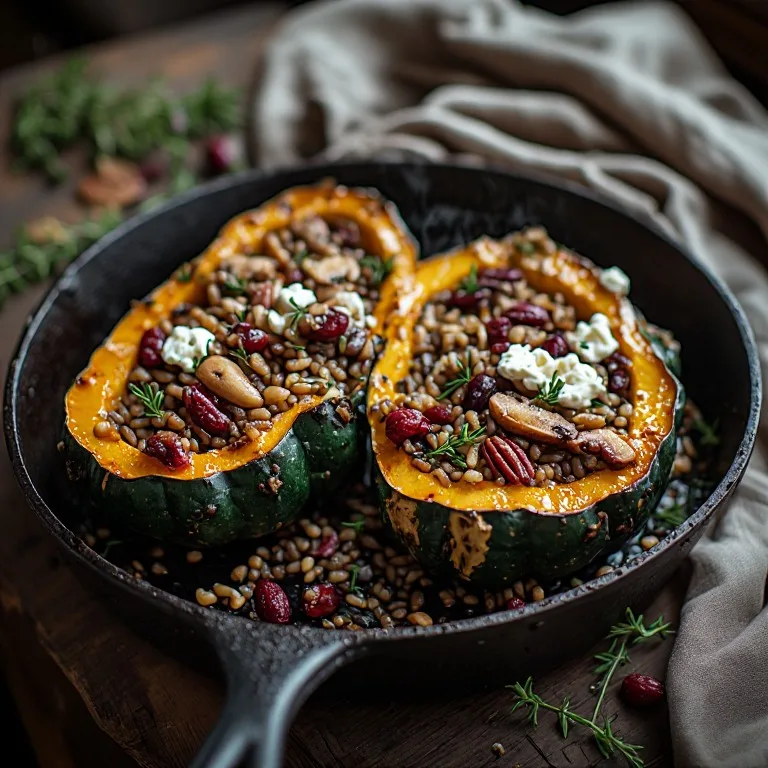
The most common uses: Thanksgiving and holiday side dishes (alongside turkey and roasted vegetables); stuffed bell peppers (replace the white rice filling with this blend for a more complex flavor); mushroom and wild rice soup base; casseroles (classic 'chicken and wild rice bake' uses a box of this as the rice layer); stuffed acorn or butternut squash; and cold wild rice salads with cranberries, pecans, and apple. The earthy, savory profile of this rice blend also pairs well with pork tenderloin, roast chicken, and braised lamb — anywhere you'd use a flavored rice pilaf.

Love this recipe? Share it!

Free PDF: our 12 most-wanted copycat recipes — instant download.

Made it? Buy us a coffee

Every recipe here is free, with no paywalls. If this one was a hit at your table, a small tip keeps new copycats coming.

$

Side Dish is a trademark of its owner, used here only to describe the dish this recipe recreates. This is an independent copycat written in our own words — Copycat Spices is not affiliated with, endorsed by or sponsored by Side Dish.

Ratings & Reviews

—
No ratings yet

Rate this recipe

Click a star to rate

Leave a Review

0/500

CS

Copycat Spices Editorial

Researched + fact-checked. Every recipe on Copycat Spices is built from published sources — official ingredient lists, brand-published recipes, interviews and food-science references — and fact-checked before it goes live, then written as clear, step-by-step instructions for home cooks of all skill levels.

Learn more about our mission →