Gordon Ramsay's Turkey with Lemon, Parsley and Garlic
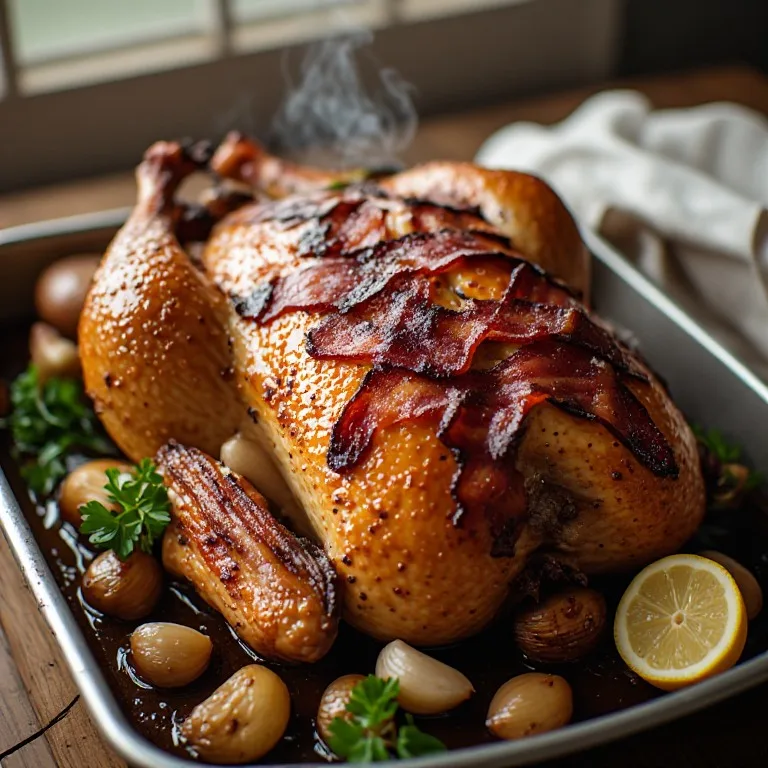
Quick answer: Make the butter: beat 13 oz (375g / about 1⅔ cups) softened unsalted butter with the zest and juice of 2 lemons, 3 crushed garlic cloves, a large handful of fresh flat-leaf parsley leaves (finely chopped), salt, and plenty of black pepper. Dry the turkey, then work your fingers under the breast skin to create a pocket without tearing it; push about two-thirds of the butter underneath, pressing from the outside to spread it across both breast halves. Rub the remaining butter all over the exterior. Season the cavity, then fill it with halved onions, a halved lemon, a halved garlic bulb, and 2 bay leaves. Scatter roughly chopped onions, carrots, and celery in the bottom of a large roasting pan; set the turkey on top. Lay 8–10 streaky bacon rashers (or pancetta slices) in overlapping rows across the breast and legs. Roast at 425°F (220°C) for 15 minutes. Reduce to 350°F (180°C) and continue roasting, basting with pan juices every 30 minutes. Remove the bacon in the last 20 minutes so the skin re-crisps. For a 14-pound unstuffed turkey, total oven time is approximately 3 to 3.5 hours after the initial blast. It is done when an instant-read thermometer reads 165°F in the thickest part of the thigh. Rest uncovered for at least 45 minutes (1 hour is better) before carving.
Shop the tools
Gear matched to this recipe. These are Amazon affiliate links — we may earn a small commission if you buy, at no extra cost to you.
 Illustrative imageInstant-Read Digital ThermometerNail fry-oil and doneness temps every timeCheck price on Amazon →
 Illustrative imageFine-Mesh Strainer SetSilky sauces and lump-free syrups — strains out every bit of pulpCheck price on Amazon →
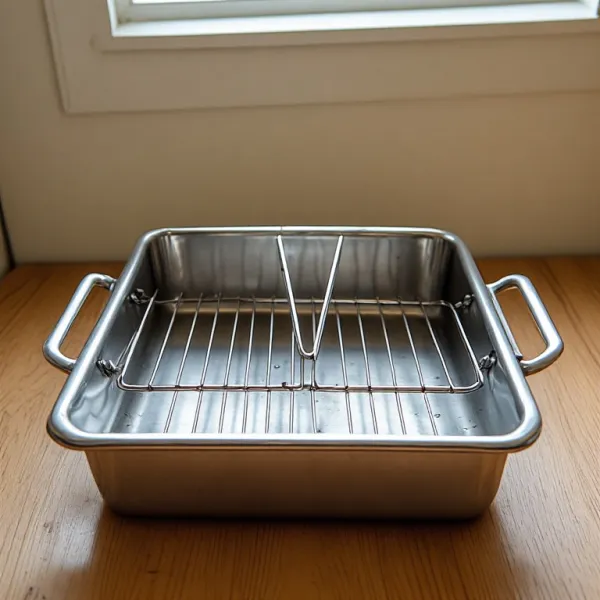 Illustrative imageRoasting Pan with RackLifts the bird off the pan so the drippings collect for gravyCheck price on Amazon →
As an Amazon Associate, Copycat Spices earns from qualifying purchases. Product images are generic illustrations, not the exact item listed.
Gordon Ramsay's Turkey with Lemon, Parsley and Garlic
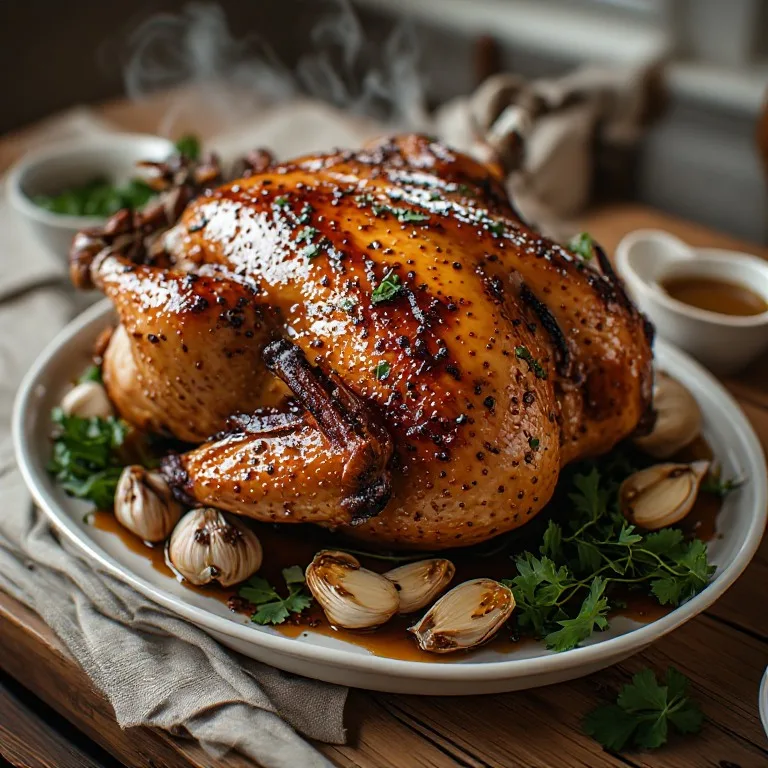
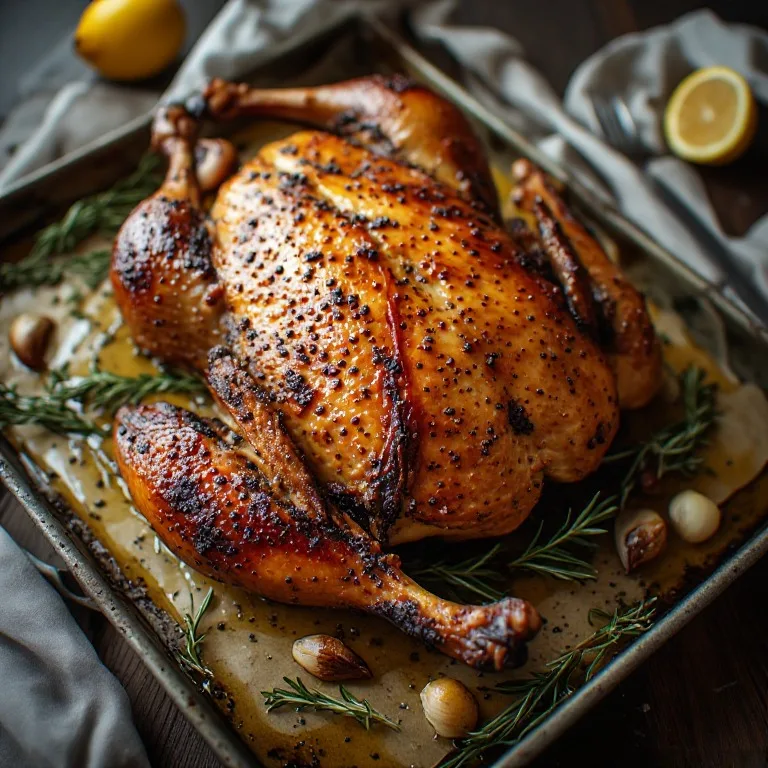
Gordon Ramsay's famous Thanksgiving turkey: compound butter of lemon, parsley, and garlic pushed under the breast skin, bacon rashers laid over the top to baste themselves in the oven, a 15-minute high-heat blast, and a thorough rest. The exact technique from his canonical roast turkey recipe, broken down step by step.
Intermediate
Prep: 30 min
Cook: 3 hr 30 min + 45 min rest
Total: 4h 0m10-12 servings
~$4.50/serving
At home~$4.50/serving
vs
Restaurant~$20.25/serving
You save ~78%
The Story Behind the Recipe
Gordon Ramsay published this recipe as "Roast Turkey with Lemon, Parsley and Garlic" — it became the most-searched celebrity chef Thanksgiving turkey within a year of appearing in his Ultimate Cookery Course. The technique is built around one insight: the breast, the driest part of any turkey, needs to be basted from the inside throughout the cook, not just from the outside. A compound butter of flat-leaf parsley, lemon zest and juice, and garlic pushed directly against the breast muscle solves this before the bird even goes in the oven. Bacon rashers laid over the top self-baste the breast from outside simultaneously. The skin never needs to be tented; the fat keeps it lacquered.
The other non-obvious detail is the rest. Ramsay emphasizes 45 minutes to one hour of resting uncovered — most home cooks give their turkey 15 minutes. A large turkey's internal temperature continues rising for 10-15 minutes out of the oven, and the muscle fibers, contracted tight under heat, need time to relax and reabsorb the released juices. Carve too early and those juices run off the board; carve after a proper rest and the meat holds them. A 14-pound turkey costs $25-45 at the grocery store. This recipe's non-turkey ingredients cost roughly $20 total.
Nutrition Facts
Per serving (10-12 servings)Calories365
Total Fat19g
Total Carbs1g
Dietary Fiber0g
Sugars0g
Protein46g
Sodium390mg
* Estimated values based on standard recipe preparation. Actual values may vary.
Ingredients
- For the compound butter
- For the turkey
- Cavity aromatics
- Roasting bed
- For the gravy
Instructions
Pro tip: This recipe tastes even better the next day. The flavors need time to meld together in the fridge.
Storage: Keeps in an airtight container in the fridge for up to 2 weeks. Freezer-friendly for up to 3 months.
Free PDF — instant download. We'll also send new seasonal copycat recipes now and then; unsubscribe anytime. Or just download it →
🎉 Your Thanksgiving Cookbook is ready!
It's free — but if it's worth something to you, you can pay what you want. It keeps the recipes coming.
$
✓ Downloading your free Thanksgiving Cookbook — check your downloads folder. Happy cooking!
Make It Healthier
Love Gordon Ramsay's Turkey with Lemon, Parsley and Garlic but want a lighter version? Try these simple swaps:
- ✓Remove the skin and bacon before eating to cut roughly 90 calories and 10g fat per serving — the lemon-parsley-garlic butter still perfumes the meat through the entire cook even if you skip the skin at the table.
- ✓Use 4 tablespoons (half a stick) of butter instead of the full amount, applying only under the skin — the bacon rashers will provide additional surface basting and keep the exterior moist.
- ✓The roasting vegetables become the gravy base; skim all visible fat from the surface of the drippings before making gravy to reduce the calorie load significantly.
- ✓Make the turkey a day ahead, slice cold, and reheat slices in warm turkey broth — this lets you remove the solidified fat from the drippings before making gravy, which is easier and more thorough than skimming hot fat.
Frequently Asked Questions
Why does Ramsay use flat-leaf parsley and lemon — not thyme and rosemary — in the butter?
Ramsay's canonical recipe is 'Roast Turkey with Lemon, Parsley and Garlic' — that title is the actual recipe, not a description of it. The choice is deliberate: flat-leaf parsley is mild and green without the resinous sharpness of thyme or rosemary; lemon provides brightness that cuts the fat and richness of the basted breast meat without competing with the turkey's flavor. Garlic is background, not foreground — crushed rather than minced so it dissolves into the butter rather than appearing as bits. The combination produces a compound butter that the finished turkey doesn't 'taste like herbs' — it tastes like turkey that is somehow more of itself. Many fan adaptations add thyme or rosemary, and those are fine; but they produce a clearly herbaceous turkey. Ramsay's original is cleaner. The lemon juice (not just zest) is key: the acidity in the juice migrates into the breast meat as the butter melts, very slightly tenderizing the muscle fibers and keeping the white meat brighter-tasting than plain buttered turkey.
What is the bacon for, and can I skip it?
The bacon rashers laid over the breast and legs serve as a self-basting system. As the oven heats, the bacon fat renders and runs down over the bird continuously — every drop of fat that drips off a rasher coats the skin beneath it. The bacon also acts as a shield that slows surface evaporation from the skin, which is why white meat under the bacon stays moist even during a long roast. Remove the bacon in the last 20 minutes so the skin re-crisps; the bacon itself comes out slightly crispy and is worth eating as a cook's snack. Can you skip it? Yes — if you have a large quantity of compound butter and baste diligently every 20–25 minutes, you can approximate the result. But the bacon is easier, more reliable, and more forgiving of missed bastings. Ramsay uses streaky bacon (what Americans call regular bacon) or pancetta; the thin fat-streaked strips render quickly and lie flat against the curved breast. Thick-cut or center-cut bacon is too chunky; it sits up off the surface and provides uneven coverage.
Why 350°F instead of 375°F for the main roast?
Lower and slower after the initial blast. The 15-minute 425°F opening sets the skin color and texture through high-heat Maillard reaction — you get your crust established early. Then the 350°F roast does the actual cooking, slowly and evenly: the heat has time to migrate from the outside in without driving the outer layers past done before the interior catches up. At 375°F you get slightly faster cooking but also more risk of the breast outer layer drying out before the thigh is cooked through — in a large turkey where the white and dark meat have very different fat content and moisture retention, the slower final roast matters. The bacon adds another reason to go lower: at 375°F the bacon fat renders very fast and can produce more rapid browning than you want during a 3-hour roast. 350°F lets both the bacon and the turkey cook at a pace that allows for control.
How long should I rest the turkey, and does it really matter?
Ramsay emphasizes this strongly: 45 minutes minimum, ideally 1 hour. Most home cooks rest turkey for 15-20 minutes and then wonder why the cutting board is flooded with juice when they carve. The mechanics: muscle fibers contract sharply under heat, squeezing their moisture outward toward the surface of the meat. The moment the turkey comes out of the oven and the heat source is removed, those contracted fibers begin slowly relaxing — and as they relax, they can reabsorb the moisture they expelled during cooking. After 15 minutes, the fibers have barely begun to relax. After 45 minutes, they've retracted enough that a significant proportion of the released juice has been reabsorbed. After 1 hour, you've recovered most of it. The turkey stays hot much longer than you'd think: the thermal mass of a 14-pound bird, surrounded by warm resting air, retains enough heat to still be carving-warm after a full hour out of the oven. Do not tent with foil during the rest — the steam softens the skin.
What goes in the cavity and why?
Ramsay fills the cavity with halved onions, a halved lemon, a halved garlic bulb, and 2 bay leaves — kept deliberately simple. The onions create moisture inside the cavity as they cook, which slows moisture loss from the dark meat via steam. The lemon's acid and oils perfume the dripping juices rather than the meat itself; the aromatics vaporize slowly throughout the roast and translate into the gravy via the drippings more than into the turkey flesh. The garlic is gentle background flavor — a halved bulb steams sweetly rather than releasing the sharp punch of raw cut garlic. Bay leaves are traditional and contribute a eucalyptus-herb note. Ramsay does NOT use a bread stuffing inside the bird; he keeps the cavity loosely filled so hot air circulates freely, which helps the dark meat cook evenly.
What is the exact timing for a 14-pound turkey?
For a 14-pound unstuffed turkey started at room temperature: 15 minutes at 425°F (220°C), then reduce to 350°F (180°C). At 350°F, plan approximately 13-14 minutes per pound, for a 14-pound turkey: roughly 182–196 minutes (3 to 3 hours 15 minutes) after the initial blast. Total oven time: approximately 3 hours 15 minutes to 3 hours 30 minutes. Remove the bacon in the last 20 minutes. Rest uncovered for 45 minutes to 1 hour. The reliable check: 165°F in the thickest part of the thigh, not touching bone. Start checking temperature 30–40 minutes before you expect the turkey to be done. Note: a stuffed turkey, a very cold turkey, or a turkey in an oven that runs cool will take longer. Rely on the thermometer, not the clock.
How do I make the gravy?
When the turkey is resting, tilt the roasting pan and skim as much fat as you can from the surface of the drippings — the fat floats and is clear/golden, the flavorful juice underneath is darker brown. Place the roasting pan over two burners at medium-high heat. Pour in 1 cup dry white wine (or Vermouth) and scrape up all the browned bits from the pan bottom. Let the wine reduce by half, about 3 minutes. Add 2 cups turkey stock or low-sodium chicken stock, bring to a boil, and reduce until the gravy is concentrated and flavorful, about 5–8 more minutes. Taste and season with salt and pepper. Strain through a fine-mesh sieve, pressing on the cooked vegetables to extract their flavor. If you want the gravy thicker, stir 1 tablespoon cornstarch into 2 tablespoons cold water until smooth, add to the strained gravy, and stir over heat for 1–2 minutes until it thickens. The roasted-in-turkey-fat vegetables have been caramelizing for 3+ hours — their flavor is the foundation of the gravy.
Does Gordon Ramsay brine his turkey?
No — this recipe does not brine the turkey, and that is intentional. The moisture insurance comes from the compound butter pushed directly under the breast skin and the bacon rashers basting the bird from above, not from a saltwater soak. Ramsay's approach treats the lean breast meat the way brining tries to: it keeps the white meat from drying out, but it does it with fat and acid (lemon juice) applied where the meat is driest rather than by osmosis. If you already dry-brine (salting the bird uncovered in the fridge for 24–48 hours ahead), it is compatible with this method — just reduce the 1 teaspoon of salt in the butter to about ½ teaspoon, and go easy salting the exterior and cavity, since the dry brine has already seasoned the meat throughout. Do not wet-brine and then also use a fully salted butter; the two together will push the finished bird too salty.
Can I make this recipe ahead?
The compound butter can be made up to 1 week ahead and refrigerated (bring to room temperature before using), or frozen for 2 months. The turkey should be roasted day-of for a traditional presentation, but it can be cooked 1 day ahead: roast, cool fully, wrap and refrigerate. The next day, slice the cold turkey, arrange in a deep baking dish with the slices slightly overlapping, add 1 cup of the reserved strained drippings over the top, cover tightly with foil, and reheat at 325°F for 30–35 minutes until heated through. Cold-sliced turkey reheated in its own drippings stays remarkably moist. The practical benefit: no day-of carving stress, and easier portion control.
Love this recipe? Share it!
Made it? Buy us a coffee
Every recipe here is free, with no paywalls. If this one was a hit at your table, a small tip keeps new copycats coming.
$
💛 Support checkout is coming soon — the cookbook stays free either way.
Ratings & Reviews
Rate this recipe
Click a star to rate