


Copycat Bestia Squid Ink Spaghetti with Lobster (LA’s Most Dramatic Pasta, Made at Home)
Prep time: 20 min | Cook time: 30 min | Serves: 4 | Difficulty: Intermediate
Bestia opened in 2012 in Downtown Los Angeles’s Arts District, in a converted warehouse at 2121 East 7th Place. When Ori Menashe and Genevieve Gergis launched it, the Arts District was not yet the neighborhood it is now. Within months, Bestia became one of the hardest reservations in the city. The wait list was eventually replaced by an online table-release system, and the restaurant has held one of the higher Yelp ratings in Los Angeles for years — difficult to sustain at any fine-dining level.
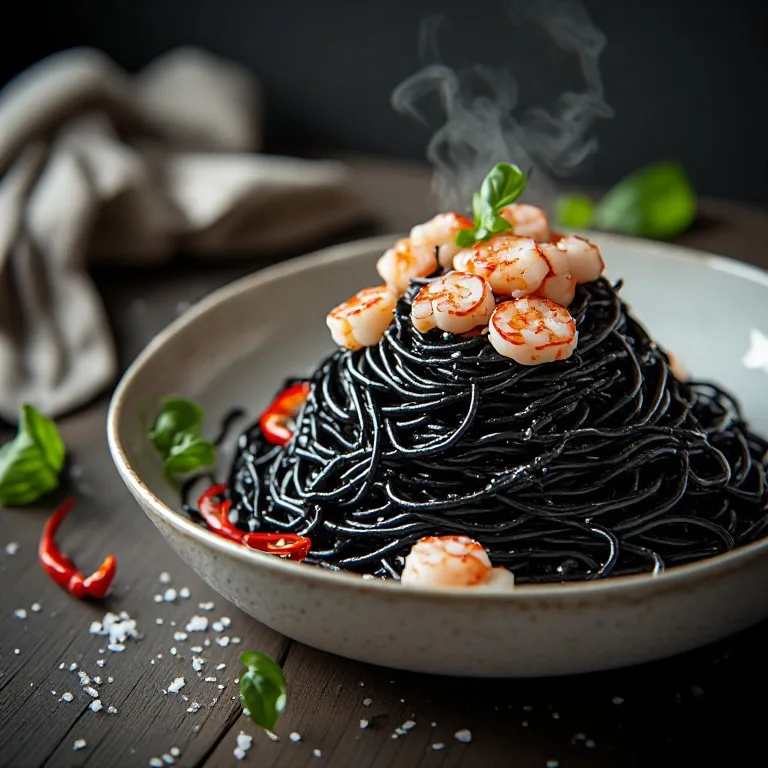
What built that reputation was a specific combination: serious Italian technique applied to California ingredients, without the reverence or ceremony of white-tablecloth dining. The room is loud. The lighting is low. The playlist is not ambient. Ori Menashe makes his charcuterie and his fermented chili paste in-house; Genevieve Gergis runs one of the best dessert programs in the city. And on the pasta menu, the dish that travels furthest on social media is the Squid Ink Chitarra — guitar-cut black spaghetti with seafood, a pasta that is visually theatrical in a way very few are.
The version people photograph pairs the jet-black pasta with butter-poached lobster, sliced chili for heat, Meyer lemon and citrus for brightness, and fresh Thai basil for an anise-forward green note. In summer, sweet white corn often joins it. It is not a quiet dish. The black pasta and white lobster against the dark, glossy sauce looks like something you photographed with intent, which is part of why it travels well on social media and part of why people come back specifically to order it.
Why Squid Ink Pasta and Lobster Belong Together
The combination is not just visual. Squid ink carries a faint briny, oceanic flavor — not fishy, but unmistakably marine, similar to the smell of the ocean on a cold morning. Lobster is sweet in the way shellfish are sweet: rich, clean, with a natural richness that benefits from acidity and heat to keep it from feeling heavy. The squid ink deepens the oceanic register rather than competing with the lobster’s sweetness — they are in the same flavor family, amplifying each other. The serrano adds heat that cuts through the butter. The Meyer lemon adds brightness that keeps the dish moving instead of sitting heavily, and the Thai basil ties it together with a clean, anise-scented lift.
The technique that makes this dish possible at home is butter-poaching, and it is worth understanding before you start.
The Beurre Monté Method: Why It Matters
Lobster goes rubbery quickly. At 212°F (the temperature of boiling water), protein fibers in lobster meat tighten and contract in seconds — the window between done and overcooked is under a minute. Most home cooks overcook lobster because they are nervous about raw shellfish and because most cooking instructions (timed in a boiling pot) assume a faster-cooking environment than they actually have.
Beurre monté — cold butter emulsified into barely simmering water — holds at 140–145°F, which is just barely above the temperature at which lobster proteins set. At this temperature, lobster tail meat takes 7 to 9 minutes to cook all the way through, and the margin of error is several minutes on either side rather than seconds. The result is a lobster that is cooked correctly: silky in the center, with the butter absorbed into the meat itself, rich without being oily. The poaching liquid then becomes your pasta sauce base — the lobster contributes its own flavor to the butter while cooking, so the sauce already tastes of the sea before you add another ingredient.
Making beurre monté sounds technical but takes about three minutes. You whisk cold butter into a small amount of simmering water, piece by piece. Cold butter emulsifies; melted butter separates. That is the entire principle.
The Three Keys Home Cooks Get Wrong
1. Not seasoning the pasta water aggressively enough. Squid ink pasta has a subtle oceanic flavor of its own — and that flavor disappears if the pasta is underseasoned. Boil it in water that tastes like mild seawater: at least 2 tablespoons of kosher salt per large pot. The pasta will carry that seasoning into the sauce.
2. Adding the lobster too early. The lobster is already cooked when it goes into the pasta pan — it needs 30 seconds to warm through, not more. The most common mistake is adding it when the pasta still needs 2 minutes, then continuing to toss. By plating time the lobster is rubbery. Add it last, toss for 30 seconds only, then plate immediately.
3. Skipping the Meyer lemon finish. Butter sauce without acid is heavy. The 2 tablespoons of Meyer lemon juice at the end — added off the heat — is what makes the dish taste light and finished rather than rich and flat. Do not skip it, and do not add it during cooking; the heat will cook off the volatile aromatics you are trying to preserve.
Notes and Variations
On the pasta: Bestia serves squid ink chitarra (guitar-cut, squared-off strands). If you can find dried squid ink chitarra, use it — the flat edges grip the butter sauce beautifully. It is rare in most stores, so dried squid ink spaghetti is the practical home substitute and works identically. Rustichella d’Abruzzo makes squid ink pasta that is widely distributed; Baia Pasta (Oakland) is excellent if you can find it in California; Cipriani makes a thinner squid ink pasta if you prefer. The pasta should be deeply black, not grey — more ink means more flavor.
On the herb: Thai basil is not a stand-in here — it is the point. Its anise-licorice edge holds up to butter and lobster where sweet Italian basil would fade. Tear it, don’t slice it, and add most of it off the heat so it stays aromatic. If you want to push the herbal note further, a couple of shiso leaves torn in alongside the basil is a nice personal twist, though it is not part of the original.
On the corn: In summer, Bestia’s version often includes sweet white corn, which plays off the lobster’s sweetness. If corn is in season, cut the kernels from one ear and cook them with the garlic to lightly caramelize before building the sauce.
On the serrano: The heat level in this dish is moderate but present. If you want it milder, seed the serrano before slicing. If you want more heat, add a second serrano to the sauce and keep the seeds in.
On making it for two: Halve all quantities. Use a 10-inch pan for the sauce and pasta toss. The beurre monté can be made in a small skillet; use 6 tablespoons butter and 3 tablespoons water.
A full-lobster upgrade: Use two whole live lobsters (1 1/4 lb each) instead of tails. Steam them for 6 minutes, pull the tail and claw meat, and make a quick shell stock from the carcasses. Use 3/4 cup of that stock in place of the beurre monté in the sauce. The claw meat — sweeter and more tender than the tail — makes this dish considerably more interesting.