Bobby Flay's Ancho Chile-Maple Glazed Thanksgiving Turkey
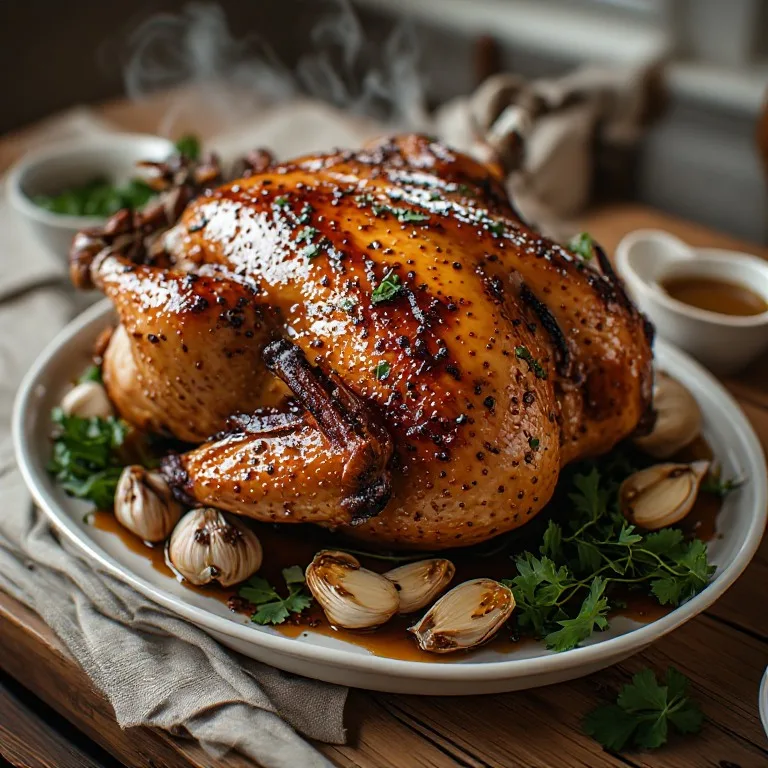
Quick answer: Dry brine the night before: mix 2 tbsp ancho chile powder, 2 tsp cumin, 1 tsp garlic powder, and 3 tbsp kosher salt (Diamond Crystal; about 1 tbsp per 5 lbs of bird); rub all over the turkey including under the breast skin; refrigerate uncovered 8–24 hours. Day of: let turkey sit at room temperature 1 hour. Preheat to 425°F. Melt 1 stick butter. Brush the turkey all over with melted butter, season lightly. Roast at 425°F for 30 minutes — baste with remaining butter every 10 minutes. Reduce to 350°F and continue roasting, basting with pan drippings every 30 minutes (about 2 hours more for a 14-lb bird). Make the glaze: whisk 1½ cups pure maple syrup + 3 tbsp ancho chile powder + 2 tbsp Dijon mustard until smooth. When the thigh thermometer reads 155°F, reduce oven to 325°F. Brush glaze over the whole turkey every 5 minutes until the thigh reads 165°F (about 25–30 minutes). Rest uncovered 35–40 minutes. Make the pan gravy: deglaze roasting pan with 1 cup stock over two burners, add another cup stock, squeeze in a head of roasted garlic, blend with ½ cup cilantro using an immersion blender, strain, season.
Shop the tools
Gear matched to this recipe. These are Amazon affiliate links — we may earn a small commission if you buy, at no extra cost to you.
 Illustrative imageInstant-Read Digital ThermometerNail fry-oil and doneness temps every timeCheck price on Amazon →
 Illustrative imageFine-Mesh Strainer SetSilky sauces and lump-free syrups — strains out every bit of pulpCheck price on Amazon →
 Illustrative imageNinja Kitchen System BlenderRestaurant-smooth sauces, shakes, and dressingsCheck price on Amazon →
 Illustrative imageImmersion (Stick) BlenderBlend soups smooth right in the pot — no transfers, no messCheck price on Amazon →
As an Amazon Associate, Copycat Spices earns from qualifying purchases. Product images are generic illustrations, not the exact item listed.
Bobby Flay's Ancho Chile-Maple Glazed Thanksgiving Turkey
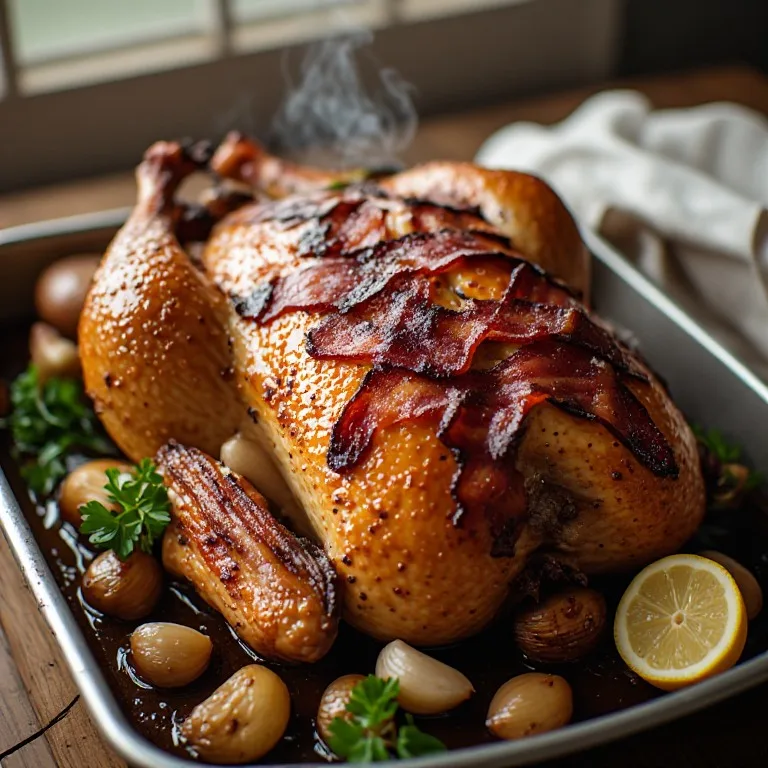
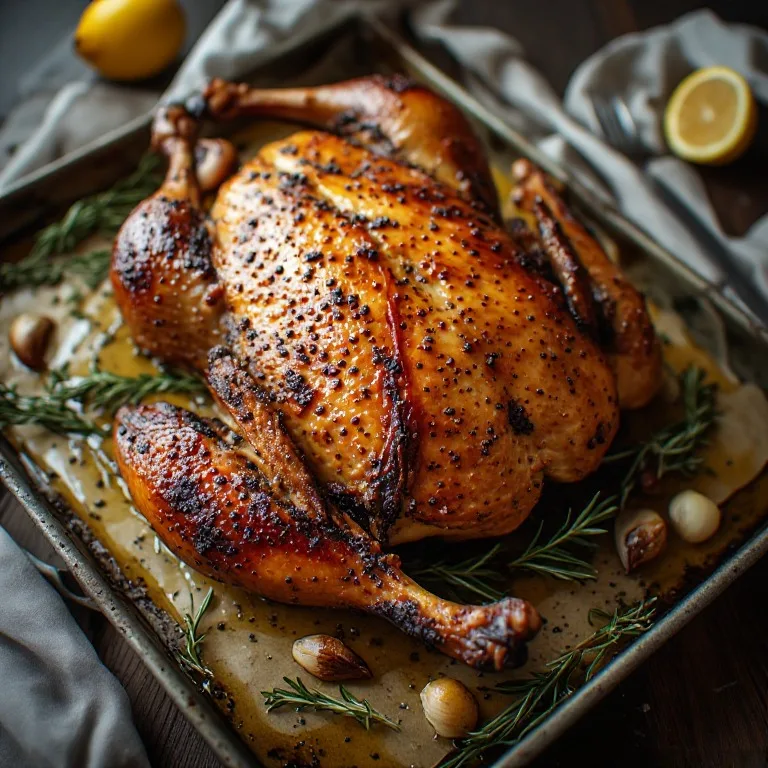
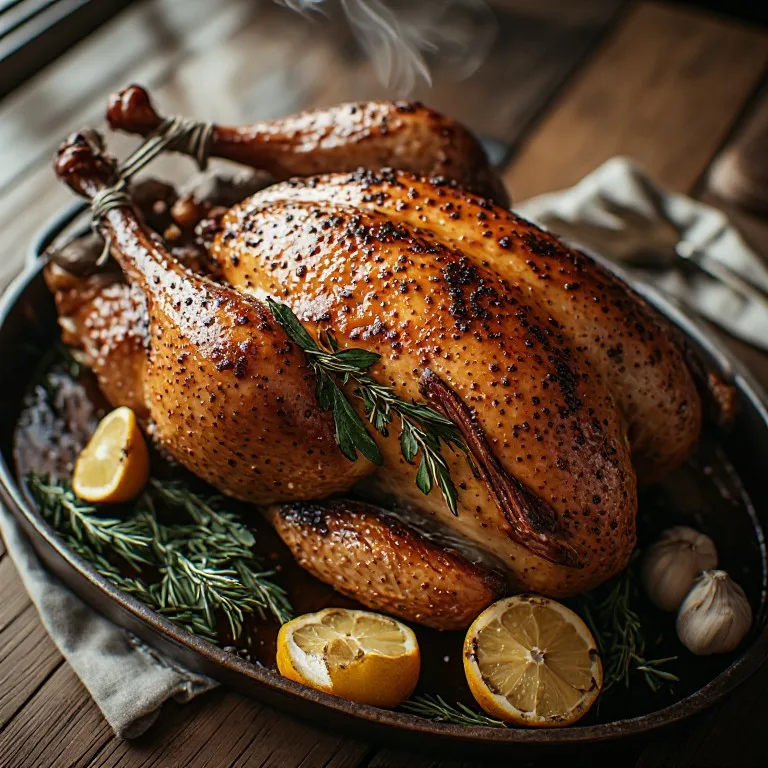
Bobby Flay's Mesa Grill Thanksgiving turkey: a smoky ancho chile dry brine overnight, plain butter basting through the roast for clean browning, then an ancho chile-maple-Dijon glaze laid on in the final 30 minutes until it lacquers the skin amber. The complete technique from his Mesa Grill Cookbook, including the roasted garlic-cilantro pan gravy.
Intermediate
Prep: 25 min (+ overnight dry brine)
Cook: 3 hr 30 min + 40 min rest
Total: 3h 55m12-14 servings
~$4.50/serving
At home~$4.50/serving
vs
Restaurant~$20.25/serving
You save ~78%
The Story Behind the Recipe
Bobby Flay opened Mesa Grill in 1991 at 102 Fifth Avenue in Manhattan's Flatiron district — he was 26. The flagship ran in New York for 22 years (1991–2013), with later outposts in Las Vegas and the Bahamas, and it defined what bold Southwestern cooking meant in America: ancho and pasilla dried chiles, smoked proteins, maple and honey playing against heat, and roasted garlic-cilantro sauces everywhere. The Ancho Chile-Maple Glazed Turkey from his 2007 Mesa Grill Cookbook translates that signature playbook directly onto the holiday bird: ancho chile powder on the skin, a pure maple-mustard-ancho glaze lacquered on in the final stretch. The chile, maple, and mustard that distinguish it cost well under $20 on top of the turkey — a fraction of what a restaurant holiday turkey dinner in Manhattan would run.
The technique that actually matters is sequencing the glaze. Maple syrup at 425°F caramelizes to carbon in under 8 minutes — Bobby Flay's counterintuitive rule is to keep the turkey in plain butter for the first 3 hours, then drop the oven temperature to 325°F specifically for the glaze phase. Lower heat plus frequent (every 5 minutes) brushing builds a lacquer rather than a burn. The ancho chile powder is not chipotle — it's the dried version of the poblano, mildly hot, fruity, and earthy without smokiness. The Dijon mustard in the glaze is the structural binder that keeps the maple from sliding off the hot skin and ensures even coverage.
Nutrition Facts
Per serving (12-14 servings)Calories390
Total Fat16g
Total Carbs12g
Dietary Fiber0g
Sugars12g
Protein42g
Sodium520mg
* Estimated values based on standard recipe preparation. Actual values may vary.
Ingredients
- For the ancho chile dry brine (night before)
- For the turkey
- For the ancho chile-maple glaze
- For the roasted garlic-cilantro pan gravy
Instructions
Pro tip: This recipe tastes even better the next day. The flavors need time to meld together in the fridge.
Storage: Keeps in an airtight container in the fridge for up to 2 weeks. Freezer-friendly for up to 3 months.
Free PDF — instant download. We'll also send new seasonal copycat recipes now and then; unsubscribe anytime. Or just download it →
🎉 Your Thanksgiving Cookbook is ready!
It's free — but if it's worth something to you, you can pay what you want. It keeps the recipes coming.
$
✓ Downloading your free Thanksgiving Cookbook — check your downloads folder. Happy cooking!
Make It Healthier
Love Bobby Flay's Ancho Chile-Maple Glazed Thanksgiving Turkey but want a lighter version? Try these simple swaps:
- ✓Skip the skin at the table — the ancho dry brine seasons the meat itself, not just the skin, so the flavor holds even without it, saving roughly 80 calories and 9g fat per serving.
- ✓Use Grade B (dark) maple syrup instead of Grade A — it has more mineral depth, so you can get the same flavor impact with 20% less syrup.
- ✓For the gravy, skip the drippings-fat step and just deglaze with stock and cilantro — the roasted garlic and fresh cilantro carry the flavor cleanly without the additional fat.
- ✓Reduce the butter baste to 4 tablespoons and use the glaze to compensate — the natural fat of a larger turkey provides most of its own basting once the initial browning is set.
Frequently Asked Questions
Why does the glaze only go on in the last 30 minutes — won't the flavor be thin?
The dry brine applied overnight does the deep flavor work: ancho chile powder in the salt rub penetrates the skin and outermost layer of meat during the 8–24 hour refrigerator rest, so the turkey has chile flavor built in before it ever hits the oven. The glaze applied at the end is a different job — it creates the visual lacquer and a concentrated sweet-spicy caramelized crust on the surface. If you applied it early, the maple syrup would scorch to bitter carbon by hour two of a 3.5-hour roast. Bobby Flay's sequencing (plain butter base coat → late glaze) is deliberate: the butter builds the browning foundation cleanly, the glaze finishes it. The 325°F oven for the glaze phase is also deliberate — lower heat slows caramelization enough that the glaze can be applied four or five times without burning, building layers.
What is ancho chile powder exactly — and can I substitute it?
Ancho chile powder is made from dried poblano chiles (ancho = the dried form of the fresh poblano). It is mildly hot (1,000–1,500 Scoville), dark brick-red, and has a deep earthy-fruity flavor with notes of dried cherry and mild chocolate — no smoke. It is not the same as generic 'chili powder,' which is a seasoning blend containing cumin, garlic powder, and other spices. Do not use chipotle powder here — chipotle is smoked jalapeño, not a poblano, and the smoke flavor would dominate the maple. The best substitute if you cannot find pure ancho powder is to toast 2 dried ancho chiles in a dry skillet for 1 minute per side, remove stems and seeds, and grind to a powder in a spice grinder. A passable shortcut: use 2 tablespoons of pure mild New Mexico red chile powder (no additives) plus ½ teaspoon cocoa powder for the earthy depth. Both should be available at any Mexican grocery store.
Why dry brine rather than wet brine — and how do I dry brine?
Wet brining adds moisture through osmosis — salt + water + time — but it can dilute the surface flavor you're building with the ancho-maple glaze. a dry brine (salt + chile powder directly on the dry skin) works differently: the salt draws out a small amount of surface moisture, which dissolves the salt and spices, which are then reabsorbed back into the outer layer of meat over the resting period. The result is deeply seasoned meat, drier skin (which means crispier browning), and no dilution of the chile flavor. To dry brine: mix 2 tablespoons ancho chile powder + 2 teaspoons ground cumin + 1 teaspoon garlic powder + 3 tablespoons kosher salt (Diamond Crystal; if using Morton's, use 2 tbsp). The salt amount matters — aim for about 1 tablespoon of Diamond Crystal per 5 pounds of turkey, so a 14-pound bird wants roughly 3 tablespoons. Too little and the brine can't season the meat all the way through. Pat the turkey completely dry with paper towels. Work your fingers under the breast skin to create a pocket on each breast half without tearing. Push about one-third of the dry brine mixture directly onto the breast meat under the skin. Rub the remaining two-thirds all over the outside of the turkey, legs, back, and inside the cavity. Place on a rack in a sheet pan or roasting pan, uncovered, in the refrigerator for 8–24 hours. Do not rinse before roasting — those spices on the skin are what you want.
What maple syrup should I use, and does the grade matter?
Use pure maple syrup, not pancake syrup (which is corn syrup with artificial flavor and will not caramelize the same way). Grade matters for flavor depth: Grade A Amber/Rich is Bobby Flay's go-to and widely available — it has medium maple flavor and caramelizes evenly. Grade A Dark/Robust (what used to be called Grade B) has more mineral depth, a slightly bitter edge, and a more complex caramel — it is actually preferred for savory-sweet applications like this glaze because the complexity counterbalances the ancho chile's earthiness better. Avoid Grade A Golden/Delicate — its mild flavor gets lost in the chile. Either Grade A Amber or Dark will work well; avoid anything labeled 'pancake syrup,' 'maple-flavored,' or that lists corn syrup as the first ingredient.
How do I make the roasted garlic-cilantro gravy?
The Mesa Grill gravy uses the turkey's own roasted pan drippings plus roasted garlic and fresh cilantro — simple and very fast. To roast garlic alongside the turkey: cut a full head of garlic across the equator (or just use the cut side of the garlic halves from the cavity), drizzle with olive oil, wrap loosely in foil, and roast in the oven for the last 45 minutes of the turkey's cooking time. The cloves will be soft, golden, and sweet. When the turkey is resting, place the roasting pan over two burners on medium-high heat. Tilt and skim off as much surface fat as you comfortably can. Add 1 cup turkey or chicken stock and scrape up all the browned and glazed bits from the bottom of the pan — those caramelized maple-ancho drippings are flavor. Add a second cup of stock and bring to a boil. Squeeze the roasted garlic cloves out of their skins directly into the pan. Add ½ cup packed fresh cilantro leaves. Use an immersion blender directly in the pan (carefully — it's hot) to blend until the garlic and cilantro are fully incorporated. Strain through a fine-mesh sieve, pressing on solids. Taste and season with salt, pepper, and optionally a small squeeze of lime juice to brighten it. The gravy should be deep amber from the drippings, lightly creamy from the garlic, and bright-tasting from the cilantro.
What is the total cooking time for different turkey sizes?
Using the two-phase method (425°F for first 30 min, then 350°F, then 325°F for glaze phase): a 12-pound turkey takes approximately 2 hours 45 minutes at 350°F plus 25–30 minutes at 325°F for glazing, total oven time around 3 hours 30–35 minutes. A 14-pound turkey: approximately 3 hours at 350°F plus 25–30 minutes glazing, total around 3 hours 50 minutes to 4 hours. An 18-pound turkey: approximately 3 hours 45 minutes at 350°F plus 30 minutes glazing, total around 4 hours 30 minutes. These are guides — the thermometer is the authority. Start checking the temperature 30–40 minutes before you expect it to be done. The turkey is done when the thickest part of the thigh (not touching bone) reads 165°F. The glaze phase begins when the thigh reads 155°F, not before — starting the glaze too early risks the maple burning before the turkey is cooked through.
Can I make the glaze ahead, and how long does it keep?
The ancho chile-maple glaze can be made up to 5 days ahead and stored in a sealed jar in the refrigerator. Reheat briefly in a small saucepan over low heat before using — it thickens as it cools and needs to be fluid enough to brush easily. If it has thickened too much, add 1–2 tablespoons of water and stir over low heat. The glaze also doubles well: make twice the quantity and keep the second half for glazing a ham, pork tenderloin, or roasted sweet potatoes. It keeps for 3 weeks refrigerated and up to 3 months frozen.
Can I prep the turkey the day before and reheat it?
Yes. Roast the turkey completely, let it cool fully, then carve: separate the breasts from the carcass and slice them; separate the legs and thighs; refrigerate everything in a deep baking dish. The next day, pour 1½ cups reserved and strained pan drippings (or turkey stock) over the sliced meat, cover tightly with foil, and reheat in a 325°F oven for 30–40 minutes until heated through. The sliced meat reheats beautifully in its own juices. The one thing lost is the dramatic carved-at-the-table presentation. If that matters, do a partial advance prep: dry brine 2 days ahead, make the glaze up to 5 days ahead, roast day-of. The glaze application takes only 30 minutes at the end; if you start the turkey 4 hours before serving, you have a comfortable window.
Love this recipe? Share it!
Made it? Buy us a coffee
Every recipe here is free, with no paywalls. If this one was a hit at your table, a small tip keeps new copycats coming.
$
💛 Support checkout is coming soon — the cookbook stays free either way.
Ratings & Reviews
Rate this recipe
Click a star to rate