

Pin It

Café Du Monde Beignets (New Orleans' Most Famous Fried Dough, Made at Home)

Café Du Monde Beignets (New Orleans' Most Famous Fried Dough, Made at Home)
Jump to Recipe
Prep 20 min + 1–8 hr rest Cook 30 min Serves 36 beignets (12 servings of 3)
Quick answer: Dissolve 2¼ tsp active dry yeast in 1 cup warm water (110°F) with 2 tablespoons of the measured sugar; let it foam for 10 minutes. In a large bowl, whisk together the remaining sugar (2 tablespoons), ½ cup evaporated milk, 1 beaten egg, ¼ teaspoon salt, and 2 tablespoons softened unsalted butter. Stir in the yeast mixture. Add 1½ teaspoons baking powder and 3½ cups all-purpose flour and mix until a soft, slightly sticky dough forms — 5 to 7 minutes by hand, just until smooth, no longer. Don't over-knead: you want a tender open crumb, not a tough bready one. Cover and refrigerate at least 1 hour; overnight is better. When ready to fry, remove the dough from the fridge and let it sit 15 minutes. On a lightly floured surface, roll it to exactly ¼-inch thick — this is not approximate, it's the most important measurement in the recipe. Cut into 2½-inch squares. Heat at least 3 inches of vegetable oil in a heavy pot to 370°F (not 350°F: too greasy; not 375°F+: outside browns before center cooks through). Fry in small batches of 4 to 5 — they puff to three times their raw size. They'll sink briefly, then float; once they float, flip them. Total time per batch: about 1 to 1½ minutes per side, flipping once or twice. They're done when puffed, golden, and hollow-sounding when tapped. Drain for 20 seconds on a rack, then immediately dump 3 full tablespoons of powdered sugar over each beignet while they are still hot — the hot surface pulls the powdered sugar into a thin glaze layer under the visible white cloud, which is the whole texture experience. Serve immediately with café au lait.

Café Du Monde Beignets (New Orleans' Most Famous Fried Dough, Made at Home)

Copycat Café Du Monde beignets, made at home. The dual yeast-and-baking-powder dough, overnight fridge rest, 370°F oil, and the hot powdered-sugar trick that makes New Orleans beignets lacy and light.

Medium Prep: 20 min + 1–8 hr rest Cook: 30 min Total: 8h 50m36 beignets (12 servings of 3) servings ~$3.85/serving
Prep20 min + 1–8 hr rest
Cook30 min
Total8h 50m
Servings
36
At home~$3.85/serving
vs
Restaurant~$17.32/serving
You save ~78%

The Story Behind the Recipe

Copycat Café Du Monde beignets, made at home. The dual yeast-and-baking-powder dough, overnight fridge rest, 370°F oil, and the hot powdered-sugar trick that makes New Orleans beignets lacy and light.

Nutrition Facts

Per serving (36 beignets (12 servings of 3) servings)
Calories290
Total Fat7g
Total Carbs52g
Dietary Fiber1g
Sugars22g
Protein5g
Sodium95mg

* Estimated values based on standard recipe preparation. Actual values may vary.

Ingredients

Instructions

💡
Pro tip: This recipe tastes even better the next day. The flavors need time to meld together in the fridge.
❄️
Storage: Keeps in an airtight container in the fridge for up to 2 weeks. Freezer-friendly for up to 3 months.
🎃 Free Halloween cookbook — download now The Copycat Halloween Cookbook A ready-made, photo-illustrated PDF of our best halloween copycat recipes — free to download, no building required. Pay what you want to support if you love it.

Free PDF — instant download. We'll also send new seasonal copycat recipes now and then; unsubscribe anytime. Or just download it →

Copycat Café Du Monde Beignets (New Orleans’ Most Famous Fried Dough, Made at Home)

Prep time: 20 min + 1–8 hr rest Cook time: 30 min Servings: 36 beignets (serves 12 at 3 per person)

Café Du Monde has been serving beignets at the French Market in New Orleans since 1862. The café is open 24 hours a day, 364 days a year. The menu has four items: beignets, café au lait, milk, and orange juice. That is still the entire menu.

The beignets are the state doughnut of Louisiana. They are famous enough that most visitors to New Orleans consider them a required stop — but the experience is specific enough that the thing people want to recreate at home isn’t just any fried dough, it’s this one: light, pillowy, lacy at the edges, covered in so much powdered sugar that it visibly migrates off the plate.

Most home recipes get one detail wrong that changes the whole result. Here’s what it is.

Why CDM Uses Both Yeast and Baking Powder

If you’ve made beignets before and found them too bready, you were probably using a pure-yeast dough. If you found them too dense and cakey, you were using a pure-baking-powder dough. Café Du Monde’s commercial mix uses both — yeast and baking powder in the same dough — and this is the technical reason their beignets have a different texture than either approach alone.

The yeast provides fermentation flavor and a slight chew. Slow fermentation (especially overnight in the refrigerator) builds subtle flavor complexity in a dough that’s otherwise almost neutral. The baking powder provides a fast, chemical lift the instant the dough hits hot oil. In a pure-yeast dough, the oven spring in oil is relatively gradual; the chemical leavener creates an explosive expansion in the first 30 seconds of frying, which opens the crumb structure aggressively and helps the exterior seal and crisp before the yeast action can tighten it back down.

The result is lighter than a pure-yeast beignet, crispier than a pure-baking-powder fritter, and mild enough in flavor to function as a platform for powdered sugar and chicory coffee. Both leaveners are doing different jobs at different moments, and you need both of them.

The Overnight Rest Is Not Optional

The dough needs at least 1 hour of rest; overnight in the refrigerator is clearly better for two reasons.

First, the yeast fermentation continues slowly in the cold, building flavor. Fresh dough fried immediately tastes like flour with sugar — okay but not the specific CDM flavor. Eight hours of fermentation produces a dough with a faint tang and a complexity that reads as richness even though the ingredients are simple.

Second, the cold rest relaxes the gluten. When you roll warm, freshly kneaded dough, it springs back the moment you lift the rolling pin — the gluten network is tightly wound and elastic. Cold dough has had hours for the gluten strands to relax; it rolls to ¼ inch without resistance and holds its square shape from the cutting board to the oil without shrinking. This is the reason CDM beignets look like squares: properly cold-rested dough.

Cover the bowl tightly, put it in the refrigerator before you go to sleep, and fry them in the morning. Let the dough sit at room temperature for 15 minutes before rolling so it’s pliable but still cool.

370°F: Why the Specific Number

This is not a range. At 350°F, beignets absorb grease. The dough enters the oil before the exterior can seal, and the fat wicks in over the extended fry time. At 375°F and above, the outside reaches deep color before the interior has cooked through — you get golden beignets with a doughy center.

370°F is the number that threads the needle. Hot enough that the exterior seals within the first 30 seconds, creating a shell that holds steam pressure and lets the interior puff. Cool enough that the interior finishes cooking and puffing in the time it takes the outside to reach an even, pale-gold color.

Check the temperature between every batch. Each batch drops the oil temperature by 10 to 15 degrees. Frying the second batch into 355°F oil makes it greasy; waiting two minutes for the oil to recover to 370°F before adding the third batch costs almost nothing and makes a real difference.

How the Powdered Sugar Works

The powdered sugar at Café Du Monde is not decoration. It is structural, and the reason it must be applied while the beignet is still hot.

When a hot beignet comes out of the oil, it is still releasing steam from its surface. If you immediately apply a thick coating of powdered sugar, the surface steam partially dissolves the sugar into a very thin glaze layer directly against the dough — a faint crisp sweetness that’s different from plain powdered sugar. Above that glaze layer, the rest of the powdered sugar stays dry and white. This two-layer effect is what CDM’s beignets have. The glaze holds the sugar on; the cloud is visual.

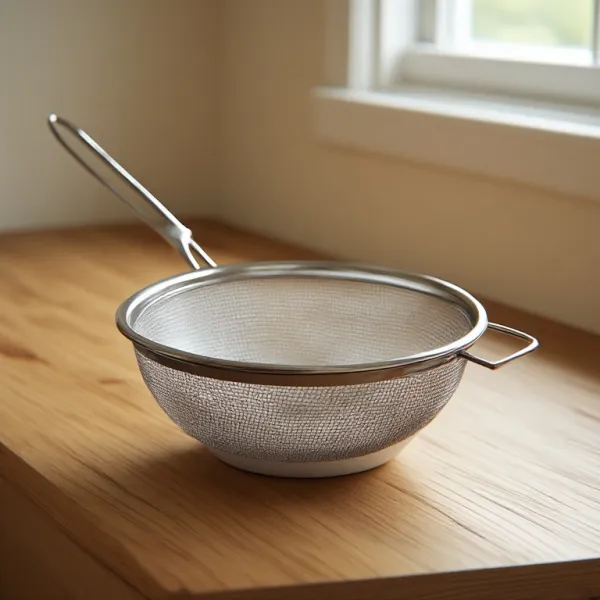
Three tablespoons per beignet sounds excessive because it is excessive. That’s the correct amount. Hold a fine-mesh sifter close to the hot beignet and apply it in a dense cloud — not tapped on, not dusted lightly, but properly sifted in a heavy pour. It will go everywhere. It goes on your shirt, your companion’s shirt, and into your coffee. This is the beignet experience and there is no way to make it tidy.

Apply the sugar immediately after the beignets come off the rack. Powdered sugar applied to a cool beignet doesn’t glaze; it just sits on the surface and falls off when you pick it up.

The Café Au Lait Pairing

CDM’s café au lait is dark-roasted coffee blended with chicory root, approximately half coffee and half warm milk. The chicory (roasted Cichorium intybus root, not the same as regular coffee) adds a woodsy, slightly bitter, mildly earthy note that has been part of New Orleans coffee culture since the Civil War, when coffee shortages pushed Louisianans to extend grounds with chicory. The final flavor is less sharp than regular black coffee, more complex, and slightly lower in caffeine.

The combination of sweet, fatty, powdery beignets and bitter, earthy café au lait is the whole CDM experience — neither is as good without the other. For home replication, CDM brand coffee with chicory is available at most grocery stores nationally. Luzianne is a good alternative. Brew it strong (use slightly more grounds than you normally would), then combine with an equal volume of whole milk heated to just below a simmer.

The contrast is intentional. The beignet is all sweetness and fat and powdered sugar. The café au lait is all bitterness and warmth. Together they are one of the more complete flavor experiences in American food.
🥗

Make It Healthier

Love Café Du Monde Beignets (New Orleans' Most Famous Fried Dough, Made at Home) but want a lighter version? Try these simple swaps:

  • ✓Bake at 400°F for 10 to 12 minutes after a light brush of butter — you won't get the same shell or puff, but you'll get a light, sweet roll that satisfies the craving with roughly half the fat. Use a slightly higher-hydration dough (add 2 tablespoons extra evaporated milk) so it doesn't dry out in the oven.
  • ✓Use a light dust of powdered sugar (1 tablespoon per 3 beignets) rather than the full CDM pour — you lose the glaze effect but still get the right flavor contrast with the chicory coffee.
  • ✓Make half-sized beignets (2-inch squares) for a single serving of 5 instead of 3 — the calorie-per-beignet drops by roughly 40%, and the higher ratio of crispy shell to doughy interior actually improves the texture.

Frequently Asked Questions

What is Café Du Monde and why are their beignets famous?

Café Du Monde is an open-air café at 800 Decatur Street in the French Quarter of New Orleans, operating at the edge of the French Market since 1862. It is open 24 hours a day, 364 days a year — closed only on Christmas Day and when a hurricane is incoming. The menu has never expanded meaningfully: beignets, café au lait, milk, and orange juice. That's it. The café's longevity and its stripped-down menu are part of the point — it's been making the same thing in the same place for over 160 years, and for most visitors to New Orleans, it is a required stop. The beignets are the state doughnut of Louisiana (officially designated). They're famous because they are specific: not a generic fried dough, but a light, lacy, pillow-shaped square covered in such an excessive quantity of powdered sugar that it migrates onto your shirt, your companion's shirt, and your drink. The experience — the French Quarter at 2 a.m., the sugar, the chicory coffee — is part of what people want to recreate.

What makes Café Du Monde beignets different from other beignets?

Most homemade beignet recipes are either pure-yeast doughs (which produce something closer to an airy roll — bready, with more chew) or pure-baking-powder doughs (which produce a cakey, dense fritter). Café Du Monde's commercial mix uses both: yeast and a chemical leavener (baking powder and baking soda). The yeast provides fermentation flavor and a slight chew; the baking powder gives a fast, explosive lift in the hot oil that opens the crumb and crisps the exterior before the yeast action can tighten the structure. The result is lighter than a pure-yeast beignet, crispier than a pure-baking-powder fritter, and milder in flavor than either — a slightly sweet, almost neutral fried dough that tastes like nothing except itself, which is exactly the right backdrop for an enormous quantity of powdered sugar and a cup of chicory coffee.

Can I make the dough ahead of time?

Yes — and you should. The single biggest improvement you can make to a home beignet recipe is to let the dough rest overnight in the refrigerator. The cold rest does two things: it continues the yeast fermentation slowly, developing slightly more flavor, and it chills the fat in the dough so the rolled squares hold their shape from board to oil without shrinking back or tearing. A 1-hour rest at room temperature will work in a pinch, but the beignets will be a little bready and the dough will fight you when you try to roll it thin. The overnight fridge dough rolls easily to ¼ inch, holds its square shape, and fries cleaner. This is a recipe you can start the night before and finish in the morning.

Why does the oil temperature matter so much?

At 350°F, beignets absorb grease. The dough goes into the oil before the exterior can seal, and the oil wicks in during the extended fry time. The result is heavy, oily, and sad. At 375°F and above, the outside browns and crisps faster than the interior can cook through — you can get golden beignets with raw, doughy centers. 370°F is the specific number that threads the needle: hot enough to seal the exterior and create a crisp shell within the first 30 seconds, cool enough to let the interior fully cook and puff in the time it takes the outside to reach deep gold. Check your oil temperature between batches — frying multiple pieces drops the temperature several degrees, and crowding makes it worse. Small batches of 4 or 5, verified temperature before each batch.

How much powdered sugar is actually correct?

More than you think. Café Du Monde uses what appears to be an irresponsible amount — the servers ladle it on at the table from wide-mouthed shakers. The practical reason: hot beignets release steam from their surface as they cool. If you dust powdered sugar over them, the steam partially dissolves the sugar into a barely-there glaze layer directly against the dough, while the outer powdered sugar stays dry and white. The thin glaze layer is part of the texture and part of the sweetness distribution — the beignet isn't sweet on its own; the sugar is the sweetness. For home replication, use at least 3 tablespoons per beignet, applied immediately while the beignets are still hot, via a fine-mesh sifter or a sieve held close to the surface so the powder falls in a dense cloud. Do not tap, dust lightly, or try to be neat. The powdered sugar will go everywhere, and that is correct.

What is café au lait and why does Café Du Monde serve it specifically?

Café Du Monde's café au lait is dark-roasted coffee blended with chicory root, served approximately half coffee and half warm milk. New Orleans has a long tradition of coffee with chicory — the practice dates to the Civil War, when coffee shortages pushed Louisianans to extend coffee grounds with roasted chicory root, which adds a woodsy, slightly bitter, mildly earthy note to the flavor. The chicory coffee has a lower caffeine content than equivalent pure coffee. The combination of the sweet, fatty, powdery beignets and the bitter, earthy café au lait is intentional contrast — neither works as well alone. If you want to replicate the full Café Du Monde experience at home, look for CDM brand coffee with chicory (sold at most grocery stores nationally) or Luzianne coffee with chicory. Brew it strong and add an equal volume of whole milk, steamed or heated in a saucepan.

What's the difference between New Orleans beignets and French beignets?

The words 'beignet' in French and 'beignet' in Louisiana refer to different things. French beignets (beignets de carnaval or beignets au sucre) are a funnel-cake-adjacent fried choux pastry or simple batter — light, crispy, and open-structured, shaped by piping or spooning batter directly into hot oil. New Orleans beignets are a yeasted (or dual-leavened) dough cut into squares, rolled out and cut before frying — much closer to a square doughnut than to French carnival beignets. The shape, the dough structure, and the powdered sugar finish are all Louisiana-specific. French Acadians (the ancestors of Cajuns) brought fried-dough traditions to Louisiana in the 18th century, but the New Orleans café beignet as we know it developed locally. Some food historians also point to the Ursuline nuns who arrived in New Orleans in 1727 as early transmitters of the recipe, though documentation is thin.

Can I use bread flour instead of all-purpose flour?

You can, but the texture will shift toward chewier and slightly more bready — closer to a donut or a roll. All-purpose flour is more authentic to the Café Du Monde mix and produces a lighter, more delicate crumb. Bread flour's higher protein content develops more gluten, which traps gas effectively but also makes the dough stiffer and the final beignet slightly tougher. If you use bread flour, reduce the kneading time and expect to add a little more liquid (the extra protein absorbs more water). All-purpose flour at 3½ cups is the correct starting point for this recipe.

Why did my beignets come out flat or dense?

Three likely causes: (1) The oil wasn't hot enough — 350°F fries instead of puffs; check with a thermometer before and between batches. (2) The dough was over-kneaded — more gluten development means the dough resists expansion in the oil; mix only until the dough comes together and is smooth, then stop. (3) The dough didn't rest long enough — both the yeast activity and the gluten relaxation that happen during the rest are what allow the dough to expand dramatically in hot oil. An hour is the absolute minimum; overnight is clearly better. Dense beignets with a small airy pocket in the center are a sign of insufficient rest or too-low oil temperature.

Can I bake beignets instead of frying them?

No, not meaningfully. The specific texture of a beignet — the crisp shell, the hollow interior, the rapid puff that opens the crumb — is caused by the thermal shock of going into 370°F oil. Hot fat seals the exterior instantly while steam pressure inside the dough expands and puffs the interior. No oven can replicate this: baked dough browns from the outside slowly, the steam escapes through the crust rather than puffing it, and the result is a dinner roll with powdered sugar on top. Beignets are one of those fried-only foods. An air fryer produces slightly better results than a regular oven, but still not the right texture — the circulation helps with crisping but can't replicate the rapid-seal mechanism of hot oil.

Love this recipe? Share it!

Free PDF: our 12 most-wanted copycat recipes — instant download.

Made it? Buy us a coffee

Every recipe here is free, with no paywalls. If this one was a hit at your table, a small tip keeps new copycats coming.

$

Café du Monde is a trademark of its owner, used here only to describe the dish this recipe recreates. This is an independent copycat written in our own words — Copycat Spices is not affiliated with, endorsed by or sponsored by Café du Monde.

Ratings & Reviews

—
No ratings yet

Rate this recipe

Click a star to rate

Leave a Review

0/500

CS

Copycat Spices Editorial

Researched + fact-checked. Every recipe on Copycat Spices is built from published sources — official ingredient lists, brand-published recipes, interviews and food-science references — and fact-checked before it goes live, then written as clear, step-by-step instructions for home cooks of all skill levels.

Learn more about our mission →