

Copycat Katz’s Deli Pastrami Sandwich (The Famous NYC Deli, Made at Home)
Prep time: 45 min active (7–10 days cure) | Cook time: 8 hours (smoke + steam) | Serves: 10–12 sandwiches | Difficulty: Advanced
Why This Sandwich Is Worth Understanding
Katz’s Delicatessen has been on the corner of Houston and Ludlow in Manhattan’s Lower East Side since 1888. It survived the near-extinction of the American Jewish deli — at the peak in the 1930s, New York had roughly 1,500 Jewish delicatessens; today it has fewer than a dozen operating in the traditional style. Katz’s is the most famous one standing.
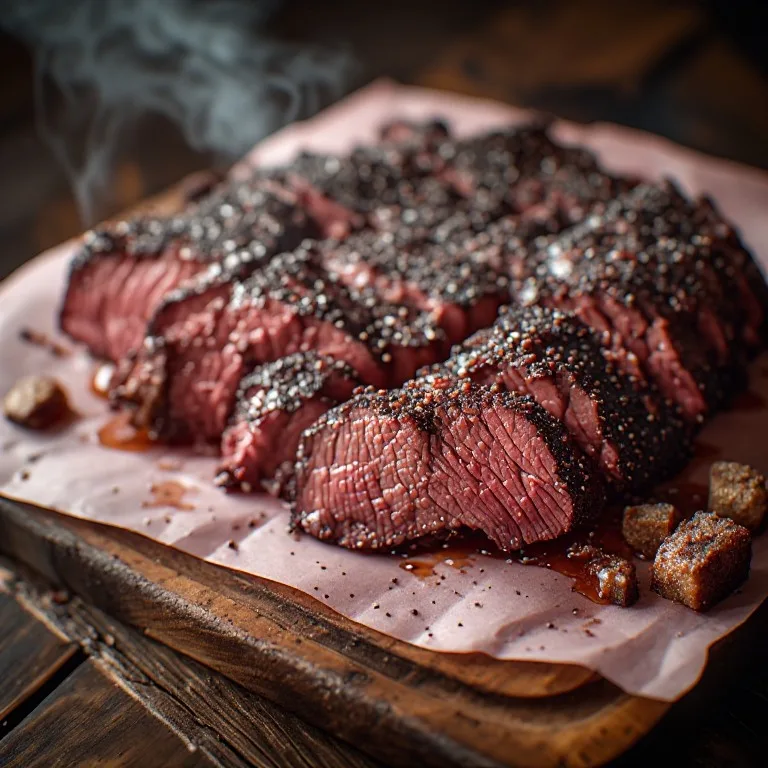
The pastrami they serve is made from scratch in-house: the brisket (specifically the fattier navel cut, not the lean flat most grocery stores sell) is wet-cured in a proprietary brine for approximately three weeks, rubbed with coriander and black pepper, smoked for several days, then boiled and steamed before each sandwich is hand-cut and piled onto rye. Every piece in the steam table at any given moment has been in process for close to a month.
You cannot replicate that exact result at home. You can replicate the flavor logic and the technique — and the result is so much better than any store-bought pastrami heated in a pan that the difference is hard to overstate.
Two Ways to Make This at Home
| The Shortcut | The Full Method | |
|---|---|---|
| Total time | 2–3 hours | 8–11 days |
| Hands-on work | ~10 minutes | ~45 minutes |
| Equipment | A pot with a lid | Smoker + brining container + instant-read thermometer |
| Cost per sandwich | ~$8–12 (good deli pastrami) | ~$4 in ingredients |
| Result | ~90% there — the steam does most of the magic | The closest you can get at home |
| Best for | A great sandwich tonight | The full Katz’s project |
The Shortcut (Ready in 3 Hours)
Buy the best deli pastrami you can find — or order a Katz’s whole pastrami online (they ship nationally; it arrives vacuum-sealed and unsliced). Set it in a covered pot over 1 inch of simmering water and steam for 2 to 3 hours until a probe slides through with no resistance. Slice thick against the grain. Serve on seeded rye with yellow mustard.
This is not cheating. This is what deli workers do every morning with received pastrami. The steam is the work; the cure and smoke were done by someone else.
The Full Method (7–10 Days Cure + 1 Day Cook)
This is the recipe below. You cure the brisket yourself, build the bark from scratch, and smoke it. The investment is mostly passive time. The result — particularly the bark, the specific smoke depth, and the way the fat and gelatin feel in the meat — is noticeably different from steamed commercial pastrami.
What Makes Katz’s Pastrami Different
The cut: Navel or beef plate — the section that runs just below the brisket flat. It has more fat and collagen than the flat, which the long cure and steam convert entirely. Every bite has a slick, rich quality you cannot get from a lean cut.
The cure time: Three weeks at Katz’s; seven days minimum at home. Commercial pastrami uses chemical accelerants to compress the cure to 3 to 5 days. The time matters because the brine slowly reshapes the protein structure from the outside in — you can feel the difference in texture between a 5-day and a 10-day cure.
The bark: Coarsely cracked black pepper and ground coriander, applied thick. The two spices are always together in pastrami — it is the defining aroma. The coarse crack of the pepper means you get individual bursts of heat rather than a uniform background warmth.
The steam: The final step that turns a stiff, overcooked-looking hunk of smoked meat into something that yields and falls without falling apart. The connective tissue converted to gelatin during smoking re-liquefies in the steam, lubricating every muscle fiber from the inside. Never skip the steam.
The Sandwich, Assembled Correctly
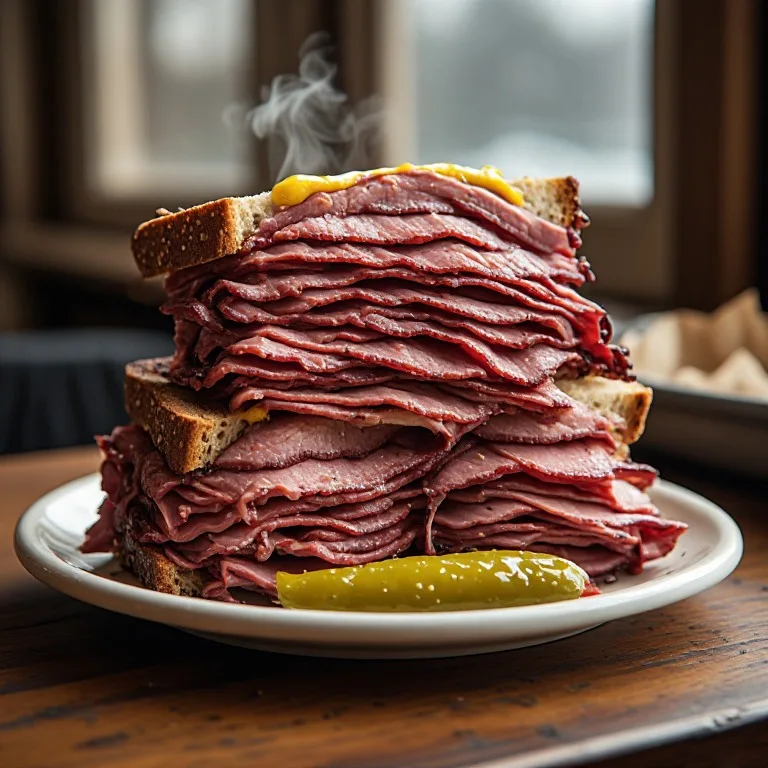
Katz’s carvers slice pastrami by hand at the counter, thick — roughly 1/4 to 3/8 inch — and pile it on the scale as they go. A sandwich gets approximately 5 to 6 ounces of meat. They lay it on a wide sheet of deli paper, apply yellow mustard to both bread slices, and close the sandwich without pressing it down.
The bread is not toasted. The pickle is served alongside on the paper, not inside the sandwich. There is no lettuce, no tomato, no onion, no cheese, no Russian dressing, and no coleslaw inside the sandwich — those are all things you can order as separate items from the menu. The pastrami is the point, and adding ingredients around it dilutes the point.
Common Mistakes
Skipping the desalination soak. A brisket pulled straight from the cure brine is intensely salty — the salt content at the surface is much higher than the interior. The 8- to 12-hour cold water soak equalizes the salinity throughout the meat and brings the exterior back to an appropriate seasoning level. If you skip this step, every bite will taste aggressively salty, not seasoned.
Using thick, white smoke. Thin, clean blue smoke (barely visible at the smoker stack) deposits the flavor compounds you want. Thick, white smoke deposits acrid creosote that coats the meat in a harsh, bitter layer. Let your fire fully establish before putting the meat on, and add wood in small amounts rather than loading the firebox.
Not checking for probe-tender. Temperature is a guide; probe-tender is the test. The collagen in beef plate converts to gelatin at different rates depending on fat content, grade, and the specific connective tissue distribution in that piece. Some plateau at 198°F probe-tender; others need 205°F. Use a thermometer for the smoke step (don’t go over 165°F before steaming) and use the probe for the steam step.
Slicing with the grain. Slicing with the grain — parallel to the muscle fibers rather than perpendicular — turns even properly cooked, tender pastrami into a chewy, stringy experience. Look at the surface of the brisket after resting: you can see the direction of the fibers. Your knife should cut across them at a right angle, not alongside them.
Under-piling the sandwich. Five to six ounces is not a luxury amount — it is the correct amount for the rye bread to meat ratio that makes the sandwich work. A thin layer of pastrami on a full slice of dense rye disappears into the bread. The pastrami should tower slightly above the bread edge before the top slice goes on.
If You Liked This, Cook These Next
If you enjoyed the cure-smoke-steam project, these use the same low-and-slow beef techniques:
- Copycat Franklin Barbecue Brisket — the Austin bark-and-smoke method on a whole packer brisket; the smoke and probe-tender lessons transfer directly.
- Copycat Chipotle Smoked Brisket — a faster, weeknight-friendly smoked-beef build if the 10-day cure feels like too much.
- Copycat Momofuku Bo Ssam — David Chang’s slow-roasted pork shoulder, another overnight-cure, hands-off showpiece for a crowd.