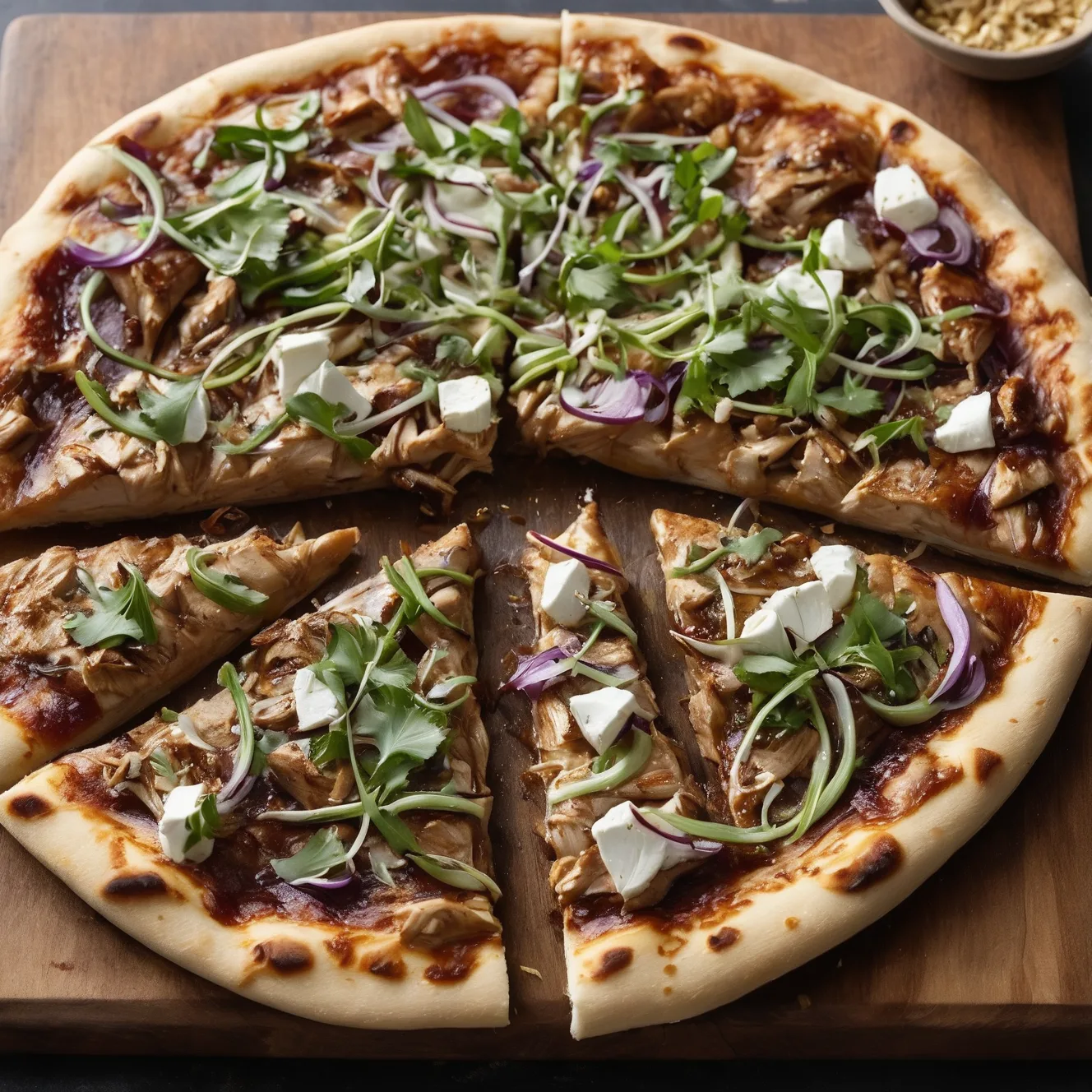
Copycat California Pizza Kitchen BBQ Chicken Pizza
Prep time: 20 min (plus 1 hr if making dough) Cook time: 12 min Servings: 4–6
California Pizza Kitchen opened in Beverly Hills in 1985, and their BBQ Chicken Pizza has been the chain’s top-selling item every year since. The premise was simple: treat pizza the way you’d treat any great flatbread — as a canvas for big flavors that wouldn’t otherwise show up in a pizzeria. BBQ sauce instead of tomato. Grilled chicken. Fresh herbs. It sounds obvious now, but in 1985 it was genuinely new.
The pizza is not hard to replicate at home, but there are two things almost every copycat version gets wrong: they skip the smoked gouda, and they bake the cilantro. Fixing both makes the difference between a pizza that tastes vaguely like CPK and one that tastes exactly like it.
The cheese: why smoked gouda is not optional
Mozzarella is the foundation of the cheese layer — its mild flavor and reliable melt make it the right base. But mozzarella alone doesn’t produce the depth of flavor that CPK’s pizza has. Smoked gouda is the variable. It melts slightly differently than mozzarella, creating a creamier, more cohesive pull. More importantly, it contributes a smoky richness that ties the whole pizza together — the BBQ sauce, the charred chicken, the sweetness of the red onion — into a coherent flavor instead of a list of toppings.
The ratio that works: 3 parts mozzarella to 1 part smoked gouda (1 cup mozzarella, ½ cup smoked gouda for a 12-inch pizza). Shred the gouda yourself — pre-shredded gouda is usually coated in anti-caking starch that prevents it from melting properly.
If smoked gouda is genuinely unavailable, smoked provolone is the best substitute. Plain (unsmoked) gouda works but loses the smokiness. All-mozzarella is wrong; that’s the most common copycat error in circulation.
The BBQ sauce: thin is everything
BBQ sauce is not tomato sauce. It contains significantly more sugar, which caramelizes and can burn in a hot oven. More critically, BBQ sauce holds moisture against the dough in a way that tomato sauce doesn’t — use too much and the bottom of the pizza stays wet even as the top looks done.
The fix is discipline with quantity: spread just enough sauce to coat the surface in a thin, translucent-ish layer. For a 12-inch pizza, ⅓ cup is the right amount. The sauce will caramelize lightly under the cheese during the bake, concentrating its flavor without making the crust soggy.
Flavor: you want sweet-smoky, not aggressively tangy or spicy. Sweet Baby Ray’s Original and KC Masterpiece are both reliable picks. If your sauce is very sweet, use slightly less — the red onion and smoked gouda add enough richness that the pizza doesn’t need extra sweetness from a generous sauce layer.
The chicken: grilled, not rotisserie
CPK describes it as “grilled white-meat chicken.” The grill (or at home, a cast iron over high heat) does two things that matter: it produces slight char on the outside that adds a faint bitterness that balances the sweet BBQ sauce, and it creates a firmer, drier surface that prevents the chicken from releasing steam into the pizza during the bake.
Season the chicken simply — garlic powder, smoked paprika, salt, pepper, olive oil. The BBQ sauce and smoked gouda are doing most of the flavor work; the chicken is primarily providing texture and protein. Cook to exactly 165°F and pull it off the heat. Rest for five minutes before cutting — the internal temperature will coast to 165°F during rest, and resting keeps the juices in the meat rather than running onto the cutting board.
Rotisserie chicken is a reasonable shortcut if you’re pressed for time. Shred it, warm it briefly in a dry skillet until the edges dry out slightly, and use it in place of grilled chicken. The texture is softer and the flavor milder — a workable substitute, not an equivalent.
The cilantro rule: always after, never before
Cilantro’s flavor comes from volatile aromatic compounds — linalool, geranyl acetate — that evaporate near instantly at high heat. A 12-minute bake at 500°F destroys all of them. What survives is cellulose and slightly bitter green pigment. This is why baked cilantro tastes like nothing, or worse, tastes faintly vegetal and flat.
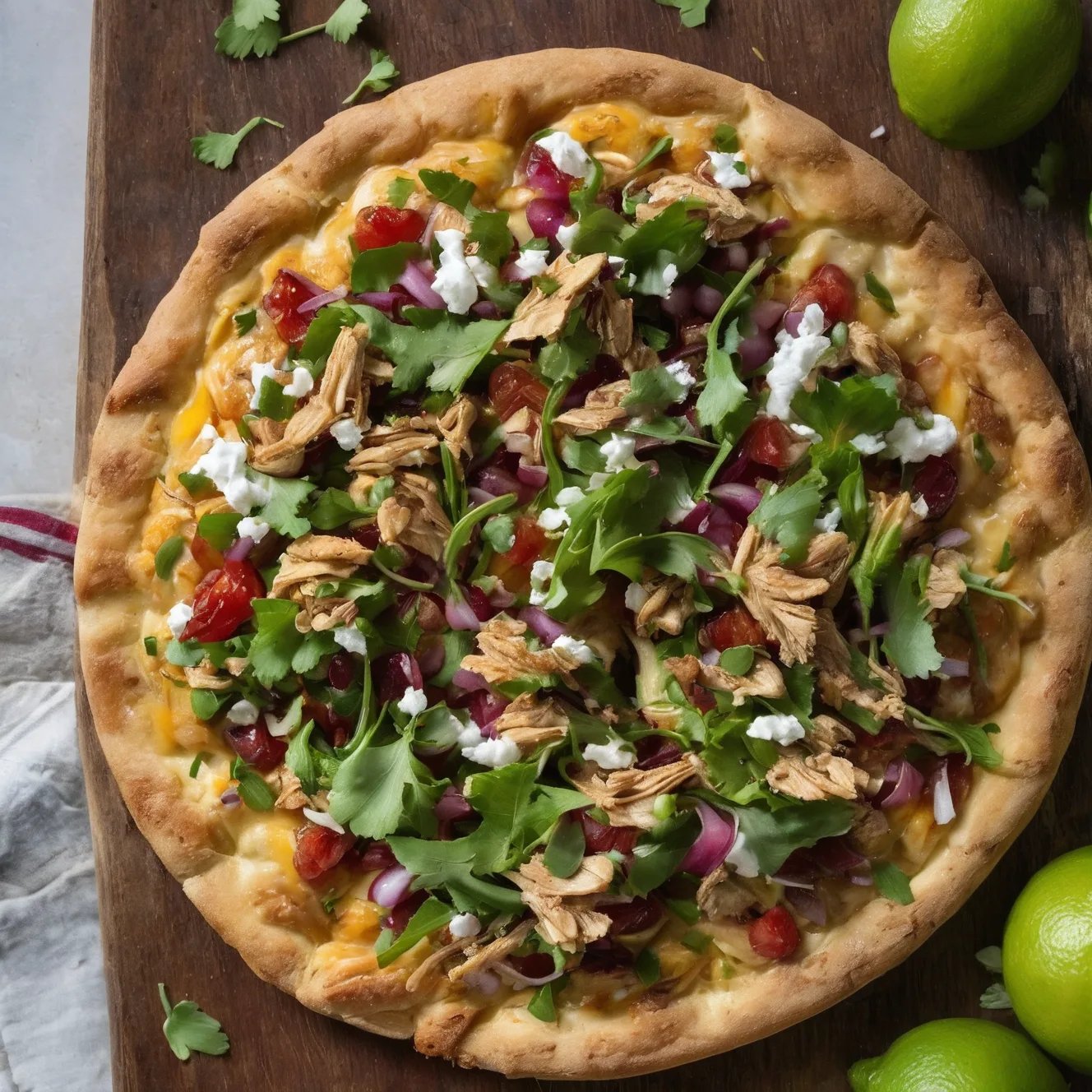
CPK adds cilantro as a finishing garnish — the same principle as adding basil to a Margherita pizza after the bake. You scatter it over the hot cheese within 60 seconds of pulling the pizza from the oven. The residual heat wilts the leaves slightly, which is exactly right — bright green, fragrant, and fresh-tasting. Any recipe that tells you to add cilantro before the pizza goes in is producing a different (lesser) result.
The red onion
Slice the red onion as thin as you can — ⅛ inch or thinner, essentially translucent. At this thickness, the slices soften completely in the oven and the sharpness converts to a mild sweetness at the edges where they contact the hot cheese. Thick-sliced red onion stays pungent and partially raw in 12 minutes, which overpowers the other flavors. If your knife skills are limited, a mandoline on the thinnest setting produces the right result instantly.
Oven setup: the hot surface is non-negotiable
CPK uses a commercial deck oven with a stone surface that runs consistently hot. At home, the substitute is a pizza stone (or a heavy steel baking sheet) preheated in a 500°F oven for at least 30 minutes. The hot surface is what produces the blistered, slightly charred bottom crust. Without it, the heat has to travel through the cool air of the oven to bake the bottom of the pizza, which takes longer — long enough that the top finishes before the bottom does, leaving you with overcooked cheese and a pale, slightly doughy crust. If you don’t have a pizza stone, an inverted heavy baking sheet preheated for 30 minutes is the next best option.
What to expect vs. the restaurant
At CPK, The Original BBQ Chicken Pizza runs approximately $22–23 as of 2026 for the standard size. Per CPK’s own nutritional data (via fastfoodnutrition.org), one slice of the hand-tossed version is 190 calories, 5g fat, 25g carbs, 11g protein, 480mg sodium. The full pizza (6 slices) is approximately 1,140 calories. The home version in this recipe is slightly higher per serving because the chicken portion is generous, but the ingredient cost is roughly $12–14 total — about half the restaurant price for the same 4–6 servings.
Tips and variations
-
Make-ahead dough. After the initial rise, punch the dough down, wrap it tightly in plastic wrap, and refrigerate for up to 3 days. Pull it out 30 minutes before you plan to stretch it. Cold-fermented dough has better flavor from the extended yeast activity.
-
Add bacon. Some CPK locations serve a BBQ Chicken Bacon Pizza — 3 strips of crispy crumbled bacon scattered over the cheese before baking. The smokiness reinforces the smoked gouda, and the fat renders into the cheese layer. This is an improvement, not just a variation.
-
Thai-influenced swap. Replace the BBQ sauce with a thin layer of peanut sauce (thinned with a little water so it spreads), swap the smoked gouda for a blend of mozzarella and a small amount of fresh mozzarella, and add bean sprouts and julienned carrots after the bake along with the cilantro. This is the direction of CPK’s Thai Chicken Pizza, their second most iconic pie.
-
Crispy thin crust version. Roll the dough thinner than you think necessary — aim for ⅛ inch — and bake on parchment directly on the hot stone at 500°F. The crust will blister and crisp rather than chew. This is closer to the frozen CPK version than the restaurant, but it is excellent in its own right.
-
Green onions (optional). The authentic CPK pizza finishes with cilantro only — no scallions. But if you like the extra allium bite, a couple of thinly sliced green onions scattered on with the cilantro after the bake is a common home addition. It’s a personal preference, not part of the restaurant recipe.
-
Reheating. Reheat leftover slices in a dry cast iron skillet over medium heat with a lid on — 3 to 4 minutes. The bottom of the crust crisps up and the cheese melts back without the sogginess that a microwave produces. The cilantro on leftover slices will be wilted; add a few fresh leaves when reheating.