


Pin It

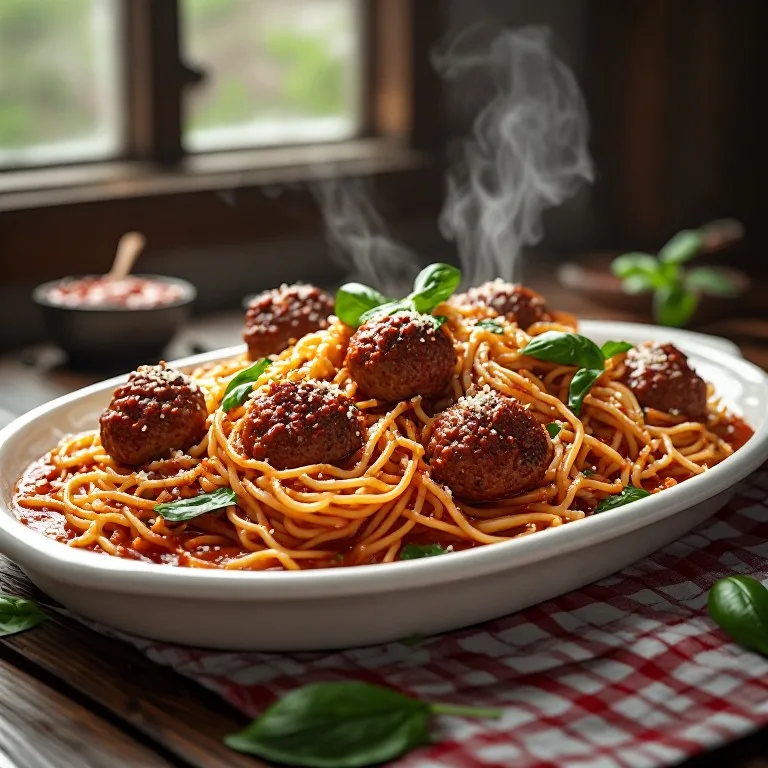
Carmine's Spaghetti and Meatballs (The NYC Family-Style Version)

Carmine's Spaghetti and Meatballs (The NYC Family-Style Version)
Jump to Recipe
Prep 25 min Cook 55 min Serves 6
Quick answer: For the meatballs: tear 4 slices of crustless white bread into a bowl, pour over 3/4 cup whole milk, and let soak 5 minutes until mushy. Add 1 1/2 lb ground beef (80/20) and 1/2 lb ground veal, 2 eggs, 1 cup grated Pecorino Romano, 3 tbsp chopped parsley, 2 tbsp chopped fresh basil, 2 minced garlic cloves, 1 1/2 tsp salt, and 1/2 tsp black pepper. Mix gently just until combined — overworking makes them dense. Roll into 12 large balls (about 2 inches each). Pan-fry in 1/4 inch of olive oil over medium-high heat, 3 minutes per side, until deeply browned. For the sauce: sauté 1/2 diced onion and 5 minced garlic cloves in 3 tbsp olive oil, then add two 28-oz cans crushed San Marzano tomatoes, 1 tsp salt, 1/2 tsp sugar, and a pinch of red pepper flakes. Simmer 20 minutes, nestle in the browned meatballs, and simmer on low, partially covered, 30 more minutes. Cook 1 lb spaghetti to al dente; toss with sauce, plate family-style, and top with basil and Romano.

Shop the tools

Gear matched to this recipe. These are Amazon affiliate links — we may earn a small commission if you buy, at no extra cost to you.

As an Amazon Associate, Copycat Spices earns from qualifying purchases. Product images are generic illustrations, not the exact item listed.

Carmine's Spaghetti and Meatballs (The NYC Family-Style Version)

Make Carmine's famous spaghetti and meatballs at home: oversized beef-and-veal meatballs with Pecorino Romano and a milk-soaked bread panade, pan-fried then simmered in a rich San Marzano sauce, served family-style over a pound of spaghetti. Feeds six for under $20.

Medium Prep: 25 min Cook: 55 min Total: 1h 20m6 servings ~$4.50/serving
Prep25 min
Cook55 min
Total1h 20m
Servings
6
At home~$4.50/serving
vs
Restaurant~$20.25/serving
You save ~78%

The Story Behind the Recipe

Artie Cutler opened Carmine's in 1990 at 2450 Broadway on the Upper West Side, betting that New York was ready for the return of real Italian-American Sunday dinner — enormous shared platters, checkered tablecloths, a menu that did not change with the seasons because it had never needed to. He was right. The restaurant filled immediately. A Times Square location followed in 1994, then outposts in Las Vegas, Washington DC, and Atlantic City. For most of the past 35 years, getting a reservation has required planning ahead, and the restaurant has expanded while keeping the original family-style format unchanged.

The spaghetti and meatballs is the most ordered dish on the menu. One family-style portion — roughly $60 at the restaurant — is sized for two to four people: a wide bowl piled with a full pound of spaghetti, ten to twelve large meatballs, and enough sauce to coat everything generously. Carmine's published recipe builds the meatballs on a beef-and-veal blend bound with milk-soaked white bread and a full cup of grated Romano, rolled large, pan-fried to a crust, then finished directly in the sauce so they absorb the tomato as it thickens. The sauce is not a quick marinara — it simmers long enough to mellow the tomatoes and pick up the fat and fond the meatballs release. At home, the same amount costs under $20 and takes about 80 minutes start to finish.

Nutrition Facts

Per serving (6 servings)
Calories650
Total Fat25g
Total Carbs66g
Dietary Fiber5g
Sugars9g
Protein40g
Sodium1150mg

* Estimated values based on standard recipe preparation. Actual values may vary.

Ingredients

  • Meatballs
  • For frying meatballs
  • San Marzano tomato sauce
  • Pasta
  • To serve

Instructions

💡
Pro tip: This recipe tastes even better the next day. The flavors need time to meld together in the fridge.
❄️
Storage: Keeps in an airtight container in the fridge for up to 2 weeks. Freezer-friendly for up to 3 months.
🎃 Free Halloween cookbook — download now The Copycat Halloween Cookbook A ready-made, photo-illustrated PDF of our best halloween copycat recipes — free to download, no building required. Pay what you want to support if you love it.

Free PDF — instant download. We'll also send new seasonal copycat recipes now and then; unsubscribe anytime. Or just download it →

Carmine’s Spaghetti and Meatballs (The NYC Family-Style Version)

Prep time: 25 min Cook time: 55 min Servings: 6

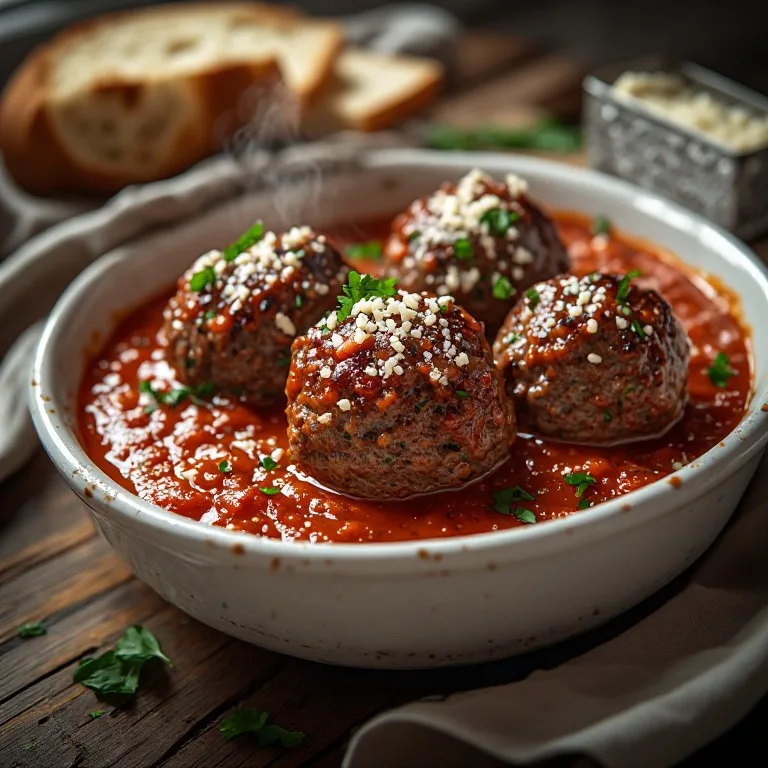
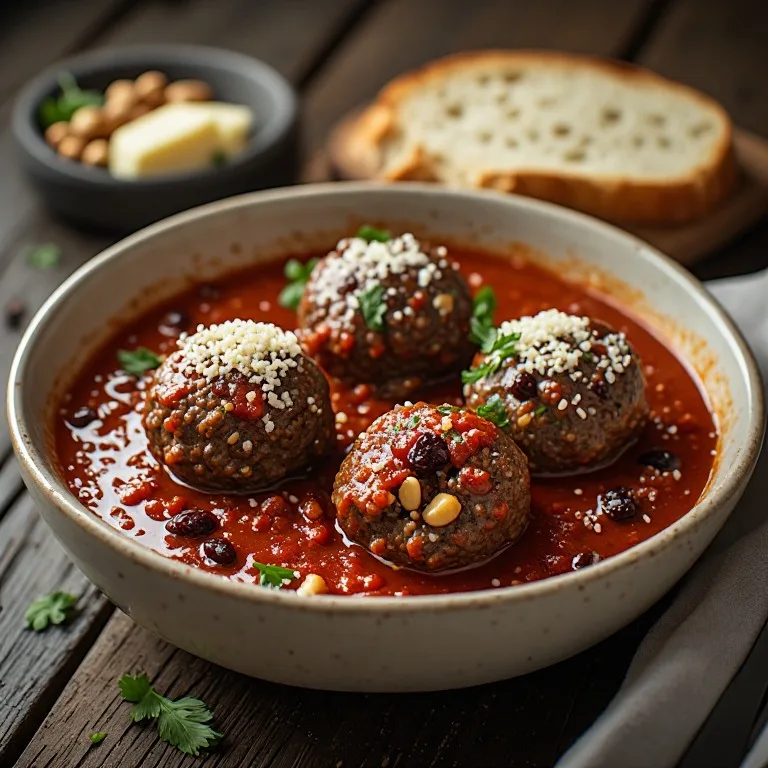
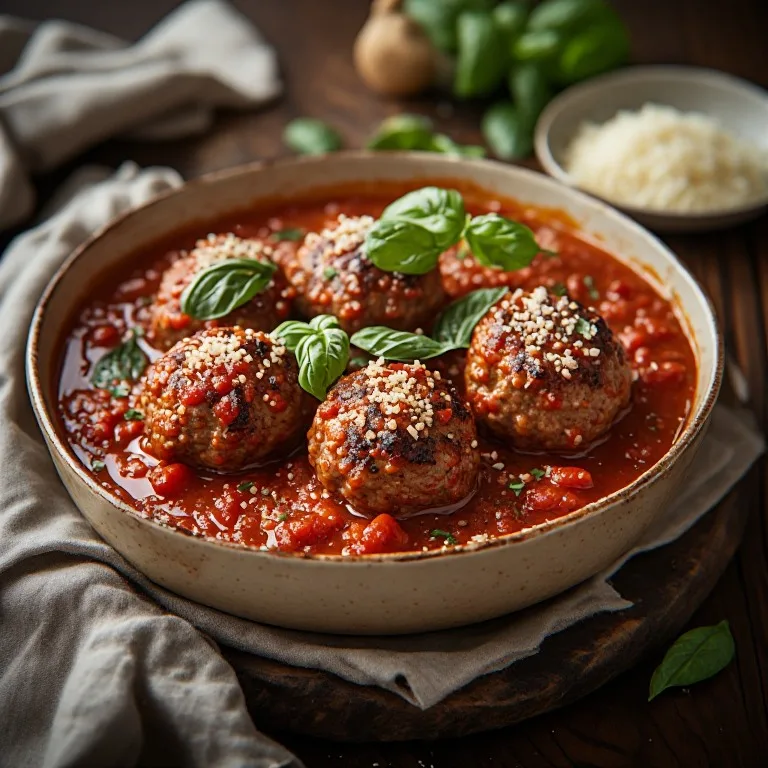
Carmine’s spaghetti and meatballs is the dish that explains why the restaurant has stayed packed for most of its 35-year history. The meatballs are large — built on a beef-and-veal blend with a cup of Pecorino Romano and a milk-soaked bread panade, rolled to golf-ball size, pan-fried until deeply browned, then finished in the sauce so they absorb the tomato as it simmers. The sauce is a straightforward San Marzano tomato sauce that runs long enough to pick up the fat and fond from the frying pan. At the restaurant, a family-style portion for four runs about $60. This recipe feeds six for under $20.

The Story Behind the Recipe

Artie Cutler opened Carmine’s in 1990 at 2450 Broadway on the Upper West Side, betting that New York was ready for the return of real Italian-American Sunday dinner — enormous shared platters, checkered tablecloths, a menu built on classics that had never needed updating. He was right. A Times Square location followed in 1994, then outposts in Las Vegas, Washington DC, and Atlantic City. For most of those 35 years, getting a reservation has meant planning ahead, and the family-style format has stayed the same since the first night: everything arrives at the center of the table, sized for the whole party.

The spaghetti and meatballs is the most-ordered item on the menu. One family-style portion is sized for two to four people: a wide bowl piled with a full pound of spaghetti, ten to twelve large meatballs, and enough sauce to coat everything. The meatballs are the work — a beef-and-veal blend mixed gently with milk-soaked white bread (the panade that keeps them tender) and a full cup of grated Romano, pan-fried to build a crust, then simmered directly in the sauce so the fat they release thickens and enriches the tomato. The total time is about 80 minutes, and the only real skill required is not overworking the meatball mix.

FAQ

Can I make the meatballs ahead? Yes — roll and chill them in the refrigerator for up to 24 hours before frying. The rest firms the mixture further and reduces the chance of any falling apart in the pan. You can also pan-fry them a day ahead and refrigerate; drop them into freshly made sauce and simmer the full 30 minutes to reheat and finish.

Why does the sauce simmer with the meatballs for 30 minutes instead of just serving them on top? The finish-in-sauce step is what separates this from assembling two separate components. During those 30 minutes, the beef-and-veal fat from the meatballs emulsifies into the tomatoes, the body of the sauce enriches, and the meatballs absorb tomato all the way through. The result is a sauce that tastes like it simmered with meat all day and meatballs that are moistened with tomato to the core. If you skip this and drop fried meatballs on quickly made sauce, both elements taste correct individually but disconnected together.

What pasta works besides spaghetti? Carmine’s serves this on spaghetti, but it also works on rigatoni (the sauce clings inside the tubes), bucatini (a thicker hollow spaghetti that holds more sauce per forkful), or pappardelle (wide ribbons, excellent with the large meatballs). Short pastas work, but the visual of long noodles wrapped around large meatballs is part of the Carmine’s experience. For the all-beef-veal-pork version of this meatball, see our Rao’s famous meatballs.
🥗

Make It Healthier

Love Carmine's Spaghetti and Meatballs (The NYC Family-Style Version) but want a lighter version? Try these simple swaps:

  • ✓Use 90/10 lean ground beef instead of 80/20 — you cut roughly 5g of fat per serving, and the milk-soaked bread panade and the veal keep the meatballs tender even with leaner meat.
  • ✓Cut the Pecorino Romano to 2/3 cup and salt the meatball mix lightly — Romano is very salty, so this is the single biggest lever for bringing the sodium down without changing the character of the dish.
  • ✓Make the sauce with one 28-oz can of tomatoes instead of two and serve over zucchini noodles (spiralized, blanched 60 seconds) for a third of the pasta carbs — the meatballs and sauce stay the same and the sauce-to-noodle ratio actually improves.
  • ✓Serve two meatballs per person instead of the restaurant's three — that's roughly 120 fewer calories per plate, and the sauce and pasta are still generous.

Frequently Asked Questions

What makes Carmine's meatballs different from other Italian-American meatballs?

Size, the bind, and the finish. Carmine's meatballs are large — roughly golf-ball to racquetball size — rather than the smaller tablespoon-sized variety. They are built on a beef-and-veal blend (no pork) bound with milk-soaked white bread rather than dry crumbs, and carry a full cup of grated Pecorino Romano for sharp, salty depth. Most importantly, they are pan-fried first to build a crust, then dropped into the sauce to finish cooking and absorb the tomato. The frying step creates browned fond that dissolves into the sauce, adding depth that straight simmering never achieves.

Why soak white bread in milk instead of using dry breadcrumbs?

The milk-soaked bread (a panade) is what keeps a large meatball tender instead of dense. The soaked bread does two things: the starch coats the meat proteins so they can't bind into a tight, rubbery matrix, and it holds moisture that would otherwise cook out during frying and the 30-minute simmer. Carmine's uses crustless white sandwich bread torn and soaked in whole milk until mushy — not dry crumbs. If you only have dry breadcrumbs, use about 3/4 cup soaked in 1/2 cup milk, but torn fresh bread gives the softer, looser texture the restaurant is known for.

Does Carmine's use pork or veal in the meatballs?

Veal, not pork. Carmine's published signature meatball is a beef-and-veal blend — roughly 3 parts ground beef to 1 part ground veal — with no pork. The veal adds a fine, delicate texture and a mild flavor that keeps the large meatball from tasting heavy. This is the main point that separates Carmine's from Rao's, which uses all three meats (beef, veal, and pork). If you can't find ground veal, a 1:1 beef-and-pork blend is the closest easy substitute, though the result leans slightly sweeter and heavier than the Carmine's original.

What type of tomatoes should I use for the sauce?

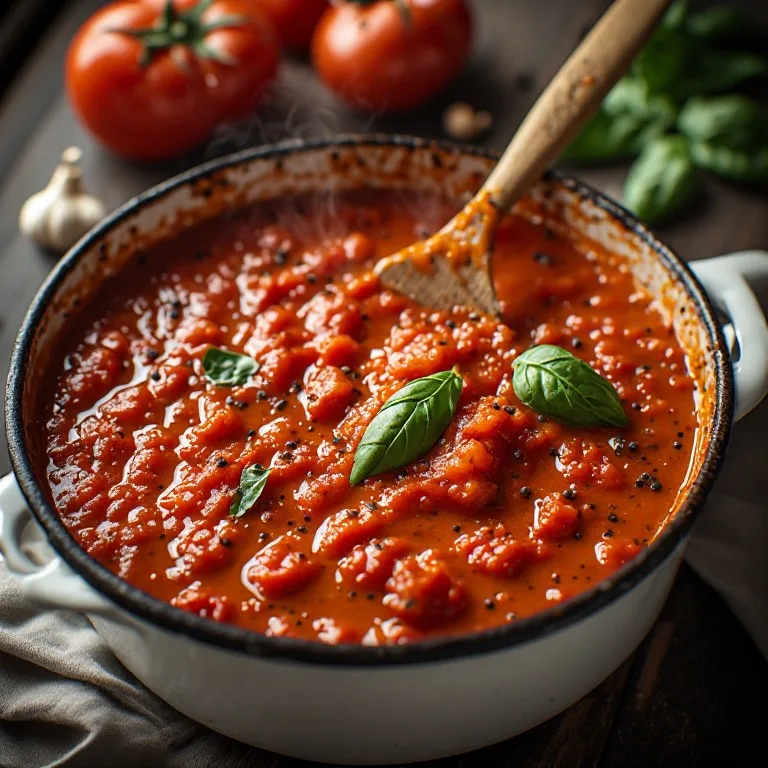
San Marzano tomatoes — either the Italian DOP-certified cans or a good American grown-in-San-Marzano-style brand. The key quality is low acidity and dense flesh with minimal seeds and gel; San Marzanos have both. Crushed tomatoes in heavy purée give the right consistency for this sauce — smooth enough to coat pasta without being watery. Avoid diced tomatoes (too chunky) or purée alone (too thin). If you can only find whole peeled tomatoes, crush them by hand directly into the pan; hand-crushing gives better texture than a blender.

Can I bake the meatballs instead of pan-frying them?

You can, but you'll lose flavor. Pan-frying creates the Maillard browning on the exterior that produces dozens of flavor compounds unavailable from the moist heat of an oven. Baking at 425°F for about 20 minutes produces a meatball that is browned but lacks the crust and fond that pan-frying delivers. If you must bake (for a cleaner kitchen), use a wire rack set over a sheet pan, get the oven very hot (425–450°F), and still finish the meatballs in the sauce for the full 30 minutes — the extended simmer is not optional.

How do I keep the meatballs from falling apart when I pan-fry them?

Three things: don't overwork the mix, don't flip too early, and use enough oil. Overworking develops the meat proteins into a paste that shrinks and cracks as it cooks. Mix just until the ingredients come together — about 30 seconds by hand. When you fry, let each meatball sit undisturbed for a full 3 minutes before turning; the crust that forms is what holds the ball together. Use at least 1/4 inch of oil so the meatballs are partially submerged, which browns them evenly and reduces sticking. Chilling the rolled meatballs for 10 to 15 minutes before frying also helps them hold their shape.

How is Carmine's tomato sauce different from a quick marinara?

Time and layering. A quick marinara — garlic, tomatoes, salt, 20 minutes — produces a bright, acidic, fresh-tasting sauce. Carmine's sauce starts with onion and garlic, then simmers with the browned meatballs for another 30 minutes. During that time, the fat from the meatballs emulsifies into the sauce, the tomatoes lose more of their raw edge, and the fond from the pan-frying step integrates fully. The result is richer and more complex without being heavy — less the bright tomato pop of marinara, more the savory depth of a slow Sunday sauce.

How does Carmine's compare to Rao's for spaghetti and meatballs?

Both are NYC Italian-American institutions, but the meatballs differ. Rao's (East Harlem, famously impossible to get into) uses a three-meat blend — beef, veal, and pork — plus the signature trick of working up to 2 cups of lukewarm water into the mix for an unusually tender, nearly baseball-sized meatball, pan-fried hard and braised briefly in their bright marinara. Carmine's uses a beef-and-veal blend (no pork), a cup of Romano, and a milk-soaked bread panade, served in a longer-simmered family-style sauce that absorbs the meatball fat. Both use Pecorino Romano and both pan-fry before saucing; the headline difference is the third meat and the water trick at Rao's versus the straightforward beef-veal, bake-in-the-sauce approach at Carmine's.

Love this recipe? Share it!

Free PDF: our 12 most-wanted copycat recipes — instant download.

Made it? Buy us a coffee

Every recipe here is free, with no paywalls. If this one was a hit at your table, a small tip keeps new copycats coming.

$

Carmine's is a trademark of its owner, used here only to describe the dish this recipe recreates. This is an independent copycat written in our own words — Copycat Spices is not affiliated with, endorsed by or sponsored by Carmine's.

Ratings & Reviews

—
No ratings yet

Rate this recipe

Click a star to rate

Leave a Review

0/500

CS

Copycat Spices Editorial

Researched + fact-checked. Every recipe on Copycat Spices is built from published sources — official ingredient lists, brand-published recipes, interviews and food-science references — and fact-checked before it goes live, then written as clear, step-by-step instructions for home cooks of all skill levels.

Learn more about our mission →