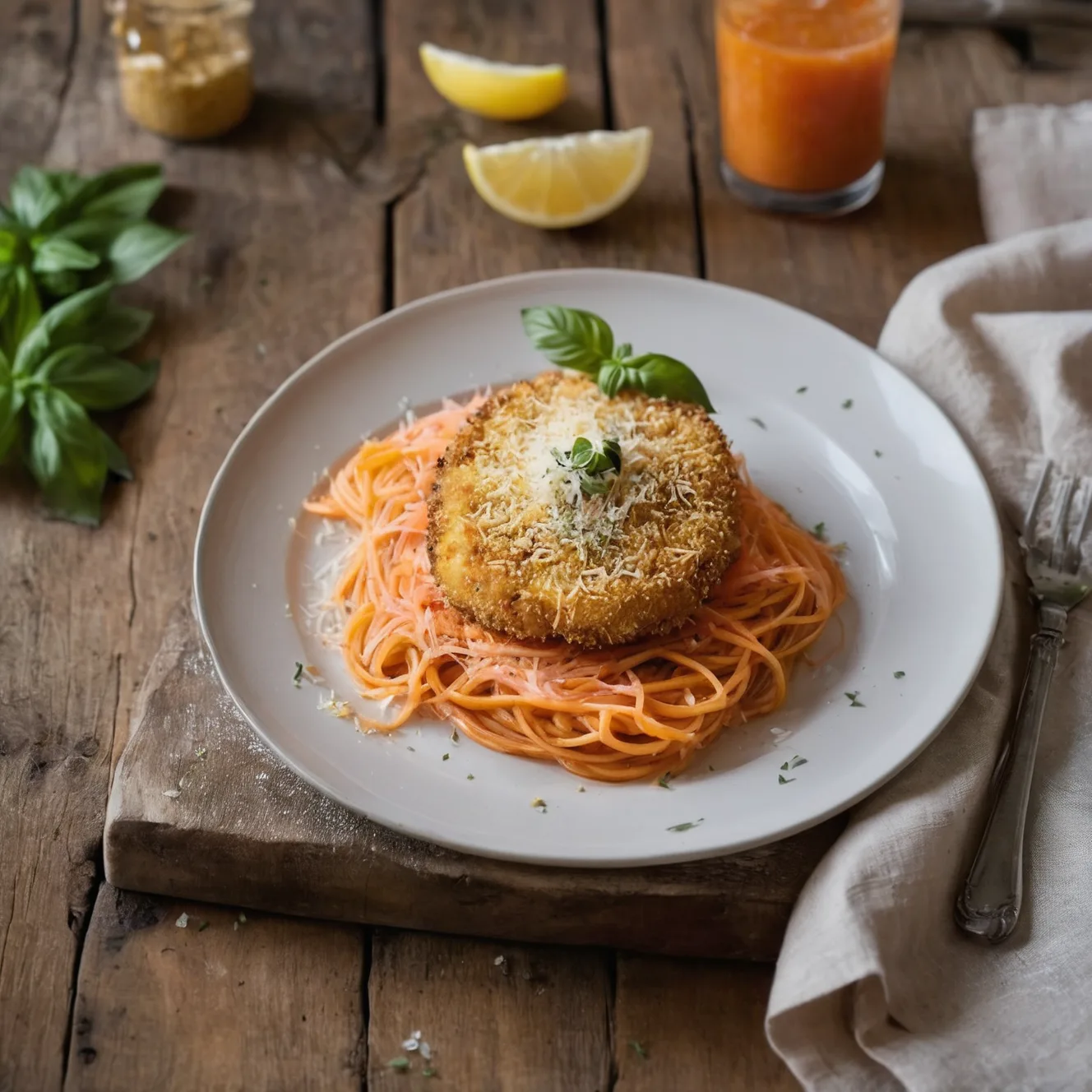
Copycat Cheesecake Factory Crusted Chicken Romano
TL;DR: Very thin chicken (¼ inch), coated in Pecorino Romano + Parmesan + panko, pan-fried to a shatteringly crispy crust, over spaghetti in a creamy tomato sauce (marinara + heavy cream). The Romano is the entire point — do not substitute Parmesan alone. 20 minutes active, 30 minutes cook. About $7–9 per serving at home vs. $22–27 at the restaurant.
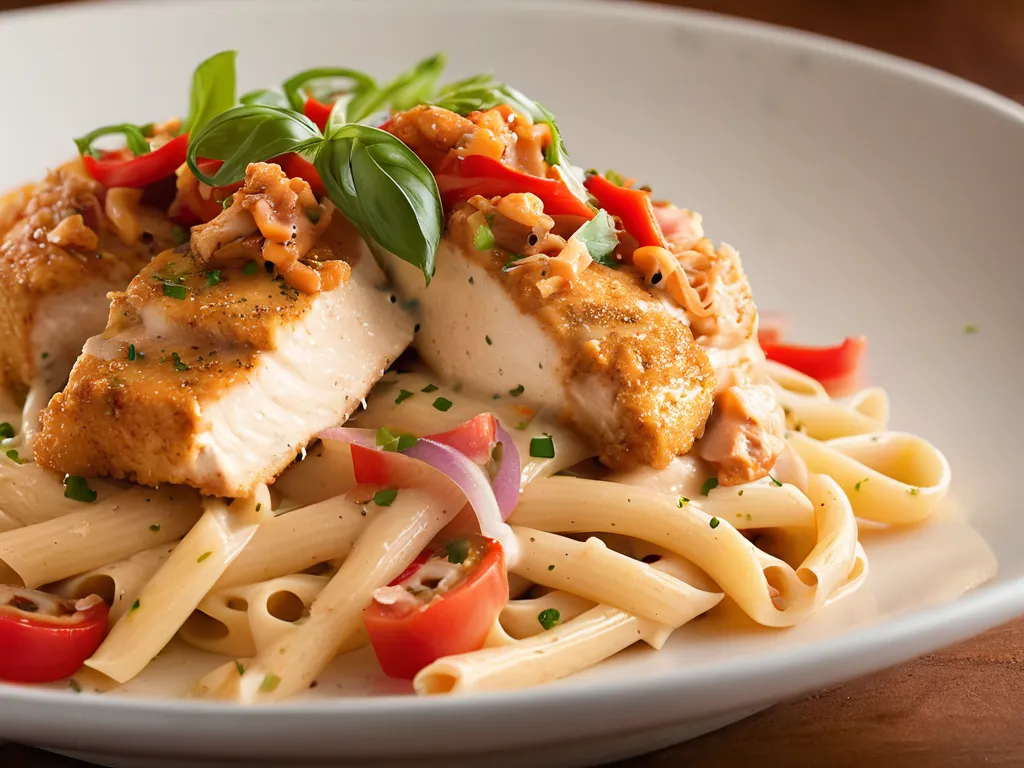
Cheesecake Factory has several crispy-coated chicken dishes on its menu, and they’re easy to confuse from a distance. Crusted Chicken Romano is not Chicken Bellagio, not Chicken Piccata, and not Louisiana Chicken Pasta. What makes it its own dish is the cheese in the crust: Pecorino Romano, not Parmesan. The distinction matters more than you’d expect.
The Romano Difference
Pecorino Romano is an aged sheep’s milk cheese from Italy. It is sharper, saltier, more pungent, and more aggressively flavored than Parmesan (which is cow’s milk, milder, and nuttier). When Romano cheese hits a hot pan, it melts faster and creates a caramelization that plain panko or even Parmesan can’t match — a crust that shatters when you cut into it and then immediately releases an intense savory note that reads as “more than chicken” without you being able to identify exactly why.
Most copycat recipes online use Parmesan alone, or Romano alone without panko. The restaurant version uses both Romano and Parmesan in the crust: Romano for the flavor and caramelization, Parmesan for body and binding, and panko for the structural crunch underneath. Get all three in the mix or the crust won’t behave correctly.
The Chicken Thickness
This is the other variable most home cooks get wrong. The chicken needs to be pounded to ¼ inch — significantly thinner than a standard pounded chicken breast (which is usually ½ inch for dishes like schnitzel or Chicken Bellagio). At ¼ inch:
- The cooking time is very short: 3–4 minutes per side at medium-high heat
- The crust-to-chicken ratio is high — each forkful has more Romano crust relative to the meat
- The chicken stays moist because the brief cooking time doesn’t dry it out
- The overall portion is flatter and wider, which is the restaurant’s plating shape
If you pound to ½ inch, the dish will still be good but it won’t be the same. The thinness is structural to the dish.
The Sauce: A Light Tomato Sauce, Enriched
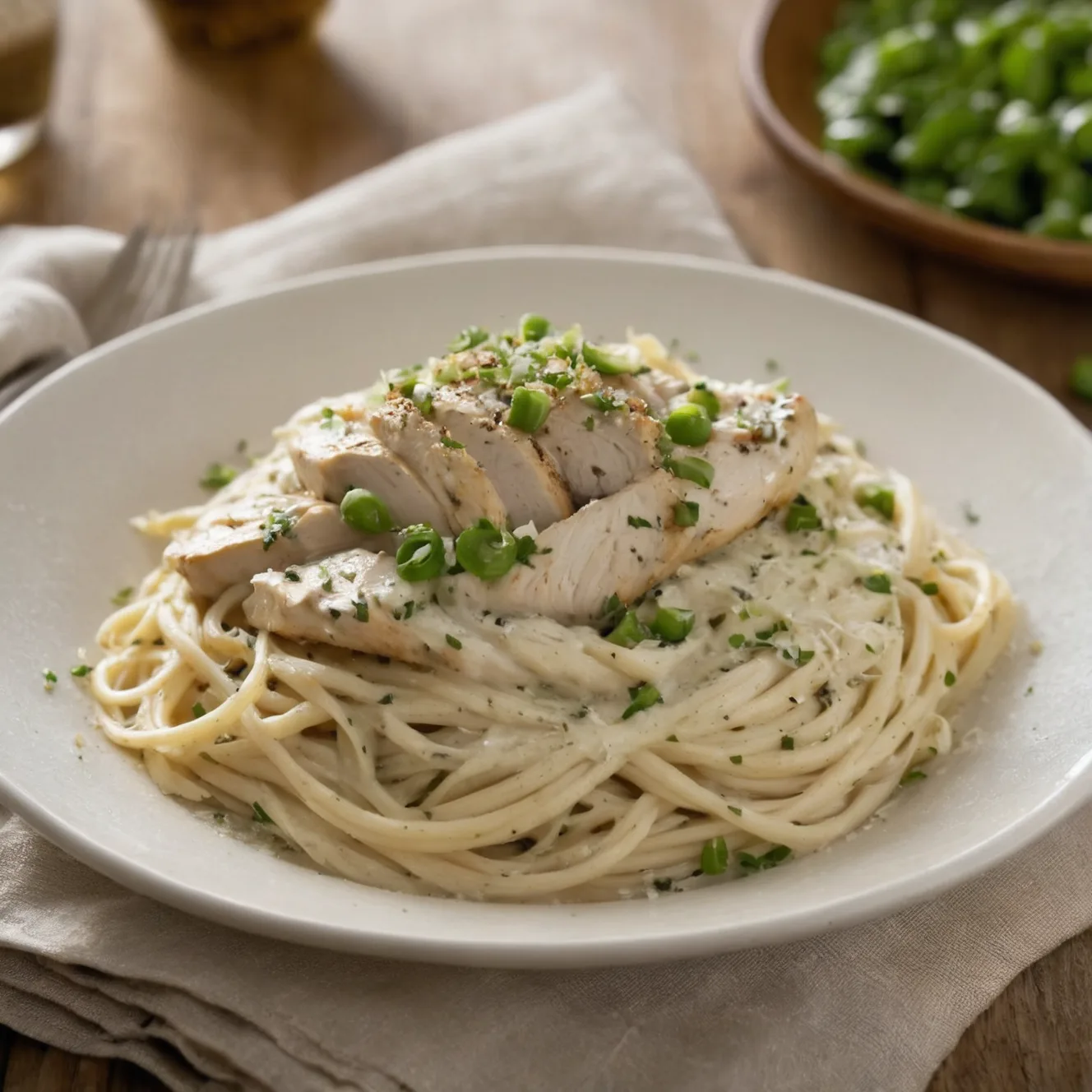
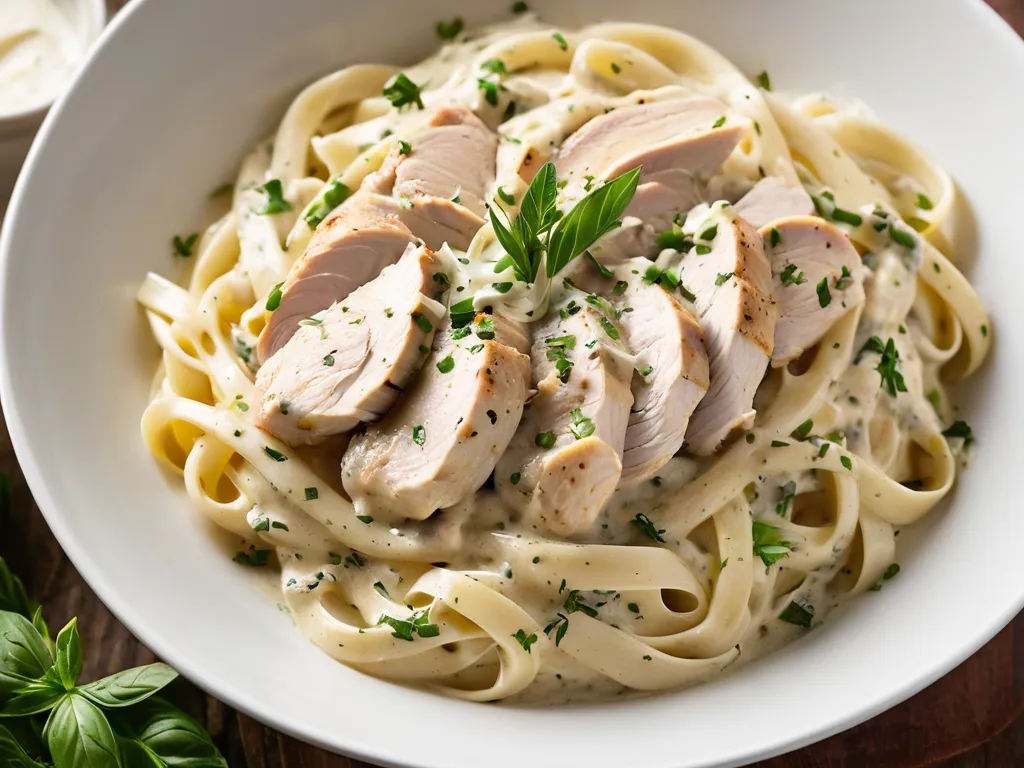
The Cheesecake Factory’s menu describes the dish as chicken “served with pasta in a light tomato sauce.” So the sauce is tomato-based — not a white alfredo or Parmesan cream. Where home cooks differ is how far to take it: most of the best copycats (this recipe included) enrich that “light tomato sauce” with a little cream, turning it into a creamy tomato sauce that clings to the pasta. The base is a good-quality marinara (jarred works well; Rao’s or Victoria are both clean options without added sugar) loosened with heavy cream and a splash of chicken broth. The finished sauce is pale coral to light orange, with both the brightness and slight acidity of tomato and the richness and body of cream.
Want to stay closer to the menu’s “light” wording? Use half the cream, or skip it and serve a straight marinara — the crispy Romano crust carries plenty of richness on its own. (A few copycats go a different direction entirely with a lemon-butter cream; that’s a variation, not the tomato-based original.)
Whichever sauce you make, the key technique is to sauce the pasta rather than the chicken. Toss the spaghetti in two-thirds of the sauce so it’s coated, then serve the remaining third pooled around the chicken on the plate. This way the crust stays dry and crispy rather than softening from the bottom up.
Cost Comparison: Home vs. Restaurant
| Cheesecake Factory | Homemade (4 servings) | |
|---|---|---|
| Dinner portion | $22–27 | — |
| Lunch portion (M–F, 11–2) | ~$14.95 | — |
| Full batch (4 dinner plates) | $88–108 | ~$28–36 |
| Per serving | $22–27 | ~$7–9 |
| Savings per plate | — | ~$15–20 |
How Chicken Romano Differs from the Other CF Chicken Dishes
The Cheesecake Factory has three crispy-coated chicken entrées, and they are meaningfully different:
| Chicken Romano | Chicken Bellagio | Louisiana Chicken Pasta | |
|---|---|---|---|
| Crust | Romano + Parmesan + panko | Parmesan + panko | Parmesan + panko (Cajun-seasoned) |
| Sauce | Tomato-based — light tomato on the menu, creamy tomato in most copycats | Parmesan cream (no tomato) | Cajun spiced cream sauce |
| Pasta | Spaghetti | Angel hair (basil oil) | Bow-tie pasta |
| Garnish | Basil | Prosciutto crown + arugula salad | Mushrooms, roasted peppers |
| Flavor character | Sharp, savory, Italian-American | Rich, elegant, multi-element | Spicy, bold, American Cajun |
| Complexity | Straightforward | Multi-component | Moderate |
Tips for a Perfect Crust
- Use freshly grated Romano and Parmesan. Pre-shredded cheese has anti-caking agents that affect how the crust adheres and caramelizes. A wedge and a box grater add one minute of prep and produce a noticeably better crust.
- Let the breaded cutlets rest 5 minutes before frying. This dries the surface slightly and lets the crust bond to the egg layer, which means less falls off in the pan.
- Don’t move the chicken until it releases naturally. A crust stuck to the pan is telling you it’s not ready. When the Romano has caramelized properly, the cutlet will release cleanly — around 3 minutes at medium-high in a preheated pan. Moving it early tears the crust.
- Fry at medium-high, not high. High heat browns the outside before the chicken cooks through; medium-high lets the crust develop fully while the thin cutlet finishes cooking.
- Use cast iron or stainless steel, not nonstick. The Romano cheese needs direct contact with a hot surface to caramelize. A nonstick pan can’t get hot enough at its safe operating temperature.
Storage and Reheating
The chicken and pasta store separately. Keep the sauced spaghetti in a sealed container for up to 2 days; reheat with a splash of cream or marinara over medium-low heat. Reheat the chicken cutlets in a 375°F oven for 10–12 minutes on a wire rack — not in the microwave, which turns the crust soft. Store the components separated rather than plated; assembled plates become soggy overnight.
More Cheesecake Factory Copycat Recipes
- Copycat Cheesecake Factory Chicken Bellagio — the other CF crispy-coated chicken: Parmesan-panko crust, prosciutto crown, lemony arugula, and a separate parmesan cream sauce with basil angel hair
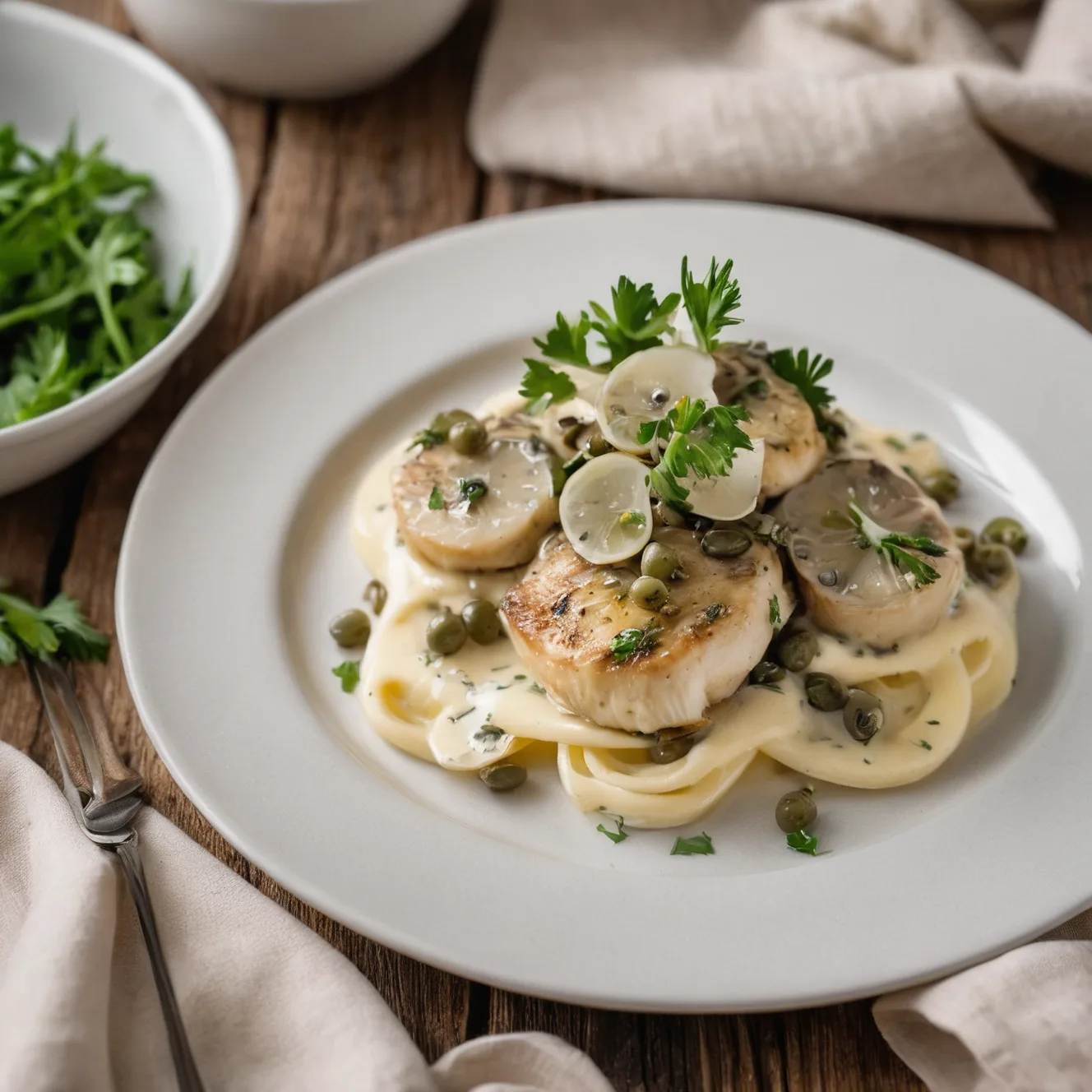
- Copycat Cheesecake Factory Chicken Piccata — lighter than Romano: lemon-caper butter sauce, no cream, no breading
- Cheesecake Factory Louisiana Chicken Pasta — Cajun-spiced crispy chicken over bow-tie pasta in a spicy cream sauce; the boldest of CF’s chicken-pasta dishes
- Copycat Cheesecake Factory Chicken Madeira — pan-seared (not breaded) chicken with mushrooms, asparagus, and mozzarella in a Madeira wine sauce
- See all Cheesecake Factory copycat recipes →