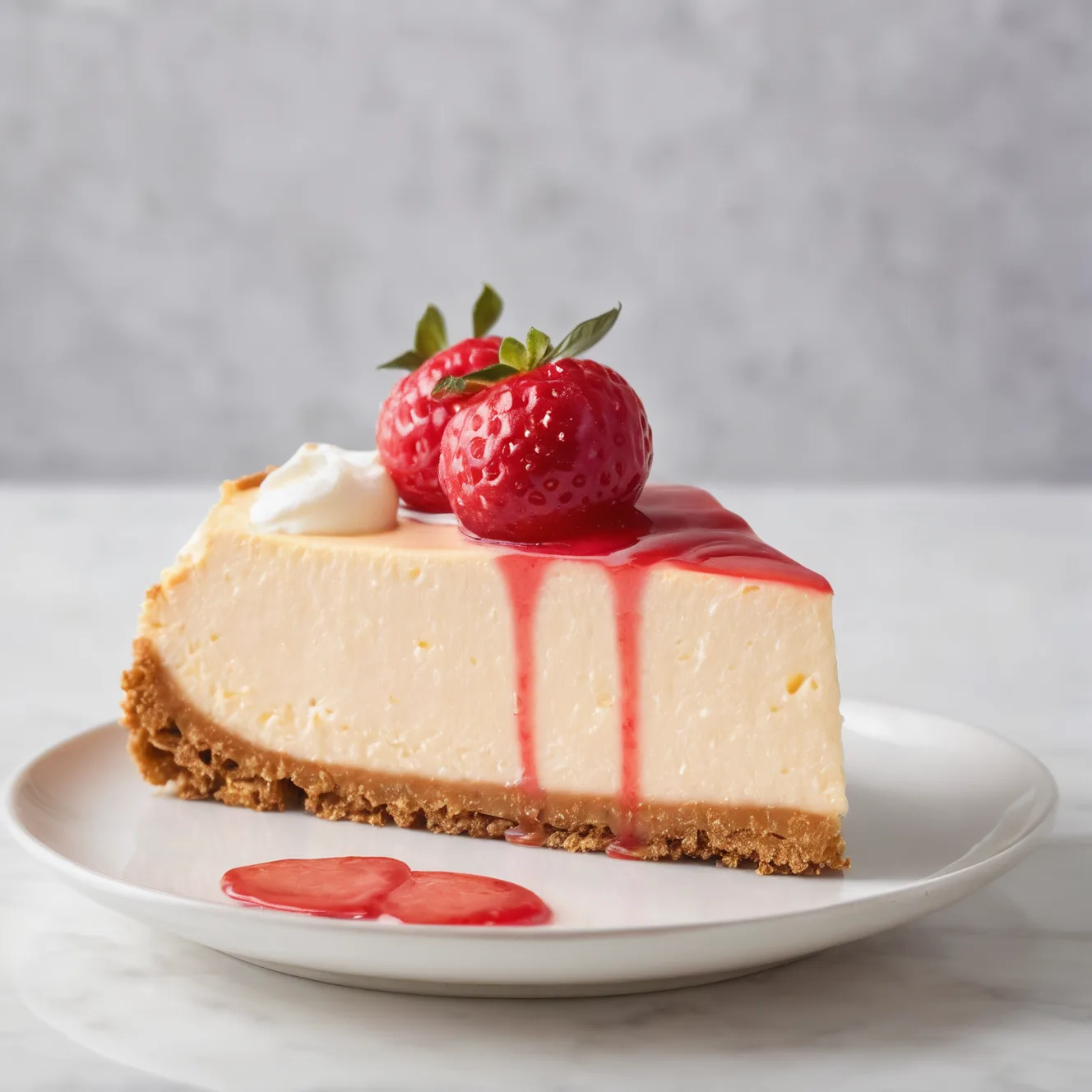
Copycat Cheesecake Factory Fresh Strawberry Cheesecake
Prep time: 40 min (plus overnight chill) Cook time: 70 min Servings: 10
The Fresh Strawberry Cheesecake is the Cheesecake Factory’s most popular flavor and has been for more than 45 years — a claim they make on every menu. It is not a strawberry-flavored cheesecake. It is the Original, their classic New York-style base, topped with glazed fresh strawberries. The cheesecake underneath is identical slice for slice to the Original. What changes is everything on top.
Understanding that distinction is the first step to replicating it correctly. The base recipe does not need tweaking for the strawberry version — the same four packages of cream cheese, the same full cup of sour cream, the same sweetened sour cream cap. What this recipe focuses on is the topping technique that most home versions get wrong.
The Glazed Strawberry Topping: What “Glazed” Actually Means
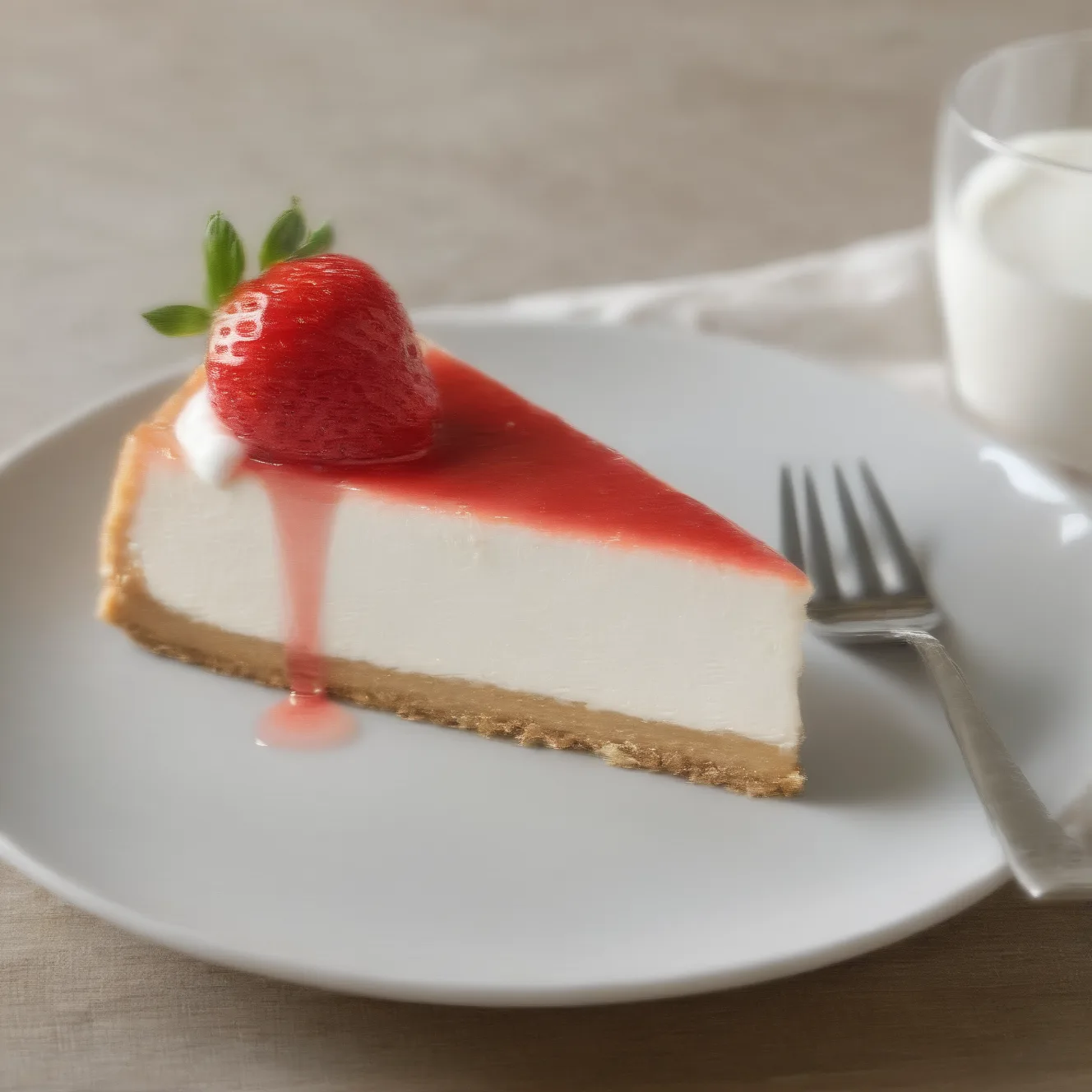
Most strawberry cheesecake recipes pile fresh berries on top or spoon over a cooked strawberry sauce. Neither matches the restaurant version. Cheesecake Factory uses glazed fresh strawberries, which is a specific technique:
Half the strawberries are pureed and cooked with sugar, water, lemon juice, and cornstarch into a thick, concentrated syrup. The remaining strawberries — left whole — are tossed in the cooled syrup until every berry is shiny and evenly coated, then arranged hull-side-down across the cheesecake.
The result looks like fresh strawberries but has a concentrated glaze that deepens the color, adds glossy sheen, and makes the topping hold together on a slice instead of rolling off. The berries themselves are never cooked — they stay firm and fresh-tasting. That is the distinction: glazed is not sauced.
| Approach | How the berries are treated | Result |
|---|---|---|
| Glazed fresh (the restaurant version) | Whole berries tossed in a cooled cornstarch glaze made from pureed berries | Firm, shiny, bright red; holds its shape on the slice |
| Sauced (what most recipes make) | All berries simmered into a cooked strawberry sauce | Soft, stewed, jam-like; slides off the fork |
| Plain fresh | Raw sliced berries piled on top | Fresh but dull, no sheen, rolls off when cut |
The whole-berry, glazed presentation — not sliced fruit under a sauce — is what identifies the “Fresh” version on the menu.
Why half-and-half
Pureeing all the strawberries gives you more sauce volume but loses the textural contrast between the creamy cheesecake and whole berries. Using all fresh whole berries gives you beautiful presentation but no glaze to hold them together or concentrate the flavor. The half-and-half method — pureed into glaze, whole into glaze — is what produces the restaurant look and texture.
Cornstarch, not gelatin
Some copycat recipes add unflavored gelatin to the strawberry glaze. Gelatin works but produces a firmer, slightly rubbery coating. Cornstarch gives a lighter, more translucent glaze that sets softly and doesn’t compete with the fresh berry texture. The cornstarch amount (1 1/2 teaspoons) is calibrated to thicken the glaze at refrigerator temperature without setting it hard — the berries should be coated, not encased.
Lemon juice is not optional
The lemon juice in the glaze brightens the strawberry flavor and balances the sweetness. Skip it and the glaze tastes flat and one-dimensional — like jam rather than fresh berries with a sheen. One tablespoon is enough to make a noticeable difference.
The Cheesecake Base
This is the same recipe as the Copycat Cheesecake Factory Original Cheesecake. If you have already made that recipe, you can skip the base instructions here and jump straight to the topping. The full method is included below for completeness.
Why no flour
Most New York cheesecake recipes add 2 to 3 tablespoons of flour for structural stability. The Cheesecake Factory recipe skips it. Without flour, the eggs and cream cheese proteins set more tightly, producing a denser, creamier interior that breaks apart reluctantly at the fork. The water bath and slow oven cool handle the cracking risk that flour would otherwise address.
A full cup of sour cream in the filling
The standard home recipe calls for 1/4 cup of sour cream at most. Some skip it entirely. Cheesecake Factory uses a full cup. Sour cream adds lactic acid tang that cuts through the richness of the cream cheese and leaves a clean finish on the palate. It also contributes fat in a different form than heavy cream — sour cream’s emulsified fat makes the texture silkier and more cohesive.
The sour cream cap
After baking, a thin layer of sweetened sour cream (1 cup sour cream + 3 tablespoons sugar + vanilla) is spread over the surface and the cheesecake briefly returns to the oven for 5 minutes. This creates a smooth, crack-free top with a faintly glossy finish. Most copycat recipes omit this step. It is what gives the restaurant cheesecake its pristine, white, unblemished surface — and it covers any minor cracking from the bake.
The Whipped Cream Border
The Fresh Strawberry Cheesecake at Cheesecake Factory is finished with a ring of whipped cream rosettes around the outer edge — not a simple swirl like the Original, but a full piped border. This framing effect is part of the restaurant presentation.
For a stable border that holds for several hours without weeping, add 1 tablespoon of full-fat sour cream to the whipped cream along with powdered sugar. The sour cream stabilizes the fat structure of the whipped cream, helping it hold stiff peaks longer than cream alone. Do not use granulated sugar in whipped cream — it stays gritty. Powdered sugar dissolves completely and adds a small amount of cornstarch that further stabilizes the peaks.
Cost Comparison
| Cheesecake Factory | Homemade (10 slices) | |
|---|---|---|
| Per slice | ~$11–13 | — |
| Full cheesecake (10 slices) | ~$110–130 | ~$16–20 |
| Per serving | ~$11–13 | ~$1.60–2.00 |
The strawberry version runs slightly more than the Original at the restaurant. At home, the main additional cost is the 2 lbs of fresh strawberries (~$5–7 depending on season). The cheesecake base ingredients are the same.
Timing Plan for Same-Day Service
Because the cheesecake needs overnight refrigeration and the topping should be applied close to serving, the best approach is to split the work across two days:
Day before: Make and bake the cheesecake. Apply the sour cream cap. Refrigerate overnight.
Day of, 2–3 hours before serving: Make the strawberry glaze. Let it cool. Toss berries in the glaze. Arrange on top. Make and pipe the whipped cream border. Return to refrigerator.
At serving: Slice and serve. The cheesecake tastes best at 45–60 minutes out of the refrigerator — slightly less than fridge-cold, when the cream cheese flavor is more pronounced.
The Most Common Mistakes
Adding the strawberry topping too early. The glaze softens the berries and begins to weep moisture into the top of the cheesecake if applied more than 3 hours before serving. It looks beautiful when first applied and significantly less so after an overnight stay. Apply the topping the day you serve.
Using frozen strawberries for the whole berries. Frozen berries work fine for the pureed glaze base. They do not work for the whole/halved berries tossed in the glaze — thawed frozen strawberries are soft, mushy, and release water that turns the glaze soupy. Use fresh for anything that goes on top as a whole berry.
Not cooling the glaze before tossing with the berries. Hot glaze partially cooks the fresh berries and makes them soft. Let the glaze cool to room temperature (or briefly in the fridge) before tossing. The glaze should be pourable but not steaming.
Rushing the cheesecake chill. The base needs at least 6 hours, but overnight produces a meaningfully better texture — denser, cleaner-slicing, and with fully integrated flavor. Do not try to accelerate this by freezing.
Storage
The cheesecake base (without topping): covered in the refrigerator, 4 to 5 days.
With the glazed strawberry topping applied: best eaten within 24 hours. The berries will soften and begin releasing moisture after that.
Do not freeze the assembled cheesecake with the strawberry topping — berries do not freeze well. Freeze the base alone (up to 2 months, wrapped tightly in plastic and foil), then add the fresh glazed topping after thawing overnight in the refrigerator.
More Cheesecake Factory Copycat Recipes
- Copycat Cheesecake Factory Original Cheesecake — the base recipe this one is built on; plain New York-style with a sour cream cap
- Copycat Cheesecake Factory Oreo Cheesecake — Oreo crust and cookie chunks throughout, chocolate drizzle
- Copycat Cheesecake Factory Dulce de Leche Cheesecake — the Original filling swirled with dulce de leche and a caramel drizzle
- Cheesecake Factory Lemon Raspberry Cheesecake — tangy lemon cheesecake with raspberry swirl; shares the same sour cream technique