Pin It

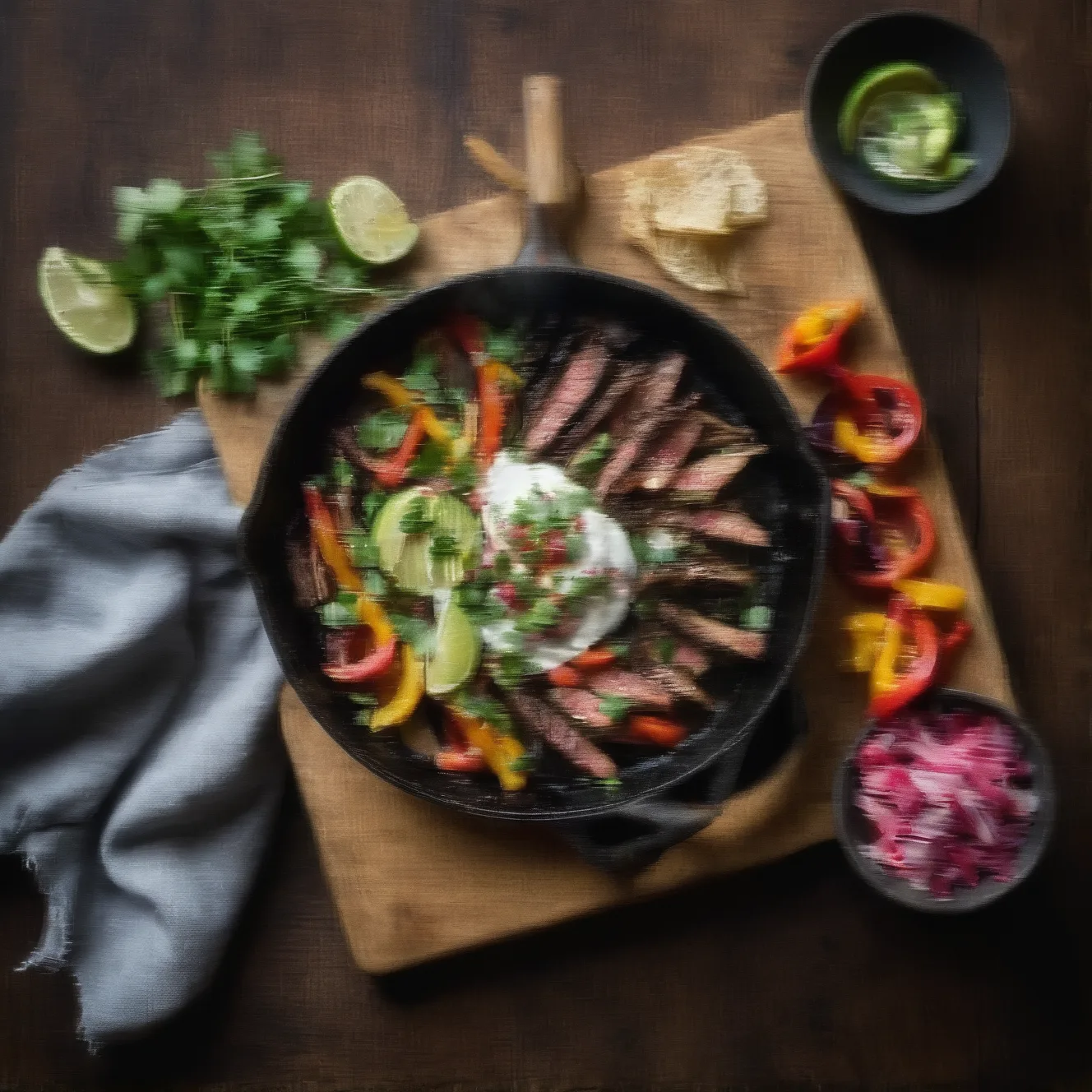
Copycat Chili's Steak Fajitas

Copycat Chili's Steak Fajitas
Jump to Recipe
Prep 15 min + 1–4 hr marinade Cook 18 min Serves 4
Quick answer: Chili's Steak Fajitas use skirt steak β€” the original fajita cut (the word 'fajita' comes from the Spanish word for this muscle, the diaphragm or 'little belt') β€” marinated in a soy-lime-Worcestershire blend and seared on a screaming-hot surface until charred outside and pink inside. Two critical steps most home versions skip: (1) slicing strictly against the grain after cooking β€” skirt steak has long, very visible muscle fibers, and cutting with them leaves the meat tough and chewy; cutting perpendicular to them produces tender, short bites; (2) resting the steak 5 minutes before slicing, so the juices redistribute rather than running out when the meat is cut. The steak-and-vegetables portion (no tortillas or toppings) runs about 670 calories per published restaurant nutrition data; the full plate with two flour tortillas and all toppings runs roughly 1,100–1,220 calories. Home cost: roughly $15–22 for a four-serving batch (vs. $17–22 per person at the restaurant).

Copycat Chili's Steak Fajitas

Three things make Chili's steak fajitas better than most home versions: skirt steak (the authentic fajita cut with more fat and flavor than sirloin), a soy-lime-Worcestershire marinade with a cumin-forward spice blend, and slicing strictly against the grain. Covers the sizzle platter technique, the vegetable char, grain direction, and how steak fajitas differ from chicken.

Medium Prep: 15 min + 1–4 hr marinade Cook: 18 min Total: 4h 33m4 servings ~$4.50/serving
Prep15 min + 1–4 hr marinade
Cook18 min
Total4h 33m
Servings
4
At home~$4.50/serving
vs
Restaurant~$20.25/serving
You save ~78%

Ingredients

Instructions

💡
Pro tip: This recipe tastes even better the next day. The flavors need time to meld together in the fridge.
❄️
Storage: Keeps in an airtight container in the fridge for up to 2 weeks. Freezer-friendly for up to 3 months.
~350-550 cal/serving Β· Rich & IndulgentπŸ”₯

The Story Behind the Recipe

Copycat Chili’s Steak Fajitas

The word β€œfajita” literally describes this cut: the diaphragm muscle, called β€œfaja” (belt or girdle) by Texas ranch hands who received it as wages in the 1930s. Skirt steak is the original fajita protein β€” high-fat, intensely beefy, and faster-cooking than any other cut on the fajita menu. It is also the most technique-dependent: cook it past medium, cut it with the grain, or skip the rest, and you end up with tough, dry strips that no sauce can redeem.

Chili’s gets three things right that most home versions miss: a cumin-forward marinade built for beef (not adapted from the chicken version), a genuinely hot sear rather than a medium-heat cook, and consistent slicing against the grain after a proper rest. This recipe covers all of it.

TL;DR

Skirt steak, marinated 1–4 hours in soy-lime-Worcestershire-cumin. Sear on a screaming-hot cast-iron pan β€” 3–4 minutes per side, no moving. Rest 5 minutes. Slice thin, perpendicular to the visible grain. Char the peppers and onions separately. Finish the vegetables in a 2-minute soy-lime reduction. Serve on a preheated cast-iron sizzle plate with warm flour tortillas, pico de gallo, sour cream, cheddar, and guacamole. Full plate (with tortillas and all toppings): approximately 1,100–1,220 calories per Chili’s data.

What Makes Steak Fajitas Different from Chicken Fajitas

The marinade framework is the same β€” lime juice, soy sauce, Worcestershire, neutral oil, garlic, and spices β€” but the spice balance shifts for beef. Cumin is more prominent here because it is the dominant aromatic in Tex-Mex beef preparations (think carne asada, birria, barbacoa) and pairs more naturally with the umami depth of beef than with poultry. The liquid smoke that appears in good chicken fajita marinades is optional for steak β€” a well-seared skirt steak generates its own smoke-adjacent char character from the Maillard reaction.

The technique differences matter more than the marinade adjustments:

  • Target temperature is lower. Chicken requires 165Β°F internal; steak fajitas should be pulled at 130–135Β°F (medium-rare to medium). Skirt steak cooked above 145Β°F becomes progressively tougher and drier.
  • The grain direction is non-negotiable. Chicken breast slices in any direction and stays tender. Skirt steak sliced with the grain is chewy regardless of how correctly it was cooked. Sliced against the grain, the same steak is tender.
  • Resting matters more. The looser, fattier structure of skirt steak makes it more prone to juice loss when cut immediately after searing. Five minutes of resting changes the experience of the finished dish.
  • Marinade time is limited. Chicken can marinate overnight. Skirt steak should not exceed 4 hours in an acid-based marinade β€” the lime juice denatures the surface proteins and makes the exterior mushy rather than char-ready.
The Grain Direction Problem

This is worth understanding once, because it applies to every piece of skirt steak you will ever cook.

Skirt steak is a thin, elongated muscle with long, parallel fibers that run the length of the cut. You can see them clearly β€” they look like visible lines or stripes across the meat surface. When you bite a piece of steak, your teeth cut through those fibers. If the fibers are long (cut parallel to them), each bite requires significant jaw effort and the steak seems tough. If the fibers are short (cut perpendicular to them), the bite goes through easily and the steak seems tender β€” even though it is exactly the same piece of meat, cooked identically.

After the steak has rested on the cutting board, look at it from above. Identify which direction the lines run. Hold your knife at a 90-degree angle to those lines and slice thin (about 1/4 inch). If your knife is pointed in any other direction, rotate until the blade crosses the fibers perpendicularly. This is the entire technique.

Flank steak has the same grain structure and requires the same approach. Sirloin and ribeye have shorter, less directional grain and are more forgiving β€” but Chili’s uses skirt steak, not sirloin, and the technique distinction is why.

The Sear: Why Temperature Matters More Than Timing

Restaurant fajitas come off a commercial flat-top griddle that maintains consistent temperatures far above what home stovetops reach. The workaround at home is cast iron: a heavy pan that retains heat when cold protein is added, rather than dropping temperature immediately.

Preheat the cast-iron pan empty on maximum heat for at least 3 minutes. It should be visibly smoking before the steak touches it. You are not looking for a little sizzle when the meat goes in β€” you want an immediate, aggressive sear sound. If you add the steak and hear a moderate sizzle that quiets after a few seconds, the pan is too cold and the steak will steam in its own moisture rather than char.

Dry the steak thoroughly before it goes in. The Maillard reaction (the browning process that produces crust) requires a dry, hot surface-to-surface contact. Surface moisture evaporates and keeps the surface temperature below browning threshold until the water is gone β€” which means fewer minutes of actual Maillard-producing contact time.

Set the steak in the pan and do not move it. Do not press it down. The natural curl of skirt steak as it cooks will flatten as the muscle relaxes after the first 60 seconds. Moving the steak breaks contact and disrupts crust formation. Three to four minutes on the first side, flip once, two to three minutes on the second. That is it.

The Marinade and Why Each Component Is There

Lime juice: The primary acid. It starts to denature the surface proteins of the beef and carries flavor throughout the marinade. Do not substitute bottled lime juice β€” the volatile aromatic compounds that give fresh lime its character evaporate during pasteurization.

Soy sauce: Adds umami depth (glutamates) that amplifies the beefy flavor of the marinade. Also promotes browning β€” the sodium and amino acids in soy interact with the Maillard reaction to produce a slightly darker, more complex crust than a lime-and-spice-only marinade.

Worcestershire: Complex depth unique to this sauce β€” tamarind, anchovies, molasses, onion, and other fermented elements that collectively produce a savory, slightly sweet undertone that pairs especially well with beef. It is in almost every credible steak fajita copycat recipe and it is not interchangeable with anything else.

Cumin: The dominant aromatic in Tex-Mex beef cooking. It is present in virtually every carne asada, birria, and fajita preparation. Use 2 teaspoons here β€” more than you would for chicken fajitas β€” because it stands up to the stronger flavor of beef rather than being overwhelmed by it.

Smoked paprika: Adds a mild smoke character without liquid smoke. Unlike chicken (which has relatively little fat to carry smoke flavor), beef picks up smoke from the sear itself β€” smoked paprika reinforces that rather than substituting for it.

The Vegetable Finishing Sauce

See the Chili’s Chicken Fajitas recipe for the full explanation of why the vegetables are cooked separately with a finishing sauce. The short version: if you cook the vegetables and protein together, both lose their individual character β€” the vegetables get steamed rather than charred, and the protein makes moisture that dilutes the vegetable texture. Cooking them separately and finishing the vegetables in a brief soy-lime reduction gives them a distinct glaze that reads separately from the steak flavor. Both can sit on the same sizzle plate and be eaten together, but they arrived at their flavors independently.

Cost: Restaurant vs. Home
Chili’s (full plate, 1 person)Home (4-serving batch)
Price$17–22$15–22 total
Per serving$17–22$4–6
Steak cutSkirt steakSkirt or flank steak
TortillasIncluded8-pack flour tortillas: ~$3
Total with tip$22–30$15–22 for four people
More Chili’s Copycat Recipes

Nutrition Facts

Per serving (4 servings)
Calories940
Total Fat72g
Total Carbs18g
Dietary Fiber2g
Sugars4g
Protein42g
Sodium1180mg

* Estimated values based on standard recipe preparation. Actual values may vary.

πŸ₯—

Make It Healthier

Love Chili's Steak Fajitas but want a lighter version? Try these simple swaps:

  • βœ“Use flank steak instead of skirt β€” slightly leaner (roughly 20% less fat per ounce) with a comparable texture when sliced correctly against the grain.
  • βœ“Skip the tortillas and serve over a bed of cilantro-lime cauliflower rice β€” saves 200+ calories per plate without changing the protein or vegetable prep.
  • βœ“Use half the cheese and sour cream β€” cuts about 100 calories per serving with minimal flavor impact when the steak and char are doing the heavy lifting.

Equipment You'll Need

Cast-iron skillet or heavy carbon-steel pan

Essential β€” thin pans drop temperature too much when cold steak hits them; cast iron stays searing-hot

Cast-iron fajita sizzle plate (optional)

The authentic presentation tool; must be preheated in a 400Β°F oven for 15 min before use

Heavy oven mitts

Required if using a sizzle plate β€” reaches 400Β°F and will cause a serious burn without proper protection

Instant-read meat thermometer

Steak fajitas should be pulled at 130–135Β°F internal (medium-rare to medium) for best texture

Sharp slicing knife

A sharp knife is more important for skirt steak than for any other fajita protein β€” you need a clean cut perpendicular to the grain

Frequently Asked Questions

What cut of steak does Chili's use for steak fajitas?

Chili's uses skirt steak for their steak fajitas β€” the same cut that defines the history of fajitas as a dish. The word 'fajita' comes from the Spanish 'faja,' meaning belt or girdle, which was the nickname Texas ranch hands gave to the diaphragm muscle they were paid with as part of their wages in the 1930s and 1940s because it was considered a low-value cut. The muscle sits between the rib cage and the abdominal cavity. It has coarse, long, visible grain, high fat marbling, and intense beefy flavor that makes it ideal for high-heat searing and quick slicing. Outer skirt steak (from the plate cut) has more fat and tenderness than inner skirt; both work for fajitas. Flank steak is the most common substitute β€” slightly leaner and less beefy in flavor but easier to find at grocery stores and very responsive to the same marinade-and-sear technique.

How do you slice skirt steak for fajitas so it isn't tough?

Skirt steak is made of long muscle fibers with very visible grain β€” if you cut parallel to those fibers, you leave intact, tough strands that require jaw effort to bite through. The only solution is to cut perpendicular to the grain (across the visible lines), which shortens the fibers and makes the meat tender regardless of how it was cooked. Before slicing, look at the cooked steak and identify which direction the lines in the meat run. Position your knife at a 90-degree angle to those lines and slice thinly, about 1/4 inch thick. This is the single technique difference between home fajitas that come out tough and restaurant fajitas that are tender. Also rest the steak for at least 5 minutes before cutting β€” cutting immediately after searing drives the internal juices onto the cutting board.

How long should you marinate steak for fajitas?

1 hour minimum, 2–4 hours optimal for skirt steak. Unlike chicken, which benefits from overnight marination, skirt steak should not be marinated beyond 4–6 hours in an acid-based marinade (lime juice + vinegar). The acid denatures the surface proteins of the meat over time β€” initially tenderizing, eventually making the exterior mushy and gray rather than searing cleanly to a brown crust. For a 1.5-pound skirt steak, 2 hours in the refrigerator produces noticeable flavor penetration without texture degradation. If you need to prep the night before, use oil, Worcestershire, garlic, and dry spices only β€” add the lime juice and vinegar in the final 30 minutes before cooking.

What is the difference between Chili's chicken fajitas and steak fajitas?

Beyond the protein choice, the technique differences matter. Steak fajitas: use skirt or flank steak rather than chicken breast; cumin is more prominent in the spice blend because it pairs better with beef than with poultry; the steak is cooked to medium-rare (130–135Β°F) rather than the 165Β°F required for chicken; resting before slicing is more critical (the grain structure of skirt steak makes resting more important); the grain-direction rule is non-negotiable for steak (see above). The vegetable prep, finishing sauce, and sizzle platter technique are identical between the two. Both use the same soy-lime-Worcestershire marinade framework. Nutritionally, steak fajitas are higher in calories and fat per serving than chicken fajitas (roughly 670 calories for the steak-and-vegetable portion vs. about 510 for chicken, before tortillas and toppings).

How many calories are in Chili's steak fajitas?

Chili's Grilled Steak Fajitas β€” the steak-and-vegetable portion without tortillas or toppings β€” run approximately 670 calories per published restaurant nutrition data. The full plate with two flour tortillas (approximately 130 calories each) plus sour cream, shredded cheddar, and guacamole totals approximately 1,100–1,220 calories depending on portion size of toppings. The steak and vegetables are relatively protein-dense (about 40–45g protein from the steak portion); the calorie count climbs primarily from the toppings and tortillas. To reduce: use one tortilla instead of two, go light on sour cream and cheese, and skip or halve the guacamole.

Can I use flank steak instead of skirt steak for Chili's fajitas?

Yes. Flank steak is the most practical substitute β€” it's easier to find at most grocery stores than outer skirt steak, slightly leaner (about 20% less intramuscular fat), and responds identically to the same marinade and high-heat sear. The flavor is slightly less intense than skirt steak but still clearly beefy and well-suited to the cumin-forward marinade. The grain direction rule applies equally to flank steak: the visible muscle fibers run lengthwise, and you must cut perpendicular to them. Flank steak is a bit thicker than skirt steak, so adjust searing time accordingly (4–5 minutes per side for a 1-inch-thick flank steak vs. 3–4 minutes for thinner skirt). Both cut to medium-rare around 130–135Β°F.

How do I get the char on steak fajitas without an outdoor grill?

A screaming-hot cast-iron skillet on your stovetop. The key is preheat time: run your burner on maximum for 3–4 minutes before the steak goes in. The pan should be visibly smoking before you add anything. Dry the steak completely before searing β€” surface moisture turns to steam and prevents the browning reaction (the Maillard reaction requires a dry, hot surface-to-surface contact). Do not move the steak after it hits the pan. Let it sit undisturbed for 3–4 minutes per side. You should hear an aggressive sizzle when the steak makes contact; if you don't, the pan is not hot enough. The dark-brown-to-black crust that forms is the char you want β€” it is not burnt. This stovetop char is less smoky than an outdoor grill but structurally equivalent in crust formation.

Love this recipe? Share it!

Shop the tools

Gear matched to this recipe's equipment list. We may earn a small commission if you buy through these links β€” at no extra cost to you.

As an Amazon Associate, Copycat Spices earns from qualifying purchases.

Free PDF: our 12 most-wanted copycat recipes β€” instant download.

Ratings & Reviews

β€”
No ratings yet

Rate this recipe

Click a star to rate

Leave a Review

0/500

CS

Copycat Spices Test Kitchen

Every recipe on Copycat Spices is developed and tested in our home test kitchen. We reverse-engineer beloved restaurant dishes and refine each one until the flavors and the instructions work reliably for home cooks of all skill levels.

Learn more about our mission →