



Pin It

Tartine Bakery Country Bread (Chad Robertson's Famous San Francisco Sourdough, Made at Home)

Tartine Bakery Country Bread (Chad Robertson's Famous San Francisco Sourdough, Made at Home)
Jump to Recipe
Prep 45 min active (24–48 hr total) Cook 45 min Serves 2 loaves (about 24 slices)
Quick answer: Build the leaven the night before: mix 1 tablespoon ripe sourdough starter with 100g bread flour, 100g whole wheat flour, and 200g warm water; cover and leave 8–12 hours until doubled, bubbly, and a spoonful floats in water. The next morning, combine 700g warm water with the 900g bread flour and 100g whole wheat flour in a large bowl, mix briefly until no dry bits remain, and rest covered 30–40 minutes (autolyse). Add all 200g of ripe leaven, squeezing it into the dough with wet hands; rest 30 minutes. Dissolve 20g fine salt in 50g warm water and pour over the dough; fold to incorporate. This is your bulk ferment starting point. Over the next 3–4 hours at room temperature (ideally 78°F), perform one set of stretch-and-folds every 30 minutes for the first 2 hours: wet your hand, reach under one side of the dough, stretch it up until it resists, and fold it over the center; rotate the bowl a quarter turn and repeat 3 more times. That's one set. After 4 sets, let the dough rest undisturbed for the remaining bulk time; it should increase about 25–30% in volume, look airy and domed, and peel off the bowl wall easily. Flour your work surface lightly. Divide the dough in half with a bench scraper. Pre-shape each piece into a loose round by folding the edges toward the center, flip seam-side down, and use the bench scraper to drag it toward you — the friction tightens the surface into a taut ball. Rest 20–30 minutes uncovered. Final shape: flour the surface of the round, flip it over, stretch it into a rectangle, fold the top third down, the bottom third up, then roll it toward you into a tight cylinder; cup your hands underneath and rotate it against the counter surface to build even more tension. Transfer seam-side up into a banneton (proofing basket) well-dusted with rice flour or a 50/50 mix of rice flour and bread flour. Cold proof in the refrigerator 12–16 hours. To bake: preheat your oven to 500°F with the Dutch oven inside for 45 minutes. Invert the cold loaf onto a square of parchment, score the top with a sharp knife or lame at a 30–45 degree angle, and lower the loaf into the screaming-hot Dutch oven using the parchment as a sling. Cover and bake 20 minutes. Remove the lid, reduce temperature to 450°F, and bake 20–25 minutes more until the crust is deep mahogany brown. Cool on a wire rack at least 1 hour before slicing.

Tartine Bakery Country Bread (Chad Robertson's Famous San Francisco Sourdough, Made at Home)

Chad Robertson's famous country bread from Tartine Bakery in San Francisco: the exact flour blend, 75% hydration formula, and the young-leaven technique that produces the shattering crust and open, irregular crumb that sell out every afternoon. Full timeline and troubleshooting.

Hard Prep: 45 min active (24–48 hr total) Cook: 45 min Total: 49h 30m2 loaves (about 24 slices) servings ~$4.50/serving
Prep45 min active (24–48 hr total)
Cook45 min
Total49h 30m
Servings
2
At home~$4.50/serving
vs
Restaurant~$20.25/serving
You save ~78%

The Story Behind the Recipe

Chad Robertson's famous country bread from Tartine Bakery in San Francisco: the exact flour blend, 75% hydration formula, and the young-leaven technique that produces the shattering crust and open, irregular crumb that sell out every afternoon. Full timeline and troubleshooting.

Nutrition Facts

Per serving (2 loaves (about 24 slices) servings)
Calories170
Total Fat0.5g
Total Carbs34g
Dietary Fiber2g
Sugars0g
Protein6g
Sodium280mg

* Estimated values based on standard recipe preparation. Actual values may vary.

Ingredients

  • For the leaven (build the night before)
  • For the dough

Instructions

💡
Pro tip: This recipe tastes even better the next day. The flavors need time to meld together in the fridge.
❄️
Storage: Keeps in an airtight container in the fridge for up to 2 weeks. Freezer-friendly for up to 3 months.
🎃 Free Halloween cookbook — download now The Copycat Halloween Cookbook A ready-made, photo-illustrated PDF of our best halloween copycat recipes — free to download, no building required. Pay what you want to support if you love it.

Free PDF — instant download. We'll also send new seasonal copycat recipes now and then; unsubscribe anytime. Or just download it →

Tartine Bakery is a narrow storefront on the corner of 18th and Guerrero in San Francisco’s Mission District. It opens every day, and every day around 5pm a line forms on the sidewalk. By 5:30, it frequently wraps around the block. By 6pm, the bread is sold out. The bakery bakes roughly 200 loaves on a good day — all of it gone before dinner.

Chad Robertson opened Tartine with his wife, pastry chef Elisabeth Prueitt, in 2002. He had spent years studying bread in France, first as a student and then working in a wood-fired bakery in the Auvergne, where he became fixated on the particular style of country loaf — the pain de campagne — that French bakers had been making for centuries: a high-hydration, long-fermented white-and-wheat blend baked in a stone deck oven with plenty of steam, producing a thick, crackling crust and an open, irregular crumb.

His version became one of the most famous loaves in American food. In 2010, he published Tartine Bread (Chronicle Books), one of the most influential cookbooks in the home baking revival — and the recipe, the one that is the subject of this page, became the recipe that launched a hundred thousand home sourdough starters.

What Makes Tartine Country Bread Different

The formula is not complicated. 900 grams of bread flour, 100 grams of whole wheat flour, 750 grams of water, 200 grams of ripe leaven, 20 grams of salt. That is it.

The difference is not in the ingredients. It is in three specific choices Robertson makes that separate his bread from most home sourdough.

He uses a young leaven. Most sourdough recipes use a mature starter — left to ferment at full peak or slightly beyond, where acetic and lactic acid have built up significantly. Robertson builds a fresh leaven each morning from a tablespoon of old starter, catches it before it peaks, and bakes with it young. A young leaven has mild acidity. The bread it produces is nutty, lightly tangy, almost sweet — not the assertive sourness most people associate with San Francisco sourdough. This is not a coincidence; it is the result Robertson is aiming for.

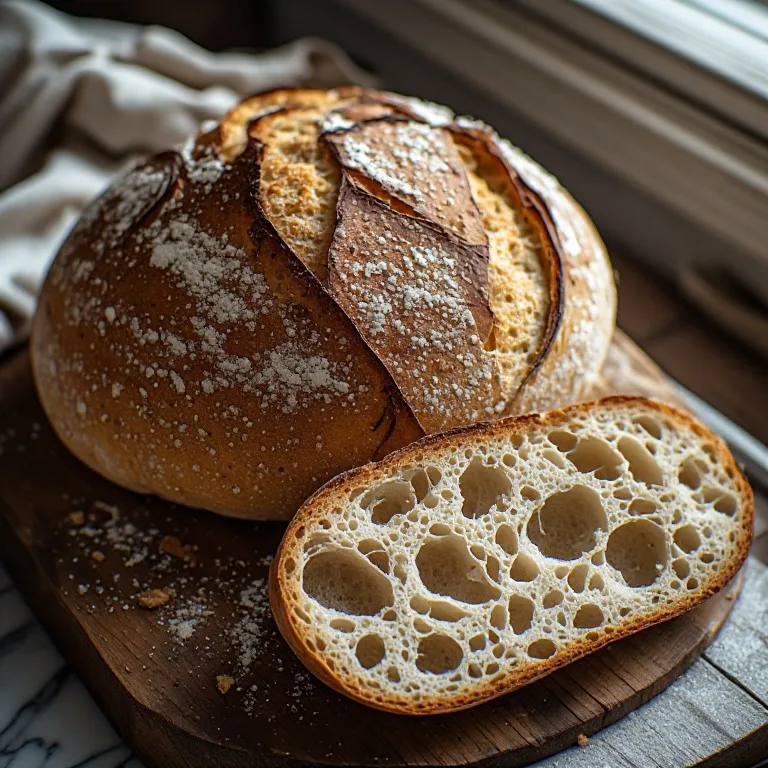
He uses high hydration. At 75% hydration (and effectively higher when the leaven’s water is factored in), the dough is very wet. It cannot be kneaded in the traditional sense — it would stick to everything and stick to itself. Instead, Robertson developed a stretch-and-fold method: periodically pulling sections of the dough up and folding them over the mass during bulk fermentation, building gluten strength in stages rather than all at once. High hydration is what produces the open, hole-riddled crumb that makes Tartine bread visually distinctive.

He bakes in a Dutch oven. Professional deck ovens inject steam during the first stage of baking, which keeps the crust surface supple during oven spring and lets the loaf expand without tearing. A home oven has no steam mechanism. Robertson’s solution is a preheated cast-iron Dutch oven: the loaf’s own moisture, trapped inside the covered pot, creates the necessary steam environment for the first 20 minutes, replicating the deck oven’s steam phase in a way that nothing else in a home kitchen can match.

The Equipment You Actually Need

You do not need specialty equipment to make this bread, but you need the right things.

A kitchen scale is non-negotiable. A cup of bread flour, depending on how it is scooped, can weigh anywhere from 120 to 160 grams. Those 40 grams — a 25% variance — is the difference between a 75% hydration dough and a 62% hydration dough. Those are fundamentally different doughs. Use weight for everything, including the water.

Two proofing baskets (bannetons), one for each loaf. If you do not have bannetons, two bowls lined with generously floured clean kitchen towels will work. Rice flour is the right dusting agent — it does not absorb back into the dough during the long cold proof the way wheat flour does, and the loaves release cleanly. If you only have bread flour, use it, but dust heavily and add more than you think you need.

A 5- or 6-quart Dutch oven with a lid. Enameled cast iron (Le Creuset, Staub) or bare cast iron both work well. The pot must preheat inside the oven for a full 45 minutes; insufficiently preheated cast iron is the most common reason home bakers get thin, pale crusts.

A lame (bread scoring tool) or a single-edge razor blade. The scoring cut before baking is not decorative — it controls where the loaf opens as it expands, directing oven spring upward rather than sideways or along an uncontrolled tear. A dull knife drags the dough; a razor cut is clean and decisive.

The Process: A Two-Day Schedule

This bread does not require two days of active work — it requires two days of calendar time, most of which you are sleeping or doing other things. The actual hands-on time is under an hour.

Night before: Build the leaven. 8–12 hours later, it is ready.

Morning, day 2: Mix the dough (10 minutes). Autolyse (30–40 minutes of rest). Add leaven and salt (15 minutes). Bulk fermentation with stretch-and-folds (3–4 hours, with maybe 15 total minutes of active work). Divide, pre-shape, bench rest, final shape (30 minutes). Load into bannetons, refrigerate.

Morning, day 3 (or the same evening): Preheat oven, bake, cool.

The cold retard in the refrigerator is not mandatory, but it is strongly recommended. The overnight slow fermentation in the cold develops a complexity of flavor — specifically acetic acid notes — that same-day proofing at room temperature cannot match. More practically, it means you are not racing the dough: you shape at your convenience, refrigerate, and bake whenever you are ready in the next 12–48 hours.

Reading the Dough

Bread is not a formula you execute — it is a biological process you read and respond to. The times given are guidelines based on a 78°F kitchen; your kitchen may be cooler or warmer, your starter stronger or weaker, your flour older or newer.

The signs that matter are not times. They are behaviors. The leaven is ready when it floats and the dome is still high. The bulk ferment is done when the dough has grown 25–30%, feels light and airy when you handle it, and leaves small bubbles visible through the bowl walls. The cold-proofed loaf is ready to bake when it has risen slightly in the banneton overnight but still feels firm and cold.

If your dough feels slack and sticky — almost liquid — during shaping, it is likely over-fermented: the gluten has been degraded by acidity and time. If it tears during stretch-and-folds and does not smooth back together, it may be under-hydrated or the flour is old. If the baked loaf is dense with small, uniform bubbles, the bulk ferment was probably too short or too cold.

None of these are disasters. They are information. Sourdough baking is a skill built over dozens of loaves, not one.

On the Crust Color

Robertson bakes dark. His crust is deep mahogany with near-black patches at the scoring line and along any blisters — a color most home bakers would instinctively pull from the oven 10 minutes early.

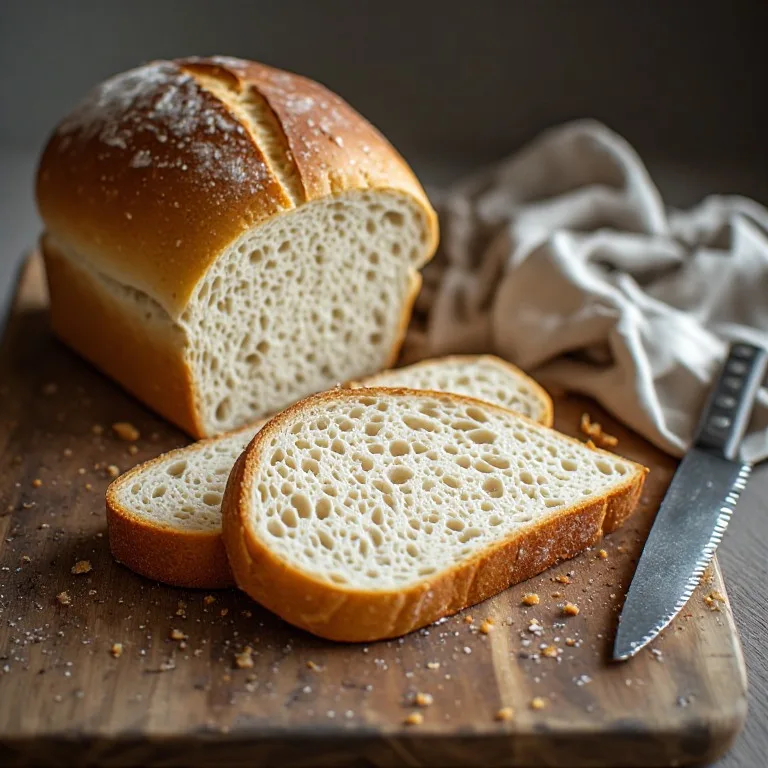
Do not. The dark color is the point. The Maillard reaction and caramelization at those temperatures create hundreds of flavor compounds that a pale tan crust does not contain. A thick, darkly baked crust is what shatters audibly when you press it with your thumb. It is what crackles on the cooling rack. A pale crust is papery.

When the second loaf comes out of the oven, set it on a wire rack and leave the room. Come back in fifteen minutes and listen: a properly baked Tartine loaf cracks and pops as it cools — Robertson calls this the loaf “singing.” If you hear it, you did it right.


🥗

Make It Healthier

Love Tartine Bakery Country Bread (Chad Robertson's Famous San Francisco Sourdough, Made at Home) but want a lighter version? Try these simple swaps:

  • ✓The country bread formula is already nutritionally clean — no added sugar, no oil, no enrichment of any kind. To increase the whole wheat content for more fiber, substitute 100g additional whole wheat for bread flour (a 20% whole wheat formula); above 20%, the open crumb becomes harder to achieve and you may need to reduce hydration slightly (down to 70%) to compensate for whole wheat's higher water absorption. Sourdough's long fermentation partially breaks down phytic acid, which improves mineral absorption compared to yeasted bread; this is an inherent benefit of the method, not a modification.

Frequently Asked Questions

What flour should I use for Tartine country bread?

The Tartine formula calls for 900g of white bread flour and 100g of whole wheat flour — a 90/10 blend by weight. Bread flour (11–13% protein) is preferable to all-purpose flour because its higher gluten content handles the high hydration and long fermentation without becoming slack. Whole wheat flour adds flavor complexity and contributes enzymes that help gluten development at low percentage. Some home bakers substitute up to 20% whole wheat without difficulty; above that, the dough becomes denser and harder to develop. If you only have all-purpose flour, use it — the bread will still work, but the crumb will be slightly less open and the crust slightly less shattering. Do not use whole wheat as your primary flour unless you are an experienced sourdough baker; it ferments faster, absorbs water differently, and produces a much tighter crumb at this hydration.

How do I know when my leaven is ready?

The float test is the standard check: drop a small spoonful of leaven into a glass of cool water. If it floats, it has trapped enough gas to be ready — this means the fermentation has produced CO2 bubbles throughout the mass. If it sinks immediately, it needs more time. Robertson uses a young leaven — caught when it has doubled in volume and is still slightly domed on top, before it collapses. This is intentional: a young leaven is mildly acidic, producing bread with a sweet, nutty flavor rather than the sharp sourness of a fully ripe or over-ripe starter. If you use leaven that has peaked and started to deflate, the bread will be noticeably more sour and the fermentation will proceed faster than the recipe timeline indicates. Watch for the dome, not just the float.

Why is Tartine bread only mildly sour — not sour like San Francisco sourdough?

This is deliberate and is the central technical insight in Chad Robertson's approach. Most sourdough uses a mature, acidic starter — left to ferment until fully ripe or slightly over-ripe — which means it contains high concentrations of lactic and acetic acids before it even touches the dough. Robertson uses a 'young' or 'sweet' leaven, built fresh each day from just a tablespoon of old starter and caught before it reaches peak acidity. The result is bread with mild tang, nutty whole-wheat notes, and a slightly sweet crumb — not the assertive sourness associated with packaged San Francisco sourdough. The long cold retard in the refrigerator adds some acidity (acetic acid production favors cold temperatures), but the starting point of a young leaven means the final bread is well short of aggressive sour. If you want more sour, use leaven that has sat at room temperature for 14–16 hours rather than 8–10.

Why did I get a dense crumb instead of the open, hole-riddled Tartine crumb?

Dense crumb in high-hydration sourdough almost always has one of three root causes. First, under-fermented dough: if the bulk ferment didn't run long enough or warm enough, the gluten network isn't strong enough to hold CO2 during baking, and the gas escapes rather than forming open holes. Check your dough temperature — it should sit between 75 and 80°F during bulk; below that, the process slows significantly and four hours may not be enough. Second, over-fermented dough: if the dough ran too long or too warm, the gluten breaks down, the dough becomes slack and extensible rather than strong, and it collapses in the oven. Dough that is over-fermented will feel very wet, almost liquid, and will not hold a shape. Third, incorrect shaping: the final shape must build tension — a tight, taut surface traps gas in the loaf and gives the crumb structure to form large holes. A loosely shaped loaf will spread flat. Pre-shaping, bench rest, and then a firm final shape are all load-bearing steps, not optional.

What size Dutch oven do I need?

A 5-quart or 6-quart Dutch oven is ideal for one Tartine-sized loaf (about 900g). The loaf needs room to spring upward and outward in the first 20 minutes — a pot that is too small will constrain oven spring; a pot that is too large won't trap steam effectively around the loaf. Round Dutch ovens work well; oval Dutch ovens are a slightly worse fit since the loaf is shaped as a round. A combo cooker (a cast-iron skillet with a low lid used inverted as the base for baking) is what Tartine specifically recommends because it lets you score the loaf on the shallow base without having to drop it into a deep pot. Any cast-iron or enameled cast-iron vessel with a tight lid will work. Carbon steel pots work but retain less heat between loaves; if baking the second loaf back-to-back, preheat for an additional 15 minutes between batches.

Can I make just one loaf instead of two?

Yes — simply halve the formula: 450g bread flour, 50g whole wheat flour, 375g water, 100g leaven, 10g salt. The bulk fermentation time remains the same; a smaller mass of dough ferments at the same rate. The cold proof time also stays the same. The one practical difference is that a half-batch dough is harder to handle at high hydration because there is less of it to develop structure through stretch-and-fold; you may find it slightly more slack and harder to shape than a full batch. If you plan to make two loaves anyway, bake the second loaf the next day: shape both, cold proof both in the refrigerator overnight, bake the first loaf in the morning, and refrigerate the second loaf for up to 48 additional hours — the extended cold retard adds more flavor and the bake is just as good.

How dark should I bake the Tartine crust?

Darker than you think. Robertson bakes his loaves until the crust is deep mahogany — a true dark brown with almost black patches on the scored edges and blisters. Most home bakers pull their loaves too early because they are afraid of burning, and the result is a tan crust that is thin and papery rather than thick and shattering. The internal temperature at the crust reaches over 400°F when the loaf is properly baked; the high temperature caramelizes the crust, creates the thick shell that shatters when you bite it, and develops the full flavor of the bread. A properly baked Tartine loaf will crackle audibly as it cools on the rack — that sound, which Robertson calls the loaf 'singing,' tells you the crust has the right structure. If you don't hear it, you pulled the loaf too early. Use an oven thermometer to verify your oven temperature; home ovens frequently run 25–50°F cooler than their display indicates.

Can I skip the overnight cold proof and bake the same day?

You can, but the bread will be different: slightly less flavorful, with a milder crust color and somewhat less tang. After final shaping, proof at room temperature (75–78°F) for 3–4 hours until the loaf passes the poke test — when you poke the dough with a floured finger, the indentation should spring back slowly and incompletely, not snap back immediately (under-proofed) or leave a permanent dent (over-proofed). Bake from room temperature: skip the cold-from-fridge assumption and watch bake timing carefully — room-temperature loaves move faster through oven spring and may need 18 minutes covered rather than 20. The cold retard exists for flavor (acetic acid development favors cold) and convenience (you sleep, the bread works); the same-day version is a solid loaf, not a failure.

What is the float test and is it reliable?

The float test is performed by dropping a small spoonful (about 1 teaspoon) of leaven into a glass of cool water. Leaven that floats has produced enough CO2 gas to be buoyant — a reliable indicator that fermentation is active and the leaven can leaven bread. Leaven that sinks has not yet produced sufficient gas. The test is reliable as a pass/fail indicator of readiness but does not distinguish between a leaven at perfect peak and one that has peaked and deflated; a deflated (over-ripe) leaven may still float because trapped gas remains even after the dome collapses. The more accurate visual check is the dome: leaven at perfect peak will have risen to a dome and be just starting to level. Use both — float confirms minimum readiness, the dome tells you whether you caught it at peak or just past.

Love this recipe? Share it!

Free PDF: our 12 most-wanted copycat recipes — instant download.

Made it? Buy us a coffee

Every recipe here is free, with no paywalls. If this one was a hit at your table, a small tip keeps new copycats coming.

$

Tartine Bakery is a trademark of its owner, used here only to describe the dish this recipe recreates. This is an independent copycat written in our own words — Copycat Spices is not affiliated with, endorsed by or sponsored by Tartine Bakery.

Ratings & Reviews

—
No ratings yet

Rate this recipe

Click a star to rate

Leave a Review

0/500

CS

Copycat Spices Editorial

Researched + fact-checked. Every recipe on Copycat Spices is built from published sources — official ingredient lists, brand-published recipes, interviews and food-science references — and fact-checked before it goes live, then written as clear, step-by-step instructions for home cooks of all skill levels.

Learn more about our mission →