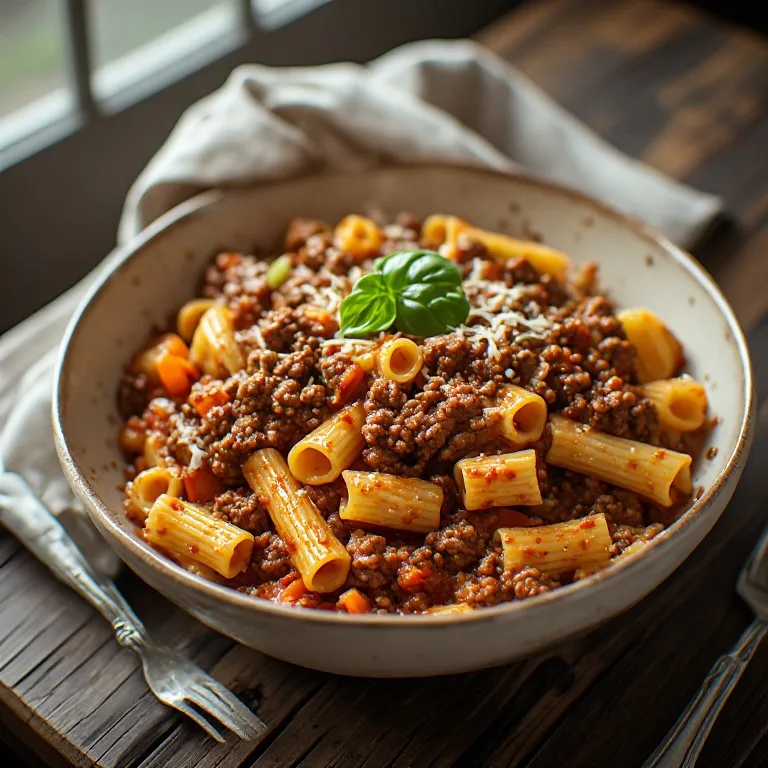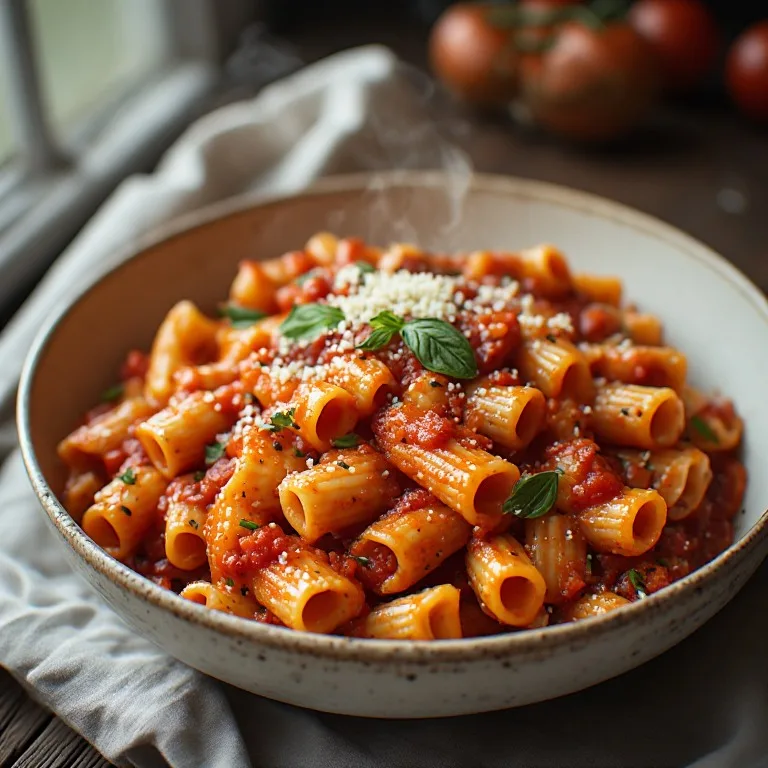



Lilia’s rigatoni diavola is the simpler, more accessible sibling of the restaurant’s famous mafaldine — and in some ways the better introduction to Missy Robbins’s cooking philosophy. Where the mafaldine requires precision emulsification and can slip up if you overcook or underheat, the diavola is a patient, forgiving sauce that rewards attention but tolerates imperfection. Cook the garlic slowly, darken the tomato paste properly, and let the sauce run long enough to thicken: the rest takes care of itself.
The Garlic Is the Architecture of This Sauce
Most tomato sauces use garlic as a background note. The diavola makes it structural. Ten whole cloves cook in olive oil for 15 to 20 minutes over gentle heat, slowly turning golden and jammy — essentially roasting in the fat rather than the oven. When you mash them back into the oil, you get a garlic-infused fat with rounded, slightly sweet depth that no amount of sautéed garlic can replicate. The four sliced cloves added afterward give you a second, sharper layer. Neither step is optional. Skipping the whole-garlic caramelization — or rushing it so the cloves toast unevenly — produces a thinner, more ordinary sauce.
Fennel Seed and Calabrian Chili Are Doing Most of the Flavor Work
The heat in arrabbiata comes from red chili flakes alone — one-dimensional, hot, and largely predictable. Diavola uses two heat sources plus fennel seed. The Calabrian chili adds a fruity, slightly fermented warmth that’s mellower than fresh Thai chili but more complex than red flakes. The fennel seed adds a faint anise-like warmth that you can’t quite name but would miss immediately if it were gone. Together, the three aromatics produce a sauce where the heat builds rather than hits — it gets warmer through the dish rather than leading with a sharp spike.
If you can’t find crushed Calabrian chili packed in oil, the sauce still works with only chili flakes — it just tastes less specifically Lilia. The fennel seed is harder to substitute; dried oregano is the closest structural parallel but delivers a completely different character.
Make the Full Batch — Freeze the Extra
Missy Robbins’s published recipe makes 6.5 cups of sauce. That’s not an accident: Lilia makes everything in large batches, and this sauce is designed to be stored. For one pound of pasta you’ll use 2 cups, which leaves about 4 cups — enough for two more dinners. Freeze it flat in zip-lock bags in 2-cup portions. They thaw in the refrigerator overnight and reheat directly from cold in the sauté pan. If you’re already doing the work, there’s no reason to scale down.
Rigatoni vs. Other Shapes
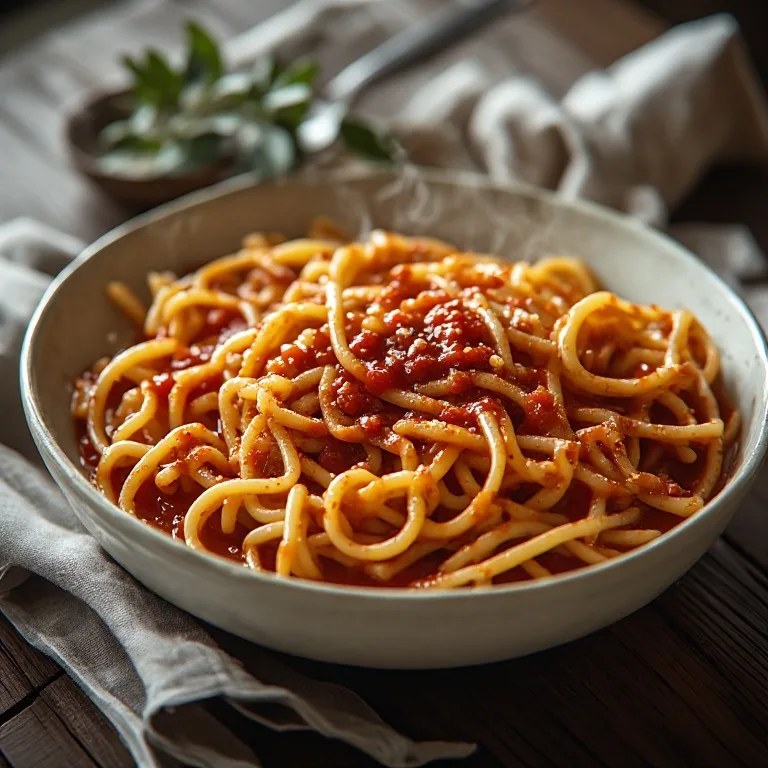
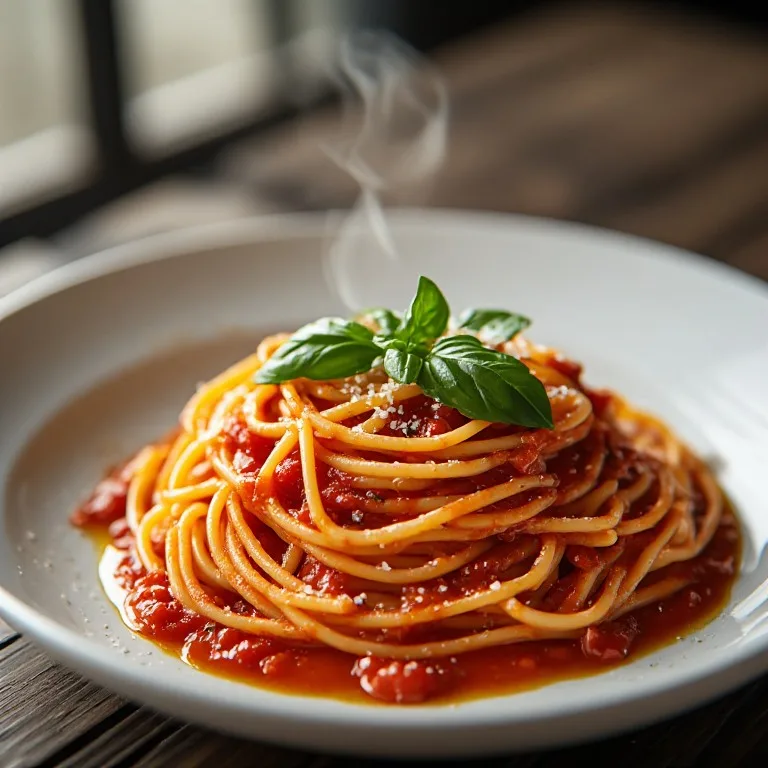
The ridged, hollow tube geometry of rigatoni is load-bearing in this recipe. The Diavola Sauce is thick and chunky; a thin pasta like spaghetti doesn’t carry it well — the sauce falls off, pools at the bottom of the bowl, and you finish your pasta with dry bites at the end. Rigatoni’s ridges grip the sauce on the outside while the hollow tube fills during the marrying step. Bronze-die-extruded rigatoni has rougher ridges and more surface texture than Teflon-die pasta — worth seeking out (De Cecco, Rustichella d’Abruzzo, or Barilla bronze).
More Spicy Pasta from Lilia and Around NYC
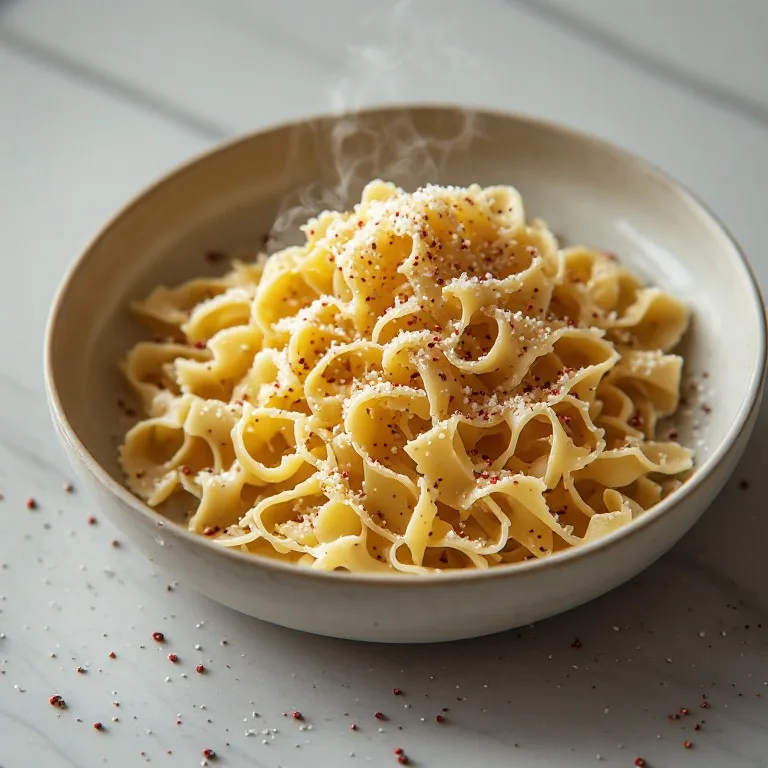
If the diavola is what brought you here, the Lilia mafaldine with pink peppercorns is the restaurant’s other signature — a butter-and-Parmigiano emulsion that’s completely different in technique but equally restrained in ingredients. For more spicy rigatoni, Carbone’s spicy rigatoni alla vodka uses a tomato-cream base with crushed Calabrian chili and vodka and is equally famous and equally simple to make at home.