Fish Cheeks Zabb Wings
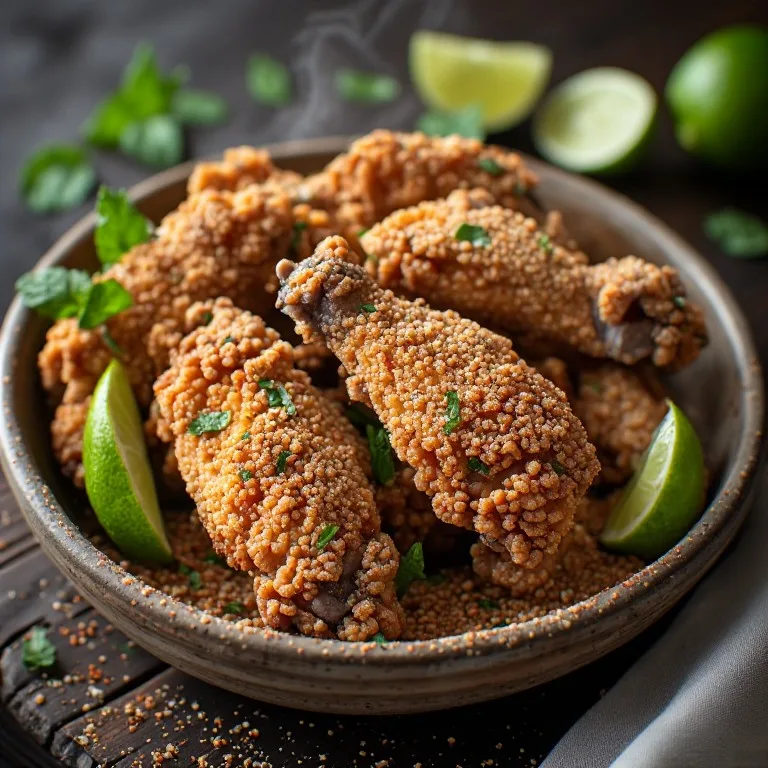
Quick answer: Marinate 2 lbs split chicken wings in 1/2 cup fish sauce + 1/2 cup water + 1/3 cup sugar + 6 minced garlic cloves + 3 minced bird's eye chilis + juice of 1 lime for 24 hours. Eight hours before frying, drain, pat dry, and leave uncovered on a wire rack in the fridge so the skin air-dries completely. For the spice dust: toast 3 tablespoons glutinous (sweet) rice in a dry pan over medium heat, stirring, until golden — about 8 minutes — then grind to a fine powder. Dry 6 makrut lime leaves in the same pan 2 minutes, grind to powder. Mix both powders with 2 tablespoons powdered fried garlic, 1 teaspoon citric acid, 1.5 teaspoons paprika, 1 teaspoon cayenne, 3 tablespoons sugar, 1.5 teaspoons salt, and 1.5 teaspoons MSG. To fry: toss air-dried wings in a 50/50 mix of cornstarch and potato starch, shake off excess. First fry at 325°F for 5 to 6 minutes until cooked through. Rest on a wire rack 5 minutes. Second fry at 375°F for 2 to 3 minutes until deeply golden and shatteringly crisp. Immediately transfer to a large bowl and shower with the spice dust. Toss vigorously to coat every surface. Serve with lime wedges and fresh mint.
Shop the tools
Gear matched to this recipe. These are Amazon affiliate links — we may earn a small commission if you buy, at no extra cost to you.
 Illustrative imageKrups Electric Spice & Coffee GrinderFresh-ground spice blends — the Copycat Spices wayCheck price on Amazon →
 Illustrative imageInstant-Read Digital ThermometerNail fry-oil and doneness temps every timeCheck price on Amazon →
 Illustrative imageNordic Ware Half Sheet PanCommercial-quality aluminum, bakes dead evenCheck price on Amazon →
 Illustrative imageLodge 6 Qt Enameled Dutch OvenDeep-frying, braising, soups — the workhorse potCheck price on Amazon →
As an Amazon Associate, Copycat Spices earns from qualifying purchases. Product images are generic illustrations, not the exact item listed.
Fish Cheeks Zabb Wings
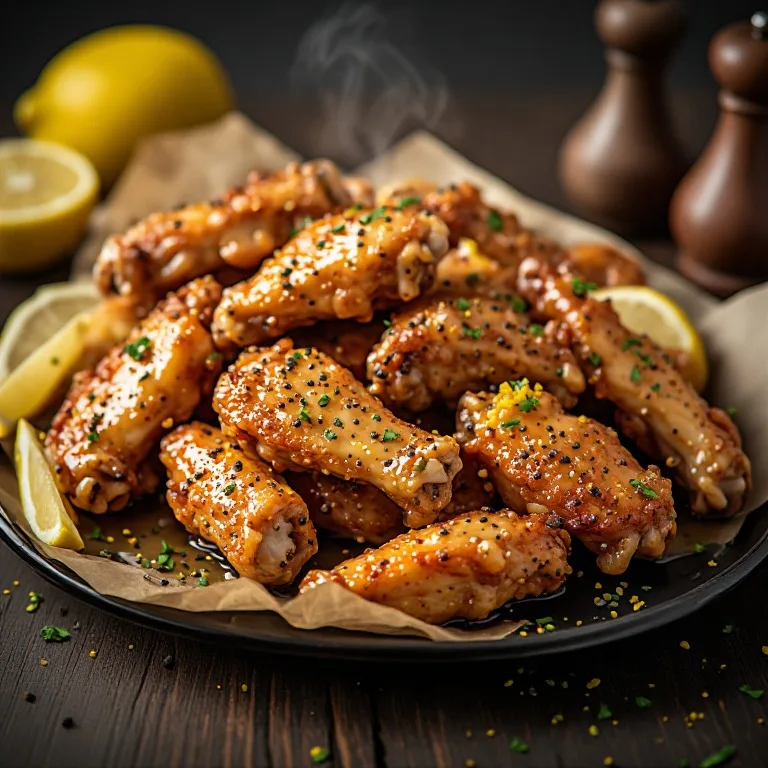
Fish Cheeks' legendary Zabb Wings made at home — the double-fried, fish-sauce-marinated Thai crispy wings from the NoHo cult hit, finished in a dry spice dust of toasted glutinous rice powder, powdered makrut lime leaves, and citric acid. No sticky sauce: the crunch stays intact through every bite.
Medium
Prep: 30 min (plus 24-hour marinade + 8-hour air-dry)
Cook: 30 min
Total: 1h 0m4 as an appetizer servings
~$4.50/serving
At home~$4.50/serving
vs
Restaurant~$20.25/serving
You save ~78%
The Story Behind the Recipe
Fish Cheeks opened in 2016 on Bond Street in NoHo, bringing the regional coastal Thai food that most American Thai restaurants had never tried to serve — not pad thai or green curry, but the seafood-forward dishes built on fish sauce, fresh chilis, and the sharp herbal flavors of the Thai coast. The restaurant was immediately impossible to book, and the Zabb Wings became the signature must-order appetizer from the first week: aggressively savory from a 24-hour fish sauce bath, shatteringly crisp from a double fry, and finished in a dry spice dust rather than a sticky glaze. That last choice is what sets them apart — the crunch survives the coating, so the last bite is as crisp as the first. A plate runs about $20 at the restaurant and disappears in four minutes; the home batch feeds four for under $15 total.
"Zabb" (ซาบ) is a Lao and Northern Thai word with no clean English translation — the closest is "intensely, addictively delicious," usually with a heat component that makes you reach back in regardless of how full you are. The dry spice technique is borrowed from laab (Isaan and Northern Thai herb-minced salads), where khao khua — toasted glutinous rice powder — and dried makrut lime leaves are the foundational flavor layer. Applied to fried chicken, the technique produces a wing unlike any other: the toasted rice powder provides a subtle nuttiness and helps the spice dust cling; the citric acid in the blend cuts through the fat with a clean brightness that a wet sauce would bury; and the powdered lime leaves leave a faint floral, herbaceous note that makes the wings taste distinctly Thai rather than just fried.
Nutrition Facts
Per serving (4 as an appetizer servings)Calories440
Total Fat26g
Total Carbs20g
Dietary Fiber0g
Sugars9g
Protein30g
Sodium860mg
* Estimated values based on standard recipe preparation. Actual values may vary.
Ingredients
- Marinade
- For frying
- Zabb Spice Dust
- To serve
Instructions
Pro tip: This recipe tastes even better the next day. The flavors need time to meld together in the fridge.
Storage: Keeps in an airtight container in the fridge for up to 2 weeks. Freezer-friendly for up to 3 months.
Free PDF — instant download. We'll also send new seasonal copycat recipes now and then; unsubscribe anytime. Or just download it →
🎉 Your Halloween Cookbook is ready!
It's free — but if it's worth something to you, you can pay what you want. It keeps the recipes coming.
$
✓ Downloading your free Halloween Cookbook — check your downloads folder. Happy cooking!
Make It Healthier
Love Fish Cheeks Zabb Wings but want a lighter version? Try these simple swaps:
- ✓Air-fry instead of deep-fry: coat wings in 1 tablespoon oil instead of starch, air-fry at 400°F for 22 to 24 minutes flipping halfway — saves roughly 100 calories and 10g fat per serving. The double-fry crunch won't fully replicate, but the spice dust still delivers.
- ✓Cut the spice dust sugar in half: reduce from 3 tablespoons to 1.5 tablespoons — the citric acid and lime leaf powder carry the brightness, so you lose very little flavor while dropping about 25 calories per serving.
- ✓Skip the MSG if sensitive: it deepens the umami, but the fish sauce marinade already carries substantial savory depth on its own. Removing it changes nothing else in the recipe.
- ✓Use chicken drumsticks for a lower-fat cut with the same technique: first fry 10 minutes at 325°F, second fry 4 minutes at 375°F. The spice dust clings just as well, and drumsticks cost less per pound.
Frequently Asked Questions
What does 'Zabb' mean — is this related to laab?
'Zabb' (ซาบ) is a Lao and Northern Thai word for something intensely and addictively delicious — typically spicy food that you can't stop eating even when you know you should. It carries a connotation of the specific pleasure of food that hits every sense at once: heat, sour, savory, aromatic. The Zabb spice dust on these wings is directly descended from the seasoning logic of laab (also spelled larb), the minced meat herb salad from Isaan and Northern Thai cuisine where toasted glutinous rice powder (khao khua) and dried makrut lime leaves form the backbone of the dry seasoning. Fish Cheeks moved that dry-rub tradition from a salad format onto fried chicken wings — same flavors, completely different texture context.
What is toasted glutinous rice powder (khao khua) and where do I buy it?
Khao khua is glutinous (sweet/sticky) rice toasted in a dry pan until golden and nutty, then ground to a fine powder. It adds a subtle roasted grain flavor and acts as a binding agent that helps the dry spice dust cling to the hot fried wings. The easiest route is to make it yourself: add 3 tablespoons of raw glutinous rice (labeled 'sweet rice' or 'sticky rice' at Asian grocery stores — do not use regular long-grain rice) to a dry skillet over medium heat. Toast, stirring frequently, for 7 to 10 minutes until the grains turn an even golden-brown color and smell nutty. Cool completely before grinding in a spice or coffee grinder to a fine powder. Pre-made khao khua is sold at most Thai grocery stores. Regular rice flour or cornstarch is not the same — the toasting step creates flavor compounds that raw flour lacks.
Can I skip the 24-hour marinade and just do a few hours?
You can do 12 hours in a pinch and still get a noticeable result. The fish sauce marinade penetrates chicken wing meat fast in the first few hours, but the deeper flavor saturation — the point where the meat is seasoned through rather than just near the surface — takes the full 24 hours. Wings marinated only 4 to 6 hours will taste lightly seasoned; 12-hour wings taste good but noticeably less complex than the full version. One thing you cannot shortcut at all is the 8-hour air-dry. If you skip it and fry wet wings, the coating steams rather than fries, the double-fry doesn't create the same shattering crust, and the spice dust won't adhere properly to a moist surface. If you're short on time, marinate 12 hours and air-dry 6, but don't compress both — the dry step matters more than the extra marinade time.
Why citric acid — can I substitute something else?
Citric acid is what gives the spice dust its clean, immediate brightness — a sharp citrus hit that cuts through the fried chicken fat without the moisture of fresh lime juice (which would make the dry rub clump). It's the ingredient that most home-cook copycat recipes get wrong or omit. You can sub 1/4 teaspoon of amchur (dried mango powder), which provides similar sourness with a faint fruity note, or finely grated then oven-dried lime zest ground to a powder. Fresh lime squeezed over finished wings is not the same — it's wet and adds moisture. Citric acid is sold in small quantities at most specialty grocery stores (look in the canning/preserves section) and online for a few dollars; it lasts indefinitely sealed.
What is the point of the double fry — why not just fry once at the right temperature?
The double fry is the same mechanism as twice-fried French fries, and the reason matters. The first fry at 325°F cooks the meat through over about 5 to 6 minutes — a lower temperature so the outside doesn't burn before the inside is done. It also drives most of the moisture out of the skin. Resting 5 minutes allows the residual heat to redistribute and the surface to cool slightly. The second fry at 375°F is fast — 2 to 3 minutes — and operates on now mostly-dry skin: the high heat rapidly evaporates the remaining surface moisture and sets the starch coating into a thin, hard, shatteringly crisp shell. If you skip the first fry and just fry at high heat, the inside cooks unevenly and the outside surface moisture doesn't have enough time to escape before the coating browns.
Can I make the spice dust ahead of time?
Yes — the Zabb spice dust keeps for up to 2 weeks in an airtight jar at room temperature. The toasted rice powder and dried lime leaf powder hold their flavor well once made. Make a double batch if you plan to serve these again soon. The one thing that degrades fastest is the fried garlic powder — it can pick up moisture from the air and lose its crunch, especially in a humid kitchen. If you're making the dust more than a day ahead, consider keeping the garlic powder in a separate small container and combining everything just before use.
What else is on the menu at Fish Cheeks — is it all wings?
The Zabb Wings are the most-ordered appetizer, but Fish Cheeks is primarily a seafood-focused Thai restaurant. The menu includes a whole steamed fish with Thai herbs, a coconut crab curry that the restaurant is equally known for, crab fried rice with a fried egg, grilled pork cheeks with jeaw (a roasted chili dipping sauce), and a rotating selection of seasonal vegetables and shellfish. The menu does not include pad thai or green curry — the restaurant deliberately serves regional Thai food rather than the westernized menu most American Thai restaurants default to. Both the NoHo (55 Bond Street) and Brooklyn (Williamsburg) locations are fully booked most evenings; same-day walk-in seating is the most reliable way to get a table without weeks of advance planning.
Can I bake these instead of deep frying?
You can air-fry or bake, but the result will be noticeably different. For air frying: toss the air-dried wings in 1.5 tablespoons neutral oil instead of the cornstarch-potato starch dredge, air-fry at 400°F for 22 to 24 minutes flipping at the 12-minute mark. The spice dust step is identical. The wings come out crispy but with a drier, slightly less cohesive skin than the deep-fried version. For oven baking: preheat to 425°F with a wire rack over a baking sheet, cook 40 to 45 minutes flipping halfway. The skin texture from baking will be softer. Either way, the 24-hour marinade and 8-hour air-dry remain important — don't skip the dry step even if you're not deep frying.
Love this recipe? Share it!
Made it? Buy us a coffee
Every recipe here is free, with no paywalls. If this one was a hit at your table, a small tip keeps new copycats coming.
$
💛 Support checkout is coming soon — the cookbook stays free either way.
Fish Cheeks is a trademark of its owner, used here only to describe the dish this recipe recreates. This is an independent copycat written in our own words — Copycat Spices is not affiliated with, endorsed by or sponsored by Fish Cheeks.
Ratings & Reviews
Rate this recipe
Click a star to rate