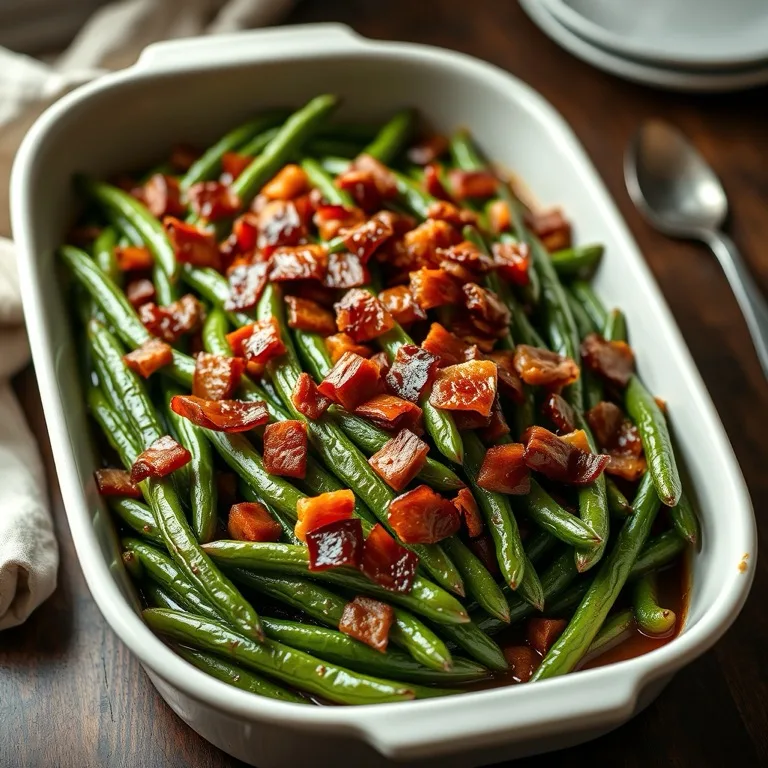


Copycat Din Tai Fung Garlic Green Beans (The Famous Side, Made at Home)
Prep time: 10 min Cook time: 10 min Servings: 4
Din Tai Fung opened in Taipei in 1958 as a cooking oil shop. The business failed within fifteen years. In 1972, founder Yang Bing-Yi cleared the shelves, put in four tables, and started making handmade dumplings. That pivot turned a failing storefront into what the New York Times named, in 1993, one of the 10 best restaurants in the world. The chain now operates across 13 countries. US locations in New York, Seattle, Los Angeles, and Houston run 45 to 90-minute waits on weekends.
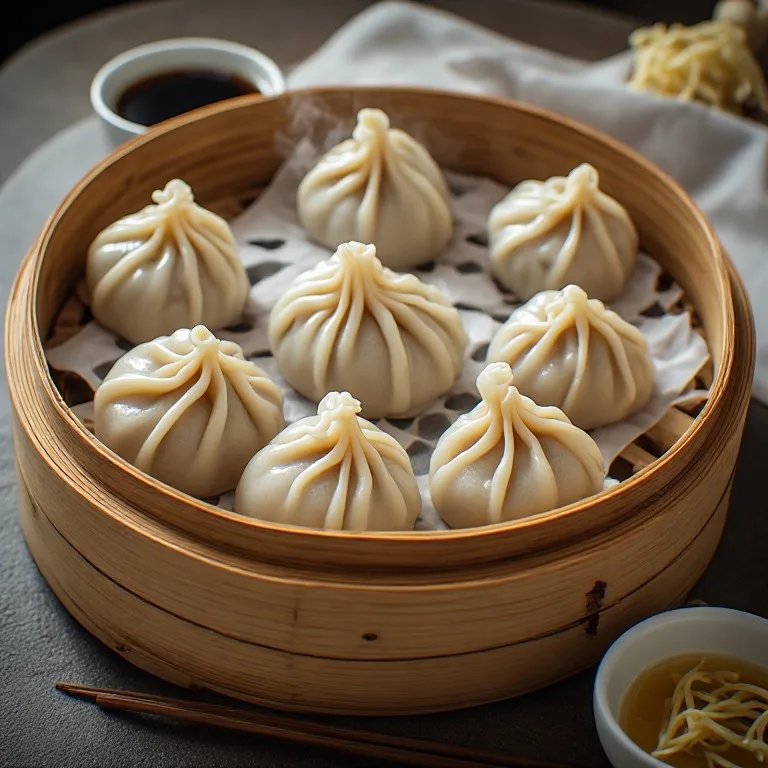
The garlic green beans are not the restaurant’s signature dish — that is the xiao long bao, whose wrappers are weighed to exactly 5 grams and folded into exactly 18 pleats. But the green beans are the side that gets reordered, the dish people describe to friends before dinner, and one of the items most searched alongside the restaurant’s name. At US locations, a side runs $10 to $14. The ingredients cost about $3.
The recipe is simple. The technique is not forgiving.
Why High Heat Is the Entire Point
Most vegetable stir-fry recipes call for medium-high heat. This recipe requires the highest heat your stove produces, sustained through the entire cook. The distinction changes the dish.
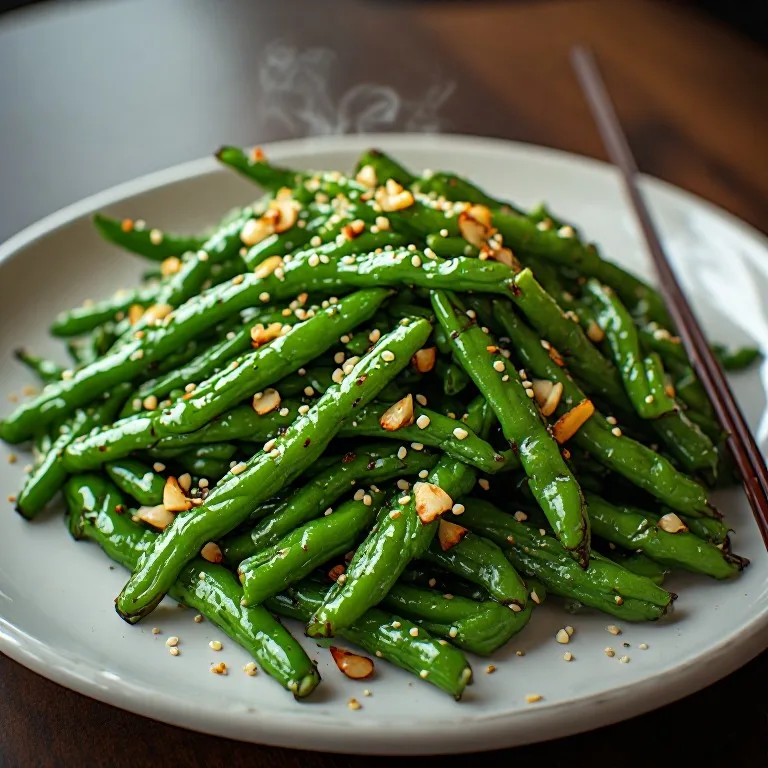
At a commercial wok station running at 100,000 BTU, green beans blister and char in under 60 seconds after blanching. The exterior develops complex, slightly smoky flavor from direct contact with the hot metal surface while the interior — already cooked from blanching — stays tender and bright. Home burners run at 10,000 to 20,000 BTU. They can approximate this effect only if the pan is preheated long enough to accumulate heat, and only if the beans are completely dry when they go in.
Two things destroy the sear: adding wet beans (they steam instead of sear, and the temperature drops immediately) and using a pan that isn’t hot enough to maintain temperature when cold beans hit it. Both problems are solved the same way — a cast-iron skillet preheated empty for 2 full minutes on your highest burner, and beans patted completely dry before going in.
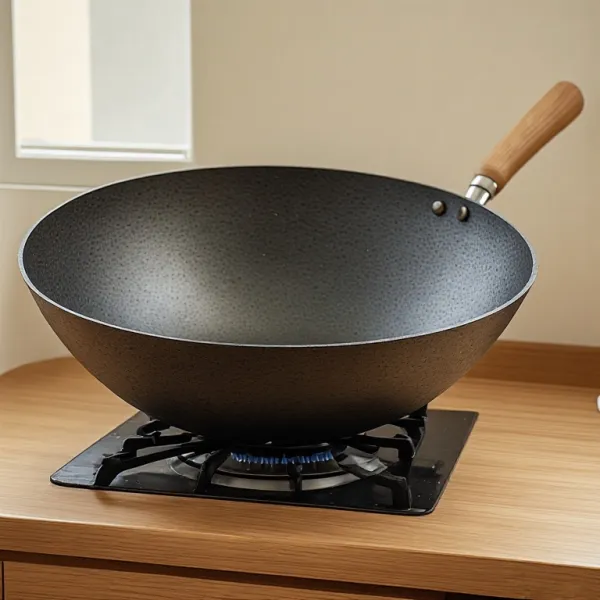
A nonstick pan is not an option. Nonstick coatings degrade above 450 to 500°F, which is the minimum temperature needed here. Cast iron or carbon steel are the right tools.
The Two-Stage Garlic Method
Garlic burns before green beans are done stir-frying if you add it at the beginning. Added too late, it stays raw. DTF’s garlic green beans hit a specific register: the garlic is cooked — fragrant, toasty, beginning to soften — without crossing into bitter territory.
The solution is to cook the garlic separately, on the bare hot pan surface with the beans moved to the side. Garlic in constant motion against a very hot surface goes from raw to fragrant in 20 to 30 seconds. In that same time, it picks up some color at the edges without burning through. Once it smells toasty and looks pale gold, you toss it immediately with the beans. Total cooking time for the garlic: under 30 seconds.
If the garlic turns dark brown within 10 seconds, your pan is too hot — reduce slightly. If it’s taking over a minute, the pan has cooled below the searing threshold from the beans. Work in smaller batches so the pan stays hotter.
Why Blanching Before Stir-Frying
A commercial wok at full heat can cook raw green beans through in 90 seconds. A home pan cannot. Without blanching, raw beans put into a home pan take 3 to 5 minutes to cook through — during which time the exterior overheats, dries out, and loses any texture contrast.
Blanching the beans for 90 seconds in heavily salted water fully cooks the interior and sets the color. The subsequent stir-fry is then entirely about exterior texture: blistering the outer surface in 60 to 90 seconds of high heat. Two separate goals, two separate cooking steps. This is how DTF achieves the specific combination of charred-blistered exterior and tender interior on a home-scale stove.
The ice bath after blanching is not optional. Without it, the beans continue cooking from residual heat for 3 to 5 minutes and will be overcooked — soft rather than tender-crisp — by the time they go into the pan.
The Seasoning: Why So Little
The green beans at Din Tai Fung taste like green beans, not like a sauce. This is deliberate. The restaurant’s approach to vegetable sides is to let the ingredient remain the primary flavor, with seasoning that enhances rather than covers.
The complete seasoning here is: light soy sauce, sesame oil, white pepper, and a small amount of sugar. Light soy sauce (not dark, not low-sodium) provides umami and salt without the molasses-heavy flavor of dark soy. Sesame oil goes in off heat, at the very end — it’s an aromatic finish, and its flavor compounds are volatile; adding it to a very hot pan drives them off before they reach the plate. White pepper provides heat without the visual speckling of black pepper and has a slightly more floral quality that suits the dish.
The sugar is optional but present in the restaurant version: a small amount rounds out the soy sauce’s sharpness and enhances the natural sweetness of well-cooked green beans without tasting sweet.
Cost Comparison: Din Tai Fung vs. Home
| Din Tai Fung (US) | Homemade (4 servings) | |
|---|---|---|
| Price | $10–$14 | ~$3 |
| Wait | 45–90 min queue + sit-down | 20 min total |
| Bean style | Haricots verts | Haricots verts |
| Garlic intensity | Generous | Generous |
| Texture | Blistered, tender-crisp | Same |
The queue at popular DTF locations runs longer than this recipe. Making it at home is faster, costs a fraction, and — with the right pan and technique — produces the same result.