Dishoom Chicken Ruby (The Famous London Makhani, Made at Home)
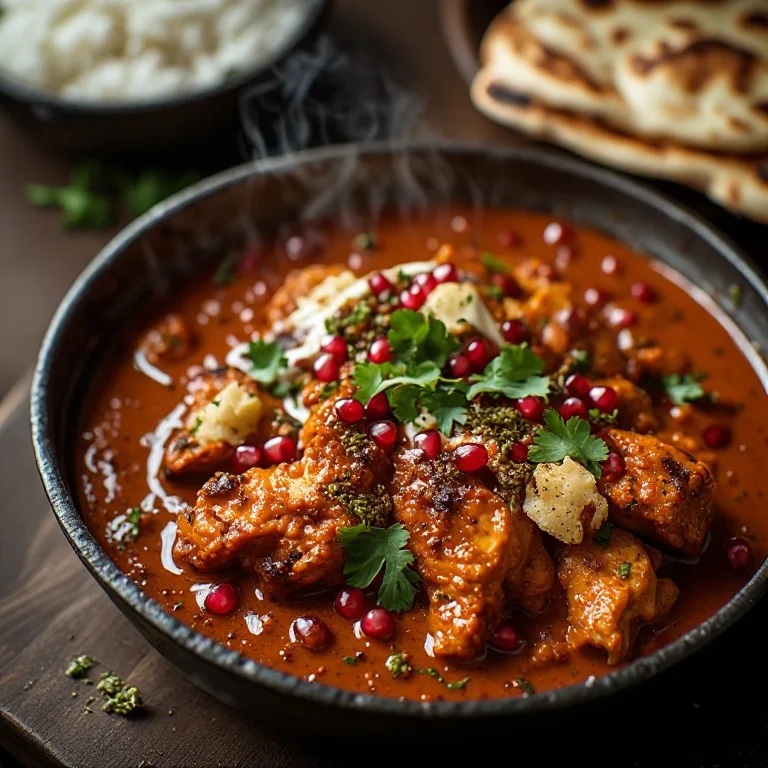
Quick answer: Make the marinade first: mix together 75g full-fat Greek yoghurt, 10g microplaned fresh ginger, 20g microplaned garlic, 1 teaspoon deggi mirch chilli powder, 1½ teaspoons ground cumin, ½ teaspoon garam masala, 2 teaspoons fresh lime juice, 2 teaspoons vegetable oil, and 5g fine sea salt into a smooth paste. Toss 700g boneless, skinless chicken thighs in the marinade until fully coated. Cover and refrigerate for at least 6 hours — overnight is better. When ready to cook, blend 2 × 400g tins of chopped tomatoes completely smooth in a blender and set aside. Heat 80ml vegetable oil in a wide, heavy-bottomed pan over medium-high heat. Slice 15g of garlic into thin rounds and fry in the oil until golden, about 3 minutes — remove with a slotted spoon and reserve on paper towels. Add 2 bay leaves, 6 green cardamom pods (lightly crushed), 2 black cardamom pods, and 2 cinnamon sticks to the hot oil; toast 2 minutes until fragrant. Add 20g finely diced garlic and 20g freshly grated ginger; cook, stirring, for 5 minutes until soft and pale golden — do not let them brown or the sauce will taste bitter. Pour in the blended tomatoes, add 2 teaspoons fine sea salt and 1½ teaspoons deggi mirch. Bring to a boil, then reduce heat and simmer uncovered for 30 full minutes, stirring occasionally, until the sauce reduces by about a third and the color deepens to a dark brick-red. Add 30g unsalted butter and cook 5 minutes more. Add 1 teaspoon garam masala, 1 teaspoon ground cumin, 20g granulated sugar, 1 teaspoon honey, 1 teaspoon dried fenugreek leaves (kasuri methi), and the reserved fried garlic slices. Stir well and simmer 15 more minutes. Stir in 80ml double cream (heavy cream) and cook 5 minutes. Meanwhile, grill or pan-fry the marinated chicken thighs over high heat until lightly charred and cooked through, about 6 to 8 minutes per side. Cut into large pieces and fold into the sauce. Simmer together 5 to 10 minutes. Stir in ½ teaspoon finely chopped fresh dill. Serve topped with thin ginger matchsticks, fresh coriander leaves, and a scattering of pomegranate seeds alongside warm naan.
Shop the tools
Gear matched to this recipe. These are Amazon affiliate links — we may earn a small commission if you buy, at no extra cost to you.
 Illustrative imageLodge 10.25" Cast Iron SkilletThe restaurant-grade sear most copycats depend onCheck price on Amazon →
 Illustrative imageLodge 6 Qt Enameled Dutch OvenDeep-frying, braising, soups — the workhorse potCheck price on Amazon →
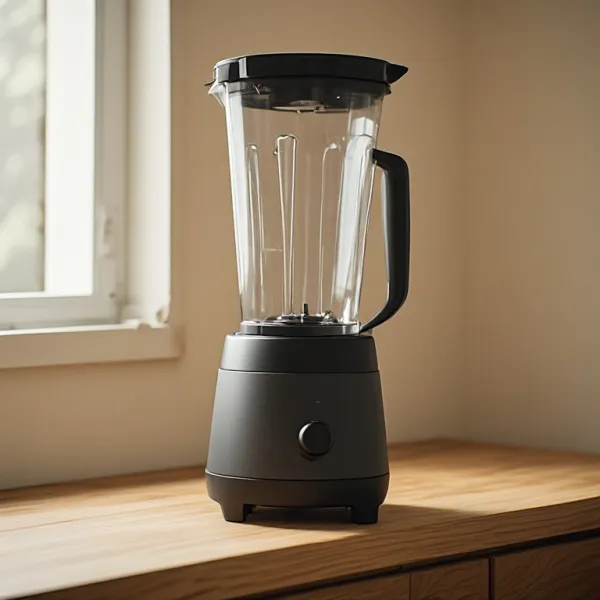 Illustrative imageNinja Kitchen System BlenderRestaurant-smooth sauces, shakes, and dressingsCheck price on Amazon →
 Illustrative imageFine-Mesh Strainer SetSilky sauces and lump-free syrups — strains out every bit of pulpCheck price on Amazon →
As an Amazon Associate, Copycat Spices earns from qualifying purchases. Product images are generic illustrations, not the exact item listed.
Dishoom Chicken Ruby (The Famous London Makhani, Made at Home)
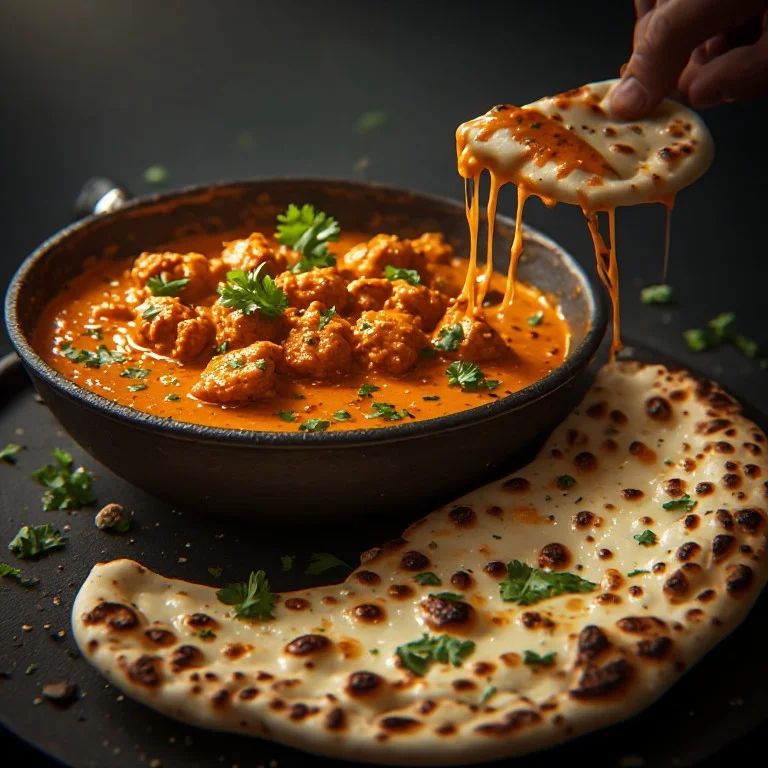
Dishoom's Chicken Ruby is their signature makhani curry — richer and more intensely built than generic butter chicken. The cookbook recipe: a dual-garlic technique, deggi mirch chilli for brick-red color, black cardamom for smokiness, and a half-teaspoon of fresh dill that surprises everyone.
Medium
Prep: 25 min (plus 6–24 hrs marinating)
Cook: 1 hr
Total: 25h 25m4 servings
~$4.50/serving
At home~$4.50/serving
vs
Restaurant~$20.25/serving
You save ~78%
The Story Behind the Recipe
Dishoom's Chicken Ruby is their signature makhani curry — richer and more intensely built than generic butter chicken. The cookbook recipe: a dual-garlic technique, deggi mirch chilli for brick-red color, black cardamom for smokiness, and a half-teaspoon of fresh dill that surprises everyone.
Ingredients
- For the chicken marinade
- For the makhani sauce
- To serve
Instructions
Pro tip: This recipe tastes even better the next day. The flavors need time to meld together in the fridge.
Storage: Keeps in an airtight container in the fridge for up to 2 weeks. Freezer-friendly for up to 3 months.
Free PDF — instant download. We'll also send new seasonal copycat recipes now and then; unsubscribe anytime. Or just download it →
🎉 Your Halloween Cookbook is ready!
It's free — but if it's worth something to you, you can pay what you want. It keeps the recipes coming.
$
✓ Downloading your free Halloween Cookbook — check your downloads folder. Happy cooking!
Frequently Asked Questions
What is deggi mirch and why can't I substitute regular chilli powder?
Deggi mirch is a ground blend of dried Kashmiri chillies and a smaller proportion of regular red chillies — sold at Indian grocery stores under that name or as 'Kashmiri chilli powder' or 'Kashmiri mirch.' Its defining characteristics are color and heat level: it produces a vivid, deep brick-red color and delivers moderate, fruity warmth rather than the sharp burn of cayenne. Regular chilli powder (the US spice-rack kind) is a blend that includes cumin, garlic powder, oregano, and other spices — completely wrong for this. Cayenne has the right color but too much heat and none of the fruity depth. If you cannot find deggi mirch or Kashmiri chilli powder at an Indian grocery store (most large US cities have at least one, and both brands Deep and MDH are widely available online), the closest working substitute is a mix of 2 parts sweet Hungarian paprika to 1 part cayenne, used at the same total quantity. It will approximate the color and a rough version of the heat, but the specific fruity depth of the original will be missing. Deggi mirch is the ingredient most worth seeking out.
Why does the recipe call for two separate preparations of garlic — sliced and fried first, then diced and cooked in the sauce?
The dual-garlic technique is one of the things that sets the Dishoom Chicken Ruby apart from most home butter chicken recipes. The sliced garlic is fried first in hot oil until golden-brown, then removed and reserved — this creates deep, nutty, almost caramelized garlic flavor that gets added back later. The second preparation is diced garlic cooked gently in the same oil with ginger as the aromatics base — this gives a softer, fresher garlic note. The two preparations hit different flavor registers: the fried slices are rich and slightly sweet; the gently-cooked diced garlic is savory and aromatic. When the reserved fried slices are added back after the 30-minute tomato reduction along with the kasuri methi and spices, they have softened slightly and distributed their flavor through the sauce. Recipes that skip this step and just cook garlic through in a single stage are making a good curry — just not Dishoom's specific one.
The recipe has fresh dill in an Indian curry. Is that really correct?
It is, and it surprises almost everyone who reads it for the first time. A half-teaspoon of finely chopped fresh dill stirred in at the very end is a confirmed, genuine Dishoom signature — it appears in the cookbook and has been verified by multiple recipe testers who have made the dish from the original and compared it against the restaurant version. Dill is not common in most Indian cooking, though it does appear in certain Parsi and Irani café traditions — the cuisine Dishoom's founders used as their reference point. In this quantity, it is not a 'dill flavor.' You will not taste dill as a distinct note. What it does is add a delicate, faintly green freshness that lifts the richness of the cream and butter finish without announcing itself. Leave it out and the sauce is still excellent. Include it and the sauce has a brightness at the end that is hard to identify but noticeable.
The sauce calls for a 30-minute reduction. Can I speed that up?
The 30-minute reduction step is load-bearing — it cannot be meaningfully shortcut without changing the character of the dish. The reason is not just thickness. During those 30 minutes at a steady simmer, the raw acidic sharpness of canned tomatoes is cooked out, the color deepens from bright red to the dark brick-red of the finished sauce, and the flavors concentrate and round out. A sauce that has reduced for 15 minutes tastes noticeably sharper and thinner than one that has gone the full 30. If you are tight on time, you can speed the reduction slightly by using a wider pan (more surface area = faster evaporation) or by increasing the heat slightly — but stirring more frequently to prevent scorching. What you cannot do is skip the reduction entirely or reduce the simmer time to 10 minutes without a significant drop in quality. The same principle applies to the 15-minute simmer after the butter and spices are added. Plan for the full time.
Should the marinated chicken be grilled, or can I cook it directly in the sauce?
The restaurant finishes the chicken on a charcoal grill before adding it to the sauce — this is why the dish has a light char that standard butter chicken often lacks. At home, grilling the marinated chicken separately before adding it to the sauce is strongly recommended and produces a much better result than poaching the raw chicken directly in the sauce. The direct-in-sauce method cooks the chicken through, but the yoghurt marinade never caramelizes and chars, the texture is softer and blander, and you lose the specific slightly smoky note from the charring. Cook the chicken thighs in a cast-iron skillet or grill pan over high heat, or under a broiler, until lightly charred and cooked through — about 6 to 8 minutes per side. Let rest briefly, cut into large pieces, and add to the sauce. If you have access to an outdoor grill, direct charcoal heat is even better and gets you closest to the restaurant's result. The chicken does not need to be fully sauced while grilling — the sauce finishes it.
What are black cardamom pods and where do I find them?
Black cardamom pods (also sold as 'large cardamom' or 'brown cardamom,' genus Amomum) are completely different from the green cardamom you may be familiar with. They are large — about the size of a grape — with a wrinkled brown-black skin, and they are typically dried over an open fire, which gives them a distinctive smoky, camphor-like flavor with notes of menthol. In this recipe, 2 black cardamom pods provide a background smokiness that most home-cook versions of makhani do not have. Do not substitute extra green cardamom — green cardamom is floral and sweet; black cardamom is smoky and savory; they are not interchangeable. Black cardamom pods are available at virtually every Indian grocery store, often in small bags or in bulk. Online, brands like Spice Garden and East End are widely available. Remove them from the finished sauce before serving — they are not meant to be eaten.
Where can I eat at Dishoom if I live in the United States?
As of 2026, there are no Dishoom locations in the United States — all existing restaurants are in the UK (London, Edinburgh, Birmingham, Manchester, Bristol). A first US location at 11 East 26th Street in NoMad, Manhattan is expected to open in 2027. Lines at UK locations regularly stretch to two or three hours for walk-in tables; Dishoom takes reservations for certain seatings that book out weeks in advance. If you visit London before then, the flagship Covent Garden location is the original. Until the New York opening, the cookbook — Dishoom: From Bombay with Love (2019) — is the closest thing to official recipes, and the Chicken Ruby recipe in this post is derived from it.
Can I make this ahead, and does it keep well?
The Chicken Ruby is an excellent make-ahead dish. The sauce can be made up to 3 days in advance and stored in the refrigerator; the flavors deepen significantly overnight. The grilled chicken can also be cooked ahead and stored separately. Reheat the sauce gently over low heat, adding a splash of water if it has thickened too much, add the chicken, and simmer 10 minutes together. For freezing: freeze the sauce without the cream, then add fresh cream when reheating. The cream can separate slightly when frozen and thawed, but whisking it in while the sauce reheats over low heat usually brings it back together. Cooked chicken thighs freeze well in the sauce; freeze the complete dish (with cream) for up to 2 months for the best texture. Full chicken-in-sauce freezing does slightly soften the texture of the charred exterior, but the flavor loss is minimal.
Love this recipe? Share it!
Made it? Buy us a coffee
Every recipe here is free, with no paywalls. If this one was a hit at your table, a small tip keeps new copycats coming.
$
💛 Support checkout is coming soon — the cookbook stays free either way.
Dishoom is a trademark of its owner, used here only to describe the dish this recipe recreates. This is an independent copycat written in our own words — Copycat Spices is not affiliated with, endorsed by or sponsored by Dishoom.

Ratings & Reviews
Rate this recipe
Click a star to rate