
Copycat Zahav Hummus (Michael Solomonov’s Famous Israeli-Style Hummus, Made at Home)
Prep time: 20 min (plus overnight soak) Cook time: 1 hr Servings: 6
Zahav means “gold” in Hebrew. Michael Solomonov opened the restaurant in Philadelphia’s Old City neighborhood in 2008. He was 28. His brother David had been killed in Lebanon in 2003 during Israeli military service, and the restaurant was partly an act of grief and partly an act of return — Solomonov had grown up in Pittsburgh, trained in French and American kitchens, and was cooking food that had nothing to do with where he was from. Zahav was his first attempt to cook the food of his childhood: Israeli food, which is not one thing but many, built from waves of immigration (Yemenite, North African, Eastern European, Persian, Arab) into something distinct and layered.
The restaurant won James Beard’s Outstanding Restaurant award in 2019. Solomonov won Outstanding Chef in 2017, and has five James Beard Awards total. The cookbook — “Zahav: A World of Israeli Cooking,” co-written with business partner Steven Cook — won Book of the Year in 2016. Reservations open eight weeks in advance on Tock and popular nights close within minutes of release.
The hummus is the first thing every table receives. It is not a bread service or an afterthought. It is a course — part of the salatim spread, which also includes six rotating Israeli vegetable salads. The whole opening sequence arrives with hot laffa bread from a wood-burning taboon oven, and it is one of the better beginnings to a meal anywhere in the country.
Why This Hummus Is Different From Any Hummus You’ve Made Before
Most hummus recipes — including recipes from good cookbooks — produce something pleasant, fine, and fundamentally the same as what you can buy at the grocery store in a better container. Zahav’s is different in three specific ways, each one a technique you can learn.
First: the chickpea texture. Most recipes use canned chickpeas, or cook dried chickpeas until just tender. Zahav wants chickpeas that are so soft they are beginning to fall apart — cooking them with baking soda at two stages (soaking and simmering) breaks down the cell walls, making the chickpeas disintegrate completely in the food processor. The result is a paste with no perceptible grain. You cannot get this from canned chickpeas no matter how long you run the machine.
Second: the tehina ratio. Most commercial hummus is roughly 70% chickpeas to 30% tahini; Zahav’s recipe uses close to equal volumes of cooked chickpeas and tehina sauce. At that ratio, tahini is the primary flavor, not the background note. The hummus is richer, nuttier, and more complex.
Third: the garlic technique. The garlic is never added directly to the hummus. Instead, raw unpeeled garlic cloves are blended into the lemon juice, the mixture rests 10 minutes (which mellows the sharpest raw-garlic compounds), and then the entire garlic-solid portion is strained out and discarded. Only the garlic-scented lemon juice continues into the tehina sauce. The result is a complex garlic depth without a raw-garlic bite — and the hummus is more stable and less prone to turning aggressively sour as it sits.
The Tehina Sauce Comes First
One thing that surprises home cooks reading through the Zahav recipe: the hummus is built on a prepared tehina sauce, not loose tahini. You make the tehina sauce first — garlic-infused lemon juice, tahini, ice water — and then combine a portion of that sauce with the warm cooked chickpeas to make the hummus. The tehina sauce makes more than you need for one batch of hummus. The extra keeps in the refrigerator for up to five days and is one of the more useful things to have around: it is the dressing for the salatim at Zahav, the sauce for the fried cauliflower, a dip for roasted vegetables. If you are going to the effort of making it, make the full batch.
On the Ice Water
Both the tehina sauce and the hummus use ice water — cold water with ice cubes in it. The cold matters. When tahini meets an acid (lemon juice), it seizes almost immediately into a dense, stiff paste. Warm water added to that paste would break the emulsification; cold water maintains it while loosening the texture into something smooth and pourable. Similarly, when ice water hits warm chickpea paste in the food processor, the contrast in temperature forces an emulsification between the fat from the tahini and the water from the chickpeas. The result is a texture that is airier and lighter than you expect from the ingredient list — creamy in the way a good sauce is creamy, not thick in the way a spread is thick.
What It’s Served With at Zahav
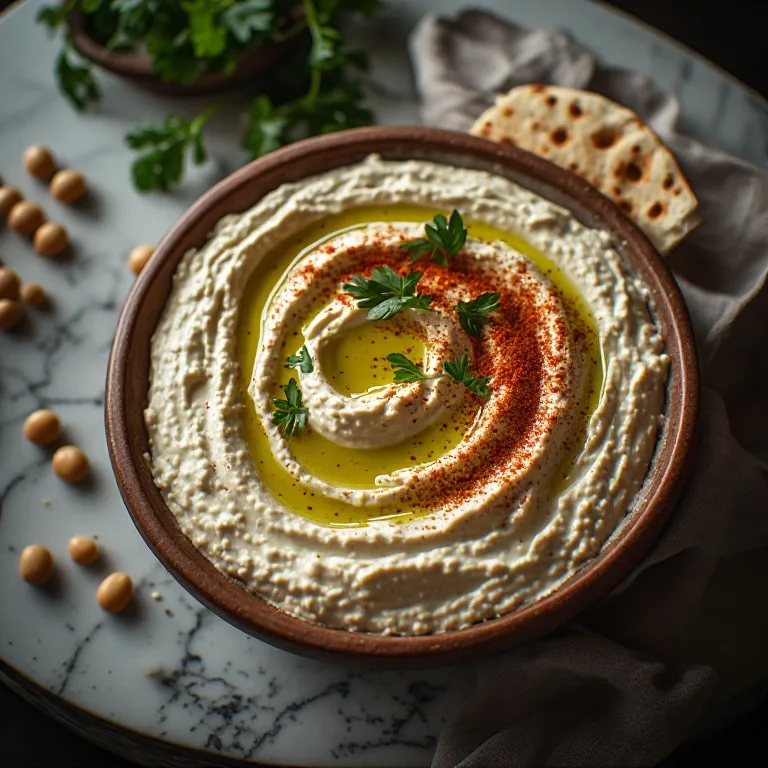
The hummus arrives in a wide, shallow bowl — the width matters because you want surface area, not depth. It is warm. A drizzle of olive oil pools in the center. Sweet paprika is dusted over the surface. Chopped flat-leaf parsley is scattered on top. The laffa bread — large, oval, fluffy and chewy, sesame and za’atar seeds baked into the surface — comes alongside. The six salatim are arranged around the table in small plates.
At home, warm pita works well. Serve the bowl as you make it, still warm from the food processor, and trust the simplicity of the olive oil and paprika finish — no garnish beyond that is required.
What the Rest of the Meal Looks Like
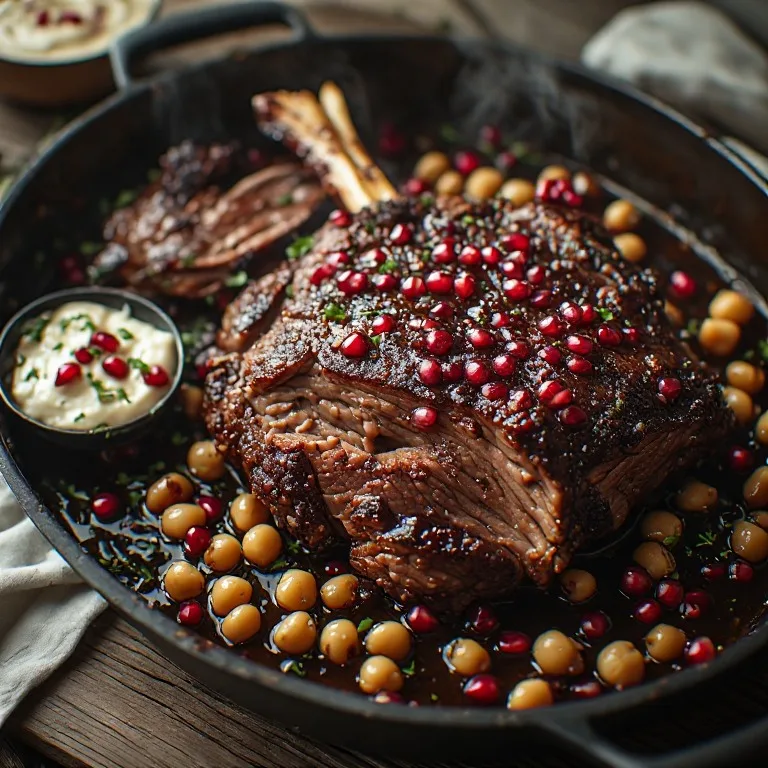
The four-course format at Zahav continues through mezze (grilled haloumi, fried cauliflower, coffee-braised sweet potatoes, salmon crudo) and into large plates anchored by the pomegranate-glazed lamb shoulder — which runs about 170 orders per week and is the other dish the restaurant is most known for. Tasting menu pricing runs roughly $90 per person before drinks. The James Beard Outstanding Restaurant award — which the restaurant won in 2019, the first Israeli-American restaurant to do so — reflects the whole meal and the ambition behind it. The hummus is the opening act.